

1N4148W Supply Risk Assessment: What to Ask Before You Buy
What to verify on 1N4148W before you buy: date code, CoC, test evidence, and allocation-backed lead time. Ask these RFQ questions on IC-Online.
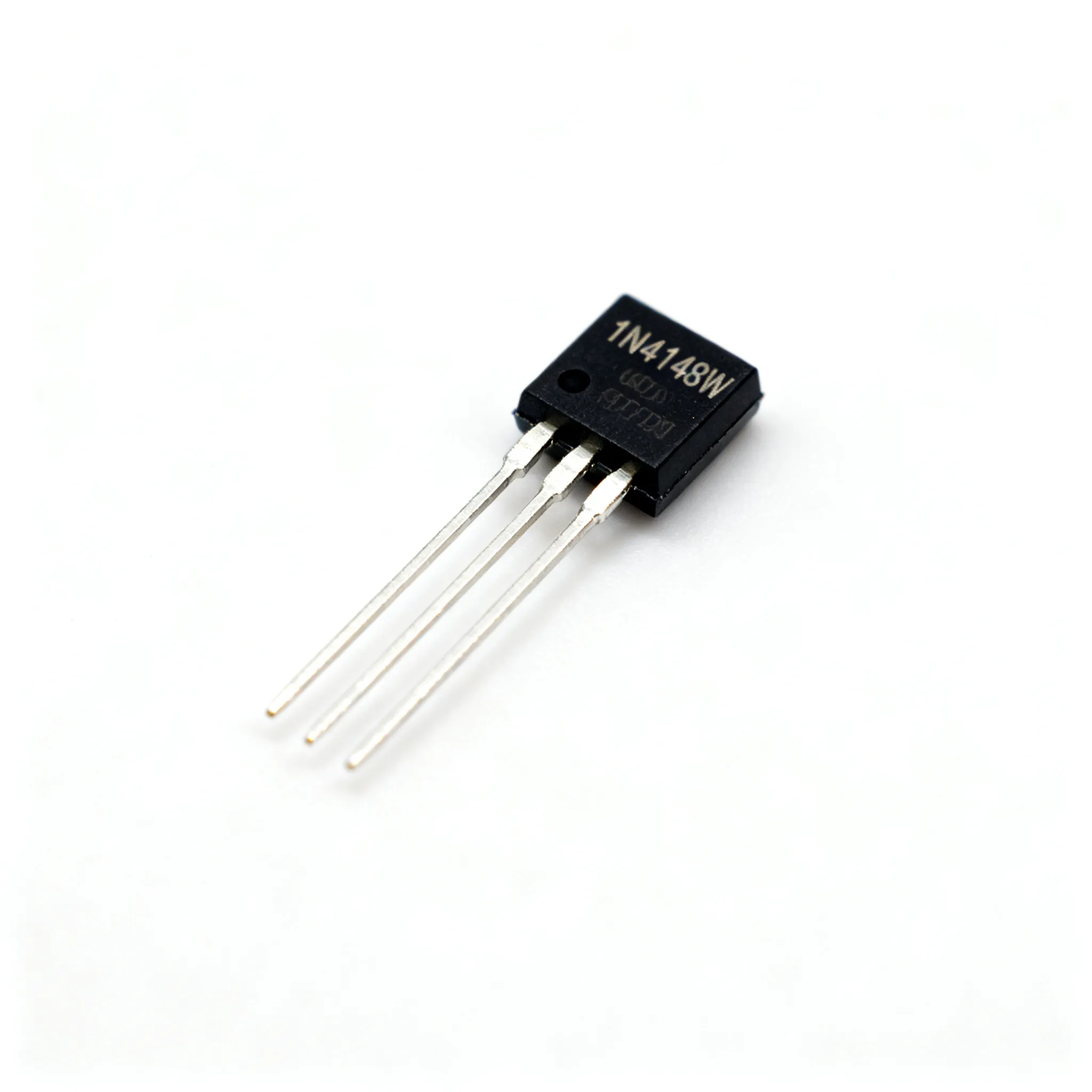
1N4148W Supply Risk Assessment: What to Ask Before You Buy
When a $0.003 Diode Stops the Line: Supply Risk Lessons from 2025–2026
You might not think about a surface‑mount switching diode until a single missing reel idles a placement machine. That scenario isn’t hypothetical — the IC‑Online 2026 shortage update underscores that one component can halt an entire build, and Elisa Industrie warns: “Electronics supply chains can break due to one missing part.” The 1N4148W may cost a fraction of a cent, yet its absence during a production run triggers the same line‑stop pain as a scarce microcontroller.
Systemic risks are not limited to single‑component shortages. In December 2025, the U.S. Food and Drug Administration issued a multicategory recall after investigators discovered unsanitary conditions at a wholesaler — an event that Christensen Group uses to illustrate how a non‑conformance deep in the supply chain can force recalls across multiple product lines. In 2021, the Colonial Pipeline cyber‑attack paralysed fuel distribution, proving that IT disruptions can cascade into physical delivery failures. For electronics procurement, these lessons converge on a single truth: no part — not even a commodity diode like the 1N4148W — should be purchased without a formal supply‑risk assessment.
This article gives you the questions and evaluation framework you need before you issue a purchase order. We’ll anchor the discussion in authoritative datasheets, cross‑reference intelligence from platforms like Parter, and the hands‑on testing playbook documented by IC‑Online. By the end, you’ll have a repeatable checklist that shields your bill of materials from allocation traps, counterfeits, and false equivalents.
1N4148W at a Glance: Why 4 ns Reverse Recovery Matters for Supply Planning
The 1N4148W is a 150 mA, 75 V fast‑switching diode housed in a SOD‑123 plastic package. Its typical reverse recovery time of 4 ns — documented in the Vishay datasheet, Taiwan Semiconductor datasheet, and SMC Diode Solutions datasheet — is the specification that separates it from generic rectifiers. A slower diode like the 1N4007 can exhibit reverse recovery times in the microsecond range, making it unsuitable for high‑frequency clamping or signal steering. As ODG Electronics points out, substituting a 1N4007 in a 1N4148 circuit often results in waveform distortion and overheating because the diode cannot turn off fast enough.
Tip: When a sourcing partner offers an “equivalent” that omits trr or capacitance values, insist on a full datasheet comparison. Even identical part numbers from different manufacturers can show small parametric variations that affect switching losses.
Below is a consolidated table of key electrical parameters pulled from the three manufacturer datasheets. Use it as your baseline for incoming inspection and second‑source qualification.
| Parameter | Vishay 1N4148W | Taiwan Semi 1N4148W | SMC 1N4148W | Procurement Significance |
|---|---|---|---|---|
| Forward current (IF) | 150 mA | 150 mA | 150 mA | All variants match; no reason to accept lower rating. |
| Peak inverse voltage (VRM) | 75 V | 75 V | 75 V | Standard 75 V; higher voltage can be a plus but not needed. |
| Reverse recovery time (trr, typ.) | 4 ns | 4 ns | 4 ns | Critical spec — confirm via sample testing. |
| Forward voltage (VF at 10 mA) | 0.715 V min / 1.0 V max | Max 1.0 V | Max 1.0 V | Excess VF can shift logic thresholds in low‑voltage circuits. |
| Capacitance (CD at 0 V, 1 MHz) | 2 pF max | 2 pF max | 2 pF max | Uniform; influences high‑speed signal integrity. |
| Surge current (IFSM, 1 µs) | 2 A | 2 A | 2 A | Handles inrush; confirm if used near hot‑plug connectors. |
| Package / MSL | SOD‑123 / MSL 1 | SOD‑123 / MSL 1 | SOD‑123 / MSL 1 | MSL 1 simplifies floor life, but bag integrity still matters. |
Moisture sensitivity level 1 means no pre‑baking is required before reflow, yet the moisture barrier bag must remain sealed until the reel is loaded. Even a tiny diode can suffer solderability degradation if stored improperly. Your incoming QA should reject any reel with a torn bag, missing humidity indicator card, or date codes that cannot be reconciled with the manufacturer’s lot traceability records.
Vetting Second Sources: 1N4148WS, LL4148, and the Diodes Inc. Cross‑Reference Trap
The 1N4148W is fabricated by multiple suppliers, but that doesn’t mean every substitute is a safe drop‑in. When an allocation squeeze forces you to look beyond your approved vendor list, evaluate alternatives through a structured lens: form, fit, electrical envelope, lifecycle status, and documented qualification evidence.
The Alibaba buying guide for the 1N4148W‑7‑F recommends pre‑qualifying one functional alternate before you are under shipment pressure. Their two suggestions — the 1N4148WS (SOD‑323, same electrical specs) and the LL4148 (MiniMELF, 4 ns trr, higher surge rating) — are often cited as near‑equivalents. In practice, you must verify that the smaller SOD‑323 footprint fits your PCB layout and that the MiniMELF’s cylindrical body doesn’t interfere with automated pick‑and‑place vision systems.
One cautionary tale comes from the Diodes Inc. product line. The through‑hole 1N4148 (DO‑35) is marked obsolete on Parter. If a buyer misreads a BOM that lists simply “1N4148” and orders the obsolete through‑hole part instead of the 1N4148W SOD‑123 device, the mismatch will be discovered only on the factory floor — wasting line‑setup time and delaying shipments. Cross‑reference traps like this are common when part numbers differ by just a suffix. Tools such as Parter’s 1N4148W alternatives table help you audit form‑fit‑function alignment with deltas flagged automatically, but the final verification must happen on your bench.
Use the comparison matrix below when evaluating candidates. Each row highlights a selection criterion and a failure boundary — the point at which the candidate is no longer acceptable.
| Candidate | Package | trr (typ.) | VF (max) | Lifecycle / Sourcing Alert | Verification Required |
|---|---|---|---|---|---|
| 1N4148W (baseline) | SOD‑123 | 4 ns | 1.0 V | Active at multiple fabs; confirm allocation via RFQ | Datasheet grounded |
| 1N4148WS | SOD‑323 | 4 ns | 1.0 V | Active; smaller footprint — verify board layout and pad dimensions | Thermal resistance may differ slightly; bench measurement advised |
| LL4148 | MiniMELF | 4 ns | 1.0 V | Active; cylindrical body may require placement equipment adjustment | Check board clearance and solder fillet formation |
| 1N4448W | SOD‑123 | ~4 ns | 1.0 V (typical slightly higher) | Similar spec but verify forward voltage on sample; OEM may list different max limits | Measure VF at your operating current; a 50 mV shift can matter in 1.8 V logic |
| 1N914BW | SOD‑123 | 4 ns | 1.0 V | Often cross‑listed; treat as same parametric envelope | Confirm marking and lot trace; some vendors badge the same die with either number |
| 1N4007 (DO NOT USE) | SMA / DO‑214 | > 2 µs | 0.93 V | Slow rectifier — not a functional alternative | Will cause switching failure; flagged by ODG Electronics as unsuitable |
The key takeaway: Even when datasheets appear verbatim, wafer‑foundry differences can shift dynamic parameters. None of the candidates above — not even the 1N4148W variants from different fabs — should enter your approved vendor list without a sample thermal and electrical evaluation under your load conditions.
Before You Click ‘Buy’: 7 Questions That Shield Your BOM from Counterfeit and Allocation Traps
The IC‑Online shortage playbook cautions that gray‑market failure rates for high‑demand components can exceed 5%, a risk that transforms a $0.003 diode into a potential line‑stop and recall liability. The December 2025 FDA recall case — in which unsanitary warehouse conditions caused a far‑reaching product purge — reinforces that contamination and improper storage can originate deep inside distribution channels, not just at the component factory. For the 1N4148W, which is frequently supplied in tape‑and‑reel from both franchised and independent sources, the following seven questions create a hard fence between safe supply and unbudgeted risk.
| # | Question You Must Ask | What the Answer Should Reveal | Red Flag |
|---|---|---|---|
| 1 | Is the distributor franchised for this manufacturer, or are you acting as an independent broker? | Franchised channels guarantee full traceability to the wafer lot; independent sources require deeper vetting. | Vague answers about “direct factory” without a valid franchise certificate. |
| 2 | Can you provide full lot‑traceability documentation, including date codes, country of origin, and the manufacturer’s certificate of conformance? | Complete lot lineage lets you screen for known process changes or recalls. | Only a generic “RoHS/REACH” statement with no manufacturer‑specific data. |
| 3 | Will you allow a sample draw for external electrical testing before we accept the full reels? | A supplier confident in their material will agree; the IC‑Online playbook recommends testing a random sample for trr, VF, and body marking consistency. | “Test after payment” or refusal to open a sealed reel. |
| 4 | What is the minimum reel quantity, and how does it align with our annual consumption rate? | Full reels reduce handling costs but can leave unused inventory if your burn rate is low; partial reels increase unit price and handling risk. Align purchased quantity with genuine demand. | Pressure to buy full reels when you only need 500 pieces, without a written ray‑back or shelf‑life plan. |
| 5 | Is the moisture barrier bag intact, and does the humidity indicator card comply with J‑STD‑033 at the 5% level? | Even MSL 1 parts require sealed packaging to maintain solderability; a punctured bag indicates mishandling. | Tape sealing looks re‑applied or HIC card shows humidity beyond the 5% dot. |
| 6 | Has the manufacturer issued any product/process change notices (PCN) or end‑of‑life (EOL) alerts for this part in the last 12 months? | Transparent suppliers notify you of changes that could affect electrical parameters or packaging. Platforms like Parter monitor lifecycle status automatically. | No answer, or a “we don’t track that” response. |
| 7 | What physical inspection protocols do you perform on incoming material, and can you share a recent report for a comparable lot? | Look for evidence of visual checks under 10× magnification — laser marking clarity, lead planarity, and reel‑orientation consistency. The Christensen Group recall underscores that dirt or residues can travel with packaging. | No inspection report, or one that’s more than 90 days old. |
Running through these questions — and insisting on documented answers — converts an opaque transaction into a defensible procurement decision. When a line manager asks why a $0.003 diode held up the build, you’ll have the trail to show that the risk was identified and mitigated before the reel ever reached the feeder.
FAQs: Senior-Level Questions on 1N4148W Supply Chain Readiness
Q: Is the 1N4148W subject to allocation or likely to go end‑of‑life soon?
A: The 1N4148W is currently active at multiple fabs including Vishay, Taiwan Semiconductor, and SMC. That multi‑source landscape lowers allocation risk, but single‑source dependencies within your approved vendor list can still create a bottleneck. A manufacturer could shift wafer capacity to a newer package without public notice. Regularly check the manufacturer’s product change notifications and consider a lifecycle‑monitoring service such as Parter or direct quarterly inquiries with your distributor. Treat any “active” signal as a snapshot, not a guarantee.
Q: How can we tell a genuine Diodes Inc. 1N4148W from a counterfeit or remark?
A: Begin with the marking: Diodes Inc. typically uses laser‑etched characters of consistent depth and alignment. Under 10× magnification, check for faint double‑lines that suggest black‑topping. Verify tape‑and‑reel orientation — all components should face the same direction with uniform pocket depth. Electrically, measure forward voltage at 10 mA and reverse recovery time; any sample exceeding the datasheet maximum by even a small margin warrants rejection of the entire lot. A counterfeit batch often shows a bimodal distribution of VF if it mixes genuine and remark dies.
Q: When should we pre‑qualify the 1N4148WS (SOD‑323) instead of waiting for the 1N4148W to become scarce?
A: If your board can accommodate the smaller SOD‑323 footprint and your annual volumes justify the engineering effort, qualify the 1N4148WS now. The electrical specs are identical, as confirmed by the Onsemi 1N4148WS datasheet. Waiting until you face a line‑down situation means you may accept a layout‑compromised revision under time pressure. Early qualification gives you a genuine second source and strengthens your bargaining position during allocation periods.
Q: What is the real risk of buying 1N4148W from a non‑franchised, gray‑market source?
A: The risk multiplies quickly. Independent testing cited by IC‑Online shows failure rates above 5% for high‑demand devices purchased through uncontrolled channels. For a reel of 3,000 diodes, that could mean 150 defective pieces — enough to cause intermittent field failures that are extremely expensive to diagnose. Gray‑market parts also carry higher chances of mixed date codes, moisture‑damaged units, or relabeled slower diodes. Always require full lot traceability, date codes, and a pre‑acceptance sample test before you commit to production‑quantity reels.
Q: Does the 1N4148W require any special handling given its MSL 1 rating?
A: MSL 1 parts do not need a bake‑out before reflow, but that statement assumes the moisture barrier bag has remained sealed. Once the bag is opened, the parts should be used within the floor‑life window defined by your factory’s conditions. A torn bag or a humidity indicator card that shows 10% or higher suggests the reel was exposed to ambient humidity long enough to degrade solderability. Reject any shipment that arrives with a compromised bag; the cost of re‑baking and re‑spooling is rarely justified for a low‑cost commodity diode.
Q: Can I substitute a 1N4448W or 1N914BW for the 1N4148W in a switching application?
A: In many circuits, yes, because both are fast‑switching diodes in the same SOD‑123 package and share the 4 ns recovery time. However, the 1N4448W typically shows a slightly higher forward voltage — a difference that may shift clamping levels in sensitive low‑voltage logic. The 1N914BW is often built from the same die as the 1N4148W, but always verify the manufacturer’s specific datasheet. Run a quick bench test: measure VF at your operating current and compare the waveform rise time with the original 1N4148W. Never assume 100% interchangeability without that verification.
References & Further Reading
- 2026 Electronic Component Shortage Update for Buyers – IC‑Online
- How to Mitigate Supply Chain Risk in Electronics – Elisa Industrie
- Product Recall Case Study: Supply Chain Risk & Insurance – Christensen Group
- Supply Chain Risk Management (SCRM): Complete Guide 2026 – Ivalua
- 1N4148W Datasheet – Vishay Semiconductors
- 1N4148W Series Datasheet – Taiwan Semiconductor
- 1N4148W Technical Data – SMC Diode Solutions
- 1N4148WS Datasheet – Onsemi
- 1N4148W‑7‑F Buying Guide – Alibaba
- Diodes Incorporated 1N4148W Alternatives & Cross‑References – Parter
- Diodes Incorporated 1N4148 Alternatives & Cross‑References – Parter
- 1N4148 Diode Alternatives – ODG Electronics
Supply risk planning for commodity discretes isn’t about stockpiling a penny part — it’s about building a repeatable qualification and verification process that catches a problem before it becomes a line‑down event. The 1N4148W may be one of the most generic diodes on the planet, but when its supply integrity is compromised by a counterfeit lot, a poorly stored reel, or an unrecognised end‑of‑life, the cost multiplies by orders of magnitude. Use the datasheet‑grounded comparisons, the seven‑question supplier checklist, and the second‑source evaluation framework presented here to make every purchase a defensible decision. Ready to strengthen your bill of materials? Request a quote or upload your BOM via IC‑Online — our team handles mixed BOMs with flexible MOQs and can help you validate allocation‑sensitive lines before you commit.