

3296W-1-103LF Obsolescence Risk Checklist: Verify Lifecycle Status and Sourcing Options
3296W-1-103LF EOL / NRND checklist: last-time-buy vs redesign, what to require on traceability, and how to RFQ without assuming a drop-in.
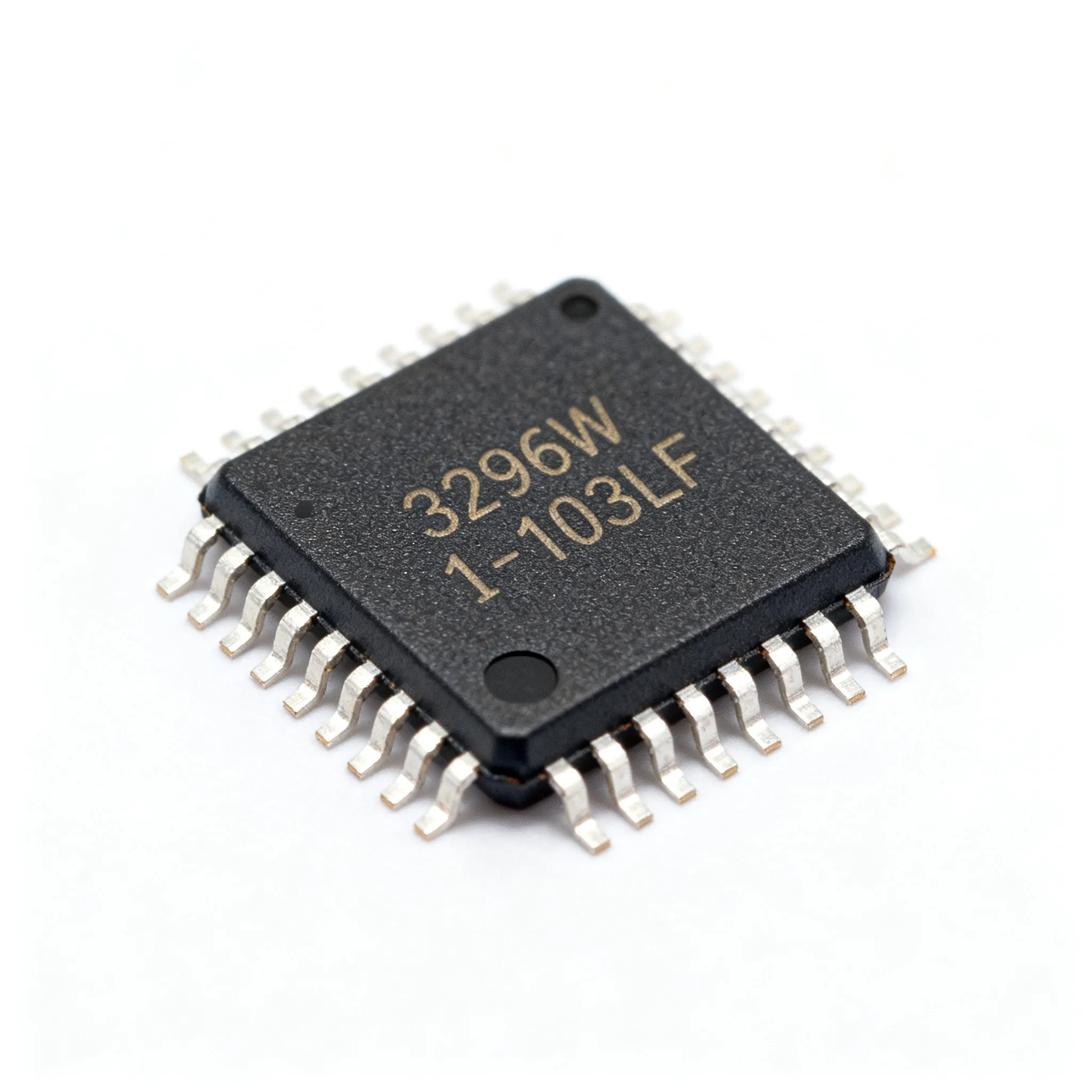
Why Trimpot Buyers Are Suddenly on High Alert for EOL Notices
If you've been sourcing through-hole trimmer potentiometers for industrial controls, power supplies, or instrumentation over the past eighteen months, you've probably noticed a shift in tone. Procurement teams that once treated the Bourns 3296 series as a "set and forget" BOM line item are now running lifecycle audits twice a year. The reason isn't specific to Bourns—it's systemic. In 2025, a record 621,909 electronic components were discontinued or declared obsolete, roughly one-third more than in 2023, according to lifecycle intelligence firm Z2Data (Dasenic EOL analysis). Even more sobering: 52% of those discontinuations—323,286 individual components—caught buyers without adequate buffer stock or qualified alternates.
The 3296W-1-103LF sits squarely in the crosshairs of this trend, not because Bourns has signaled an imminent EOL, but because mature through-hole trimmers occupy an awkward position in the component lifecycle curve. Demand remains surprisingly steady from industrial, medical, and test-equipment sectors where through-hole assembly persists, yet global production capacity for leaded passive components continues to consolidate. When a part occupies the "mature but commercially active" zone for decades, buyers can become complacent—and that complacency is precisely what the 2025 EOL surge punishes.
Tip: The most dangerous lifecycle assumption you can make about any mature trimmer is that "no news is good news." In practice, the absence of a formal EOL notice often means the part hasn't been reviewed recently—not that it's guaranteed for another five years. Progressive procurement organizations now model their lifecycle monitoring on frameworks like Rockwell Automation's product lifecycle portal (Rockwell lifecycle status tool), which provides clear stage definitions (Active, Active Mature, End of Life, Discontinued) and recommended migration timelines. Even if your organization doesn't use Rockwell equipment, the methodology—proactive stage tracking, documented transition windows, and gated approval for mature parts in new designs—translates directly to passive component management.
Decoding the 3296W-1-103LF Lifecycle: Datasheet Clues, MSL Ratings, and Official Signals
Before you can assess obsolescence risk for the 3296W-1-103LF, you need to understand what the part's documentation tells you—and, more importantly, what it doesn't. The available datasheets from Bourns (LCSC mirror, ciiva archive, All About Circuits) paint a picture of a robust, industrial-grade component: 25-turn cermet element, sealed construction rated for wave soldering and board wash processes, five terminal style variants within the 3296 family, and a temperature coefficient of ±100 ppm/°C. These are the specs of a workhorse, not a niche part circling the drain.
One specification that deserves particular attention from a lifecycle perspective is the MSL-1 moisture sensitivity rating (PNEDA product detail). MSL-1 means the 3296W-1-103LF requires no special dry-pack storage, no pre-reflow bake-out, and no floor-life clock management. For procurement, this translates to lower carrying costs and fewer shelf-life headaches—both factors that extend the practical service window of existing inventory and reduce pressure to migrate away from the part prematurely. But MSL-1 is a storage and handling classification, not a lifecycle guarantee. It tells you the part tolerates standard reflow assembly environments; it says nothing about whether Bourns' foundry partners will continue allocating cermet deposition capacity to this specific SKU.
What seasoned buyers also track are the signals that fall between formal EOL notices: PCN (Product Change Notification) frequency, PDN (Product Discontinuance Notice) patterns across the broader 3296 family, and shifts in distributor stock depth—particularly at authorized channels like TTI (TTI part detail). When a franchise distributor begins restricting access to part detail pages behind account logins, it sometimes indicates allocation-sensitive supply rather than a publicly available commodity. This doesn't signal EOL, but it does suggest you should verify allocation-backed lead time through RFQ rather than assuming open-market availability.
The core electrical and mechanical parameters that define the 3296W-1-103LF are well-documented and stable:
| Parameter | Value | Unit / Notes |
|---|---|---|
| Resistance | 10 | kΩ (nominal) |
| Tolerance | ±10 | % |
| Power Rating (70°C) | 0.5 | W |
| Temperature Coefficient | ±100 | ppm/°C |
| Adjustment Turns (Nominal) | 25 | Turns |
| Element Material | Cermet | — |
| Terminal Style | W (In-line, top adjust) | Through-hole, 3-pin |
| Sealing | Fully sealed | Board wash compatible |
| Moisture Sensitivity Level | MSL-1 | Unlimited floor life |
| Operating Temperature Range | -55 to +150 (derated above 70°C) | °C |
None of these parameters raise lifecycle red flags by themselves—the cermet formulation is mature and well-characterized, the 25-turn mechanism is proven across billions of Bourns trimmers shipped over three decades, and the sealed housing design has not changed materially in years. However, the very stability that makes the 3296W-1-103LF attractive also creates a procurement blind spot: when a part's datasheet hasn't been revised in years, there may be no obvious trigger for a lifecycle review. The Luminovo obsolescence management guide (Luminovo lifecycle methodology) recommends treating any component that hasn't received a datasheet revision or PCN in 24+ months as a candidate for proactive lifecycle verification—not because a revision is inherently good, but because silence can mask supply chain changes happening upstream at the raw material and foundry level.
3296W-1-103LF vs. 3296X, 3296Y, and Cross-Distributor Availability
When the W-style terminal configuration on the 3296W-1-103LF faces allocation constraints—or when your assembly house flags extended factory lead times—the broader Bourns 3296 family provides potential fallback positions. But "potential" is the operative word. The 3296 series spans five terminal styles (P, W, X, Y, Z), all sharing the same 10 kΩ resistance value when specified with the "-1-103LF" suffix, yet differing in adjust screw orientation and pin arrangement (Mouser product detail). These mechanical differences are not cosmetic—they determine whether the part physically fits your PCB footprint and whether your production technicians can access the adjustment screw after board assembly.
The most instructive comparison is between the 3296W-1-103LF (in-line, top-adjust) and the 3296X-1-103LF (side-adjust). According to the Utmel comparison tool (Utmel: 3296X-1-103LF vs 3296W-1-103LF), the two variants share identical electrical specifications—resistance, tolerance, power rating, tempco, and MSL—but differ fundamentally in mechanical envelope. The W-style positions the adjustment screw perpendicular to the PCB plane, facing upward; the X-style orients it parallel to the board, facing laterally. If your enclosure has clearance only for top-down tweaking, the X-style becomes a mechanical non-starter regardless of electrical compatibility.
Beyond the W/X comparison, the Y and Z terminal styles introduce further mechanical variation while maintaining electrical equivalence. Here is how the four principal alternatives stack up against the 3296W-1-103LF in procurement and engineering terms:
| Comparison Metric | 3296W-1-103LF (Reference) | 3296X-1-103LF (Alternative) | 3296Y-1-103LF / 3296Z-1-103LF (Alternatives) | Selection Criteria & Failure Boundary |
|---|---|---|---|---|
| Adjust Screw Orientation | Top-adjust, in-line with pins | Side-adjust, perpendicular to pin axis | Top-adjust (Y/Z), pin arrangement differs | Verify enclosure clearance; side-adjust may be inaccessible after chassis integration |
| Pin Footprint | In-line 3-pin, 2.54 mm pitch | In-line 3-pin, 2.54 mm pitch; screw access from side | Y: staggered pin layout; Z: alternate in-line spacing | Confirm pad layout match with Bourns mechanical drawing; prototype before committing |
| Electrical Specs | 10 kΩ ±10%, 0.5 W, ±100 ppm/°C | Identical electrical specs | Identical electrical specs | Electrically interchangeable within published tolerances |
| Sealing / Wash Compatibility | Fully sealed, board wash rated | Fully sealed, board wash rated | Fully sealed, board wash rated | No process change required for any 3296 variant in wave solder or wash |
| MSL Rating | MSL-1 | MSL-1 | MSL-1 | All variants share unlimited floor life; no bake-out needed |
| Distributor Depth (Observed) | Broadest distribution; 14+ sources on Octopart | Widely stocked; typically 8–12 sources | More limited; verify allocation with franchised distributors | Use Octopart aggregation to surface real-time depth; lower source count = higher allocation risk |
Distributor landscape data from Octopart (Octopart: 3296W-1-103LF) aggregates pricing and availability across 14 distributors for the W-style variant, which is the broadest commercial footprint within the 3296 series. Mouser (Mouser direct) maintains direct stock and provides the 3296 family overview with terminal style descriptions, while PNEDA (PNEDA global channel view) surfaces international distribution reach. When cross-referencing these sources, pay attention to the granularity of inventory data: if multiple distributors show "factory stock" or "call for availability" rather than click-to-buy quantities, that's a signal to verify allocation-backed lead time with the supplier rather than relying on open-market assumptions.
Key Takeaway: The 3296P, W, X, Y, and Z terminal styles form a family of electrically identical trimmers differentiated exclusively by mechanical configuration. This is good news for buyers facing allocation on one style—provided your PCB layout and enclosure design can accommodate the alternative. The bad news is that mechanical fit is binary: if the screw orientation or pin arrangement doesn't match, even a perfect electrical substitute is useless without a board respin. Always verify footprint compatibility against Bourns' mechanical drawings before issuing a PO for an alternative terminal style.
Your 5-Step Obsolescence Risk Checklist for the 3296W-1-103LF
The checklist below is designed for procurement and engineering teams managing the 3296W-1-103LF in active production BOMs. Each step addresses a specific failure mode we've observed in organizations that treat mature trimmers as zero-risk commodities. This isn't a one-and-done exercise—integrate these checks into your quarterly BOM scrubbing cadence, and escalate any red flags to your component engineering review board.
- Check official lifecycle status through Bourns' product page and authorized distribution. Start at the Bourns website for any PCN, PDN, or "Not Recommended for New Design" flags. Cross-reference with a franchised distributor like TTI (TTI part detail portal), whose part detail pages typically reflect the manufacturer's current lifecycle classification. If access is gated behind an account login, request lifecycle status confirmation through your assigned account representative—don't assume active status from silence.
- Monitor PCN and PDN feeds—don't wait for an email from your CM. Your contract manufacturer may or may not forward Bourns PCNs promptly, and some PCNs affect only specific date codes or lot codes that may not flag in automated systems. Implement a structured monitoring approach using a lifecycle management platform (the Luminovo methodology (Luminovo obsolescence guide) provides a practical framework). At minimum, subscribe to Bourns' PCN distribution list and check third-party databases such as SiliconExpert or IHS Markit through your EMS partner if you lack direct subscription access.
- Survey real-time distributor stock across aggregator platforms. Visit Octopart (Octopart aggregation for 3296W-1-103LF), Mouser (Mouser stock page), and PNEDA (PNEDA global inventory) in a single session. Look for thinning inventory depth, increasing prevalence of "factory stock" notes, or extended lead-time indicators. If three or more major distributors show constrained availability simultaneously, treat it as a supply risk signal and escalate to your sourcing team.
- Qualify alternative terminal styles in prototype—before you need them. The 3296X-1-103LF and 3296Y-1-103LF are the two most common alternatives to the W-style. Reference the Utmel mechanical comparison (3296X vs 3296W detailed comparison) and Bourns' mechanical datasheets for exact footprint and adjust-orientation differences. Order small prototype quantities, verify mechanical fit in your enclosure, and document any assembly process changes (e.g., side-access tooling for X-style adjustment). Having a pre-qualified alternate shaves weeks off your response time if the W-style goes on allocation.
- Plan for last-time buys if risk signals converge. If the Dasenic EOL surge data (2025 component discontinuation statistics) and Rockwell's lifecycle model (Rockwell lifecycle stage definitions) are any guide, mature parts with stable but non-growing demand can transition from "active" to "last-time-buy" with surprisingly short notice windows—sometimes 90 days or less. Calculate your remaining production forecast for any SKU dependent on the 3296W-1-103LF, add buffer for qualification cycles on alternates, and secure LTB inventory before the window closes. Treat this as insurance, not panic-buying.
| Risk Signal | What You Observe | Recommended Action | Escalation Trigger |
|---|---|---|---|
| Distributor Inventory Thinning | 3+ major distributors shift from "in stock" to "factory stock" or "call" | Initiate RFQ with franchised distributor; verify allocation status | Escalate to sourcing manager if lead-time confirmation exceeds 8 weeks |
| PCN/PDN Activity in 3296 Family | Any Bourns PCN referencing 3296 series, even for different terminal styles | Review PCN scope; determine if W-style is downstream-affected | If PDN issued for any 3296 variant, initiate alternate qualification immediately |
| Datasheet Staleness | No datasheet revision or PCN in 24+ months | Request lifecycle status confirmation from Bourns via authorized distributor | Treat as "verify now" rather than "assume active"—silence is not confirmation |
| Price Anomalies at Distribution | Spot prices diverge >15% across major distributors for same volume break | Cross-reference with Octopart aggregation; identify outlier | Investigate whether premium pricing signals constrained allocation or gray-market risk |
This risk-assessment table gives you a structured way to triage signals without overreacting. A single distributor showing "factory stock" is routine. Three simultaneously, combined with price divergence and no recent PCN activity, is a pattern worth escalating. The key discipline is documenting your observations so that procurement decisions are driven by evidence, not anxiety.
3296W-1-103LF Sourcing FAQ: What Engineers and Buyers Need to Know Right Now
The following questions reflect the most frequent inquiries we receive from engineering and procurement professionals managing the 3296W-1-103LF in production environments. Answers are grounded in currently available manufacturer documentation, distributor data, and industry lifecycle intelligence—not speculation.
Q: Is the Bourns 3296W-1-103LF currently at risk of being discontinued?
As of the latest available product information, Bourns has not issued an EOL or PDN notice for the 3296W-1-103LF. However, context matters: 2025 saw a record 621,909 component discontinuations across the industry (Dasenic 2025 EOL data), and mature through-hole trimmers are not immune to foundry consolidation trends. The prudent approach is consistent lifecycle monitoring—check Bourns' product page and authorized distributor flags at least quarterly, and more frequently if your annual consumption exceeds 5,000 units. The absence of a discontinuance notice today does not guarantee availability in 18 months.
Q: What are the exact mechanical differences between 3296W and 3296X that could prevent a drop-in replacement?
The W-style terminal on the 3296W-1-103LF positions the adjustment screw for top access, perpendicular to the PCB surface. The X-style (3296X-1-103LF) orients the screw for side access, parallel to the board plane. This single difference cascades into three practical constraints: (1) your PCB footprint may place the side-adjust screw against an adjacent component or enclosure wall, blocking access; (2) your production calibration fixture may be tooled exclusively for top-down adjustment; and (3) the overall height profile changes—the W-style is taller due to the vertically oriented screw mechanism. Reference the Utmel comparison (detailed mechanical comparison) and the Bourns datasheet mechanical drawings before assuming interchangeability. Electrically, the two parts are identical; mechanically, they are not.
Q: Which authorized distributors are currently carrying the 3296W-1-103LF?
Major franchised and catalog distribution channels for the 3296W-1-103LF include Mouser (Mouser listing), TTI (TTI part detail), and PNEDA's global channel (PNEDA product page). Octopart's aggregation (Octopart: 14 distributors) provides the broadest cross-section of availability, spanning both franchised and independent channels. Stock levels fluctuate, sometimes significantly between weekly refreshes. Cross-reference at least three sources before drawing conclusions about market depth. If you require traceability for regulated industries (medical, aerospace, ATEX), confirm that the distributor provides full lot-code traceability back to Bourns—not all independent channels maintain this documentation chain.
Q: How can I verify lifecycle status if I lack direct access to Bourns' customer portal?
Several paths exist. First, use publicly accessible lifecycle search models—Rockwell Automation's lifecycle portal (Rockwell lifecycle search) demonstrates the methodology even though it covers Rockwell's own product lines. Second, apply the framework from the Luminovo obsolescence management guide (Luminovo guide) to structure your own tracking. Third, leverage your EMS partner—most contract manufacturers maintain subscriptions to SiliconExpert, IHS Markit, or similar component databases that include lifecycle status fields for Bourns parts. Finally, you can request lifecycle confirmation directly from your franchised distributor's FAE or product manager; this request is routine and should not require special NDA arrangements for a commodity trimmer.
Q: Can I substitute 3296Y or 3296Z without a board change?
The Y and Z terminal styles provide top-adjust variants within the 3296 series, which at first glance appears to make them closer drop-in candidates than the side-adjust X-style. However, the pin arrangements are not identical: the Y-style uses a staggered pin layout that differs from the W-style's in-line configuration, and the Z-style introduces subtle offset variations. Before ordering either as an alternate for the 3296W-1-103LF, verify footprint compatibility against Bourns' official mechanical specifications—not against a third-party summary. Prototype a small batch (10–25 units) on your production PCB and confirm mechanical fit, adjust-screw accessibility, and board-wash integrity. A day of prototyping now avoids a line-down situation later.
Q: What lead-time red flags should I watch for on this part?
Three signals warrant attention. First, if multiple distributor listings shift from showing numeric stock quantities to abstract notes like "factory stock" or "contact us," that often indicates the part is on allocation and inventory is being managed manually rather than through automated replenishment. Second, if the Octopart aggregation (Octopart: 3296W-1-103LF) shows fewer than half the usual distributors carrying active stock, the supply base may be consolidating—a precursor to tighter allocation. Third, verify allocation-backed lead time through your franchised distributor's formal RFQ process. A lead-time confirmation from the supplier's system carries more weight than a web-listing estimate. If confirmed factory lead times stretch past your production planning horizon plus buffer, initiate alternate qualification and last-time-buy discussions in parallel.
References & Further Reading
- Obsolete Components in 2026: EOL Notices & Shortage Data — Dasenic — Industry-wide discontinuation statistics and procurement guidance.
- Product Lifecycle Status — Rockwell Automation — Lifecycle stage definitions and proactive migration methodology.
- 3296W-1-103LF Datasheet — LCSC Electronics — Primary Bourns datasheet for the 3296W-1-103LF.
- 3296W-1-103LF Datasheet — ciiva — Alternate datasheet source with mechanical drawings.
- 3296W-1-103LF Datasheet — All About Circuits — Datasheet access and technical specifications.
- 3296X-1-103LF vs 3296W-1-103LF Comparison — Utmel — Detailed mechanical and electrical comparison between terminal styles.
- 3296W-1-103LF Availability — Octopart — Multi-distributor aggregation for pricing and stock across 14 sources.
- 3296W-1-103LF — Mouser Electronics — Authorized distributor listing with 3296 series family overview.
- 3296W-1-103LF — PNEDA Technology — Global distribution view with MSL-1 and lifecycle information.
- 3296W-1-103LF Part Detail — TTI, Inc. — Franchised distributor portal for lifecycle and availability verification.
- Component Obsolescence: Lifecycle & EOL Management Guide — Luminovo — Practical framework for lifecycle monitoring and risk assessment.
Related Articles
 Blog
Test Your Lawn Mower Starter with a Multimeter
Learn how to test a lawn mower starter with a multimeter: check battery voltage, test the solenoid, and measure voltage and continuity at the starter.
 Blog
Exhaust Resonator vs Muffler Understanding the Key Differences
An exhaust resonator tunes specific sound frequencies to cancel drone and rasp, while a muffler reduces overall volume. Learn how each shapes your car's sound.
 Blog
Master How to Add Capacitors in Series with Ease
To add capacitors in series, connect them end to end. Total capacitance drops below the smallest; voltage divides inversely. Use balancing resistors for safety.
 Blog
Power Sequencer IC or Discrete Sequencing? Critical RFQ Verification Steps for OEM Power Rails
Buyer-side specification, inspection, and RFQ checks on this technical topic. Not a hobby explainer. Request a quote on IC-Online.
 Blog
GRM188R61C225KE15D Datasheet, Pinout, and Sourcing Checks for OEM Buyers
GRM188R61C225KE15D pinout, package, and datasheet limits buyers actually check — plus lot inspection notes. Request a quote on IC-Online; no invented stock...
 Blog
What Arduino Simulators Do for Electronic Functionality
Arduino simulators emulate boards and components to test code and circuits virtually. They replicate pin states, signals, and protocols for faster debugging.