
Counterfeit IC Risk Mitigation for Procurement Teams: How to Specify, Inspect, and RFQ
Buyer-side specification, inspection, and RFQ checks on this technical topic. Not a hobby explainer. Request a quote on IC-Online.
The Grey-Market Wave That’s Turning Every RFQ into a Counterfeit Risk Test
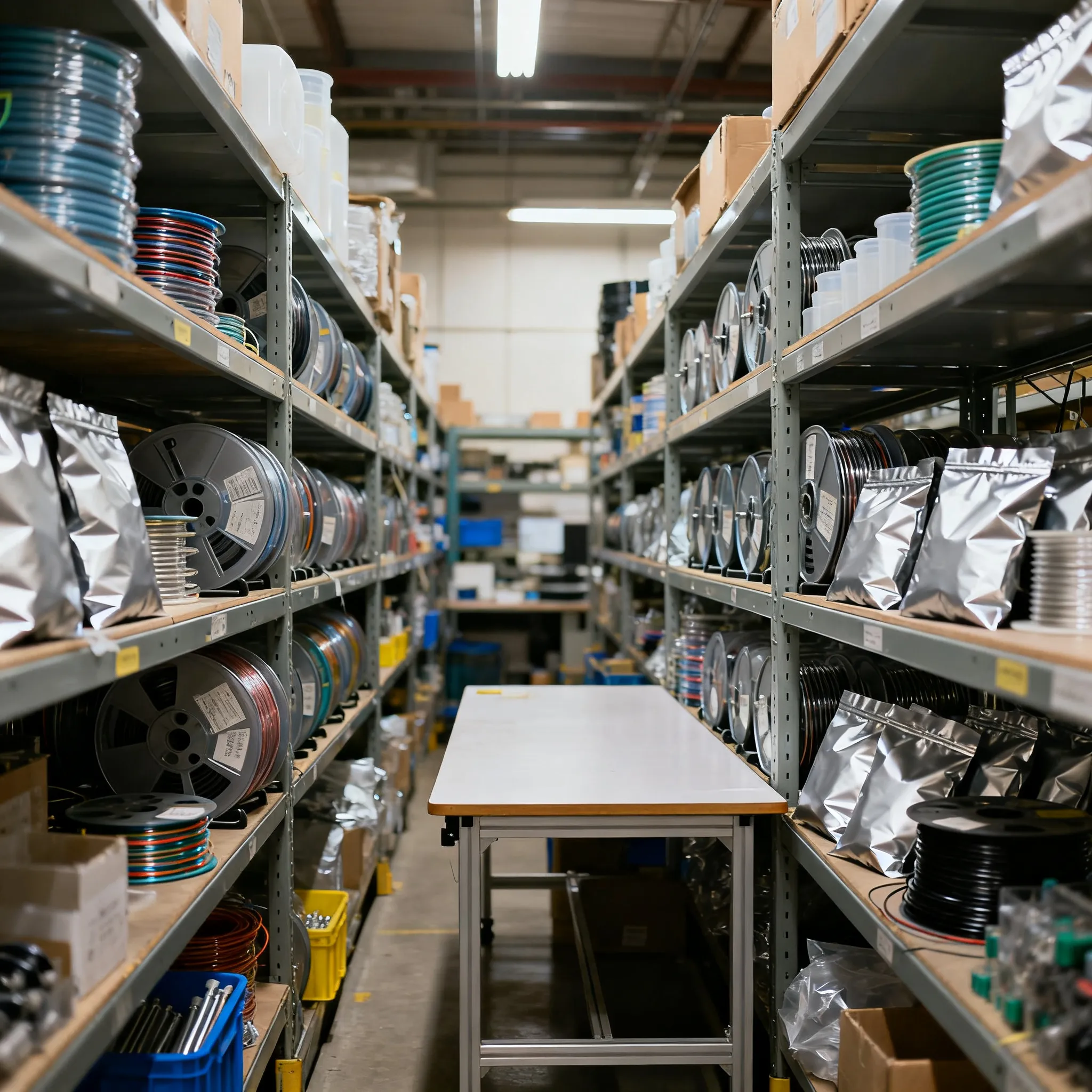
Procurement teams are not fighting a single counterfeiter; they are fighting a distributed liquidation cycle. As 2026 began, hardware startups, DIY engineers, and procurement teams faced an influx of grey-market counterfeits as brokers and unauthorized traders liquidated hoarded stockpiles. Those parts often carry convincing paperwork, clean labels, and competitive quotes. What they lack is a traceable path back to the original manufacturer.
The operational trigger is familiar: when a critical IC becomes hard to find, purchasing teams feel pressure to accept available stock from less familiar sources. Shortages increase risk because they push purchasing teams away from authorized channels and toward available stock with weaker traceability. That is precisely when re-marked, salvaged, or out-of-spec material enters the BOM.
The commercial trap is equally serious. A lower purchase price can become extremely expensive if the components are defective or counterfeit. Total-cost evaluation must include rework, field failures, safety investigations, and production downtime. If a quote is unusually low and the lead time is unusually short for the same part, treat it as a risk signal, not a negotiation win.
What Changed in the RFQ Environment
| Driver | Mechanism | Procurement Impact |
|---|---|---|
| Broker stock liquidation | Unauthorized traders dispose of surplus or hoarded inventory through grey-market channels | Quotes appear legitimate but lack a franchised chain of custody; require origin documentation |
| Allocation-sensitive demand | Buyers under production pressure widen sourcing beyond authorized distribution | Traceability gaps appear at the exact moment when counterfeit risk is highest |
| Low-price anchoring | Unit-price comparison hides the cost of failure | Buyers accept marginal stock because the quote beats franchised pricing by a wide margin |
| Higher-precision re-marking and recycling | Blacktopping, re-marking, reballing, and salvage recovery can pass simple visual checks | Visual-only inspection creates false confidence; physical analysis becomes necessary |
| Plastic-encapsulated microcircuit volume | Plastic packages are the largest counterfeit risk category | AS6081/AS6171-style controls should be required for high-reliability ICs sourced outside franchised channels |
The takeaway is not that every non-franchised quote is counterfeit. It is that the RFQ must carry the burden of proof. If the sourcing path cannot be documented, the buyer should require stronger inspection and traceability before the parts enter production.
Inside a Counterfeit Inspection Lab: The Testing Hierarchy That Tells You What to Require
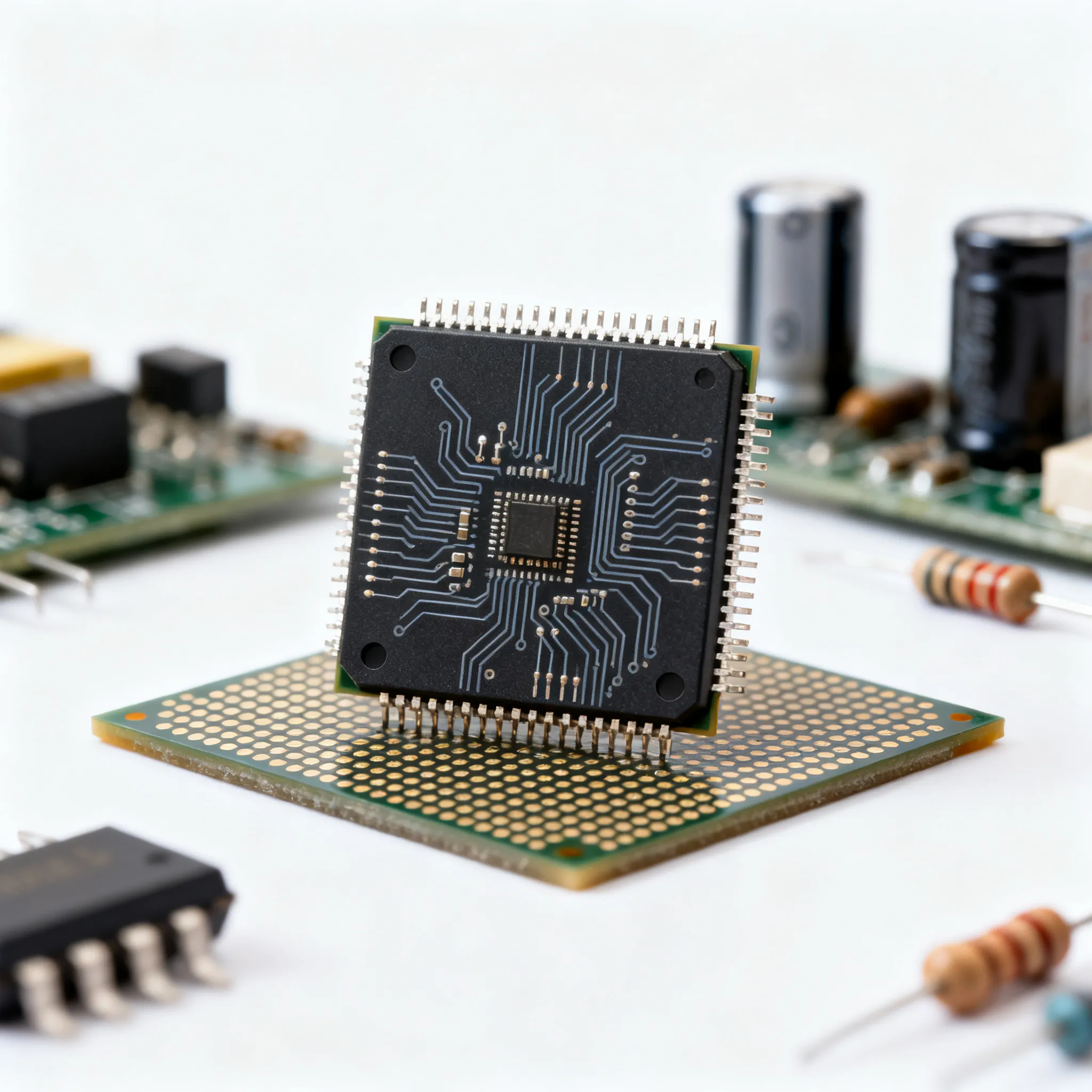
The most common compliance error is to write “counterfeit inspection required” into an RFQ without specifying the method. Do not treat “counterfeit” as one generic defect. Ask what the false claim is: re-marked? Salvaged? Out-of-spec? The answer determines whether visual inspection, solderability checks, X-ray, XRF, electrical comparison, or destructive analysis is appropriate.
A practical lab sequence moves from non-destructive screening to deeper physical analysis. Micross inspects components and packaging using the IDEA-1010 methodology and checklist to identify non-conformances. That baseline visual screen is useful, but it cannot close the case alone.
- External visual / IDEA-1010: catches gross marking, pin, package, and date-code anomalies; blind to high-precision re-marking.
- X-ray: catches missing die, inconsistent wire bonds, die attach voids, or incorrect die size; does not verify silicon identity.
- XRF: verifies lead finish and material composition; detects non-conforming plating; cannot prove die authenticity.
- Electrical comparison: checks room-temperature bench performance; may pass parts that degrade with thermal cycling and stress.
- Acoustic microscopy / decapsulation: verifies die markings and construction; destructive or lot-sacrificial and should be reserved for high-risk lots.
Inspection Methods, Blind Spots, and RFQ Triggers
| Detection Method | What It Catches | Blind Spots | When to Require |
|---|---|---|---|
| IDEA-1010 external visual | Package damage, re-marking evidence, pin condition, label and logotype anomalies | High-precision re-marking; recycled parts with new plating | Every lot from non-franchised sources; first gate before shipment |
| X-ray | Missing or inconsistent die, wire bond defects, die attach voids | Functional silicon quality; counterfeit die with correct form factor | When visual passes but traceability is weak; high-reliability lots |
| XRF | Lead finish composition, RoHS and plating conformity, suspected re-plating | Internal die authenticity; latent reliability | When finish compliance or re-marking is suspected; before soldering high-value assemblies |
| Electrical comparison at room temperature | Gross functional mismatch against datasheet limits | Latent degradation, thermal cycling, end-of-life drift | All suspect lots, but not sufficient as the only method |
| Decapsulation / acoustic microscopy | Die markings, bond wire integrity, internal construction, resurfacing evidence | Destructive, requires sampling, higher cost and longer inspection time | When AS6171-level confidence is required or earlier methods cannot resolve suspicion |
The key procurement insight is that each method answers a different question. A visual certificate does not prove silicon authenticity. An X-ray does not prove reliability. A room-temperature electrical test does not prove the part will survive thermal cycling. The RFQ should therefore name the specific methods appropriate to the risk profile rather than accepting a generic “inspected” statement.
How to Write an RFQ That Rejects Counterfeits Before the Distributor Ships
The goal is not to inspect your way out of a bad supply base; it is to make the RFQ filter bad actors before the parts arrive. The strongest RFQs treat traceability and inspection evidence as line items, not assumptions.
Core RFQ clauses for critical ICs:
- Authorized sourcing unless explicitly approved: Require franchised-distribution evidence for the exact part number. For independent distribution, require an audited AS6081-based process or equivalent written justification.
- Lot-level traceability: Require original manufacturer, part number, date/lot code, and quantity on the certificate of conformance. For high-risk parts, require a single date/lot code; any mixed-lot quote must include documented justification and separate inspection evidence per lot.
- Inspection evidence: For non-franchised plastic-encapsulated microcircuits, require AS6171/IDEA-1010-based inspection reports with photos or raw data tied to the specific lot and generated within the last 90 days.
- Economic disincentive: State that if counterfeit or nonconforming parts are discovered, the supplier is responsible for rework, recall, third-party test, and replacement costs.
- Quote realism: Instruct buyers to flag unusually low prices or unusually short lead times as risk signals and require written confirmation that parts do not come from opportunistic broker stock.
Procurement teams should standardize traceability paperwork rather than accept a certificate that merely restates the part number. The paperwork must create an auditable chain of custody from original manufacturer to final ship-to address.
Training should also explain how to identify counterfeit electronic components and when visual concerns require additional inspection or laboratory-level authentication. An unusually low price is not automatically counterfeit, but it changes the burden of proof. If in-house laboratory capability is not available, require distributors to show in-house or partnered lab capability and the ability to issue lot-referenced reports.
RFQ Controls and Their Trade-offs
| Action | When to Use | Trade-off |
|---|---|---|
| Require authorized-only sourcing | Always for safety-critical, high-reliability, or long-life products | Narrows the supplier base and may require allocation negotiation |
| Require AS6171/IDEA-1010 inspection report | Independent distributor, plastic-encapsulated IC, high-reliability application | Adds inspection cost and certification time; confirm current capability with supplier |
| Require lot-specific certificate of conformance with chain-of-custody evidence | Any quote outside franchised distribution | More document review effort before purchase order release |
| Add counterfeit penalty and replacement obligation clauses | Single-source or schedule-critical parts where grey-market substitution is tempting | Suppliers may price risk into the quote; requires legal review |
| Require visual and X-ray for every lot, full AS6171 for high-risk lots | Mixed-BOM procurement with varied traceability levels | Higher variable inspection spend; lot-sacrificial methods may consume samples |
The RFQ should make compliance cheap to demonstrate honestly and expensive to fake. That means asking for documents that reference the specific lot, not generic quality manuals. It also means making the supplier understand that a counterfeit event will not be absorbed by the buyer.
AS6081, AS6171, and the Standards That Redefine Due Diligence for IC Purchasing
The acronym soup is manageable if procurement remembers the division of labor. AS6081 is a process standard for distributors. AS6171 is a test methodology standard for laboratories. IDEA-1010 is a visual inspection methodology. DFARS clauses impose contracting obligations. Together they turn a supplier’s paperwork promise into auditable process control.
AS6081 — Counterfeit Electronic Parts; Avoidance, Detection, Mitigation, and Disposition – Plastic Encapsulated Microcircuits is especially relevant because plastic-encapsulated parts are the largest counterfeit risk category. Procurement teams should ask independent distributors how their AS6081 system handles supplier qualification, lot segregation, inspection, and reporting.
Defense Logistics Agency anti-counterfeit efforts frame counterfeit risk mitigation and parts standardization as management-level responsibilities, not isolated incoming-inspection tasks. That means procurement should not delegate these decisions to a single inspector. The requirements belong in the part selection policy and the RFQ itself.
When independent laboratory testing is required, AS6171 provides the multi-stage test flow from external visual to die inspection. Micross’s counterfeit mitigation services show how IDEA-1010 methodology and laboratory capabilities support AS6171-style reporting. Ask whether reports are pass/fail stamps or include images and raw data. A pass/fail stamp alone is weak evidence for a high-risk plastic-encapsulated microcircuit.
FAQs: The Tough Questions Procurement Engineers Ask After a Counterfeit Scare
What immediate steps should we take when a visual inspection flags a suspect IC?
- Quarantine the entire lot immediately and stop production use.
- Document the non-conformance with high-resolution images and lot label photos.
- Notify your internal ERM or quality system and report the suspect part to industry databases such as ERAI or GIDEP where applicable.
- Preserve evidence; do not return the parts to the supplier without chain-of-custody control.
Depending on the source of material, organizations may be obligated to report to GIDEP, ERAI, and the Anti-Counterfeiting forum. The shipment is the evidence, so avoid repacking, mixing, or returning it until the investigation is complete.
How can we tell if a ‘low price’ from an apparently legitimate distributor is actually too low to be true?
Benchmark the quote against franchised distribution pricing for the same date code and package. As a procurement guardrail, an unusually large deviation warrants investigation. Factor in the total cost of a counterfeit event—rework, field failures, and reputational damage—instead of evaluating purchase price in isolation. A lower purchase price can become extremely expensive if the components are defective or counterfeit. Demand written confirmation that the parts come from authorized channels and not from opportunistic broker stock.
When should we insist on AS6171-level inspection rather than basic visual screening?
Specify full AS6171 testing when the IC is plastic-encapsulated, destined for a high-reliability or safety-critical application, or sourced from an independent distributor without a long-standing vendor rating. These parts are the most counterfeited category. AS6081/AS6171-style requirements are particularly important for plastic-encapsulated microcircuits. AS6171’s multi-stage protocol—external visual, X-ray, acoustic microscopy, and decapsulation—catches re-marked and salvaged die that visual checks miss. Laboratory-based AS6171 reporting should include images or raw data tied to the lot, not just a pass/fail stamp.
What paperwork absolutely must be included in the RFQ to prove traceability?
Require a certificate of conformance that lists original manufacturer, part number, date/lot code, and quantity, along with proof of authorized distribution chain—franchise certificates or direct-purchase invoices. Demand that test reports from in-house or third-party labs reference the specific lot and include images or test raw data, not just a pass/fail stamp. Strong traceability paperwork converts a suspect shipment into an auditable chain of custody.
Can a counterfeit IC pass initial electrical tests but still cause field failures later?
Yes. Re-marked, under-specified, or recycled components can meet datasheet limits at room temperature yet degrade under thermal cycling, biased stress, or end-of-life tolerance drift. Electrical testing alone is insufficient; physical analysis such as X-ray, XRF, and decapsulation is needed to verify die authenticity and bond wire integrity. The false claim may be about reliability lifetime, not initial function.
Should we permanently blacklist a supplier after one counterfeit incident?
Not automatically. Immediate suspension of new orders is prudent while you evaluate root cause and corrective action. If the supplier proactively disclosed the issue, cooperated in the investigation, and implemented auditor-verified process improvements, a probationary reinstatement with heightened inspection requirements may be acceptable. Blanket blacklisting without analysis can shrink the supply base unnecessarily. A repeat offender with no systemic fixes should be removed permanently.
Conclusion: Make the RFQ Do the Inspection Work
Counterfeit IC risk is not solved by one test. It is solved by combining a demanding RFQ structure, method-specific inspection, and standards-backed traceability so suspect lots are rejected before they reach production. The most effective procurement teams do not stop at price comparison; they use the quote itself as a risk screen.
When you have a mixed BOM or a hard-to-find IC that needs allocation-sensitive handling, request a quote or upload your BOM through IC-Online. The RFQ can request authorized-only sourcing, lot-level traceability evidence, and AS6171/IDEA-1010 inspection reporting for high-risk parts. Use the IC-Online RFQ to test these clauses in your next purchasing cycle.
References & Further Reading
- Electronic Component Sourcing Guide: Avoid Counterfeits in 2026 | ElectricalFlux
- Counterfeit Electronic Components Detection Methods and Supply Chain Best Practices | Masline
- How to Prevent Counterfeit Components PCB Assembly Failures | QueenEMS
- The Evolution of the Counterfeit Electronic Parts Threat | SMT Corp
- Procurement Guide: Avoiding Counterfeit Industrial Automation Parts | Chipsgate
- Counterfeit Mitigation Services | Micross
- Counterfeit Risk Mitigation Parts Standardization & Management Committee | DLA
- Counterfeit Parts Guide — DFARS Detection, Prevention & Quality Requirements | GovCon Giants