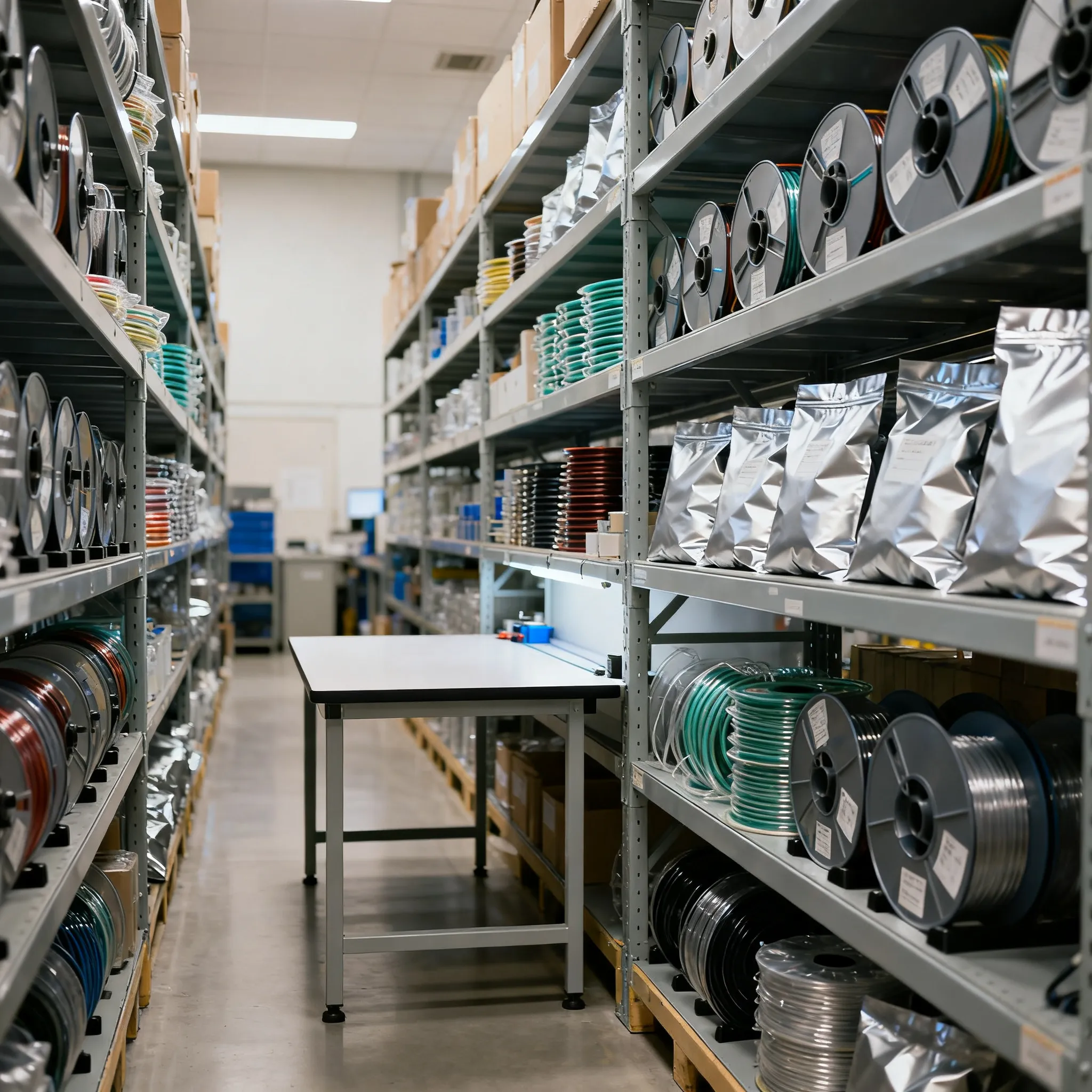

GRM188R71E105KA12D Supply Risk Assessment: What to Ask Before You Buy
What to verify on GRM188R71E105KA12D before you buy: date code, CoC, test evidence, and allocation-backed lead time. Ask these RFQ questions on IC-Online.
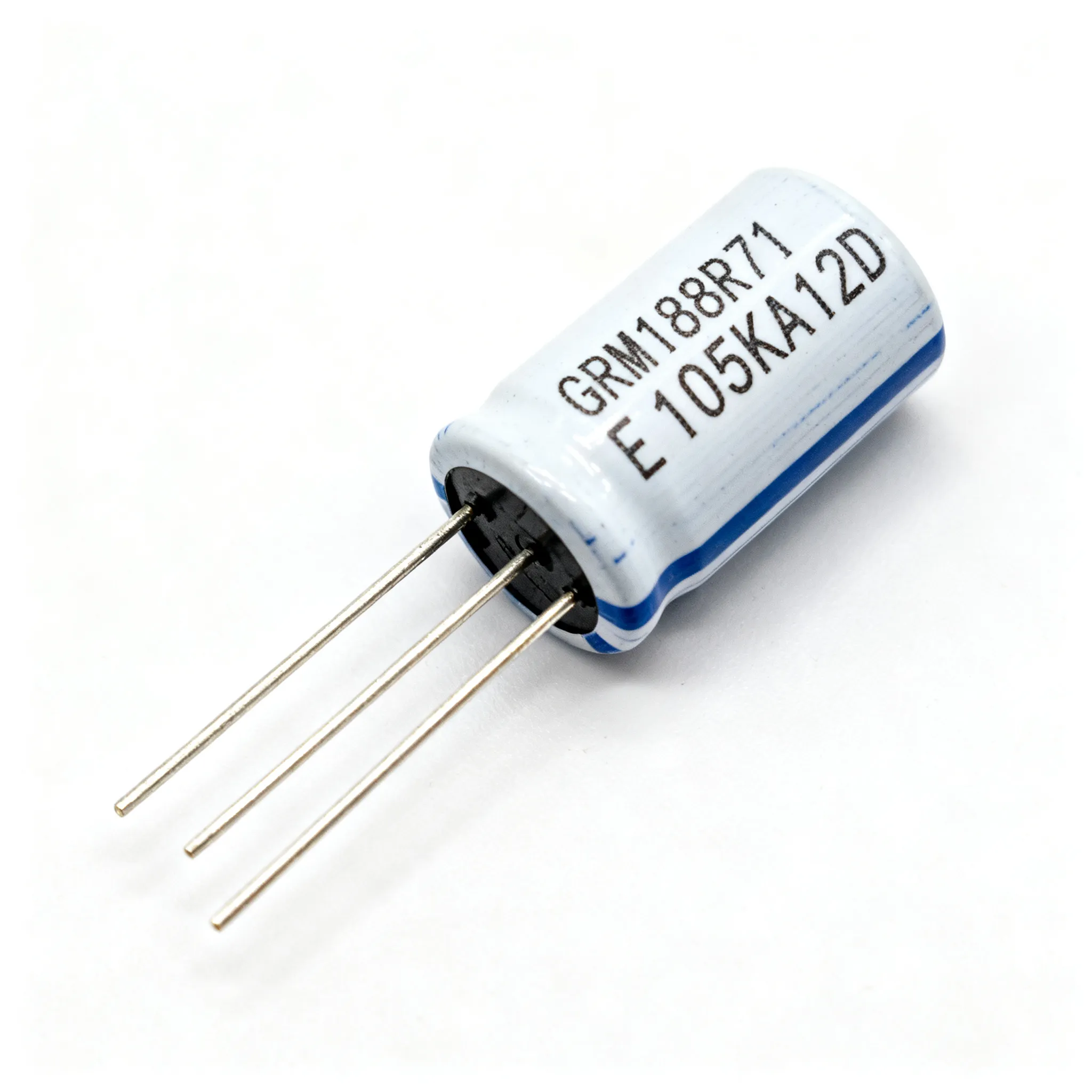
GRM188R71E105KA12D Supply Risk Assessment: What to Ask Before You Buy
Why the GRM188R71E105KA12D Is at the Centre of Today’s MLCC Squeeze
Multi-layer ceramic capacitors are rarely headline news, but anyone managing a bill of materials in the last three years knows that general-purpose X7R MLCCs in 0805 have moved from commodity to allocation-sensitive. The EE Times has tracked the extended factory weeks across passive-component supply chains, and the 1 µF, 25 V, X7R, 0805 footprint sits squarely in the demand hot zone. GRM188R71E105KA12D—Murata’s GRM-series 1 µF capacitor—exemplifies this squeeze because it appears in power-rail decoupling, DC-DC converter filtering, and general timing circuits across consumer, industrial, and automotive-qualified designs.
Several structural factors are at play. Ceramic powder and electrode paste supply has tightened as foundries compete with base-metal-electrode production for high-capacitance parts. The 0805 case size, while mature, shares manufacturing lines with many other high-volume formats, so any shift in demand toward larger or smaller chips affects allocation cycles. When a single design uses dozens of these capacitors—and the assembly line runs thousands of boards—a supply interruption on a part like GRM188R71E105KA12D stops more than just the decoupling network. It halts the entire build.
The point is not to panic about one part number. The point is to treat GRM188R71E105KA12D as a risk lens: its supply dynamics reflect the broader passive-component environment. Engineers and procurement teams who ask the right questions before placing an order protect their assembly line far better than those who assume any 1 µF 0805 cap will do. This article maps out those questions, spec-by-spec, alternative-by-alternative, and checklist-by-checklist.
Decoding the GRM188R71E105KA12D: Key Specs That Define Supply Risk
Risk in a capacitor supply chain rarely comes from a single parameter. It emerges from the interaction of several datasheet boundaries that constrain substitution freedom. The table below captures the essential specifications of GRM188R71E105KA12D drawn directly from Murata’s official documentation and representative measurements. Understanding these numbers is the first step in qualifying any alternative that might appear on an allocation-constrained line down.
| Parameter | Value | Implication for Substitution |
|---|---|---|
| Capacitance (nominal) | 1 µF | Any replacement must match; a drop to 0.47 µF shifts pole frequencies in filters and can degrade PSRR. |
| Dielectric type | X7R (−55 °C to +125 °C, ΔC ≤ ±15%) | Z5U or Y5V alternatives exhibit catastrophic DC-bias losses and narrower temperature windows. Verify the temperature coefficient explicitly. |
| Capacitance tolerance | ±10 % (K) | Tighter tolerances (±5 %) are available but rarely stocked in high volume; looser tolerances (±20 %) may be acceptable in bulk decoupling but not in timing-critical nodes. Confirm circuit margin. |
| Rated voltage | 25 V DC | Derating to 10–15 V operating voltage is typical; a 16 V-rated substitute may be unsafe if the rail exceeds 12 V during transients. Always check maximum working voltage under worst-case conditions. |
| Case size (EIA) | 0805 (2.0 mm × 1.25 mm) | Land pattern geometry must match; even 0805 from different vendors can have slight dimensional variation. Verify solder fillet requirements against IPC-A-610 class criteria. |
| Thickness (max) | 1.25 mm | Thicker parts (up to 1.45 mm) exist in other 0805 series; verify clearance in enclosures and z-height on pick-and-place nozzles. |
| Termination finish | Ni + Sn (100 % matte) | Gold-flashed or Pd/Ag terminations can introduce solder-joint reliability issues if the reflow profile isn't adjusted. Check compatibility with your solder paste. |
| Packaging | 7″ paper/embossed tape (4 mm pitch) | Reel size, orientation, and moisture sensitivity level (MSL 1 per J-STD-020C) affect floor life and feeder setup. A substitute with MSL 2 or 2a requires additional baking procedures. |
Several parameters warrant deeper attention because they directly affect how a part behaves under real operating voltages. X7R dielectrics exhibit a well-known capacitance drop under DC bias: at 25 V applied, a 1 µF 0805 X7R capacitor can lose 30–50 % of its nominal capacitance depending on internal layer count and material formulation. Murata’s detailed characteristics—available in the GRM series datasheet and simulation tools—show that GRM188R71E105KA12D maintains a useful capacitance typically above 0.6 µF at 15 V DC bias at room temperature. An alternative that drops to 0.3 µF at the same bias will not perform the same decoupling function, even if it carries the same “1 µF” label.
Temperature also plays a role. While X7R guarantees ΔC/C ≤ ±15 % across –55 °C to +125 °C, typical behaviour for GRM188R71E105KA12D shows a gradual decrease below +25 °C and a slight increase near 125 °C. This matters in outdoor or engine-compartment applications where ambients swing widely. Relying on a capacitor that barely meets X7R corner limits, or that has not been characterised for ageing, invites intermittent failures that are difficult to trace.
From a handling perspective, incoming inspection should follow the moisture sensitivity guidelines of IPC/JEDEC J-STD-033. Although MLCCs are typically classified as MSL 1, re-reeling or repackaging at non-authorised distributors can introduce moisture. A simple bake and solderability test against IPC-1601 guidelines prevents wetting-related tombstoning on the line.
Alternatives Worth Evaluating for 1µF X7R 0805 25V Capacitors
When allocation on GRM188R71E105KA12D tightens, engineers often look to other major MLCC manufacturers. Three commonly cross-referenced parts are Samsung’s CL21A105KAFNNNE, TDK’s C0805X7R1E105K050BB, and Yageo’s CC0805KRX7R9BB105. None of these is a compatibility must be verified (package, pinout, firmware), but each has characteristics worth evaluating in the context of your design’s voltage, temperature, and assembly constraints.
The table below highlights parameters where differences commonly surface. Use it as a starting point for your own qualification—not as a procurement short-cut.
| Comparison Metric | Murata GRM188R71E105KA12D | Samsung CL21A105KAFNNNE | TDK C0805X7R1E105K050BB | Yageo CC0805KRX7R9BB105 | Verification Note |
|---|---|---|---|---|---|
| Capacitance, Tolerance, Dielectric | 1 µF ±10 %, X7R | 1 µF ±10 %, X7R | 1 µF ±10 %, X7R | 1 µF ±10 %, X7R | Nominal match, but DC bias and ageing curves differ. |
| Rated Voltage | 25 V | 25 V | 25 V | 25 V | Equal rating; check actual derating recommendation from vendor. |
| DC Bias Characteristic (typical at 15 V) | ~0.6–0.7 µF (based on Murata SimSurfing) | ~0.55–0.65 µF (varies by lot) | ~0.6 µF (TDK C-series tends toward higher stability) | ~0.5–0.6 µF (may de-rate more aggressively) | Request bias curves from supplier; perform in-circuit measurement. |
| Thickness (max) | 1.25 mm | 1.25 mm | 1.25 mm | 1.25 mm | Mechanically compatible in most layouts. |
| Termination Finish | Ni + Sn | Ni + Sn | Ni + Sn | Ni + Sn | Verify plated layer thickness and solderability under your profile. |
| Packaging & MSL | Paper/embossed tape, MSL 1 | Paper tape, MSL 1 | Paper tape, MSL 1 | Paper tape, MSL 1 | Reel diameter and feeder compatibility must be checked; same MSL but always bake if package integrity is suspect. |
| Typical Reel Quantity | 4,000 pcs (standard) | 4,000 pcs | 2,000 or 4,000 pcs | 4,000 pcs | MOQ impacts line inventory; confirm with distributor. |
Beyond the table, two factors regularly derail a substitution. The first is land pattern tolerance: while all these parts are 0805, the exact terminal dimensions (end cap width, termination length) can vary by 50–100 µm. If your stencil aperture was optimised for Murata’s terminal geometry, a Samsung or Yageo part may produce a smaller fillet that falls below IPC-A-610 Class 2 acceptance criteria. A quick cross-check with the approved manufacturer listing and a first-article solder joint inspection avoids this trap.
The second is supplier-specific storage and handling. Parts from authorised distributors are traceable and usually carry date codes within two years. Capacitors sourced from open market channels, even if they carry a recognised brand marking, may have been stored in uncontrolled humidity or re-marked. The same EE Times coverage that documents MLCC shortages also warns of an uptick in grey-market infiltration. When evaluating alternatives, insist on full traceability documentation and a certificate of conformance that references the original manufacturer’s lot number.
Pre-Purchase Due Diligence: Questions That Protect Your Assembly Line
Supply risk is not just about whether a part is available today; it’s about the gap between what a supplier promises and what actually arrives at the dock. For GRM188R71E105KA12D—and for any passive component with allocation pressure—a disciplined checklist transforms a reactive purchase into a managed risk. The table below distils the questions that experienced buyers and quality engineers ask before releasing a PO.
| Category | What to Ask | What to Accept / Require |
|---|---|---|
| Lead time & allocation | Is the quoted lead time a confirmed factory date or an estimated allocation? | Require a “shipment-on or before” commitment tied to a specific production batch; allocation-only promises often slip. |
| Minimum order quantity | What is the MOQ, and can you provide a tape-and-reel option that matches our feeder? | If MOQ exceeds your forecast, negotiate a partial release with the distributor or explore authorised mixed-reel programs. |
| Date code & shelf life | What date code will be supplied? Will it be within 24 months of shipment? | Accept parts ≤ 2 years old unless you can validate solderability on older stock; write the date code window into the PO. |
| MSL & packaging | Is the part MSL 1 per J-STD-020, and has the packaging been opened or re-sealed? | Demand factory-sealed reels; if a reel has been cut, ask for a moisture barrier bag with fresh desiccant and an HIC indicator card. |
| Authenticity verification | Can you supply a certificate of conformance with the original manufacturer’s lot number? | Accept only authorised distribution documentation; reject parts accompanied by generic or photocopied certificates. |
| Incoming inspection | Will you support a solderability test and capacitance measurement on a sample before full shipment? | Arrange for 100 pcs sample lot evaluation: measure C and DF at 1 kHz and 100 kHz, verify DC bias curve, and conduct a solder dip test per IPC-A-610 Class criteria. |
| EMS / line compatibility | Does our assembly partner recognise this supplier’s lot as approved? | Share the lot traceability with your EMS and get a written acceptance before the material enters the kitting process. |
A few of these points deserve extra emphasis. The date code window is often overlooked in passive components because capacitors don’t “age” in the same way as semiconductors, but prolonged storage in humid environments can degrade terminations. Requiring date codes within two years and a solderability test report performed within 90 days of shipment is a sensible baseline that many automotive-tier procurement organisations already follow. IPC-A-610 class criteria (Class 2 or 3, depending on your product) provide objective acceptance standards for termination fillet size and wetting, so quoting them in your inspection plan makes pass/fail decisions unambiguous.
The authenticity layer is equally critical. Murata’s own identification guides describe laser-marking formats and lot-code patterns. Incoming inspectors should verify that the part marking matches the current production format; counterfeit MLCCs often use ink marking instead of laser, or show inconsistent font thickness. Even simple capacitance measurements at multiple frequencies can reveal a fake: an authentic X7R part will show a stable C and low DF at 1 kHz, and a slight shift at 100 kHz due to dielectric relaxation. A part that reads bang-on 1.000 µF with zero change across all test conditions is suspicious—real passive components aren’t that perfect.
To turn these checks into a standard operating procedure:
- Build a one-page capacitor qualification form that lists the 12-digit Murata lot number, measured C/DF at 1 kHz and 100 kHz, DC bias at the operating voltage, and visual inspection photos of the termination.
- Record solderability results with a representative reflow profile, checking fillet height against IPC-A-610 figures.
- Maintain a small reference library of known-good capacitors for comparative analysis when new lots arrive.
- If a part fails any test, quarantine the entire shipment and request a corrective action report from the supplier before accepting a replacement lot.
Senior Engineer & Buyer FAQ: Sourcing the GRM188R71E105KA12D in Uncertain Markets
Q: What are the real lead times for GRM188R71E105KA12D right now, and how do they compare with alternative 1µF X7R 0805 capacitors?
Lead times are moving targets, but industry reports from EE Times consistently show that general-purpose X7R MLCCs in 0805 face extended factory weeks, often beyond 16–24 weeks. Some alternative brands may show shorter allocation windows, but verified availability from authorised sources and an honest risk buffer—factory commitment plus transit time, plus customs clearance—should drive the buyer’s decision, not a spreadsheet promise. Always ask the distributor: “Is this lead time backed by a confirmed factory schedule, and what is your on-time delivery rate for this commodity class over the last six months?” The answer tells you more than any number.
Q: How can my team quickly check that the received GRM188R71E105KA12D parts aren’t counterfeit or re-marked scrap?
Beyond visual inspection, measure capacitance and dissipation factor at multiple frequencies using an LCR meter. For GRM188R71E105KA12D, an authentic part will typically measure between 0.9 µF and 1.1 µF at 1 kHz with a dissipation factor below 5 %. More telling is the DC bias characteristic: X7R parts lose capacitance under voltage in a predictable, manufacturer-characterised curve. Counterfeit parts often exhibit flatter or erratic curves because they use cheaper dielectric formulations. Compare laser-marking codes with Murata’s official identification guides, and check termination fillets against IPC-A-610 acceptance criteria: re-soldered or altered devices often show uneven solder coverage or excessive flux residue.
Q: Is there a known risk of lot-to-lot variation in X7R behaviour for this specific Murata part?
Murata’s GRM series is manufactured with tight process controls, but X7R dielectrics inherently show capacitance shift with time (ageing), DC bias, and temperature. Engineers should expect small lot-driven differences—typically within datasheet limits of ±15 % over temperature and <3 % ageing per decade hour. These variations are seldom large enough to disrupt a well-designed decoupling network, but they can matter in precision timing, RC filters, or charge-pump circuits. Designing with sufficient derating margin (e.g., targeting an effective capacitance at least 50 % above the minimum required at worst-case bias and temperature) ensures that minor lot shifts don’t push a circuit into marginal operation.
Q: If I can’t get GRM188R71E105KA12D, what qualification steps should I follow before approving a substitute capacitor?
Start by verifying that the substitute matches dimensions, voltage rating, X7R temperature coefficient, and tolerance. Then evaluate DC bias characteristics at your operating voltage using a source measure unit or a known load. Solderability and thermal shock tests following J-STD-020 profiles reveal termination robustness. Run a small pilot build (50–100 boards) with the substitute capacitor and perform functional testing across temperature corners. Document the change via your approved vendor list, update the bill of materials, and confirm the replaced part’s approved manufacturer listing with your EMS partner before scaling to production. Treat this as a formal engineering change order, not a spot buy.
References & Further Reading
- Murata GRM Series MLCC Product Page
- Murata Capacitor FAQ & Identification Guides
- EE Times – Passive Component Supply Chain Coverage
- IPC Standards (IPC-A-610, IPC-1601, J-STD-033)
- Samsung Electro-Mechanics MLCC Portfolio
- TDK MLCC Product Information
- Yageo MLCC Product Selection
- IC-Online – Request a Quote or Upload Your BOM
When the passive market tightens, guessing is expensive. Request a quote for GRM188R71E105KA12D or upload your full bill of materials at IC-Online. Our procurement desk works with authorised distribution to confirm allocation-backed availability and supports mixed-BOM, flexible-MOQ sourcing—so you can keep your line running without betting on a single part number.