
How OEM Buyers Can Navigate the Semiconductor Shortage with Smarter Sourcing Strategies
Practical guide for buyers and engineers: How OEM Buyers Can Navigate the Semiconductor Shortage with Smarter Sourcing Strategies. Sourcing, risk, and selection notes.

Why Packaging Delays and Export Controls Are Reshaping Buyer Decisions in 2026
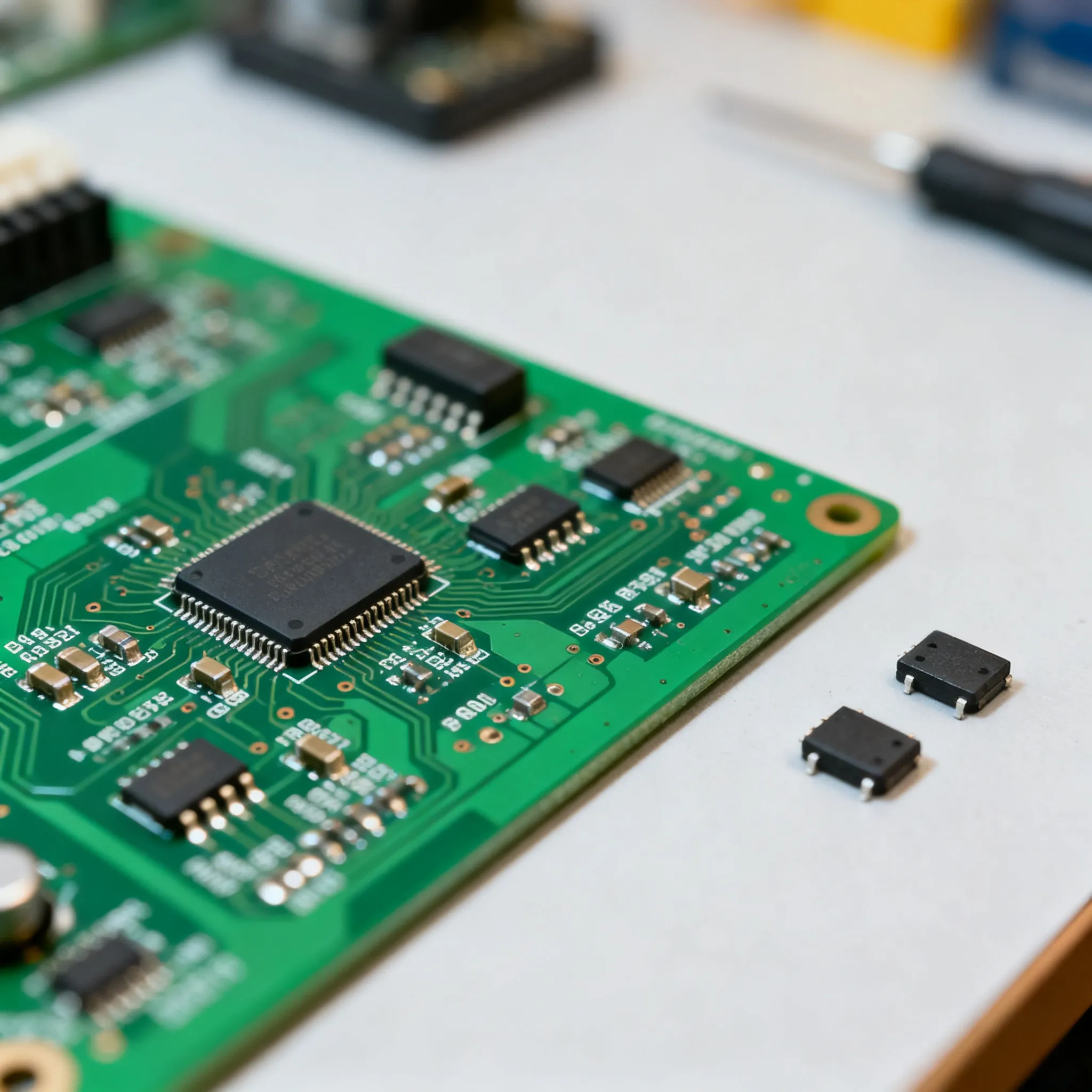
The semiconductor shortage that defined early‑2020s procurement has evolved into a more complex, layered crisis for OEM buyers in 2026. While wafer capacity has recovered in many nodes, the path from finished wafer to a component on your production line is now choked by two new bottlenecks: packaging and trade controls. Semiconductor packaging lead times have extended to approximately 10 weeks across the industry as of September 2026, meaning components that exist in wafer form still face an additional 10‑week delay before reaching buyers. This hidden lag wreaks havoc on just‑in‑time schedules and forces procurement teams to re‑baseline their entire material requirements planning (MRP) logic.
Simultaneously, a separate geopolitical shock has upended the legacy discrete market. China’s export controls on Nexperia — one of the world’s largest suppliers of standard transistors, diodes, and ESD protection devices — prompted Volvo, Volkswagen, and Honda to warn of potential line stoppages in late 2025. The qualification fallout from this disruption is still working its way through supply chains months later, leaving numerous OEMs scrambling to re‑qualify alternatives for parts that were considered commodity‑grade only a year ago.
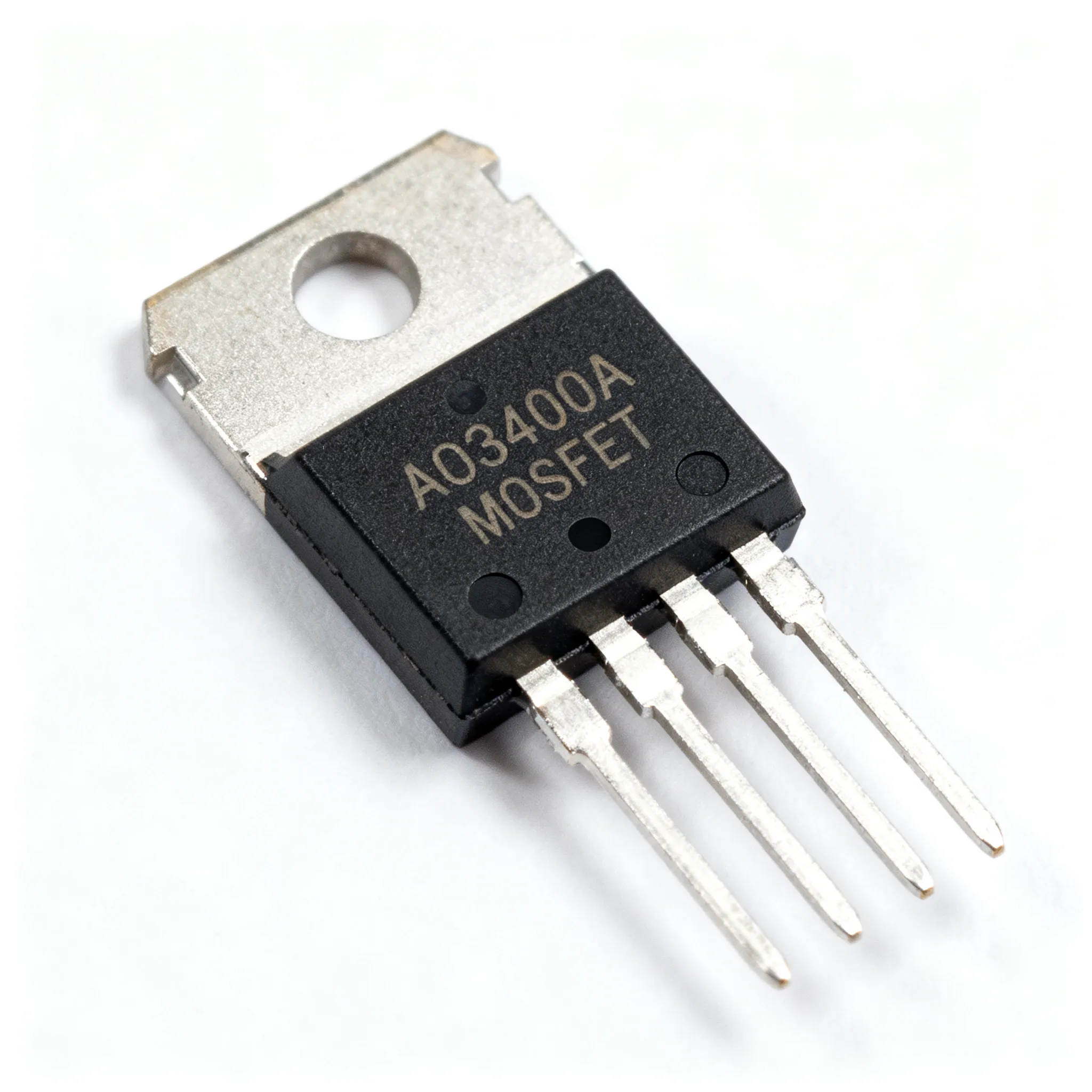
On top of these structural supply shocks, international cooperation slowed and supply chain agility vanished, according to AGS Devices’ analysis of the 2026 landscape. The old playbook — where a buyer could quickly source from a different region or rely on spot‑market inventory — no longer works. For many high‑demand MCUs and power MOSFETs, turning to non‑authorized channels introduces a quality risk that far outweighs the apparent cost savings. Field experience shows a failure rate exceeding 5% for gray‑market batches of these devices, a figure that translates directly into line‑stops, rework, and potential recalls — costs that can run into six figures per incident. For OEM buyers, the conclusion is inescapable: every sourcing decision must now be treated as an allocation‑sensitive, quality‑critical move, not a simple purchase order.
This section unpacks the three forces reshaping buyer behavior — packaging bottlenecks, export controls, and gray‑market risk — and frames them as a single interconnected challenge that demands a new, smarter sourcing strategy.
| Driver | Mechanism | Procurement Impact |
|---|---|---|
| Packaging lead time extension | OSAT capacity constraints, advanced packaging complexity | Adds ~10 weeks post‑wafer; forces MRP buffer recalculation; makes on‑time delivery unreliable even when die are available |
| China export controls on Nexperia | Regulatory restrictions on legacy discrete supply | Disruption of commodity‑grade transistors/diodes; automotive and industrial OEMs must re‑qualify alternatives or face line‑stops |
| Fragmented international cooperation | Trade disputes, technology nationalism | Reduced supply chain agility; single‑region sourcing strategies become high‑risk; long‑term allocation agreements essential |
| Gray‑market quality degradation | Counterfeit, re‑marked, or poorly stored components entering market | Greater than 5% failure rate on high‑demand MCUs and MOSFETs; line‑stop and recall costs dwarf purchase savings; external inspection required |
| AI‑driven memory demand surge | Massive HBM consumption by data center GPUs | 80–90% price jumps and 58‑week lead times for memory chips; memory allocation tightens; dual sourcing becomes non‑negotiable |
These drivers do not operate in isolation. A memory‑constrained design that cannot secure DRAM modules may be forced to consider a board re‑spin, which in turn exposes the PCB to the risk of Nexperia‑discrete shortages during manufacturing. Procurement leaders who treat each component category independently will find themselves fighting fires on multiple fronts simultaneously. Instead, the situation demands a unified decision framework that links technical fit, standards alignment, supply resilience, and lifetime commercial value — a concept we explore in the next section.
Authorized Channels, Brokers, and Redesigns: A Decision Framework for Buyers
With buyers increasingly accepting above‑list premiums and longer waits rather than substituting parts, and memory chip lead times hitting 58 weeks with 80–90% price jumps, procurement teams can no longer rely on a single sourcing channel. A structured comparison of manufacturer allocation, franchise distribution, independent brokers, and outright redesigns is essential to protect production continuity and budget.
The smarter approach is to compare sourcing options through one decision framework that connects technical fit, standards alignment, supply resilience, and lifetime commercial value. This framework moves the conversation beyond simple unit‑price comparison and into total‑cost‑of‑ownership territory, where the true cost of a channel — including re‑qualification, rework risk, and lost production time — can be weighed against the apparent savings.
Dual sourcing is no longer optional but essential to reduce vulnerability when one supplier moves specific customers into allocation. For memory components especially, having a qualified second source can mean the difference between shipping product and idling a line for 14 weeks while the primary supplier’s allocation window reopens.
The following table provides a high‑level comparison of the four main sourcing strategies available to OEM buyers in 2026. It does not prescribe a single “best” option; rather, it helps you evaluate each against the procurement realities of your specific BOM.
| Option | Effect on Availability | Cost & Risk Trade‑off | Notes / When to Use |
|---|---|---|---|
| Manufacturer allocation / direct contract | Priority access but subject to global allocation caps; lead times governed by supplier’s committed service level | Highest price stability; lowest quality risk; requires long‑term volume commitment | Best for high‑runner MCUs, ASICs, and memory where continuity is non‑negotiable |
| Authorized distributor (franchise) | Reliable buffer stock, bonded inventory programs; lead times align with manufacturer allocation | List‑price or negotiated discount; full traceability; lower risk of counterfeits | Ideal for medium‑volume, multi‑supplier BOMs; leverage distributor inventory management services to smooth demand spikes |
| Independent broker (spot market) | Can fill immediate gaps when authorized channels are empty | Premium pricing often >2× list; >5% failure rate on high‑demand parts; must add sample inspection cost; no manufacturer warranty | Only after authorized options exhausted; mandatory: run sample batch through external inspection and electrical testing before full reel purchase |
| Redesign / alternative part qualification | Breaks dependency on a constrained component; creates long‑term supply independence | High up‑front engineering cost; board re‑spin and re‑qualification time; may require firmware changes | Use when a part enters last‑time‑buy or lead time exceeds acceptable project delay; evaluate candidates with “verify pinout, package, and firmware” language |
The decision framework touted by Qishuai’s procurement model asks four blunt questions that every buyer should pose to internal stakeholders before committing to a channel: (1) Does the part meet the required technical specifications without compromise? (2) Are the applicable industry and safety standards satisfied? (3) Can supply be sustained for the planned product lifetime? (4) What is the total lifetime commercial value after factoring in qualification, scrap risk, and field failure liability? Only when all four answers are favorable should you proceed. For most 2026 OEM BOMs, the optimal mix will involve some combination of direct allocation for critical semiconductors, franchise distribution for passives and discretes, and a qualified second source for memory — leaving the broker channel reserved strictly for verified emergency buys under a sample‑and‑test protocol.
From Sample Validation to Lifetime Buy: De-Risking Your BOM Step by Step
Practical mitigation begins long before an allocation notice lands in your inbox. The most resilient OEM procurement teams have embedded robust validation processes and early‑warning monitoring into their daily operations. Two principles stand out: never trust a cross‑reference table alone, and never let a legacy part go undocumented after an EOL notification.
Only qualify substitutes after they pass form, fit, and function checks against the original datasheet and prototype testing, because published cross‑reference tables are not always current and rarely cover application edge cases. A pin‑compatible device with the same functional block diagram may draw different leakage currents, exhibit a different start‑up sequence, or require adjusted passive values — any of which can cause intermittent field failures that are far more expensive to resolve than a pre‑production board spin.
When an end‑of‑life (EOL) notice arrives for a critical PLC module, power semiconductor, or interface IC that has been part of your design for years, speed is everything. Document the full original specification immediately — voltage ratings, form factor, operating temperature range, communication interfaces, and approval markings (UL, CE, ATEX) — before the datasheet becomes difficult to obtain. This captured baseline serves as the objective yardstick against which every candidate substitute is measured, and it ensures that a last‑time‑buy order doesn’t accidentally miss a parameter that was assumed common knowledge when the original part was selected.
Equally important is the role of third‑party distributors in a shortage mitigation plan. Distributors bring years of experience navigating global supply chains, help manage complexity, and coordinate inventory strategies across multiple suppliers. They can offer bonded inventory programs that keep buffer stock on your premises but only bill when it is consumed, and they often have early visibility into allocation trends long before that information filters down to the buyer’s desktop. Leaning on a sophisticated distributor also reduces the pressure to source from risky independent brokers, which is a critical line of defense in a market where disciplined buyer strategy directly determines cost, availability, and supply continuity.
The table below outlines the most effective mitigation actions that OEM buyers can integrate into their standard procurement workflow. Each action is mapped to the point in the product lifecycle or shortage event where it delivers the greatest impact, along with the trade‑off it implies.
| Action | When to Use | Trade‑off |
|---|---|---|
| Rigorous sample inspection and electrical testing | Before accepting any non‑franchise shipment | Adds 2–5 days and a few hundred dollars in lab fees per batch; eliminates >90% of latent defects that would cause line‑stops |
| Capture full legacy part specification | Immediately upon EOL notification | Requires engineering time; prevents hidden parameter omissions that sink last‑time‑buy or redesign decisions |
| Establish dual‑source qualification for memory | During initial BOM risk assessment, before allocation hits | Increases qualification effort and may add a second layout option; averts 58‑week single‑source lead time paralysis |
| Build packaging buffer into MRP | At every release of a production plan | Ties up working capital with a few weeks of extra raw material inventory; absorbs ~10‑week OSAT delay without stopping lines |
| Engage a distributor for bonded inventory | When monthly demand variability exceeds 20% | Incurs a small carrying cost; provides on‑site safety stock without full purchase commitment until usage |
Integrating these actions into a cohesive BOM management strategy is not a one‑time exercise. The most successful OEM procurement teams treat their approved vendor list as a living document, revisiting single‑source risks quarterly and running what‑if scenarios for each component category. When a red flag appears — be it a lead time extension, an export control announcement, or a reported increase in counterfeit activity — the team already has a pre‑qualified path forward rather than scrambling to invent one under production pressure.
What Senior Buyers and Engineers Need to Know About Quality and Lead Times Right Now
Below are the questions that procurement leads and design engineers are wrestling with in 2026, answered with the pragmatic, data‑informed perspective that separates resilient supply chains from reactive ones.
Q: How do I calculate the true cost of gray‑market components beyond the purchase price?
A: Start with the failure rate. For high‑demand MCUs and power MOSFETs, field experience indicates a >5% failure rate on gray‑market batches (IC Online). Model the cost of a single line‑stop — lost production time, operator idle cost, rework labor, and potential scrap — plus the liability of a customer return or recall if the defect escapes final test. That cost often dwarfs the upfront savings from a broker purchase. Always require a small sample batch to pass external visual inspection, X‑ray, and electrical testing before committing to the full reel quantity. Without that gate, you are gambling with your production schedule.
Q: What is the most time‑critical step when a legacy chip goes EOL?
A: Immediately capture the full original specification — voltage ratings, form factor, operating temperature range, communication interfaces, and approval markings (UL, CE, ATEX) — while the datasheet is still accessible (SUPfuse). This documentation is the irreplaceable baseline for evaluating any substitute and for scoping a last‑time‑buy order. Delaying this step by even 48 hours can result in the part’s official documentation disappearing from the manufacturer’s website, forcing you to rely on third‑party memory and guesswork that opens the door to specification gaps.
Q: Can I trust cross‑reference tools to find a drop‑in replacement?
A: No, not blindly. Published cross‑reference tables are often out of date and rarely cover your application’s specific edge cases — such as start‑up current profiles, noise margins in a particular layout, or behavior during supply brown‑out. A substitute should undergo form, fit, and function checks against the original datasheet and, in most cases, prototype validation (Win Source). Only after passing those gates can you confirm true compatibility. Until then, treat any candidate as an evaluation part that requires verification of package, pinout, and firmware behavior.
Q: With memory lead times at 58 weeks, is redesign the only viable long‑term option?
A: Redesign is a last resort, but dual sourcing can buy valuable time. When one memory supplier moves customers into allocation, a qualified second source avoids a complete BOM freeze (Z2Data). Pair dual‑source planning with a decision framework that balances lead‑time risk, technical fit, and lifetime cost (Qishuai) before committing to a board re‑spin. In many cases, a pin‑compatible alternative from a different DRAM vendor can be qualified without a board change, provided you have done the upfront electrical verification.
Q: How can I navigate the additional delay from semiconductor packaging lead times?
A: The roughly 10‑week packaging bottleneck (GlobX) means that your material requirements planning must explicitly model a post‑wafer lag. Work closely with your distributors and manufacturer contacts to track wafer status and receive allocation forecasts that include that packaging buffer. This visibility allows you to adjust production schedules before the gap hits the assembly line — for example, by pulling in demand for less time‑sensitive products or by authorizing an early pre‑build of subassemblies that do not require the delayed component.
Q: What role should third‑party distributors play in a shortage mitigation plan?
A: Distributors bring years of experience coordinating inventory across multiple suppliers and geographies, helping you manage complexity and avoid single‑point failures (Microchip USA). They can provide buffer stock, bonded inventory programs, and insight into allocation trends that are invisible through a direct‑only lens. A strong distributor partnership reduces the temptation to reach for risky gray‑market sources and frees your procurement team to focus on strategic supplier negotiations rather than fire‑fighting part shortages every morning.
Tip: When you upload a full BOM to a distribution‑agnostic RFQ platform, you force competitive tension among multiple authorized sources while maintaining a single, auditable inquiry record. This approach aligns with the disciplined buyer strategy that Vyrian describes as directly determining cost, availability, and continuity — without relying on any single channel’s inventory claim.
The 2026 shortage is not a monolithic shortage of “all chips.” It is a mosaic of packaging delays, export disruptions, and demand spikes that hit specific component families at different times. OEM buyers who treat each BOM line with the proper risk lens, validate every alternative before production commits, and systematically pull the levers of dual sourcing, bonded inventory, and informed distributor partnerships will keep lines running while others wait on allocation. Smart sourcing in this environment is not about finding a magic part; it’s about putting processes in place that absorb uncertainty without pausing production.
If your team is reviewing a complex BOM and needs present‑day availability visibility, request a quote or upload your bill of materials through IC-Online. IC-Online’s mixed‑BOM RFQ process spans multiple component categories and flexible MOQs, giving you a consolidated view of pricing and lead times from authorized channels — and helping you build that disciplined, allocation‑aware procurement strategy without chasing individual line items.
References & Further Reading
- Semiconductor Shortage 2026: EU OEM Survival Guide | GlobX
- 2026 Electronic Component Shortage Update for Buyers | IC Online
- Semiconductor Shortage: Causes & Key Supply Chain Risks | AGS Devices
- Shortage of Electronic Components in 2026: Causes and Sourcing Strategies | NextPCB
- Semiconductor Shortage: Buyers Accept Higher Prices & Delays | Quettor
- Surviving the 2026 Memory Chip Shortage: EMS & OEM Guide | Luminovo
- Why Dual Sourcing Is Essential to Weathering the Memory Chip Shortage | Z2Data
- Procurement Strategy for Semiconductor Buyers: How to Compare Lead Time, Risk, and Cost | Qishuai
- The Ultimate Buyers Guide – Semiconductor Components | Microchip USA
- Industrial electronic parts: a practical sourcing and selection guide | SUPfuse
- Semiconductor Shortage Survival Guide for Procurement Teams | WIN SOURCE
- Semiconductor Shortages and Sourcing Risk Explained | Vyrian