

Micron vs Samsung DRAM Sourcing Strategy: Specification Verification, Inspection Criteria, and RFQ Best Practices for OEM Buyers
Buyer-side specification, inspection, and RFQ checks on this technical topic. Not a hobby explainer. Request a quote on IC-Online.
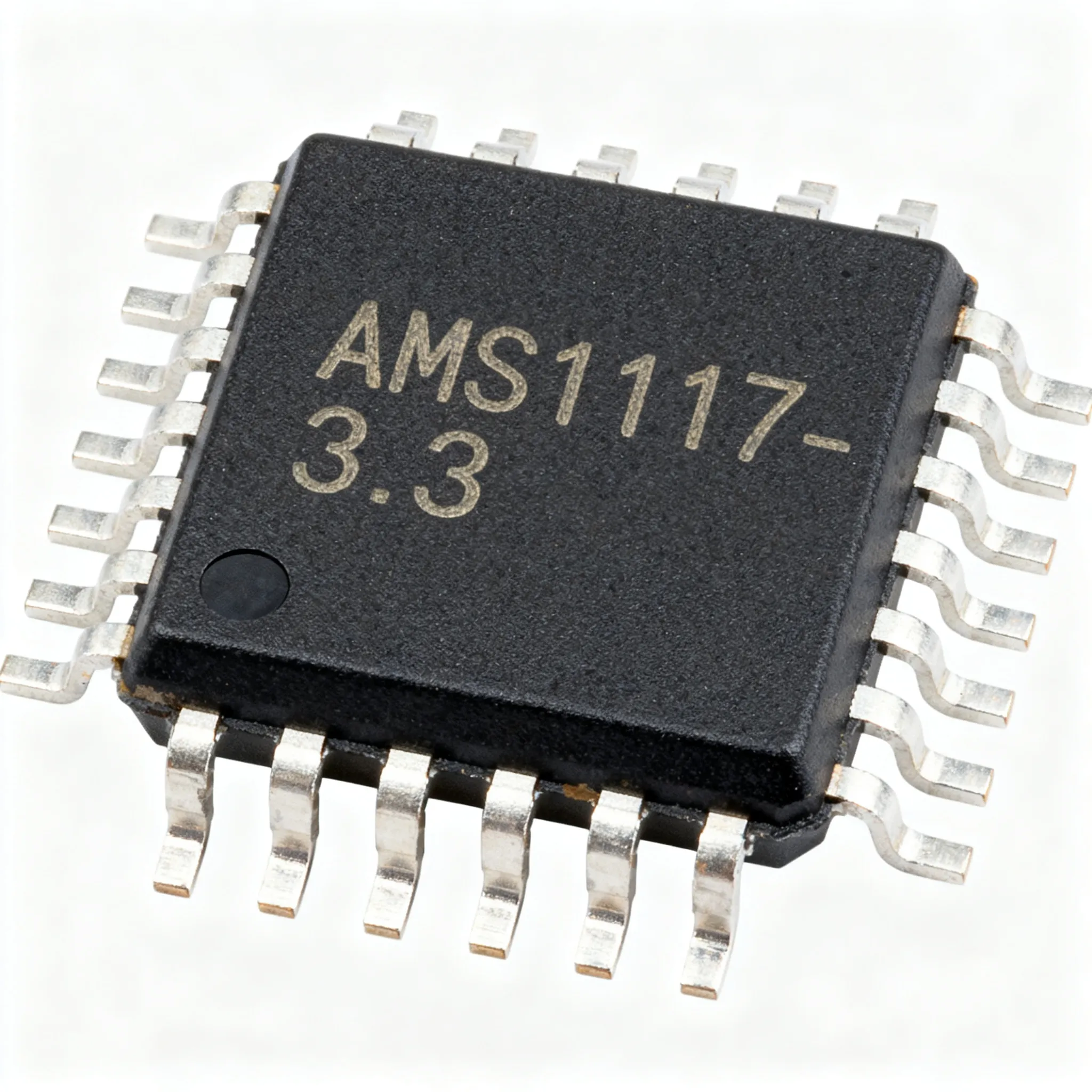
The choice between Micron and Samsung DRAM used to be a simple triad of price, availability, and brand preference. That equation no longer holds. OEM procurement teams now face a structural shortage layered with legal risk, allocation uncertainty, and a widening secondary market where counterfeit ICs thrive. Making a sourcing decision without a methodical specification-verification and inspection discipline can turn an approved vendor list into a liability. This article provides a buyer-focused framework for comparing Micron and Samsung DRAM, cross-referencing part numbers, and building RFQ clauses that protect your BOM in a market where every line item demands scrutiny.
Why DRAM Procurement Is No Longer a Simple Price Check: Supply Scarcity, AI Priorities, and a Price-Fixing Lawsuit
Memory buyers entered 2026 with a volatility playbook they hadn’t used in a decade. Three structural shifts—HBM-driven wafer reallocation, a class-action price-fixing suit, and persistent DDR4 tightness—turned DRAM from a cyclical component into a strategic risk. The lawsuit Garciaguirre v. Samsung Electronics, filed in the Northern District of California, alleges that Samsung, SK Hynix, and Micron coordinated supply to engineer a shortage, not simply a response to AI demand. While the litigation will take years to resolve, its existence complicates supplier qualification and raises questions about allocation transparency that procurement teams can’t ignore.
Even without legal risk, wafer allocation data makes the scarcity real. An analysis by SpecForge notes that the 18 million-wafer aggregate capacity figure masks a painful truth: effective bits delivered to non-HBM, non-server customers are far lower because of Samsung’s 1c-node transition yield loss, Micron’s delayed capacity ramp until 2027–2028, and the sheer volume of wafer starts diverted to server and AI accelerator SKUs. PC and mobile buyers are reportedly receiving only about half of their requested volumes, a gap that widens design-to-procurement tensions.
The lead-time data from industry trackers underlines that pressure. WIN SOURCE, citing TrendForce’s October 5 update, reported DRAM lead times of 20 weeks, with server and enterprise SSD suppliers also feeling the pinch. Meanwhile, Microchip USA notes that DDR4 shortages and elevated pricing are expected to persist throughout 2026, especially in industrial and long-life applications. PCXco’s memory scarcity advisory urges a line-by-line BOM exposure check before any spot-market noise pushes a team into a rushed purchase. The bottom line: every DRAM line on your BOM is allocation-sensitive and must be treated as such—through RFQ, not a phone call.
Spec Verification Decoded: What to Check Before You Accept a Cross-Referenced Part Number
A cross-reference suggested by a distributor or a parametric search tool is the starting point, not the finish line. DRAM part numbers from Micron and Samsung carry speed-grade, temperature-range, and die-revision information that look similar but can change a board’s timing closure. To verify a candidate, pull the official datasheet from Micron’s downloads or Samsung’s equivalent resource, and cross-check every field against your controller’s requirements. The TrustCompo DDR4 cross-reference guide decodes naming conventions for both manufacturers and maps speed bins, density codes, and temperature grades side by side—an essential companion for your engineering review.
Below is a verification table that captures the parameters that most often break a design when omitted from the check. Use it alongside Micron’s DDR SDRAM catalog and the broader DRAM components directory to confirm that any offered part matches your approved specification.
| Parameter | Micron Typical Coding / Example | Samsung Typical Coding / Example | Verification Action for Buyer |
|---|---|---|---|
| Density | 8Gb indicated by “8G” in part number (e.g., MT40A1G8…) | 8Gb coded in density field (e.g., K4A8G08…) | Confirm exact density matches memory-down requirements. |
| Organization | x8, x16 embedded in part number (e.g., “8” for x8) | Width code indicates x8, x16, etc. | Verify alignment with controller data-bus width. |
| Speed Grade (Data Rate) | -062E = DDR4-3200 (3200 MT/s) | -BCPB may map to DDR4-3200 22-22-22; other codes for 3200 24-24-24 | Cross-read Micron speed grade definition vs Samsung speed bin table; do not assume identical CL. |
| CAS Latency (CL) | CL22 for -062E; CL15 for lower bins | CL22 common in “-BCPB” variant; CL24 in alternate speed grade | Validate that your controller’s memory training supports the specific CL value. |
| tRCD / tRP / tRAS | 22-22-22 for -062E | 22-22-22 or 24-24-24 depending on sub-code | Run timing analysis against worst-case DRAM timing parameters. |
| Voltage (VDD/VDDQ) | 1.2 V nominal for DDR4 | 1.2 V; 1.35 V for some DDR3L/DDR4 lower-power variants | Match to power supply and PMIC tolerances. |
| Temperature Grade | IT (-40°C to +95°C), CT (0°C to +85°C), etc. | Industrial code “I” or commercial “C” in part number suffix | Ensure the grade matches enclosure ambient and self-heating margins. |
| Package/ Form Factor | FBGA code indicates ball count and pitch (e.g., FBGA 78-ball) | Package field similar; e.g., “WB” for 78-ball FBGA | Correlate with PCB footprint; confirm ball-out compatibility. |
| Die Revision / Stepping | Two-digit stepping shown in final part extension | Check that the revision has no errata affecting your memory interface. | |
| RoHS/ Halogen-Free | Suffix “E” for lead‑free/RoHS | “E” or similar suffix for green compliance | Verify with manufacturer’s environmental compliance sheet. |
Tip: Never accept a cross-reference solely on density and speed-grade equivalence. A 3200 MT/s Micron part with CL22 and a Samsung 3200 MT/s part with CL24 will behave differently in your controller’s training routine; signal integrity margins can erode enough to cause cold-boot failures. Always requisition the manufacturer’s most current datasheet directly from Micron’s download center or Samsung’s portal, and store it with your PCN watch trail.
Micron vs Samsung vs Qualified Alternates: Building a Sourcing Matrix That Survives Allocation
When demand outruns supply, a sourcing matrix must go deeper than brand preference. Process maturity, fab investment scale, lifecycle policy, and traceability infrastructure all influence whether a component will arrive on time—and stay qualified for the life of the product. The OneBullEx comparison highlights the strategic disparity: Samsung’s announced $230 billion semiconductor investment through 2030 dwarfs Micron’s $150 billion plan, potentially accelerating node transitions and cost competitiveness, while Micron’s memory-only focus can yield faster technology turns in DRAM. Buyers need to weigh these trajectories against their own product longevity.
Equally important is sourcing integrity. Ersaelectronics recommends prioritizing authorized distribution and requiring traceability documentation, especially when evaluating alternates. The TrustCompo DDR4 cross-reference guide adds CXMT, Nanya, and Winbond as potential evaluation candidates for industrial long-life designs. But none of these are drop-ins; each must pass a lifecycle-status check, timing validation, and packaging verification. The comparison matrix below places Micron, Samsung, and the alternate tier alongside selection criteria that reflect post-2025 market realities.
| Comparison Metric | Micron Technology | Samsung Electronics | Qualified Alternates (CXMT, Nanya, Winbond) | Selection Criteria & Failure Boundary |
|---|---|---|---|---|
| Process Node Maturity (DDR4) | 1α nm production; 1c nm ramp delayed to 2027–2028 | 1c nm transition with yield challenges affecting output | CXMT: 17 nm class; Nanya: 20 nm; Winbond: specialty node | Node maturity impacts bit cost and supply stability; request current PCN status. |
| Investment & Capacity Outlook | $150B through 2030; memory-only fabs | $230B through 2030; diversified logic and memory | Smaller capex; Nanya expanding, CXMT catching up | Correlate capacity announcements with allocation risk for your volume tier. |
| DDR4 Longevity Commitment | DDR4 product line sustained; no EOL announced | Samsung and SK Hynix extending DDR4 lifecycles | Nanya and Winbond position DDR4 for long-life industrial | Verify lifecycle status via RFQ; do not assume DDR4 is on a glide path. |
| Product Portfolio Breadth | Full stack: DDR4/5, LPDDR, HBM, GDDR | Broadest memory portfolio; strong in HBM | DDR4 focused; limited HBM/advanced DRAM | Single-source risk rises if your BOM spans multiple memory types. |
| Supply Chain Traceability | Strong authorized distribution; internal trace system | Authorized network; occasional grey market leakage | Authorization varies; traceability documentation may be less mature | Require lot-level traceability and CofC for any non-authorised source. |
| Lead-Time Stability (Allocation-Backed) | Subject to HBM allocation pull; confirm via RFQ | Heavily HBM-allocated; expect extended lead times for commodity DDR4 | Potentially more stable for non-HBM SKUs, but verify capacity | Weight allocation transparency over spot price; request fixed lead-time commitment. |
| Cost Competitiveness | Middle of market; premium for wide temperature | Often volume price leader on DDR4 | Competitive on specific densities; may offer cost relief on 4Gb/8Gb | Factor in re-qual cost and margin loss from allocation gaps. |
| Technical Support & Documentation | Detailed datasheets, IBIS models, simulation support | Comprehensive guides; broad ecosystem support | Datasheet depth varies; check IBIS availability | Test signal integrity simulations with manufacturer-provided models. |
Samsung’s production heft and Micron’s memory-focused agility each offer distinct advantages, but neither can insulate a buyer from allocation shocks. The alternate tier—CXMT, Nanya, Winbond—should enter your AVL only after a full qualification cycle that includes re-running JEDEC timing compliance checks, verifying temperature-grade suitability, and locking in a PCN agreement. Relying on any one vendor for a sole-source DRAM line is no longer tenable; even if you settle on Samsung or Micron as primary, a qualified second source reduces negotiation leverage risk and provides a fallback when allocation shifts overnight.
Inspection Protocols and RFQ Clauses: Spotting Non-Conforming DRAM Before It Hits the Line
When allocation squeezes authorized channels, the grey market grows. Remarked DRAM, recycled ball-grid arrays, and devices that failed speed-sorting are real threats. A systematic incoming inspection workflow, paired with RFQ language that compels transparency, can stop questionable material before it reaches your assembler. Use the traceability and packaging checklist from Ersaelectronics as a baseline, and layer your own visual, dimensional, and electrical checks.
| Inspection Item | Acceptance Criteria | Tools / References |
|---|---|---|
| Markings consistency | Laser-etched text matches format, font, and orientation in official datasheet | Micron downloads or Samsung packaging spec |
| Ball-grid pattern | Ball pitch, diameter, and layout match package drawing | Micron / Samsung package outline; compare with optical inspection |
| Packaging seal integrity | Original tray/reel intact; moisture barrier bag seal unbroken; HIC card present | J-STD-033; internal ESD handling SOP |
| Lot traceability | Manufacturer lot code present and linked to CofC; date code within agreed range | CofC from supplier; lot code decoder from manufacturer |
| Certificate of Conformance (CofC) | States manufacturer, part number, lot/test results, and authorized channel attestation | Authorized distributor statement |
| Sample electrical testing | All speed bins meet JEDEC timing at rated temperature corners | Memory ATE or platform-level validation; compare with manufacturer timing table |
| X-ray inspection (if resoldered) | No signs of ball rework, internal wire-bond anomalies | In-house X-ray; reference original device image |
| Country-of-origin check | Matches origin in manufacturer’s shipping documents | Customs documentation; manufacturer’s site list |
Tip: Even with visual inspection passed, pull a small sample and run a memory test that stresses write/read timing margins, such as a full-rank MemTest or a built-in memory BIST at elevated temperature. A DRAM that meets its JEDEC speed bin at room temperature may fail in a hot chassis.
Your RFQ must go beyond unit price. Strengthen it with these clauses to build a defensible sourcing position:
- Authorized distribution mandate: Require that all offered DRAM is sourced through the manufacturer’s authorized distribution network. If a non-authorized source is proposed, demand full lot traceability, a copy of the original manufacturer’s CofC, and a re-screen test report dated within 90 days of shipment.
- Allocation-backed lead-time commitment: Ask the supplier to state the allocation-audited lead time and to provide a written liability window should the committed date slip. Avoid accepting generic “standard lead time” assertions; tie the delivery slot to an order acknowledgement that references the manufacturer’s allocation code.
- Early-warning EOL notification: Specify that the supplier must notify you within 30 days of a manufacturer PCN that changes the part’s lifecycle status, even if the product line remains active. This prevents last-time-buy scrambles.
- PCN and change-control clause: Require that any change to die revision, speed-grade specification, or package before shipment is disclosed and accepted in writing. A “silent” revision can derail your signal integrity budget.
- BOM exposure scan obligation: Consider adding a clause that obligates the distributor to run a BOM exposure scan at least quarterly, flagging sole-sourced DRAM lines and recommending qualified alternates where available.
Together, these protocols turn the RFQ into an active risk-management tool rather than a price quote. They also send a clear signal to the supply chain that you won’t accept undocumented parts.
DRAM Sourcing FAQ: Micron, Samsung, and Alternative Strategy Questions Your Engineering and Procurement Teams Are Debating
Q: How can I confirm a Samsung or Micron DRAM part is not counterfeit before prototyping?
A: Start by comparing the top-side markings and ball-pattern photos with the official datasheet downloaded from Micron’s download center (or Samsung’s portal). Request lot traceability documentation and a certificate of conformance from the supplier. Test a small sample across minimum and maximum operating temperature while running memory diagnostics that stress timing margins. Any deviation from the published speed bin should be treated as a red flag.
Q: With persistent DDR4 shortages, what are my validated alternate sources beyond the big two?
A: CXMT, Nanya, and Winbond are producing DDR4 products that can serve as evaluation candidates for industrial applications. Use the TrustCompo DDR4 cross-reference guide to check lifecycle status, speed-grade availability, and package compatibility. Do not treat them as drop-in replacements; you must perform a full qualification cycle—timing closure, temperature-grade confirmation, and supplier audit—before adding them to the approved vendor list.
Q: Should I restrict spot-buy DRAM to authorized distribution only?
A: Yes. Authorized channels remain the strongest defense against counterfeit, remarked, and early-life-failure parts. If an all-time buy or allocation pressure forces you to consider a non-authorized source, insist on full lot traceability, original CofC, and a sample test report generated no more than 90 days before shipment. The extra validation cost pales in comparison to a line-down event.
Q: What metrics should I prioritize in an RFQ when comparing Samsung and Micron offers?
A: Weight lead-time stability and allocation transparency above unit price. Request a fixed lead-time commitment tied to the manufacturer’s allocation code, PCN notification policy, warranty terms for early-life failures, and total landed cost. A slightly lower unit price evaporates quickly if you must re-order on the open market at a premium during an allocation crunch.
Q: Are Micron and Samsung DRAM parts interchangeable in all applications?
A: Not automatically. Speed bin, CAS latency, operating temperature range, and die revision can differ between equivalent-looking part numbers. Always confirm timing compatibility with your memory controller through simulation or lab validation. When changing brands, re-run at least a signal integrity simulation and a cold-boot test across temperature extremes.
Q: How do I decode Samsung’s and Micron’s DRAM part numbers quickly?
A: Use the TrustCompo DDR4 cross-reference guide, which breaks down the naming logic for each manufacturer and lists equivalent speed, temperature, and density codes side by side. Bookmark it alongside Micron’s part numbering documents to reduce translation errors when your engineering and procurement teams are working from different datasheets.
In a memory market where HBM diverts wafers and legal clouds gather over pricing conduct, the buyer who treats each DRAM line as an allocation-sensitive risk item—backed by rigorous specification verification, inspection discipline, and a tightly worded RFQ—will keep production lines running while competitors scramble. Whether you settle on Samsung, Micron, or a qualified alternate, the key is a sourcing process that leaves no alibi for an unusable reel. Start your qualification cycle now, not when your next allocation cut is announced.
Ready to secure your DRAM supply? Request a quote or upload your BOM via IC-Online for flexible MOQs and allocation-aware sourcing support.