936054-1 Connector Housing: 2026 Supply Chain Trends and Volume Purchasing Advice
Expert guide on 936054-1 Connector Housing: 2026 Supply Chain Trends and Volume Purchasing Advice. Technical specs, applications, sourcing tips for engineers and buyers.
Why 936054-1 Connector Housing Lead Times Are Stretching into 2026
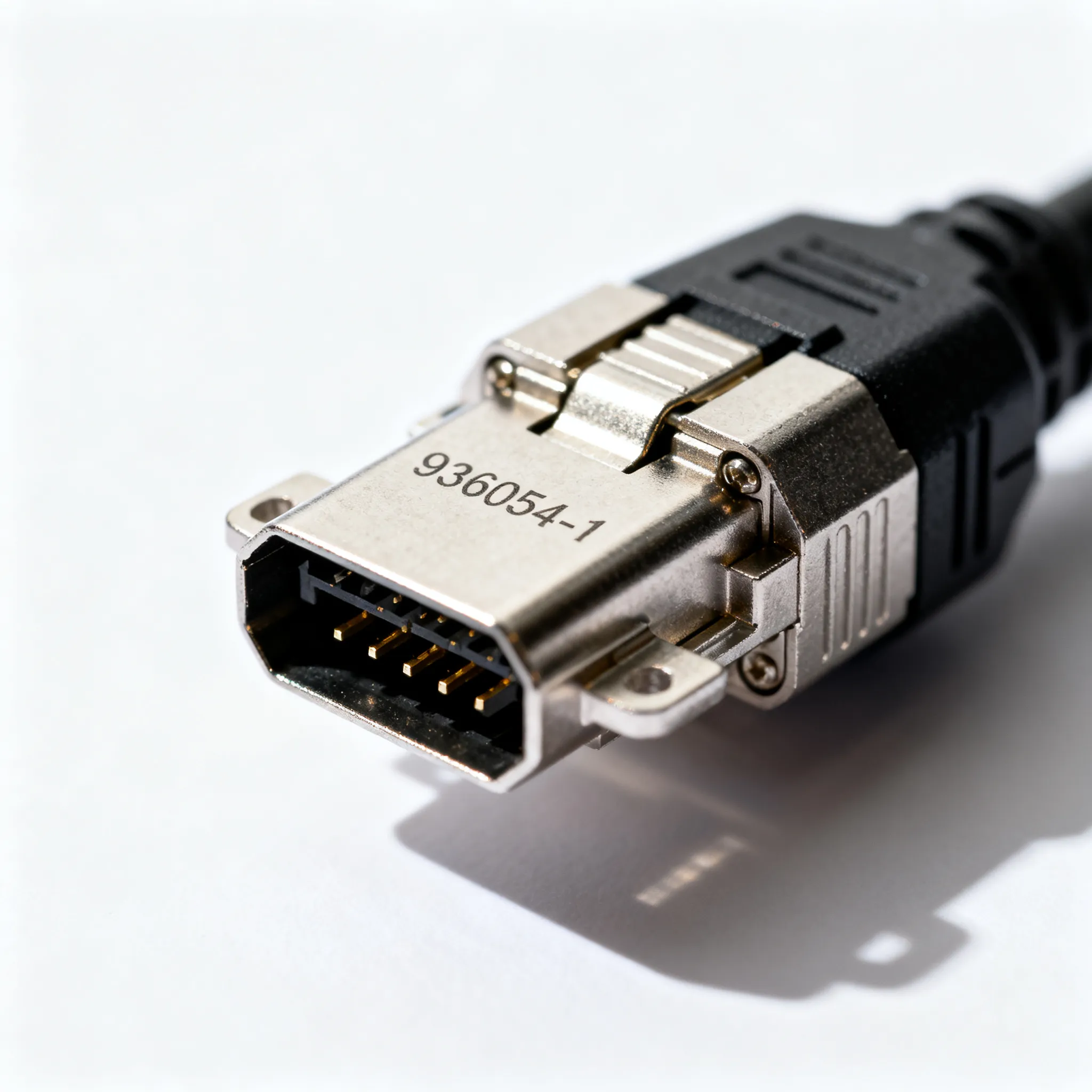
Procurement teams who have been tracking the EE Times coverage of electronics supply chains already know the story: lead times for connector housings haven’t snapped back to 2019 norms. For the 936054-1 — TE Connectivity’s 2-way unsealed receptacle housing for AMP MCP 1.5K terminals — the situation is especially tight. Multiple converging forces are compressing availability just as demand from automotive body electronics, industrial power distribution, and commercial vehicle harnesses continues to climb.
Engineers and buyers who treat the 936054-1 as a simple off-the-shelf item are already feeling the pain. Resin allocations, logistics friction, and TE’s own allocation policies have pushed standard-order lead times to 12–20 weeks in many regions, with spot buys at franchised distributors often limited to a few hundred pieces. The table below breaks down the key drivers so you can see exactly where the pressure is coming from and how each factor translates into procurement risk.
| Driver | Mechanism | Procurement Impact for 936054-1 |
|---|---|---|
| PBT resin shortages | Global tightness in polybutylene terephthalate (PBT) and glass-fiber compounds, driven by upstream petrochemical constraints and competing demand from EV battery components. | TE and its molders face intermittent allocation of PBT-GF grades; housing production runs are smaller and less predictable, extending lead times by 4–6 weeks. |
| Logistics bottlenecks | Ocean freight delays, port congestion, and elevated air-freight costs continue to disrupt just-in-time shipments from Asian molding hubs. | Distributors report inconsistent restocking cycles for 936054-1; spot inventory evaporates quickly when a single large buyer sweeps the channel. |
| Automotive & commercial vehicle demand surge | Wiring harness content per vehicle is rising, and the MCP 1.5K contact system is widely designed into body controllers, lighting, and auxiliary power circuits. | High-volume OEM contracts absorb a disproportionate share of TE’s output, leaving smaller industrial buyers to compete for the remainder. |
| TE allocation and priority programs | TE Connectivity uses tiered allocation that favors long-term agreement (LTA) holders and strategic accounts during constrained periods. | Buyers without an LTA may see their orders pushed to the back of the queue; lead times can swing from 14 to 24 weeks depending on allocation status. |
| Raw material and energy cost inflation | Rising electricity, labor, and resin costs force molders to optimize for high-margin, high-volume SKUs. | Low-margin commodity housings like 936054-1 may be deprioritized when capacity is tight, further stretching availability. |
| Single-source dependency | The 936054-1 is a TE proprietary housing; no fully interchangeable second source exists without terminal and cavity redesign. | Any disruption at TE’s molding sites creates an immediate line-down risk for harness builders who haven’t pre-qualified an alternative footprint. |
What this means for your 2026 planning is straightforward: you can no longer treat the 936054-1 as a transactional buy. The combination of resin constraints, logistics uncertainty, and strong automotive pull-through will keep lead times elevated through at least the first half of 2026. The buyers who stay ahead are the ones building 16-week buffers, negotiating blanket orders now, and actively evaluating second-source strategies — topics we’ll unpack in the sections that follow.
936054-1 Housing Essentials: Materials, Ratings, and Assembly Standards
Before you can make smart volume-buying decisions, you need to understand exactly what the 936054-1 brings to your harness design — and where its limits lie. This housing is part of TE’s MCP (Multiple Contact Point) 1.5K interconnect system, a workhorse platform in automotive and industrial applications that demand compact, high-current connections without the cost and complexity of sealed connectors.
The 936054-1 is a 2-way, unsealed receptacle housing with a 4.0 mm pitch. It accepts AMP MCP 1.5K female terminals and features an integrated secondary locking device (SLD) that confirms terminal insertion and provides additional retention. The housing material is PBT-GF (glass-fiber-reinforced polybutylene terephthalate), which delivers the mechanical strength and thermal stability required for engine-compartment-adjacent and under-dash environments. Key specifications include:
- Pitch: 4.0 mm (centerline spacing)
- Number of positions: 2
- Current rating: Up to 20 A per contact, depending on terminal selection and wire gauge (typically 2.5 mm² wire for 20 A)
- Operating temperature range: -40 °C to +125 °C (housing only; terminal and wire derating may apply)
- Housing material: PBT-GF, color black
- Locking feature: Integrated secondary lock (SLD) with audible click
- Mating interface: Compatible with AMP MCP 1.5K tab contacts and headers
- Flammability rating: UL 94 V-0 (housing material)
From a manufacturing standpoint, harness assemblies built with the 936054-1 must meet the workmanship requirements of IPC/WHMA-A-620, the industry standard for cable and wire harness assemblies. Whether you’re targeting Class 2 (dedicated service) or Class 3 (high reliability) depends on your end application, but the standard’s criteria for crimp height, pull force, insulation clearance, and terminal seating apply regardless. You can find the latest revision and training materials at IPC Standards.
Tip: Even though the housing itself is unsealed, many engineers pair the 936054-1 with sealed terminals and wire seals when the harness section passes through a splash zone. That hybrid approach keeps costs down while meeting IP67 requirements at the terminal level — but it requires careful validation of terminal retention and seal integrity per IPC/WHMA-A-620.
936054-1 vs. Alternative Sealed and Unsealed Housings for Volume Buyers
When the 936054-1 lead time stretches beyond what your production schedule can tolerate, the natural question is: “What else can I use?” The answer isn’t a simple drop-in replacement, because the MCP 1.5K terminal interface is proprietary. However, several connector families can serve similar 2-position, medium-current functions, and understanding the trade-offs helps you decide when it’s worth investing in a second-source qualification.
The table below positions the 936054-1 against four alternatives that frequently appear on volume buyers’ shortlists. The comparison focuses on the factors that matter most in a constrained market: terminal compatibility, sealing, current capacity, and typical lead-time behavior.
| Option | Effect on Your Design & Supply Chain | Notes for Volume Buyers |
|---|---|---|
| 936054-1 (TE MCP 1.5K, unsealed) | Proven footprint, no redesign needed; supply is constrained but the part is active and widely tooled. | Lead times 12–20 weeks; best availability through franchised distributors with blanket orders. No terminal cross-compatibility with other families. |
| Molex MX150 sealed connector (2-circuit) | Sealed interface adds environmental protection; requires new terminals, crimp tooling, and cavity validation. Larger package than MCP 1.5K. | Molex MX150 lead times have also been volatile but may offer better spot availability in some regions. Sealing adds cost; only worth the switch if you need IP67 at the connector level. |
| JST JWPF series (2-position, unsealed) | Compact 2.0 mm pitch, lower current rating (typically 3–5 A). Not a direct replacement for 20 A applications but can work for signal circuits. | JST lead times have historically been more stable for JWPF, but the current limitation is a hard boundary. Requires complete terminal and wire-size re-evaluation. |
| TE MCON 1.2 sealed housing (2-way) | Sealed, smaller pitch (2.54 mm), lower current (up to 15 A). Uses different terminals and tooling. Can be a strategic second source within the TE ecosystem. | Being another TE product, it may face similar allocation pressures, but the MCON line sometimes has independent molding capacity. Qualifying it gives you an internal TE alternative. |
| Custom overmolded solution | Eliminates the housing altogether by overmolding directly onto terminals; maximum design flexibility but high NRE and tooling lead time. | Only viable for very high volumes (100k+ units/year). Not a quick fix for 2026 shortages; plan 6–9 months for tooling and validation. |
For most buyers, the most pragmatic path isn’t a full redesign — it’s pre-qualifying a pin-compatible alternative that accepts the same MCP 1.5K terminals. While no third-party housing is officially interchangeable, some harness builders have successfully qualified TE’s own 2-way MCP 1.5K sealed housing (e.g., 1-967059-1) as a functional substitute in applications where the added sealing doesn’t hurt. The key is to run the full gamut of crimp tensile, terminal retention, and thermal cycling tests before you need the part on the line. Pre-qualification done during a calm period can save you six weeks of validation when your primary 936054-1 supply dries up.
Volume Purchasing Playbook for the 936054-1 in a Constrained Market
You’ve seen the drivers, you know the specs, and you’ve sized up the alternatives. Now let’s translate that into a concrete purchasing strategy that keeps your harness production running through 2026. The playbook below is built around actions that experienced buyers and engineers are already taking — not theoretical advice.
| Action | When to Use | Trade-off |
|---|---|---|
| Negotiate a blanket order with TE or a franchised distributor | As soon as your 12-month forecast firms up. Blanket orders reserve capacity and often come with priority allocation. | You commit to a volume and schedule; if demand drops, you may still be liable for a portion of the order. Requires accurate forecasting. |
| Build 12–16 weeks of safety stock | Immediately, if your cash flow and warehouse space allow. This buffer absorbs lead-time variability and spot shortages. | Ties up working capital and floor space. Risk of obsolescence is low for 936054-1, but engineering changes could still occur. |
| Pre-qualify an alternative housing footprint | During a design review or as a contingency project. Don’t wait for a line-down event. | Engineering time and test-lab resources are required. The alternative may not be a perfect fit, so you may need to adjust terminal insertion or retention features. |
| Monitor TE product change notifications (PCNs) and distributor inventory feeds | Continuously. Set up automated alerts through your distributor’s portal and TE’s PCN subscription. | Information overload is real; assign one person to filter and act on relevant notifications. Missing a PCN can leave you with obsolete stock. |
| Use distributor-held inventory programs (e.g., bonded stock) | When you need guaranteed availability without taking physical delivery. The distributor holds the stock and releases it against your schedule. | Costs more than standard pricing. Requires a strong relationship with a distributor that has access to TE’s allocation. |
| Lock pricing through a long-term agreement (LTA) with escalation clauses | When you can commit to 12–24 months of volume. LTAs protect against spot-price spikes and give you leverage during allocation. | Fixed pricing can backfire if market prices drop; escalation clauses tied to resin indices can mitigate this but add complexity. |
A few additional tactics deserve emphasis. First, don’t overlook the value of regional distributor networks. While the big global players get the lion’s share of TE’s allocation, smaller regional distributors sometimes have access to excess stock that never appears on the major platforms. Second, engage your TE field application engineer (FAE) early. They can give you visibility into upcoming mold maintenance schedules, resin allocation changes, and potential PCNs that haven’t yet been published. Finally, if your harness design is still in the prototype phase, consider whether you can standardize on a single contact system across multiple housings. Using the MCP 1.5K terminal across several connector sizes increases your aggregate volume and strengthens your negotiating position with TE.
Key Takeaway: The buyers who will navigate 2026 successfully are not the ones who react to shortages — they’re the ones who have already diversified their sourcing, locked in capacity, and qualified a backup before the next allocation cycle hits.
936054-1 Supply Chain and Volume Buying FAQ
Below are the questions we hear most often from senior engineers and procurement leads who are trying to secure the 936054-1 without overpaying or putting their production lines at risk.
- Q: What is the realistic lead time for the 936054-1 housing in early 2026, and how is it trending?
- Lead times have extended to 12–20 weeks for standard orders, with some distributors holding limited stock for spot buys. The trend is stabilizing but remains above pre-pandemic levels; buyers should plan for 16-week buffers. TE’s own published lead times may show shorter windows, but actual delivery often slips when resin allocations tighten. Check with your distributor weekly and track their on-hand quantities.
- Q: Can I use a substitute connector housing without redesigning my harness?
- It depends on terminal compatibility and cavity dimensions. The 936054-1 uses AMP MCP 1.5K terminals; alternatives like Molex MX150 use different terminals. A full re-validation of crimp quality and sealing is required. Pre-qualifying a drop-in replacement can save weeks of downtime. Some teams have successfully used TE’s sealed MCP 1.5K housings as a functional substitute, but you must verify terminal retention and environmental performance for your specific application.
- Q: What minimum order quantities (MOQs) apply for volume pricing on the 936054-1?
- TE typically sets MOQs in the thousands for direct purchases, but authorized distributors may offer smaller reels or break-pack options. Volume pricing breaks often start at 5,000–10,000 pieces; negotiate with your distributor for the best tier. If your annual usage is below 10,000 pieces, you may get better pricing by combining the 936054-1 with other TE MCP 1.5K components on the same blanket order.
- Q: How can I protect against price increases for this housing?
- Lock in pricing through long-term agreements (LTAs) with TE or distributors. Consider multi-year contracts with fixed escalation clauses tied to resin indices or PPI. Additionally, qualifying a second source gives leverage in negotiations. Even if you never switch, having a validated alternative changes the conversation with your TE rep.
- Q: Is the 936054-1 at risk of obsolescence or allocation?
- The 936054-1 is an active, widely used part in automotive and industrial applications, so near-term obsolescence is unlikely. However, TE may allocate supply during high-demand periods. Stay in close contact with your TE representative for allocation forecasts and sign up for PCN alerts. If your volumes are small, you are more vulnerable to allocation cuts; consider aggregating demand with other buyers or through a distributor’s bonded-stock program.
- Q: What IPC standards apply to assemblies using this housing?
- Harness assemblies with the 936054-1 should be built to IPC/WHMA-A-620 Class 2 or 3, depending on the application. This governs crimp quality, strain relief, and overall workmanship. Refer to IPC.org for the latest revision. If your harness is destined for automotive under-hood environments, you may also need to meet OEM-specific validation standards that go beyond IPC/WHMA-A-620.
References & Further Reading
- EE Times — Electronics Engineering News — Ongoing coverage of semiconductor and connector supply chain disruptions.
- IPC Standards — Home of IPC/WHMA-A-620 and other manufacturing standards referenced in this article.
- TE Connectivity 936054-1 Product Page — Official datasheet, 3D models, and PCN subscription.
- DigiKey Electronics — Authorized distributor with real-time inventory and lead-time data for TE connectors.
- Mouser Electronics — Another major franchised distributor carrying the 936054-1 and related MCP 1.5K components.
- IC-Online — Mixed-BOM sourcing and flexible MOQ options for buyers managing multi-line orders that include connector housings like the 936054-1.
For engineers and buyers who need to keep a mixed bill of materials moving, IC-Online offers flexible minimum order quantities and consolidated sourcing that can help you avoid line-down situations when a single SKU like the 936054-1 becomes hard to find. Combining your connector housing orders with other passives, discretes, and electromechanical parts through one platform often unlocks volume-tier pricing and simplifies logistics — exactly the kind of leverage you need in a constrained 2026 market.