

Troubleshooting Common Issues with Your MOSFET Diagram
Expert guide on Troubleshooting Common Issues with Your MOSFET Diagram. Technical specs, applications, sourcing tips for engineers and buyers.
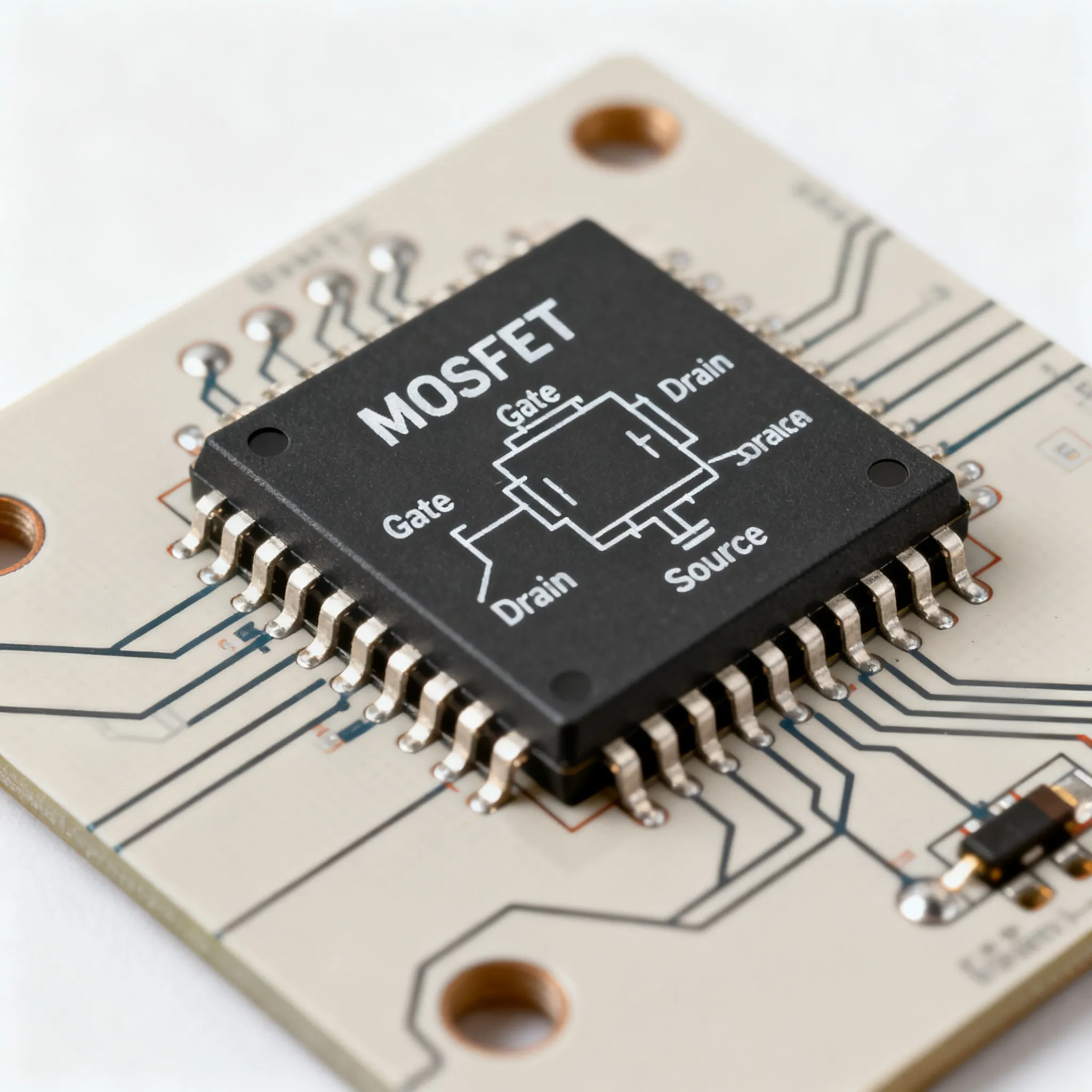
Introduction
In the world of electronics, MOSFETs (Metal-Oxide-Semiconductor Field-Effect Transistors) play a crucial role as essential components in the design and functioning of a wide array of circuits. Their ability to efficiently switch and amplify electronic signals makes them indispensable in modern electronics, from power supplies to motor controls and audio amplifiers. With the global semiconductor market projected to reach $595.2 billion by 2026, as reported by the Semiconductor Industry Association, the demand for reliable and efficient MOSFETs continues to surge. Understanding their specifications and troubleshooting common issues is pivotal for engineers and hobbyists alike.
Technical Overview
MOSFETs are semiconductor devices used to switch or amplify signals in electronic devices. They are voltage-controlled devices, meaning that their operation is governed by the voltage applied to the gate terminal. Unlike bipolar junction transistors (BJTs), which are current-controlled, MOSFETs offer high input impedance and fast switching speeds, making them ideal for high-frequency applications. The core principle of a MOSFET involves the modulation of a channel's conductivity between the source and drain terminals through an electric field induced by the gate voltage.
The two main types of MOSFETs are N-channel and P-channel, distinguished by the type of charge carriers that flow through them. N-channel MOSFETs, such as the IRF520, are generally preferred for their lower on-resistance and higher electron mobility. On the other hand, P-channel MOSFETs, like the IRF9540, are used in high-side switching applications. Key parameters that define MOSFET performance include threshold voltage (Vth), on-state resistance (RDS(on)), maximum drain current (ID), and breakdown voltage (VDS).
Detailed Specifications
| Parameter | Value | Units | Notes |
|---|---|---|---|
| Maximum Drain-Source Voltage (VDS) | 100 | V | Breakdown voltage |
| Maximum Gate-Source Voltage (VGS) | ±20 | V | Gate voltage tolerance |
| Continuous Drain Current (ID) | 17 | A | At 25°C |
| On-State Resistance (RDS(on)) | 0.27 | Ω | Typical value |
| Threshold Voltage (Vth) | 2.0 - 4.0 | V | Gate voltage required to turn on |
| Gate Charge (QG) | 25 | nC | Typical value |
| Input Capacitance (Ciss) | 1500 | pF | Measured at VDS = 25V |
| Output Capacitance (Coss) | 200 | pF | - |
| Reverse Recovery Time (trr) | 75 | ns | - |
| Junction Temperature (TJ) | -55 to 150 | °C | Operating range |
| Parameter | Value | Units | Notes |
|---|---|---|---|
| Thermal Resistance (Junction-to-Case) | 1.0 | °C/W | Typical value |
| Thermal Resistance (Junction-to-Ambient) | 62.5 | °C/W | With heatsink |
| Package Type | TO-220 | - | Standard package |
| Mounting Style | Through Hole | - | - |
| Lead Free | Yes | - | RoHS compliant |
| Heatsink Required | Yes | - | For high power applications |
| Weight | 2.0 | g | - |
| Dimensions | 10.4 x 4.6 x 15.7 | mm | L x W x H |
| Application | Recommended MOSFET | Notes |
|---|---|---|
| Switch Mode Power Supply (SMPS) | IRF540N | Low RDS(on) for efficient power conversion |
| Motor Control | IRLZ44N | High current capability |
| Audio Amplifiers | IRFP240 | Linear amplification |
| DC-DC Converters | IRF3205 | High efficiency |
| LED Drivers | IRF3708 | Low gate charge |
The tables above provide detailed insights into the electrical and thermal characteristics of MOSFETs, as well as their suitability for various applications. Understanding these specifications is crucial for selecting the right component for your design. For instance, the on-state resistance (RDS(on)) is a critical factor influencing power loss and efficiency, while gate charge (QG) affects switching speed. Moreover, thermal management, as indicated by parameters like thermal resistance, is vital for ensuring reliable operation under high power conditions.
Design Considerations
Designing with MOSFETs requires careful consideration of various factors to ensure optimal performance and reliability. The first step is selecting a MOSFET with appropriate voltage and current ratings for your application. The maximum drain-source voltage (VDS) should exceed the highest voltage the device will encounter, while the continuous drain current (ID) should accommodate the maximum expected current.
Thermal management is another critical aspect. The power dissipation in a MOSFET is determined by the product of the drain current and the on-state resistance (P = ID² * RDS(on)), and this must be managed to prevent overheating. Heatsinks or active cooling may be necessary, especially in high-power applications. The thermal resistance from junction-to-case and junction-to-ambient provides a measure of the device's ability to dissipate heat.
When designing circuits that require fast switching, gate charge and input capacitance become important. A lower gate charge allows for faster switching, reducing transition losses. Additionally, proper gate drive circuitry is essential to ensure the MOSFET switches fully on and off, minimizing power loss in the linear region.
Finally, consider the package type and mounting style. Through-hole components like the TO-220 package offer robustness and ease of use in prototyping, while surface mount devices (SMD) are more suitable for compact designs. Ensure that the selected package can handle the thermal and mechanical stresses of your application.
Step-by-Step Guide
- Identify Requirements: Determine the voltage, current, and power requirements of your application. This will guide your selection of the appropriate MOSFET.
- Select the MOSFET: Use a distributor's database, such as DigiKey Electronics, to find MOSFETs that meet your specifications. Consider parameters like VDS, ID, and RDS(on).
- Design the Gate Drive Circuit: Ensure the gate drive circuit can provide the necessary voltage and current to switch the MOSFET efficiently. A gate resistor might be needed to limit the inrush current.
- Plan for Thermal Management: Calculate the power dissipation and select an appropriate heatsink or cooling method. Consider the thermal resistance ratings to ensure adequate heat dissipation.
- Prototype the Circuit: Assemble the circuit on a breadboard or PCB. Use an oscilloscope to verify the switching performance, ensuring clean transitions and minimal overshoot.
- Test Under Load: Apply the expected load and monitor the MOSFET's temperature and performance. Ensure it operates within safe limits, adjusting the design as necessary.
- Refine the Design: Based on testing, make any necessary adjustments to component values or layout to optimize performance and reliability.
- Finalize the Design: Once testing is complete and the design is verified, create a final version of the PCB for production, ensuring all components are correctly specified and sourced.
Common Issues & Solutions
Despite their widespread use, MOSFETs can present several challenges in practical applications. Here are some common issues and their solutions:
- Overheating: This can occur if the MOSFET is not adequately cooled. Ensure proper heatsinking and consider using a MOSFET with a lower RDS(on) to reduce power dissipation.
- Gate Voltage Insufficiency: If the gate voltage is too low, the MOSFET may not fully turn on, leading to high losses. Ensure the gate voltage is within the specified range, typically 10-15V for N-channel MOSFETs.
- Oscillations: High-frequency oscillations can occur due to parasitic inductance and capacitance. Use a gate resistor and decoupling capacitors to stabilize the circuit.
- False Triggering: Noise can cause unintentional switching. Implement proper filtering and shielding techniques to minimize interference.
- Failure to Switch: This can result from incorrect gate drive circuitry. Verify the gate drive voltage and current capabilities, ensuring they meet the MOSFET's requirements.
- Thermal Runaway: Inadequate thermal management can lead to thermal runaway. Use thermal protection mechanisms such as temperature sensors and shutdown features.
Applications & Use Cases
MOSFETs are versatile components used in a wide range of applications. In switch mode power supplies (SMPS), they provide efficient power conversion, while in motor control circuits, they handle high currents with ease. Audio amplifiers benefit from their linear amplification capabilities, and DC-DC converters utilize their fast switching to achieve high efficiency. Additionally, MOSFETs are commonly used in LED drivers, where their low gate charge reduces power loss and improves performance.
Each application has unique requirements, and selecting the right MOSFET is crucial for achieving optimal performance. For example, the IRF540N is often recommended for SMPS applications due to its low on-state resistance, while the IRLZ44N is favored in motor control for its high current capacity.
Selection & Sourcing Guide
Selecting the right MOSFET involves considering various parameters, including voltage, current, and thermal characteristics. Utilize resources like IC Online to search for and source components. Ensure the selected MOSFET meets the specific needs of your application, and consider factors like cost, availability, and lead time when making your decision.
FAQ
- What is a MOSFET used for? MOSFETs are used for switching and amplifying electronic signals in various applications, including power supplies, motor controls, and amplifiers.
- How do I choose the right MOSFET? Consider the voltage, current, and thermal requirements of your application, and select a MOSFET that meets these specifications.
- What is the difference between N-channel and P-channel MOSFETs? N-channel MOSFETs use electrons as charge carriers and are generally more efficient, while P-channel MOSFETs use holes as charge carriers and are suitable for high-side switching.
- Why is thermal management important for MOSFETs? Proper thermal management prevents overheating, ensuring reliable operation and preventing damage to the MOSFET.
- What is gate charge, and why does it matter? Gate charge affects the MOSFET's switching speed. A lower gate charge allows for faster switching, reducing power loss.
- How can I prevent MOSFET overheating? Use appropriate heatsinking, ensure adequate airflow, and select a MOSFET with a low on-state resistance.
- What is the role of the gate resistor in a MOSFET circuit? A gate resistor limits the inrush current to the gate, preventing oscillations and ensuring stable operation.
- Can MOSFETs be used for both AC and DC applications? Yes, MOSFETs can be used in both AC and DC applications, although their specific characteristics may influence performance in AC applications.
- What are some common MOSFET packages? Common packages include TO-220, TO-247, and surface mount options like SO-8 and DPAK.
- How do I test a MOSFET? Use a multimeter to check the gate-source and drain-source junctions for proper operation, and verify switching performance with an oscilloscope.
Conclusion
Understanding MOSFET specifications and troubleshooting common issues are essential skills for any electronics engineer. By selecting the right MOSFET for your application and implementing robust design practices, you can ensure reliable and efficient operation. With the ongoing growth of the semiconductor industry, as highlighted by resources like
Related Articles
IGBT vs MOSFET: Choosing the Right Power Switch for Cost-Effective Design
Expert guide on IGBT vs MOSFET: Choosing the Right Power Switch for Cost-Effective Design. Technical specs, applications, sourcing tips for engineers and buyers.
Step-by-Step Design Tutorial: Integrating an ADC Chip for Arduino Projects
Expert guide on Step-by-Step Design Tutorial: Integrating an ADC Chip for Arduino Projects. Technical specs, applications, sourcing tips for engineers and buyers.
2026 Market Outlook: The Future of RF Modules and Their Applications in Wireless Communication
Expert guide on 2026 Market Outlook: The Future of RF Modules and Their Applications in Wireless Communication. Technical specs, applications, sourcing tips for engineers and buyers.
microcontroller
Expert guide on microcontroller. Technical specs, applications, sourcing tips for engineers and buyers.
Choosing the Right Microcontroller Board for Your Next Project: A Practical Guide
Expert guide on Choosing the Right Microcontroller Board for Your Next Project: A Practical Guide. Technical specs, applications, sourcing tips for engineers and buyers.
Optimizing Audio Quality: Case Studies on the Impact of DAC Chips in Modern Devices
Expert guide on Optimizing Audio Quality: Case Studies on the Impact of DAC Chips in Modern Devices. Technical specs, applications, sourcing tips for engineers and buyers.