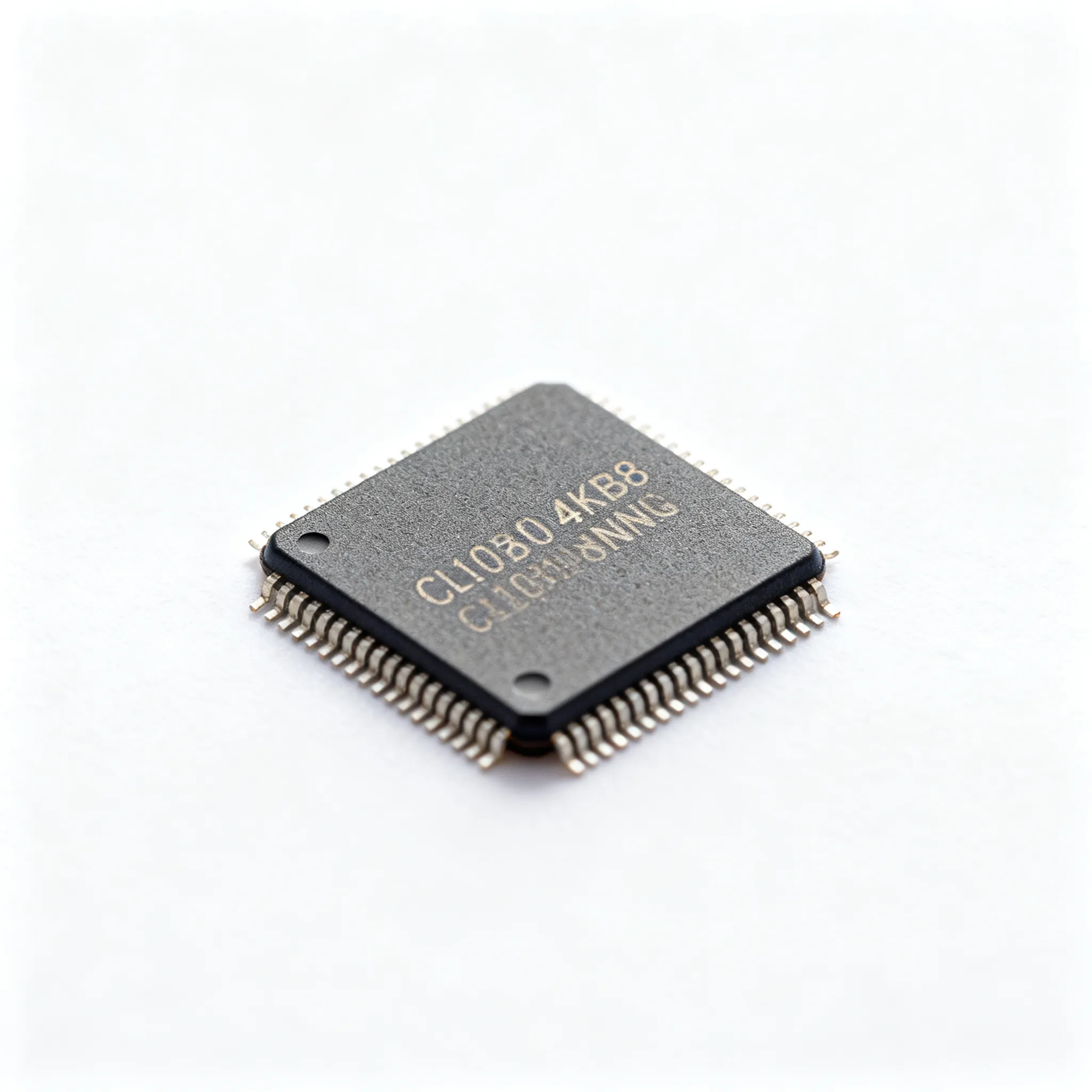
AD7524KP Overview: 8-Bit Multiplying DAC Architecture, Features, and Applications
Understanding the AD7524KP Architecture The AD7524KP is an 8-bit multiplying digital-to-analog converter (DAC) that employs a unique architecture
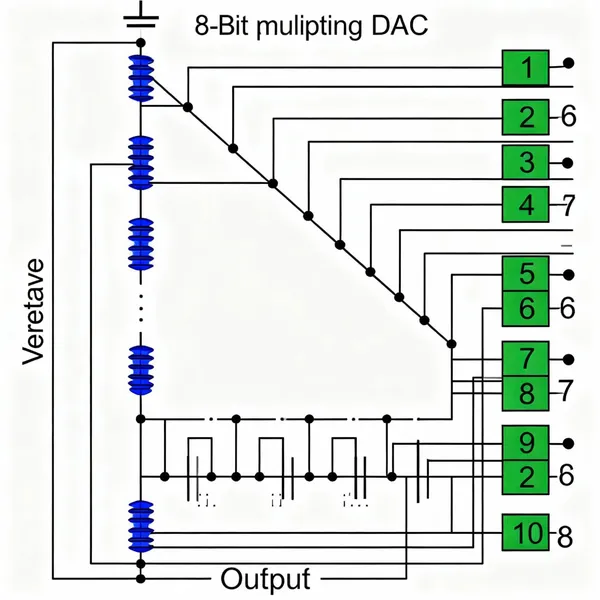
Understanding the AD7524KP Architecture
The AD7524KP is an 8-bit multiplying digital-to-analog converter (DAC) that employs a unique architecture allowing it to convert digital input codes into proportional analog output voltages or currents. This capability is crucial for applications requiring precise analog signal generation from digital data.
The internal structure of the AD7524KP includes a digital input register, a resistor ladder network, and an operational amplifier. The multiplying function is achieved by scaling the digital input with a reference voltage, resulting in an output that is directly proportional to the product of these two inputs.
Resolution and accuracy play significant roles in DAC applications. The 8-bit resolution of the AD7524KP allows for 256 discrete output levels, making it suitable for a variety of applications where ultra-high resolution is not critical.
Key Features of the AD7524KP
This DAC boasts several electrical specifications that enhance its performance:
- Voltage Range: The AD7524KP supports a bipolar output voltage range when paired with an appropriate reference voltage, allowing it to generate both positive and negative analog signals.
- Operational Speed: The device features a settling time that is crucial for applications requiring rapid response to digital input changes.
- Compatibility: The AD7524KP is designed to be compatible with various digital interfaces, enhancing its versatility in different systems.
Selecting the AD7524KP for Your Design
When selecting the AD7524KP for your design, follow these steps to ensure optimal performance:
- Define Application Requirements: Identify the necessary resolution, speed, and output range.
- Evaluate BOM Cost: Consider the components in your bill of materials (BOM) and their availability to manage costs effectively.
- Check PCBA Compatibility: Ensure that the DAC's package type (20-pin plastic DIP) aligns with your PCB assembly (PCBA) processes, especially if using surface-mount technology (SMT).
- Reference Datasheet: Always refer to the official datasheet for detailed specifications and pin configurations to avoid integration issues.
Real-World Applications of the AD7524KP
The AD7524KP is widely used in various applications: If you’re sourcing parts, you can optionally check current availability on ic-online.com. When you’re ready to purchase, Octopart is an optional checkpoint for pricing/stock. If BOM timing is critical, Texas Instruments is a quick place to confirm availability. If you’re sourcing parts, you can optionally check current availability on Infineon. When you’re ready to purchase, STMicroelectronics is an optional checkpoint for pricing/stock.
- Audio Systems: It is utilized for waveform generation and processing in audio applications, where precise analog output control is essential.
- Industrial Controls: The DAC is employed in control systems requiring accurate signal generation for actuator control.
- Instrumentation: Its ability to convert digital signals into analog outputs makes it ideal for sensor interfacing and data acquisition systems.
For instance, in an audio processing application, the AD7524KP can be used to modulate the amplitude of an audio signal based on digital input, allowing for dynamic control over sound output.
Comparative Analysis with Other 8-Bit DACs
When comparing the AD7524KP with similar 8-bit DACs from other manufacturers, several factors should be considered:
- Performance: Evaluate the settling time and linearity against competitors to determine the best fit for your application.
- Cost: Assess the BOM cost implications of various options, including the AD7524KP.
- Industry Trends: Keep an eye on advancements in DAC technology that may influence future design choices.
Troubleshooting and Best Practices
To ensure optimal performance and reliability when using the AD7524KP, consider the following best practices:
- Common Issues: Be aware of potential issues such as output voltage inaccuracies or instability, and have solutions ready.
- Circuit Design: Optimize your circuit layout to minimize noise and ensure proper grounding.
- Validation: Perform thorough testing of DAC linearity and output accuracy during the verification process.
- Scope: This article discusses the architecture, features, and applications of the AD7524KP, without delving into proprietary comparisons.
- Evidence discipline: Claims are based on verifiable datasheets and manufacturer specifications.
- Practical engineering lens: Real constraints and verification steps are emphasized to guide engineers.
- Update guidance: Always check the latest datasheet or vendor notes for updates and changes in specifications.
FAQ
- What is the maximum output voltage of the AD7524KP?
The maximum output voltage is typically specified in the datasheet, usually ranging from 0V to the reference voltage applied. - How does the multiplying function work in the AD7524KP?
The DAC multiplies the digital input by the reference voltage, allowing for scaling the output signal based on the input value. - What are the typical applications for the AD7524KP?
Common uses include audio processing, signal generation, and control systems, as well as instrumentation and sensor interfacing. - How can I obtain the official datasheet for the AD7524KP?
The official datasheet can be found on the Analog Devices website, which includes detailed specifications, pin configurations, and application notes. - What considerations should I have for SMT assembly of the AD7524KP?
Ensure proper footprint design on the PCB for compatibility, and consider thermal management and soldering techniques for reliability. - What is the significance of BOM in selecting the AD7524KP?
BOM impacts the overall cost and availability of components in your design, and choosing readily available components can reduce lead times.