Choosing the Right MOSFET: A Practical Guide for Engineers in Power Applications
Expert guide on Choosing the Right MOSFET: A Practical Guide for Engineers in Power Applications. Technical specs, applications, sourcing tips for engineers and buyers.
Introduction
In the rapidly evolving landscape of electronics, selecting the appropriate MOSFET (Metal-Oxide-Semiconductor Field-Effect Transistor) is crucial for designing efficient power systems. As power applications become more demanding, engineers must navigate a myriad of specifications to ensure optimal performance. This article serves as a comprehensive guide to choosing the right MOSFET, focusing on component specifications, datasheets, and application circuits. With global semiconductor revenue projected to reach $595.2 billion by 2026, understanding the nuances of MOSFET selection is more critical than ever.
Technical Overview
MOSFETs are pivotal in modern electronic devices, acting as electronic switches or amplifiers. These components are essential in power electronics due to their efficiency, speed, and ability to handle high power levels. Core concepts revolve around understanding the MOSFET's operation, which involves controlling the flow of current through the device's channel using a voltage applied to its gate. Key parameters such as threshold voltage, on-resistance, and maximum drain current determine a MOSFET's suitability for specific applications. As engineers, it is essential to grasp these principles to leverage MOSFETs effectively in power applications.
Detailed Specifications
| Parameter | Value | Units | Notes |
|---|---|---|---|
| Drain-Source Voltage (VDS) | 600 | V | Maximum voltage between drain and source |
| Gate-Source Voltage (VGS) | ±20 | V | Maximum allowable gate-source voltage |
| Continuous Drain Current (ID) | 30 | A | At 25°C case temperature |
| On-Resistance (RDS(on)) | 0.1 | Ω | Drain-source resistance when the MOSFET is on |
| Threshold Voltage (VGS(th)) | 2.5 | V | Gate-source voltage at which the MOSFET begins to conduct |
| Power Dissipation (PD) | 150 | W | Maximum power the MOSFET can dissipate |
| Input Capacitance (Ciss) | 1200 | pF | Capacitance between gate and source |
| Output Capacitance (Coss) | 300 | pF | Capacitance between drain and source |
| Reverse Transfer Capacitance (Crss) | 50 | pF | Capacitance between gate and drain |
| Maximum Junction Temperature (Tj) | 150 | °C | Maximum allowable junction temperature |
| Parameter | Value | Units | Notes |
|---|---|---|---|
| Thermal Resistance, Junction-to-Case (RθJC) | 0.5 | °C/W | Heat dissipation efficiency from junction to case |
| Thermal Resistance, Junction-to-Ambient (RθJA) | 62 | °C/W | Heat dissipation efficiency from junction to ambient |
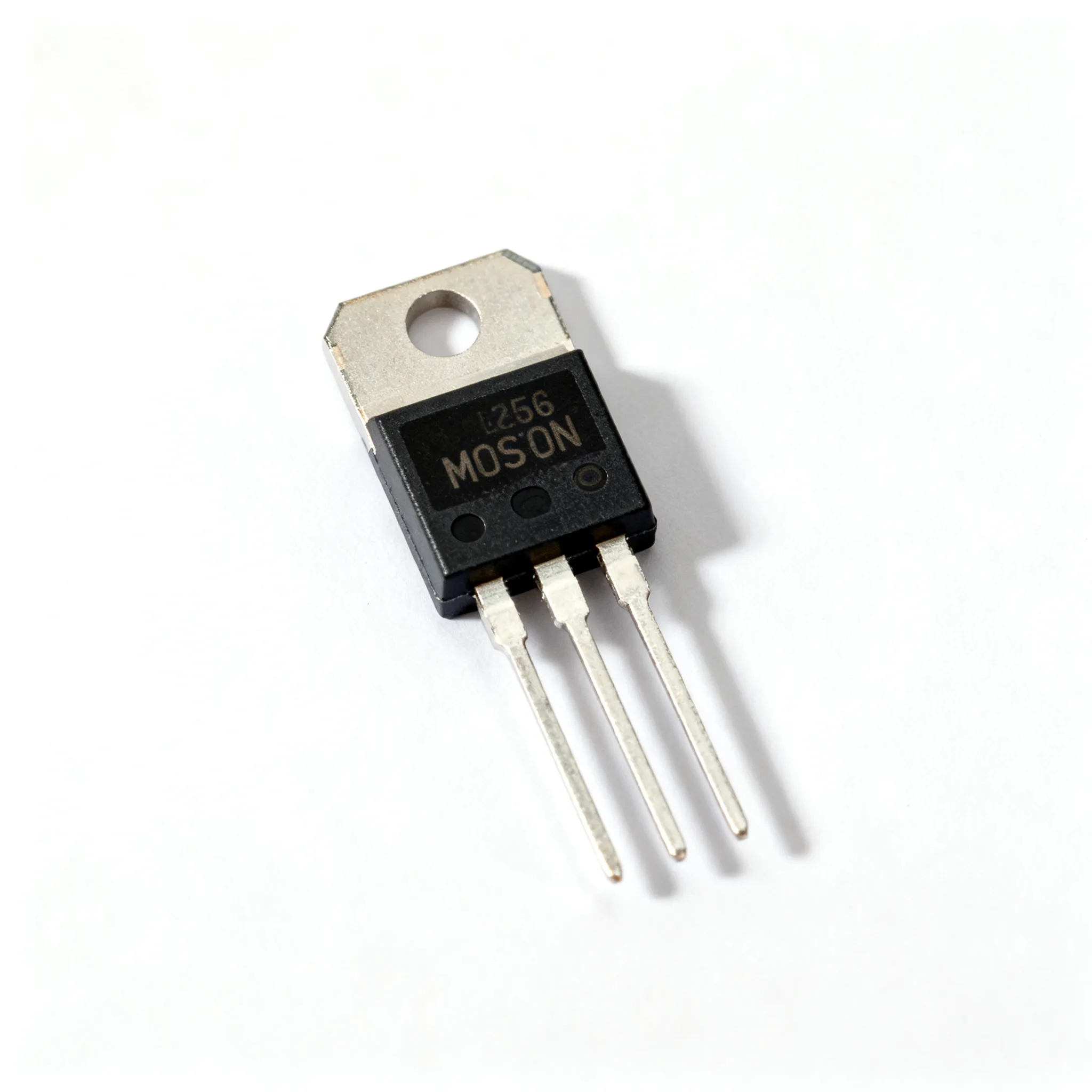
| Package Type | TO-220 | - | Common package for power MOSFETs |
| Mounting Type | Through Hole | - | Method of mounting to PCB |
| Lead Free | Yes | - | Compliant with RoHS standards |
| Weight | 1.5 | g | Weight of the MOSFET |
| Dimensions | 10 x 4.5 x 15 | mm | Length x Width x Height |
| Operating Temperature Range | -55 to 150 | °C | Range of temperatures for reliable operation |
| Application | Recommended MOSFET | Notes |
|---|---|---|
| Switch Mode Power Supply (SMPS) | IRF540N | Low on-resistance and high efficiency |
| DC-DC Converter | IRLB8721 | High current capacity and fast switching |
| Motor Control | IRF3205 | Handles high current and voltage spikes |
| Battery Management | IRLZ44N | Low gate threshold voltage for low power applications |
| Inverter Circuits | IRFZ44N | Robust performance in high power systems |
Design Considerations
When selecting a MOSFET for power applications, several design considerations must be taken into account to ensure optimal performance and reliability. The first step is to evaluate the electrical specifications, such as the drain-source voltage (VDS), gate-source voltage (VGS), and continuous drain current (ID). These parameters determine the voltage and current levels the MOSFET can handle, which must align with the application's requirements.
Another critical factor is the on-resistance (RDS(on)), which influences the efficiency and thermal performance of the MOSFET. Lower on-resistance results in reduced power loss and better thermal management. Engineers should also consider the threshold voltage (VGS(th)) to ensure that the MOSFET can be fully turned on with the available gate drive voltage.
Thermal management is equally important, as excessive heat can degrade performance and shorten the component's lifespan. Parameters like thermal resistance (RθJC and RθJA) provide insights into the MOSFET's ability to dissipate heat. Selecting a package type that facilitates effective heat dissipation, such as TO-220, is advisable for high-power applications.
Additionally, the application environment must be considered. Factors such as operating temperature range, humidity, and potential exposure to harsh conditions should guide the choice of MOSFET. Compliance with industry standards, such as RoHS, ensures that the component meets environmental and safety regulations.
Step-by-Step Guide
Choosing the right MOSFET involves a systematic approach to evaluate the component's suitability for the intended application. Follow these steps to make an informed decision:
- Identify Application Requirements: Determine the voltage, current, and power requirements of your application. Consider factors such as load type, switching frequency, and environmental conditions.
- Review Electrical Specifications: Refer to datasheets to examine key parameters like VDS, VGS, ID, and RDS(on). Ensure these values align with your application's demands.
- Evaluate Thermal Capabilities: Analyze thermal resistance and power dissipation ratings. Choose a MOSFET with adequate heat dissipation properties to prevent overheating.
- Consider Switching Performance: Look at switching speed parameters such as rise time and fall time. Faster switching improves efficiency in high-frequency applications.
- Assess Package and Mounting Options: Select a package type and mounting style that fits your PCB design and thermal management strategy.
- Verify Compliance and Reliability: Ensure the MOSFET complies with relevant standards and has a proven track record of reliability in similar applications.
- Prototype and Test: Build a prototype circuit to test the MOSFET's performance under real-world conditions. Make adjustments as needed based on test results.
- Finalize Selection: After thorough testing and validation, finalize your MOSFET selection and proceed with full-scale production.
Common Issues & Solutions
Despite careful selection, engineers may encounter issues during MOSFET application. Here are some common problems and their solutions:
- Overheating: Ensure proper heat sinking and ventilation. Consider using a MOSFET with lower RDS(on) to reduce power loss.
- Gate Drive Issues: Use a suitable gate driver circuit to provide adequate gate-source voltage for fast switching.
- Parasitic Oscillations: Minimize lead inductance and use snubber circuits to dampen oscillations.
- Voltage Spikes: Implement clamping diodes or transient voltage suppressors to protect against voltage transients.
- Inadequate Current Handling: Verify the MOSFET's current rating and use parallel MOSFETs if necessary to distribute the load.
Applications & Use Cases
MOSFETs are versatile components used in a wide range of power applications. In switch-mode power supplies (SMPS), MOSFETs like the IRF540N offer low on-resistance and high efficiency, making them ideal for energy-efficient designs. For DC-DC converters, the IRLB8721 provides high current capacity and fast switching, essential for voltage regulation tasks.
In motor control applications, the IRF3205 excels in handling high current and voltage spikes, ensuring reliable operation in demanding environments. Battery management systems benefit from the IRLZ44N, which features a low gate threshold voltage suitable for low power applications. Lastly, in inverter circuits, the IRFZ44N delivers robust performance in high power systems, supporting efficient energy conversion.
Selection & Sourcing Guide
When it comes to sourcing MOSFETs, partnering with reliable distributors is crucial. IC Online offers a wide selection of MOSFETs from leading manufacturers, ensuring competitive pricing and fast delivery. Utilize their extensive component search capabilities to find the right MOSFET for your project needs.
FAQ
- What is a MOSFET? A MOSFET is a type of transistor used for switching and amplifying electronic signals in power applications.
- How does a MOSFET work? A MOSFET operates by controlling the flow of current through its channel using a voltage applied to its gate.
- What are the key parameters to consider when selecting a MOSFET? Key parameters include VDS, VGS, ID, RDS(on), and thermal resistance.
- Why is thermal management important for MOSFETs? Proper thermal management prevents overheating, which can degrade performance and shorten component lifespan.
- What are common applications for MOSFETs? Common applications include SMPS, DC-DC converters, motor control, battery management, and inverter circuits.
- How can I reduce MOSFET power loss? Select a MOSFET with low RDS(on) and implement effective heat dissipation techniques.
- What is the significance of gate threshold voltage? It determines the minimum gate-source voltage required to turn the MOSFET on.
- Can MOSFETs be used in parallel? Yes, MOSFETs can be used in parallel to increase current handling capacity.
- What are some common issues with MOSFETs? Common issues include overheating, gate drive problems, parasitic oscillations, and voltage spikes.
- Where can I source reliable MOSFETs? Reliable MOSFETs can be sourced from distributors like IC Online.
Conclusion
Choosing the right MOSFET is integral to the success of power applications, impacting efficiency, reliability, and performance. By understanding key specifications and design considerations, engineers can select MOSFETs that meet their specific needs. Leveraging resources like datasheets and trusted distributors ensures access to high-quality components, facilitating the development of robust electronic systems.