STM32F103C8T6: A 2026 Market Outlook and Essential Buying Guide for Engineers
Expert guide on STM32F103C8T6: A 2026 Market Outlook and Essential Buying Guide for Engineers. Technical specs, applications, sourcing tips for engineers and buyers.
Introduction
The STM32F103C8T6 microcontroller, a cornerstone of the STM32 family, continues to be a popular choice for embedded systems due to its robust performance and cost-effectiveness. As the semiconductor industry projected to reach $595.2 billion in 2026, according to the Semiconductor Industry Association, the demand for versatile microcontrollers like STM32F103C8T6 remains strong. This article explores the technical specifications, applications, and selection criteria for the STM32F103C8T6, providing a comprehensive guide for engineers and designers looking to integrate this component into their projects.
Technical Overview
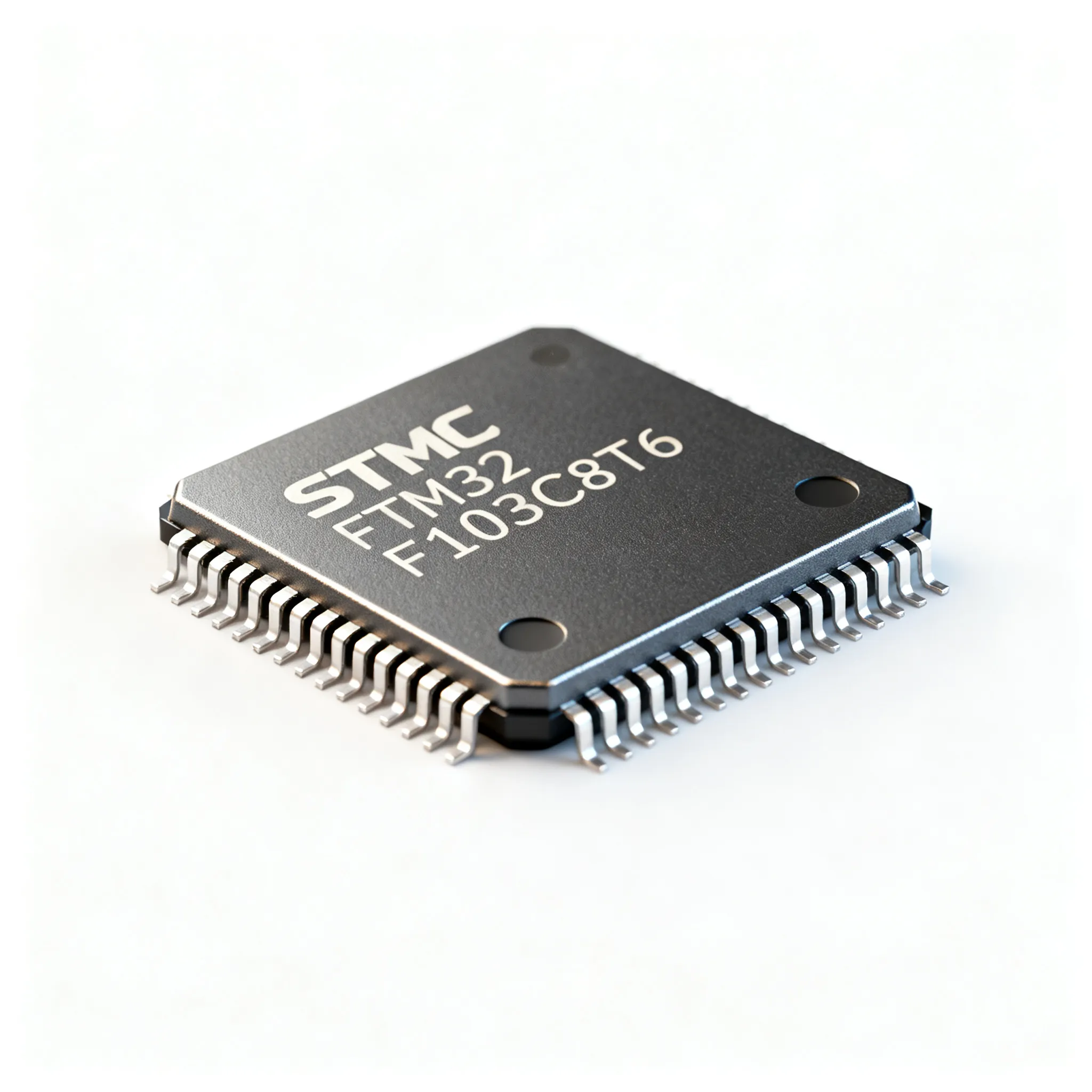
The STM32F103C8T6 is part of the STM32F1 series, known for its balance of performance, power consumption, and cost. Built around the ARM Cortex-M3 core, this microcontroller operates at a frequency of up to 72 MHz, offering a rich set of peripherals and interfaces. Its architecture is designed to support real-time operations, making it suitable for a wide range of applications from consumer electronics to industrial automation.
The microcontroller is equipped with 64 KB of Flash memory and 20 KB of SRAM, providing ample space for program code and data storage. It features multiple communication interfaces including UART, SPI, and I2C, enhancing its versatility in complex systems. The ADC, with a resolution of 12 bits, allows for precise analog-to-digital conversions, essential for sensor interfacing and data acquisition tasks.
Detailed Specifications
| Parameter | Value | Units | Notes |
|---|---|---|---|
| Core | ARM Cortex-M3 | N/A | 32-bit RISC processor |
| Operating Frequency | 72 | MHz | Maximum clock speed |
| Flash Memory | 64 | KB | Program storage |
| SRAM | 20 | KB | Data storage |
| GPIO Pins | 37 | Pins | General-purpose I/O |
| ADC Channels | 10 | Channels | 12-bit resolution |
| UART Interfaces | 3 | Ports | Serial communication |
| SPI Interfaces | 2 | Ports | Serial Peripheral Interface |
| I2C Interfaces | 2 | Ports | Inter-Integrated Circuit |
| Timer Units | 4 | Units | Advanced control |
| USB Ports | 1 | Port | Full-speed USB 2.0 |
| Parameter | Value | Units | Notes |
|---|---|---|---|
| Operating Temperature | -40 to 85 | °C | Industrial range |
| Storage Temperature | -65 to 150 | °C | Safe storage limits |
| Package Type | LQFP | N/A | Low-profile quad flat package |
| Package Size | 48 | Pins | Pin count |
| VDD Voltage | 2.0 to 3.6 | V | Operating voltage range |
| Power Consumption (Run) | 27 | mA | At 72 MHz |
| Power Consumption (Sleep) | 1.8 | mA | Low-power mode |
| Thermal Resistance | 27 | °C/W | Junction to ambient |
| Application | Description | Advantages | Considerations |
|---|---|---|---|
| Consumer Electronics | Used in devices like remote controls and toys | Low power, cost-effective | Limited processing power |
| Industrial Automation | Control systems and sensors | Reliable and robust | Requires precise timing |
| Home Automation | Smart home devices | Easy integration | Security concerns |
| Medical Devices | Non-critical monitoring devices | Compact and efficient | Regulatory compliance |
| Automotive | Infotainment systems | High reliability | Temperature limits |
The tables above provide a comprehensive overview of the STM32F103C8T6's electrical, thermal, and mechanical specifications, as well as its application areas. Engineers can use this data to assess the suitability of the microcontroller for their specific project requirements, considering factors such as operating temperature, power consumption, and peripheral support.
Design Considerations
When designing with the STM32F103C8T6, several critical considerations must be made to ensure optimal performance and reliability. First, power management is crucial, especially in battery-operated devices. Utilizing the microcontroller's low-power modes can significantly extend battery life, making it ideal for portable applications. Additionally, careful design of the power supply and decoupling capacitors is necessary to maintain stable operation under varying loads.
The choice of communication interfaces should align with the requirements of the target application. For instance, the availability of multiple UART, SPI, and I2C interfaces allows for flexible connectivity options, supporting a wide range of peripherals and sensors. Engineers should ensure that the selected interfaces meet the speed and data integrity requirements of the application.
Attention should also be given to the microcontroller's GPIO configuration. With 37 GPIO pins available, developers have the flexibility to interface with various external components. However, it is essential to consider the electrical characteristics of these pins, such as their drive strength and input/output voltage levels, to prevent damage and ensure reliable operation.
Finally, software development is a key aspect of any microcontroller-based project. The STM32F103C8T6 is supported by a robust ecosystem of development tools, including the STM32CubeMX configuration tool and the STM32CubeIDE integrated development environment. Leveraging these tools can accelerate the development process and help in the efficient management of the microcontroller's resources.
Step-by-Step Guide
- Define System Requirements: Start by clearly defining the system requirements, including processing power, memory, communication interfaces, and power consumption. This will guide the overall design and ensure that the STM32F103C8T6 is a suitable choice for the application.
- Select Development Tools: Choose the appropriate development tools for your project. The STM32CubeMX tool can help configure the microcontroller's peripherals and generate initialization code, while the STM32CubeIDE provides a comprehensive environment for code development and debugging.
- Design Circuit Schematic: Create a detailed circuit schematic that includes the STM32F103C8T6, power supply, decoupling capacitors, and any external components. Ensure that all connections are correctly made and that the microcontroller is properly powered and grounded.
- Develop Firmware: Write the firmware using the STM32CubeIDE. Begin with initializing the microcontroller's peripherals and setting up the desired communication protocols. Implement the main application logic, ensuring efficient use of the microcontroller's resources.
- Prototype and Test: Assemble a prototype of the system and conduct thorough testing. Verify that all functionalities work as expected and that the system meets the defined requirements. Pay close attention to power consumption and thermal performance.
- Optimize and Finalize: Based on the testing results, make any necessary optimizations to the hardware or firmware. This may involve refining the power management strategy or optimizing the code for performance and efficiency.
- Prepare for Production: Once the design is finalized, prepare the system for production. This includes creating detailed documentation, finalizing the PCB design, and ensuring compliance with relevant standards and regulations.
- Deploy and Maintain: Deploy the final product and establish a maintenance plan. Regularly update the firmware to address any issues and add new features, ensuring that the system remains reliable and up-to-date.
Common Issues & Solutions
- Power Supply Instability: Ensure that the power supply design includes adequate decoupling capacitors close to the microcontroller's power pins to stabilize the supply voltage and prevent voltage drops.
- Communication Errors: Verify that the communication interfaces are correctly configured, with matching baud rates and data formats. Use pull-up resistors on I2C lines to ensure proper signal integrity.
- Overheating: Check the thermal design and ensure that the microcontroller operates within its specified temperature range. Consider adding heat sinks or improving airflow if necessary.
- Inconsistent GPIO Behavior: Confirm that the GPIO pins are configured correctly in both hardware and software. Ensure that the pins are not exposed to voltages outside their specified range.
- Flash Memory Corruption: Implement robust error-checking and correction mechanisms in the firmware to handle potential flash memory errors and prevent data corruption.
- Firmware Bugs: Use debugging tools and techniques such as breakpoints, watchpoints, and logging to identify and resolve firmware issues. Regularly update the firmware to incorporate bug fixes and improvements.
Applications & Use Cases
The versatility of the STM32F103C8T6 makes it suitable for a wide range of applications. In consumer electronics, it powers devices such as remote controls, toys, and home automation systems. Its low power consumption and compact size are advantageous in portable and battery-operated devices.
In industrial automation, the microcontroller is used in control systems, sensors, and communication interfaces, where its reliability and real-time capabilities are critical. The medical device sector also benefits from its compact design and efficiency, particularly in non-critical monitoring devices.
The automotive industry leverages the STM32F103C8T6 for infotainment systems and other non-safety-critical applications, where its robustness and temperature tolerance are essential. Overall, its adaptability and performance make it a valuable component across various domains.
Selection & Sourcing Guide
When selecting the STM32F103C8T6, consider the specific requirements of your application, such as processing power, memory, and peripheral support. Ensure that the microcontroller meets any regulatory and industry standards applicable to your project.
For sourcing, visit IC Online, an authorized distributor offering competitive pricing and fast delivery. Check availability and lead times to ensure timely procurement for your design and production schedules.
FAQ
- What is the maximum operating frequency of the STM32F103C8T6? The maximum operating frequency is 72 MHz.
- How much flash memory does the STM32F103C8T6 have? It has 64 KB of flash memory.
- Can the STM32F103C8T6 be used in automotive applications? Yes, it is suitable for non-safety-critical automotive applications.
- What development tools are available for the STM32F103C8T6? The STM32CubeIDE and STM32CubeMX are popular development tools.
- What are the power consumption figures for the STM32F103C8T6? It consumes 27 mA in run mode and 1.8 mA in sleep mode.
- Is the STM32F103C8T6 suitable for high-temperature environments? It operates within an industrial temperature range of -40 to 85 °C.
- How many GPIO pins are available on the STM32F103C8T6? There are 37 GPIO pins available.
- What is the resolution of the ADC in the STM32F103C8T6? The ADC has a resolution of 12 bits.
- Can the STM32F103C8T6 interface with SPI devices? Yes, it has two SPI interfaces available.
- Where can I source the STM32F103C8T6? It can be sourced from IC Online.
Conclusion
The STM32F103C8T6 remains a powerful and flexible solution for a wide range of applications, from consumer electronics to industrial automation. Its balanced performance, extensive peripheral support, and robust ecosystem make it an ideal choice for engineers looking to develop reliable and efficient embedded systems. As the industry continues to grow, the STM32F103C8T6 will undoubtedly play a significant role in future innovations.