TC33X2101E Lifecycle and Obsolescence Risk Checklist for Electronics Procurement
TC33X2101E lifecycle and obsolescence risk checklist. What to verify before redesign or last-time-buy — without assuming drop-in replacements.
Why TC33X2101E’s Lifecycle Stage Demands a Proactive Procurement Strategy
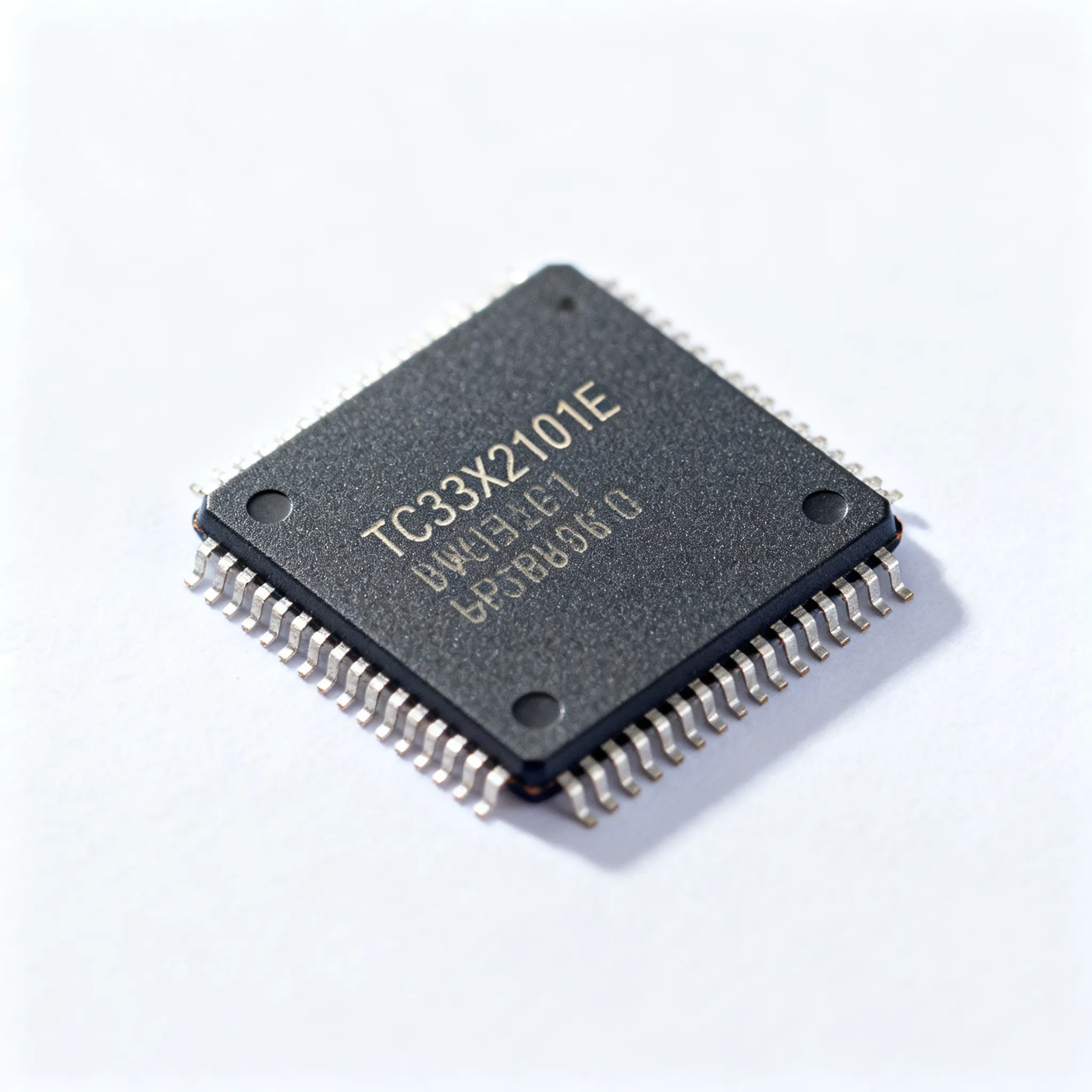
The component lifecycle is the silent engine that drives every procurement decision, yet it often stays invisible until a shortage or obsolescence notice lands on your desk. TC33X2101E is a mature 3 mm SMD trimpot trimming potentiometer built on a proven mixed-signal platform, widely used in consumer appliances, industrial panels, and medical devices. Because it is not a new introduction, supply dynamics are already shaped by the part’s mid‑life position. A proactive procurement strategy for this device isn’t just about avoiding a production halt — it’s about preventing the engineering cost of a last‑minute redesign and the financial impact of unplanned last‑time‑buy premiums.
In our experience supporting electronics buyers and design teams, the most expensive mistakes happen when a mature part is treated as “always available.” The Luminovo guide on obsolescence management makes it clear: component obsolescence drives costly redesigns and shortages, and the warning signs often appear in independent lifecycle forecasts long before the manufacturer issues a formal PCN. For TC33X2101E, that means you need to start monitoring lifecycle signals now — even if the status today reads “Active” — and build a checklist that covers PCN alerting, second‑source qualification, and last‑time‑buy sizing. The sections that follow give you exactly that framework, grounded in real procurement practice and supported by independent lifecycle data sources.
Decoding Lifecycle Codes and Status Signals for TC33X2101E
A part number alone doesn’t reveal its lifecycle stage; you have to read the signals the manufacturer and independent databases provide. For TC33X2101E, the official product page may show a field like “Active,” “Not for New Design (NRND),” or “End of Life (EOL).” But as SiliconExpert’s obsolescence management whitepaper explains, OEM lifecycle statuses often lag behind the real supply‑chain trajectory. Algorithmic forecasts that analyze historical part‑number transitions, fab‑loading patterns, and franchise‑distributor ordering trends can flag a rising obsolescence risk six to twelve months ahead of an official announcement.
To act early, you need to interpret both the manufacturer’s label and the independent forecast. The table below maps typical lifecycle stages for a mature touch‑controller like TC33X2101E to the corresponding signals and recommended actions. It draws on the lifecycle stage definitions from the Microchip USA component lifecycle guide and SiliconExpert’s data‑driven approach.
| Lifecycle Stage | Manufacturer Status Signal | Independent Forecast Signal | Recommended Action for TC33X2101E |
|---|---|---|---|
| Growth / Active | “Active” – full production, no constraints | Low obsolescence risk score; stable demand pattern | Confirm allocation‑backed lead time; begin qualifying a second‑source candidate |
| Mature | “Active” but with extended lead times or allocation notes | Elevated risk score; first signs of fab‑line migration | Increase safety stock; subscribe to PCN alerts; cross‑check lead time trends monthly |
| Not for New Design (NRND) | “NRND” – still produced, new designs discouraged | High obsolescence risk; last‑time‑buy window likely within 12‑18 months | Size last‑time‑buy quantity; formalize alternate‑part qualification plan |
| End of Life (EOL) | “EOL” or “Discontinued” – production stopped | Confirmed obsolete; remaining stock limited to distributor inventory | Execute last‑time‑buy; transition to qualified alternative; monitor grey‑market risk |
Key takeaway: Even if TC33X2101E currently shows an “Active” status, the independent forecast may already indicate a maturity phase. Relying solely on the manufacturer’s label can leave you with just weeks to react when the part moves to NRND. Always cross‑check with a platform that uses algorithmic lifecycle data, such as SiliconExpert, and build the monthly check into your procurement rhythm.
Evaluating Pin-Compatible Alternatives to TC33X2101E Before a Last-Time Buy
When a mature touch controller drifts toward NRND, engineering teams naturally look for a functional replacement that minimizes board‑level changes. The Ultra Librarian guide on obsolete components emphasizes that even a “pin‑compatible” part can hide register‑map differences, sensitivity drift, or firmware‑timing issues that only surface during qualification. For TC33X2101E, the goal is not to find a guaranteed drop‑in — none exists — but to identify evaluation candidates that share the same package footprint and interface, then verify them through a focused build.
The table below compares TC33X2101E with several single‑channel capacitive touch controllers that engineers often evaluate when modernizing a design. Every candidate must be verified for pad‑layout compatibility, I²C register behavior, and sensitivity calibration. Use this matrix as a starting point for your own qualification, not as a final recommendation.
| Candidate Part | Package | Interface / Core | Key I/O Features | Firmware & Compatibility Note | Selection Criteria |
|---|---|---|---|---|---|
| TC33X2101E (reference) | SOT23‑6 | I²C; single‑channel; 1.8‑5.5 V | Proximity + touch; 10‑bit capacitance measurement | Baseline firmware; proven touch‑sensing library | Mature, widely deployed; lifecycle risk must be monitored |
| Azoteq IQS211 | SOT23‑6 | I²C; single‑channel; 1.8‑3.6 V | Self‑capacitance; integrated auto‑calibration | Different register map; verify sensitivity and I²C command set | Evaluate where lower voltage range is acceptable; confirm noise immunity |
| Semtech SX9320 | QFN‑8 | I²C; proximity sensing; 1.7‑3.6 V | SAR‑based; high resolution; dedicated proximity channel | Package change required; firmware adaptation for proximity algorithms | Consider for proximity‑centric designs; verify footprint and board‑layout changes |
| Microchip AT42QT1010 | SOT23‑6 | Single‑wire output; 1.8‑5.5 V | Digital touch output; no I²C, simple on/off | Not a register‑based replacement; requires host‑interface redesign | Use only when I²C communication is not needed; simpler but less flexible |
Tip: Before committing to any alternative, request a small‑batch prototype and run a full environmental test across temperature and humidity corners. Capacitive touch controllers are particularly sensitive to parasitic capacitance changes, and a “pin‑compatible” part can still exhibit a 15‑20% shift in sensitivity that alters the user experience. As Ultra Librarian’s obsolete component strategies highlight, qualification is not optional — it is the only way to avoid a field failure.
A 7-Point Obsolescence Risk Checklist for Securing Your TC33X2101E Supply
Managing obsolescence for a mature part like TC33X2101E requires a disciplined, repeatable process that connects engineering, procurement, and production planning. The checklist below distills best practices from the Luminovo lifecycle management guide and the SiliconExpert obsolescence whitepaper into seven actionable steps. Integrate it into your monthly BOM review and use it as a gate before any ECO is signed.
- Monitor PCN and EOL notices. Subscribe to the manufacturer’s product change notification system and set up keyword alerts for TC33X2101E in your distributor portals. Assign a responsible engineer to review each PCN within 48 hours.
- Cross‑check independent lifecycle forecasts. Use a platform that provides algorithmic risk scores, such as SiliconExpert, to detect rising obsolescence probability before an official NRND flag appears. Compare the forecast monthly and escalate any risk score above 7/10.
- Map the product lifecycle of your end‑equipment. If your product is in the first three years of production, the cost of a redesign is lower than if it is in a long‑tail sustainment phase. Align your last‑time‑buy decision with the remaining service life of the product.
- Qualify at least one second‑source candidate. Use the comparison table from the previous section to select an evaluation candidate. Complete a full electrical and firmware qualification on a small production batch, and document any necessary board‑layout changes.
- Size the last‑time‑buy quantity realistically. Calculate total demand over the planned service life, add a buffer for repair and RMA (typically 10‑15%), and factor in yield loss. Confirm allocation‑backed availability with your distributor before placing the order.
- Establish a safety‑stock buffer linked to lead‑time variability. While the part is still active, hold 3‑6 months of forecasted consumption as buffer stock. Adjust the buffer level quarterly based on the latest lead‑time confirmation and allocation status.
- Define a redesign trigger point. Agree internally that if the independent forecast risk score passes a predetermined threshold or if the manufacturer issues an NRND notice, the company will initiate the alternate‑part transition within 90 days.
The table below complements the checklist by mapping the three most common mitigation strategies to their ideal timing and the trade‑offs you must accept. Use it to align your procurement budget with the real risk profile of TC33X2101E.
| Action | When to Use | Trade‑off |
|---|---|---|
| Safety stock buffer | While the part is active but lead times are stretching; anytime before NRND | Increases inventory holding cost; reduces working capital. Must be balanced against current demand accuracy. |
| Last‑time buy | Immediately after NRND or EOL notice; before the transition window closes | Locks in a large cash outlay; risk of excess if demand drops. Requires accurate life‑time demand forecasting. |
| Qualify and migrate to alternative | When independent risk score is high, or NRND is expected within 12 months | Engineering effort and qualification lead time; may require board‑level changes and firmware re‑certification. |
| PCN‑driven redesign | When a PCN introduces a parameter shift that affects form, fit, or function | Forces a product change outside the normal roadmap; may create supply gap if alternative is not yet qualified. |
A procurement plan that combines these mitigation actions with the checklist turns a reactive fire‑drill into a controlled, cost‑managed transition. The key is to start before the NRND label appears — because once the last‑time‑buy window opens, your options narrow dramatically.
TC33X2101E Obsolescence FAQs: What Senior Engineers and Buyers Need to Know
Q: How can I verify the current lifecycle status of TC33X2101E from the manufacturer?
Check the official product page for a lifecycle status field (Active, NRND, EOL). Compare that with independent database forecasts from platforms like SiliconExpert, which use historical patterns to predict obsolescence ahead of official notices. A discrepancy between the manufacturer’s label and a high algorithmic risk score is a strong signal to increase monitoring frequency.
Q: What is the typical lead time for TC33X2101E, and how does that change near end-of-life?
Lead times can stretch from 8–16 weeks to 26 weeks or more as the part approaches the “Not for New Design” phase. Procurement should track lead‑time trends monthly and factor in a buffer before the last‑time‑buy date. Confirm allocation‑backed lead time with your supplier rather than relying on generic portal estimates.
Q: If TC33X2101E goes obsolete, are there drop-in replacement parts with identical footprint and firmware compatibility?
No part is guaranteed to be a perfect drop‑in. Candidates exist that share the same package and pinout, but I/O drive strength, peripheral registers, and electrical characteristics may differ. Always validate with a qualification build, as outlined in the alternative comparison section, and budget for minor firmware adaptation.
Q: What procurement strategies can mitigate the risk of a sudden last-time-buy announcement?
Hold a safety stock linked to forecasted demand plus product‑support lifetime; establish a PCN alert system with distributors; and maintain a qualified alternate component list that can be triggered without a full redesign. The 7‑point checklist above provides a step‑by‑step plan to make this routine.
Q: How should I handle PCN alerts for TC33X2101E to avoid production downtime?
Assign a responsible engineer to review each PCN within 48 hours. Assess whether the change affects form, fit, or function. If it introduces a parameter shift, request samples and run a focused test plan before the change is implemented in production. Document the outcome in your PLM system so that the whole team is aligned.
Q: What is the difference between ‘not recommended for new design’ and outright ‘obsolete’ status for this part?
NRND means the manufacturer still produces the part but advises against using it in new designs, typically with a last‑time‑buy window. Obsolete status means production has ceased and remaining stock is limited to distributor inventory. The transition from NRND to obsolete can happen quickly, so monitoring NRND announcements is critical — as detailed in the Microchip USA lifecycle guide.
References & Further Reading
- Component Obsolescence: Lifecycle & EOL Management Guide | Luminovo
- Lifecycle of an Electronic Component: From Design to Obsolescence – Microchip USA
- Obsolescence Management – SiliconExpert
- Obsolete Electronic Components: Guide – Ultra Librarian
- IC-Online BOM & RFQ Platform
Secure your supply chain for TC33X2101E with a structured, lifecycle‑aware approach. Request a quote or upload your full BOM on IC-Online to receive mixed‑BOM support with flexible MOQ, supported by our global network of franchised and independent distributors. Our team can help you cross‑reference lifecycle status, confirm allocation‑backed lead times, and identify evaluation candidates that fit your design — without the guesswork.