Understanding the Differences: STM32F407VET6 vs STM32F103RCT6 and Common Pitfalls
Key Specifications Overview When comparing the STM32F407VET6 and STM32F103RCT6, one of the first aspects to consider is their key specifications.
Key Specifications Overview
When comparing the STM32F407VET6 and STM32F103RCT6, one of the first aspects to consider is their key specifications. These microcontrollers serve different purposes based on their architecture and capabilities.
| Specification | STM32F407VET6 | STM32F103RCT6 |
|---|---|---|
| Core Architecture | ARM Cortex-M4 | ARM Cortex-M3 |
| Max Clock Speed | 168 MHz | 72 MHz |
| Flash Memory | 512 KB | 256 KB |
| SRAM | 192 KB | 48 KB |
| Package Type | 100-pin LQFP | 64-pin LQFP |
The STM32F407VET6 is designed for more demanding applications due to its higher clock speed and greater memory capacity. These specifications directly influence the performance and efficiency of the microcontroller in various projects.
Architectural Differences
The architectural differences between these two microcontrollers are significant. The STM32F407VET6 utilizes an ARM Cortex-M4 core, which includes a floating-point unit (FPU) and digital signal processing (DSP) capabilities. In contrast, the STM32F103RCT6 is based on the ARM Cortex-M3 core, which does not offer these advanced features. This difference is crucial for applications requiring complex mathematical computations or real-time processing.
Furthermore, the Cortex-M4 architecture allows for more efficient execution of algorithms, making the STM32F407VET6 a better choice for tasks involving signal processing or high-speed calculations.
Peripheral Features and Connectivity
Another critical aspect to evaluate is the available peripheral features and connectivity options. The STM32F407VET6 supports a wider range of communication interfaces, including:
- USB OTG FS/HS
- CAN
- Multiple SPI, I2C, and USART interfaces
On the other hand, the STM32F103RCT6 provides more limited options, which may restrict its use in applications requiring extensive communication capabilities. Moreover, the ADC capabilities differ significantly, with the STM32F407VET6 supporting more channels and higher resolution, making it more suitable for applications involving data acquisition or sensor interfacing.
Performance Benchmarks
When it comes to performance benchmarks, the STM32F407VET6 consistently outperforms the STM32F103RCT6 in various tests. For instance, in scenarios involving complex algorithms or real-time data processing, the STM32F407VET6 demonstrates faster execution times and lower latency.
Performance Flow: 1. Initialize system clock. 2. Configure peripherals based on application needs. 3. Execute main processing loop. 4. Handle interrupts and communication tasks. 5. Manage power states for efficiency.
These performance characteristics make the STM32F407VET6 a preferred choice for applications such as motor control, audio processing, and advanced robotics.
Choosing the Right Microcontroller
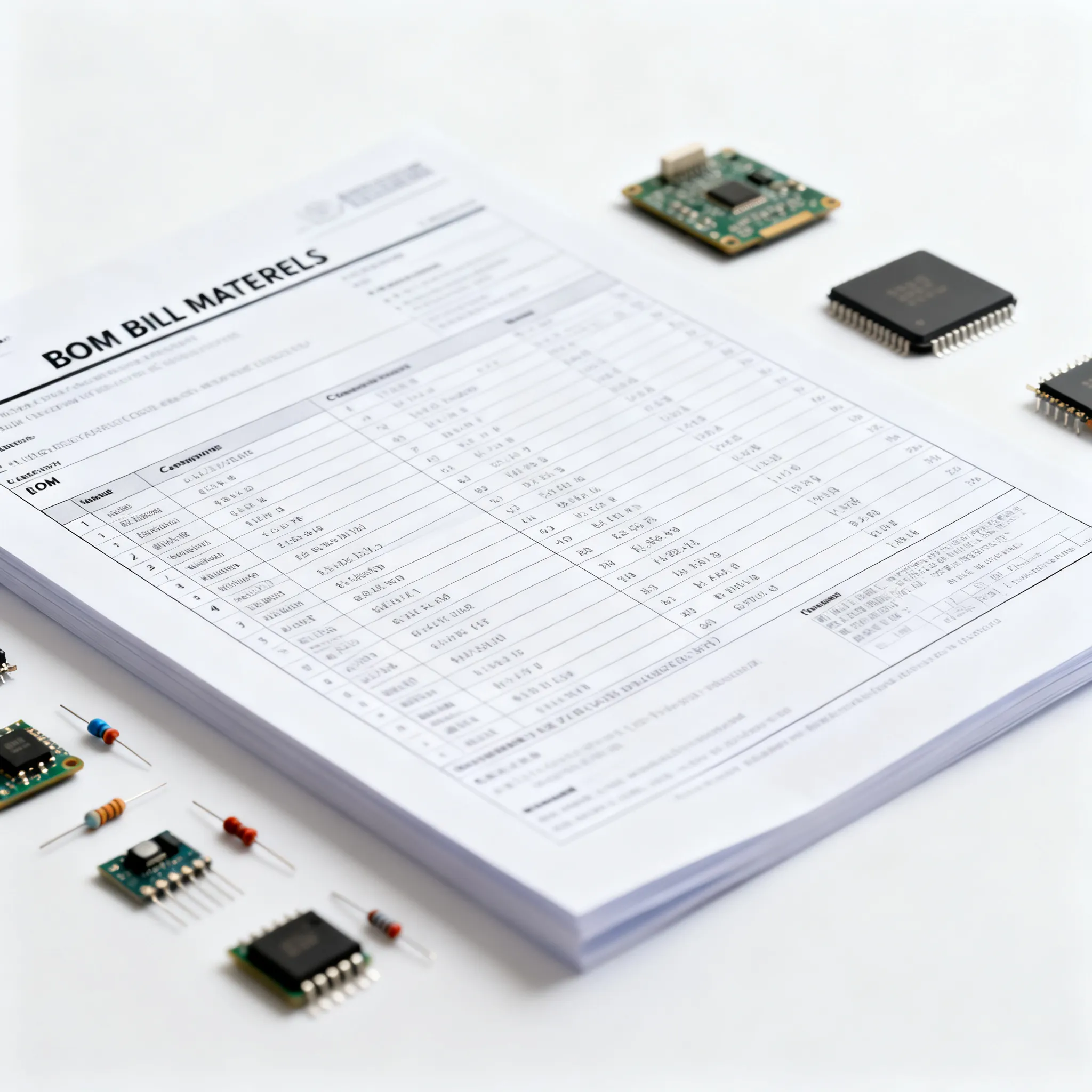
When selecting between the STM32F407VET6 and STM32F103RCT6, consider the specific requirements of your project. Factors such as processing power, memory requirements, and peripheral needs should guide your decision. Additionally, it is essential to evaluate the BOM (Bill of Materials) implications, as the choice of microcontroller can affect the overall cost and availability of components.
Utilizing tools like Nova for BOM management can streamline the process of selecting the right microcontroller and ensure that all necessary components are accounted for, reducing the risk of costly redesigns.
User Experience and Community Support
The development environment and community support for both microcontrollers should also be considered. The STM32F407VET6 benefits from a robust ecosystem of development tools, libraries, and community resources, which can significantly ease the development process. In contrast, while the STM32F103RCT6 has adequate support, it may not match the extensive resources available for the STM32F407VET6.
- Check for available libraries and example projects.
- Evaluate the support provided by forums and community platforms.
- Consider the availability of development boards for rapid prototyping.
FAQ
What are the main differences between STM32F407VET6 and STM32F103RCT6?
- Different architectures: Cortex-M4 vs Cortex-M3.
- Higher clock speed and performance for STM32F407VET6.
- More advanced peripherals on STM32F407VET6.
Which microcontroller is more power-efficient?
- STM32F103RCT6 generally has lower power consumption.
- Efficiency depends on specific application use cases.
- Consider sleep modes and active current ratings.
When should I choose STM32F407VET6 over STM32F103RCT6?
- When high performance and advanced features are needed.
- For applications requiring DSP capabilities.
- If using complex algorithms that require more processing power.
Can I use both microcontrollers in the same project?
- Yes, if the project allows for mixed architectures.
- Ensure compatibility in communication protocols.
- Design for modularity to switch between them.
Where can I find the datasheets for these microcontrollers?
- Datasheets available on manufacturer and distributor websites.
- Direct links: STM32F407VET6 (Digi-Key) and (IC-Online).
- STM32F103RCT6 (Mouser) and (IC-Online).
What role does BOM play in selecting these microcontrollers?
- BOM impacts cost and availability of components.
- Consider total cost of ownership including sourcing.
- Use BOM to compare long-term project feasibility.
Are there any development boards available for these microcontrollers?
- Yes, various development boards are available for both.
- Check manufacturer websites for recommended boards.
- Consider boards that include additional peripherals for prototyping.