What is an NPU and Its Uses in Popular Gadgets
What is NPU? A neural processing unit is a chip that powers AI tasks in gadgets, enabling fast, efficient features like facial recognition and voice assistants.
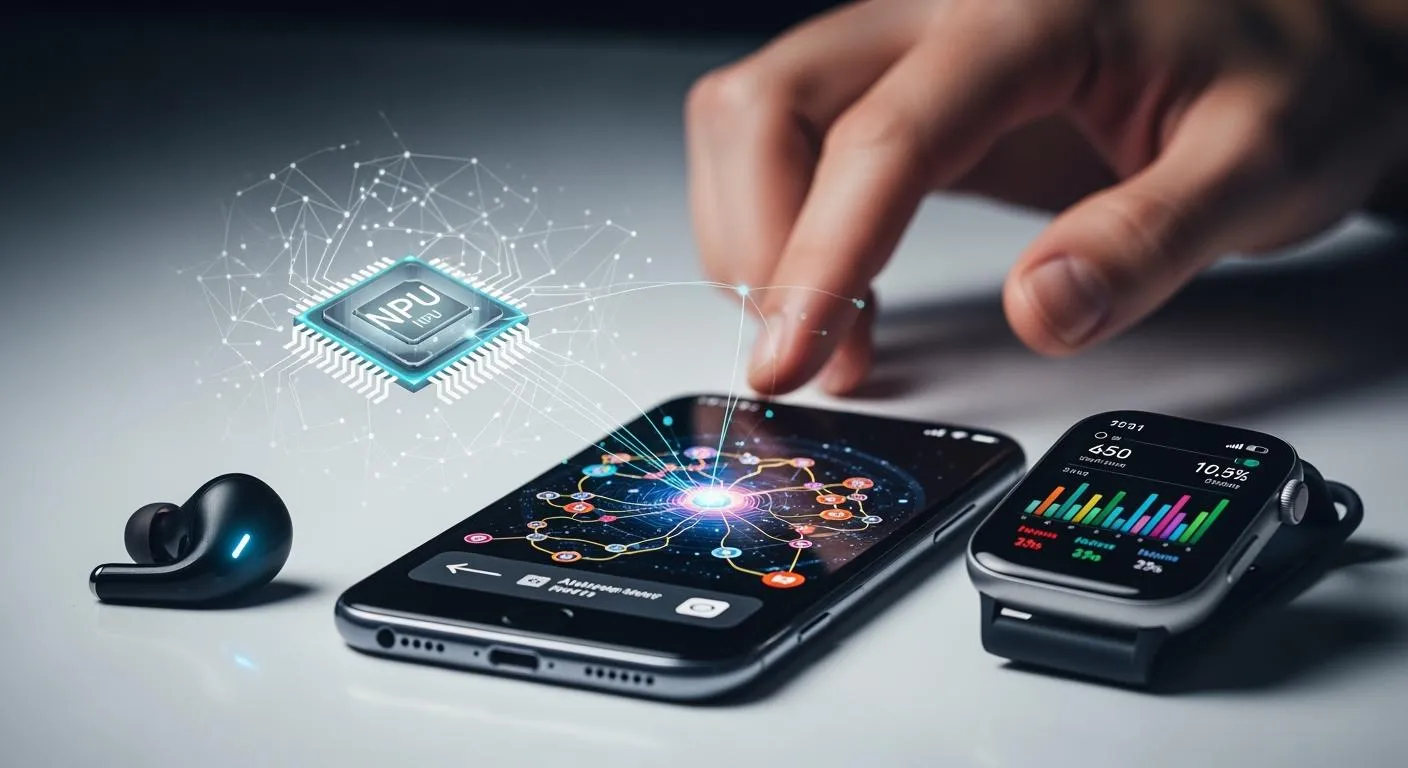
You might wonder, what is npu? An npu, or Neural Processing Unit, acts as the brain behind many smart features in your devices. You see npu technology at work when your phone recognizes your face or understands your voice. Unlike regular processors, an npu handles ai tasks quickly and efficiently. This special chip brings intelligent functions to your everyday electronics.
Key Takeaways
- An NPU, or Neural Processing Unit, acts like a mini brain in devices, handling AI tasks quickly and efficiently.
- NPUs improve device performance by processing data locally, which enhances speed and privacy while saving battery life.
- You find NPUs in many gadgets, including smartphones, laptops, and smart home devices, powering features like facial recognition and voice assistants.
- NPUs are designed for specific AI tasks, making them more efficient than traditional processors like CPUs and GPUs for real-time applications.
- The NPU market is rapidly growing, driven by the increasing demand for energy-efficient and high-performance AI capabilities in technology.
What is NPU?

Neural Processing Unit Basics
You often hear the term "what is npu" when people talk about smart devices. A neural processing unit is a specialized chip that handles tasks related to artificial intelligence and machine learning. You can think of it as a mini brain inside your device. This unit uses a computer architecture inspired by the human brain, simulating neurons and synapses to process information quickly and efficiently.
NPUs use synaptic weights to combine memory storage and computation, which allows them to multitask and adapt over time.
Manufacturers like Samsung, IBM, and VLSI describe the neural processing unit as a microprocessor built for deep learning and neural networks. It performs complex matrix calculations and parallel processing much faster than traditional chips. You can see the technical definitions in the table below:
| Source | Definition |
|---|---|
| Samsung | The NPU is made up of countless numbers of nerve cells and synapses that transmit and receive signals to and from each other simultaneously, just like the human brain. It also can be called an artificial intelligence chip, as artificial intelligence (AI) technology is incorporated so that it can learn and make decisions for itself. |
| VLSI Facts | A neural processing unit (NPU) is a specialized type of microprocessor designed to accelerate the performance of artificial neural networks (ANNs) and machine learning algorithms. These chips have been developed with the goal of accelerating the training and inference processes of deep learning models. NPUs can perform complex matrix calculations and parallel processing much more efficiently than traditional CPUs or GPUs. They are widely used in various applications such as computer vision, natural language processing, and speech recognition, among others. |
| IBM | NPUs use a computer architecture designed to simulate the neurons of the human brain to provide highly efficient high performance. NPUs use synaptic weights to integrate both memory storage and computation functions, providing occasionally less precise solutions at a very low latency. While CPUs are designed for precise, linear computing, NPUs are built for machine learning, resulting in improved multitasking, parallel processing and the ability to adjust and customize operations overtime without the need for other programming. |
A typical neural processing unit contains specialized cores or engines. These cores use multiply-accumulate units for neural network tasks. The memory subsystem includes several cache levels, with Level 1 caches storing weights and activations needed right away. Data movement engines transfer information between memory and processing cores. Modern NPUs support variable precision arithmetic, which means they can use different bit widths for calculations to save power and boost performance. They also use sparsity acceleration, skipping operations with zero values, and dynamic voltage and frequency scaling to adjust power use based on workload.
NPU Role in Devices
You see NPUs in many devices today. When you ask, "what is npu," you find that it powers AI features in smartphones, tablets, laptops, and smart home gadgets. NPUs operate with low power consumption, making them perfect for repetitive tasks like machine vision and real-time speech recognition. They work alongside GPUs, taking over AI workloads and freeing up the CPU for other tasks. This setup allows your device to process data locally, which improves speed and saves energy.
NPUs excel in real-time processing tasks such as facial recognition and voice assistants. You benefit from faster responses and improved privacy because your device does not need to send data to the cloud. Edge devices, like drones and smart cameras, rely on NPUs for low latency and efficient operation.
- Smartphones use NPUs for facial recognition and real-time voice assistants.
- Autonomous vehicles depend on NPUs for object detection and decision-making.
- IoT devices use NPUs for real-time feedback in smart home systems and wearables.
NPUs come in two main types:
- Discrete NPUs for high-performance, low-latency AI tasks.
- Integrated NPUs within system-on-chip architectures for general-purpose AI processing and always-on functions.
NPUs help reduce latency and enhance privacy in industrial applications. They also offer flexibility for intelligent edge system designs.
You find NPUs in edge computing devices, data center solutions, cloud platforms, and client computing devices. Their parallel architecture and high-speed on-chip memory make them ideal for image and facial recognition tasks.
Nova Technology Company (HK) Limited stands out in the integrated circuit industry as a HiSilicon-designated solutions partner. You can rely on Nova Technology Company (HK) Limited for professional chip-level solutions, system integration, and advanced application scenarios. Their expertise ensures that NPUs deliver optimized performance in devices ranging from consumer electronics to industrial systems.
When you explore what is npu, you discover that this technology drives the intelligence in your favorite gadgets. NPUs make AI features possible, improve device efficiency, and enable smarter, faster, and more secure experiences.
How NPUs Work
Brain-Inspired Architecture
You can think of a neural processing unit as a chip that acts like a simplified version of your brain. The npu uses a structure that mimics neural networks, which are groups of connected nodes similar to neurons. This design allows the npu to process large amounts of data at the same time, just like your brain handles many signals at once. The npu performs matrix arithmetic, which is essential for deep learning and machine learning. Unlike a traditional CPU, the npu and GPU can process vectors or matrices of values together. This parallel processing gives the npu a big advantage in speed and energy efficiency.
Neural processing units excel at handling deep learning tasks. They can manage complex calculations for machine learning models, which helps your device learn from data and make decisions. The npu’s ability to process data in real-time means you get instant feedback from your device. For example, when you use facial recognition or voice assistants, the npu works behind the scenes to deliver fast and accurate results.
NPUs are designed to replicate the structure and efficiency of biological neural networks. This allows them to handle large volumes of data simultaneously, making them much more efficient than traditional CPUs for ai workloads.
NPU for AI Tasks
You see the benefits of an npu every time you use real-time data processing features on your device. The npu is optimized for localized, low-power ai inference. This means it can perform deep learning tasks directly on your phone or tablet without sending data to the cloud. You get faster responses and better privacy because your information stays on your device.
NPUs are perfect for mobile and embedded devices. They use much less power than GPUs or CPUs, which helps your battery last longer. The table below shows how much energy different chips use during ai inference tasks:
| Device Type | Power Consumption (Watts) | Efficiency Advantage |
|---|---|---|
| Neuromorphic Chips | 15-50 | 90-95% less than GPUs |
| GPUs | 300-700 | - |
You benefit from enhanced performance, energy efficiency, and improved responsiveness. Real-time data processing lets you enjoy smooth gaming, augmented reality, and smart camera features. NPUs also provide better privacy controls by keeping your data on the device. You can trust your device to handle machine learning and ai tasks quickly and securely.
- NPUs are optimized for localized ai tasks, while traditional processors are general-purpose.
- NPUs provide enhanced energy efficiency, unlike traditional processors that may consume more power for similar tasks.
- NPUs offer better privacy controls by processing data on-device, whereas traditional processors often rely on cloud services.
AI PCs distinguish themselves by embedding NPUs for accelerated local ai compute, delivering superior task throughput, energy savings, and privacy controls.
You will notice that real-time performance, low power use, and secure data handling make the npu a key part of modern smart devices.
NPU vs CPU vs GPU
Key Differences
You may wonder how an npu compares to a CPU or GPU. Each processor type has its own strengths and weaknesses. The table below shows how they stack up for ai and data tasks:
| Processor Type | Strengths | Weaknesses |
|---|---|---|
| NPU | High efficiency with low energy use, ideal for AI tasks like vision and language models. | Lack of flexibility, optimized for specific AI tasks. |
| GPU | Excellent parallel computing capabilities, suitable for AI training and graphics rendering. | High power consumption, less efficient for tasks lacking parallelism. |
| CPU | General-purpose computing, good for sequential tasks. | Struggles with parallel processing, fewer cores than GPUs. |
An npu, or neural processing unit, is built to handle ai workloads. It uses a neural-inspired design to process large amounts of data quickly. You get real-time results for tasks like voice recognition and face detection. CPUs work well for everyday tasks, such as running apps or browsing the web. They process instructions one at a time and have fewer cores. GPUs shine when you need to handle graphics or train ai models. They can process many data streams at once but use more power.
NPUs stand out for their low latency. You see this in real-time ai applications, where immediate responses matter. They also use less energy, which helps your device last longer. However, they are not as flexible as CPUs or GPUs. You cannot use them for every type of computing task.
When to Use Each
You should choose the right processor for your needs:
- Use an npu for neural network inference, edge ai, and real-time ai applications. These include voice assistants, smart cameras, and autonomous vehicles.
- Pick a GPU for graphics rendering, scientific computing, and ai training. GPUs work best when you need to process lots of data in parallel.
- Rely on a CPU for general-purpose tasks and sequential processing, such as running your operating system or basic apps.
NPUs excel in localized, real-time ai processing. They reduce the need to send data to the cloud, which improves privacy and lowers latency. You benefit from faster responses and better battery life, especially in mobile and IoT devices. For large-scale data sets and matrix multiplications, the npu provides exceptional parallelism and energy efficiency. CPUs and GPUs still play important roles, but the npu brings unique advantages for ai-focused tasks.
NPUs in Popular Gadgets

You see the impact of the neural processing unit in many popular gadgets today. This low power chip brings edge ai to your hands, home, and workspace. Let’s explore how different devices use this technology for smarter, faster, and more secure experiences.
Smartphones and Tablets
Most flagship smartphones now include an npu or ai chip. These chips power advanced ai applications that you use every day. Here’s a quick look at which brands use npus in their top devices:
| Brand | NPU Usage in Flagship Devices | Notes |
|---|---|---|
| Samsung | Yes | Ramping up npu development for on-device ai technology. |
| Qualcomm | Yes | Snapdragon 8 Gen 3 features major npu improvements. |
| LG Electronics | Yes | Joined the npu development race. |
| Yes | Developing npus for enhanced ai capabilities. | |
| Apple | Yes | Actively developing npus for their devices. |
You benefit from ai applications like voice assistants, facial recognition, and real-time camera enhancements. The npu enables generative ai, automatic scene detection, and smart display adjustments. You notice the shift from touch to voice interaction, thanks to advanced speech recognition. These edge ai features transform your user experience by keeping data processing on your device, which improves privacy and speed.
Laptops and PCs
Modern laptops and PCs use the neural processing unit to accelerate ai tasks. The ai chip handles large blocks of data with many multiply-accumulate units, making real-time applications possible. You get instant responses for ai features without sending data to the cloud. This approach extends battery life and boosts efficiency.
Common ai applications in laptops include:
- Real-time background blur for video calls
- Speech recognition for dictation and commands
- Enhanced security through facial detection
- Faster object detection in images and videos
You see these edge ai features in Copilot+ PCs, which deliver up to five times the speed of older devices and support over 40 TOPS (trillion operations per second) for on-device ai. The npu makes your laptop smarter and more responsive.
Smart Home & IoT Devices
Smart home devices rely on the npu for efficient ai processing. You find this ai chip in smart TVs, audio devices, and voice assistant devices:
| Device Category |
|---|
| Smart TVs |
| Audio Devices |
| Voice Assistant Devices |
The neural processing unit improves real-time applications in home automation. It enables quick data analysis, voice recognition, and instant feedback. You experience better energy efficiency and faster response times. The npu supports edge ai by handling complex tasks like speech recognition and object detection directly on the device, which is essential for smart home systems.
Nova Technology Company (HK) Limited, a HiSilicon-designated solutions partner, leads in the integrated circuit industry. The company provides chip-level solutions, system integration, and advanced application scenarios for ai chip deployment in consumer electronics and industrial systems.
You see how the npu brings artificial intelligence to the edge, powering ai applications that make your devices smarter and more secure.
Benefits and Future of NPUs
User Advantages
You experience many advantages when your device uses an npu. This chip brings intelligence to your gadgets, making them smarter and more responsive. The npu processes ai tasks locally, which means your device responds quickly and keeps your data safe. You notice faster photo and video editing tools, smoother app performance, and longer battery life. The npu uses energy-efficient methods to handle complex calculations, so your device stays cool and lasts longer.
Devices with an npu process ai tasks locally. You get faster responses, smoother performance, and better protection of sensitive data. Apps stay responsive, and the battery holds up better under pressure.
The table below shows the main benefits you gain from having an npu in your personal device:
| Benefit | Description |
|---|---|
| Real-Time AI Processing | Systems respond almost instantly by accelerating ai inference, supporting applications like voice assistants and smart cameras. |
| Improved Power Efficiency | AI processing uses fewer instructions and less energy, crucial for power-constrained devices. |
| On-Device AI Processing | AI models run locally, providing immediate results without relying on cloud computing. |
| Improved Data Privacy | Local processing protects sensitive data, enhancing privacy in applications like healthcare. |
| More Efficient System Architecture | NPUs handle ai workloads more efficiently, allowing better resource allocation and improved overall performance. |
You benefit from energy-efficient operation, real-time intelligence, and improved privacy. These features make your device more reliable and secure.
Future Trends
You will see rapid growth in npu technology over the next few years. The market is projected to grow from USD 2.5 billion in 2023 to USD 17.8 billion by 2032. This represents a compound annual growth rate of 23.7%. The adoption of ai and machine learning technologies drives this expansion.
Emerging applications will push npu development forward. The table below highlights areas where npus will play a key role:
| Application Area | Description |
|---|---|
| Robotics | AI-powered robots need computational power for object recognition and path planning. NPUs enhance performance and efficiency. |
| Consumer Electronics | Smart devices like speakers and wearables use ai features that demand high processing power. NPUs provide energy-efficient solutions. |
| Edge AI Solutions | Local ai processing benefits from npus for privacy and latency, driving demand in industrial and commercial applications. |
| Healthcare | Medical imaging and personalized treatment benefit from on-device ai processing, making npus attractive in this sector. |
| Automotive | Autonomous driving and ADAS rely on npus for real-time data processing, ensuring safe vehicle operation. |
You will see more energy-efficient devices, smarter applications, and improved data privacy. NPUs will continue to shape the future of artificial intelligence in everyday technology.
You gain faster, smarter, and more efficient device experiences with NPUs. These chips deliver real-time AI processing, extend battery life, and optimize performance in everyday gadgets.
The NPU market grows rapidly as more devices need energy-efficient, high-performance AI features.
When you shop for new electronics, look for NPU capabilities and on-device processing options. NPUs will shape the future of technology, making your devices even more intelligent and responsive.
FAQ
What does an NPU do in my smartphone?
You use an NPU to speed up AI tasks like facial recognition, voice commands, and photo enhancements. The chip processes data locally, so your phone responds faster and keeps your information secure.
How is an NPU different from a CPU or GPU?
You see NPUs handle AI workloads with high efficiency. CPUs manage general tasks, while GPUs focus on graphics and parallel processing. NPUs specialize in neural network operations, making AI features smoother and more energy-efficient.
Can an NPU improve battery life?
Yes! You notice longer battery life because NPUs use less power for AI tasks. The chip completes calculations quickly, reducing energy drain and keeping your device cool.
Do all smart devices have NPUs?
Not every device includes an NPU. You find NPUs mostly in high-end smartphones, laptops, and smart home gadgets. Entry-level devices may rely on CPUs or GPUs for AI functions.
What are some real-world uses for NPUs?
You benefit from NPUs in voice assistants, smart cameras, and security features like facial unlock. The chip also powers real-time translation, object detection, and advanced photo editing.