

Japanese Semiconductor Terminology and Cross-Reference Guide for Component Engineers
Expert guide on Japanese Semiconductor Terminology and Cross-Reference Guide for Component Engineers. Technical specs, applications, sourcing tips for engineers and buyers.
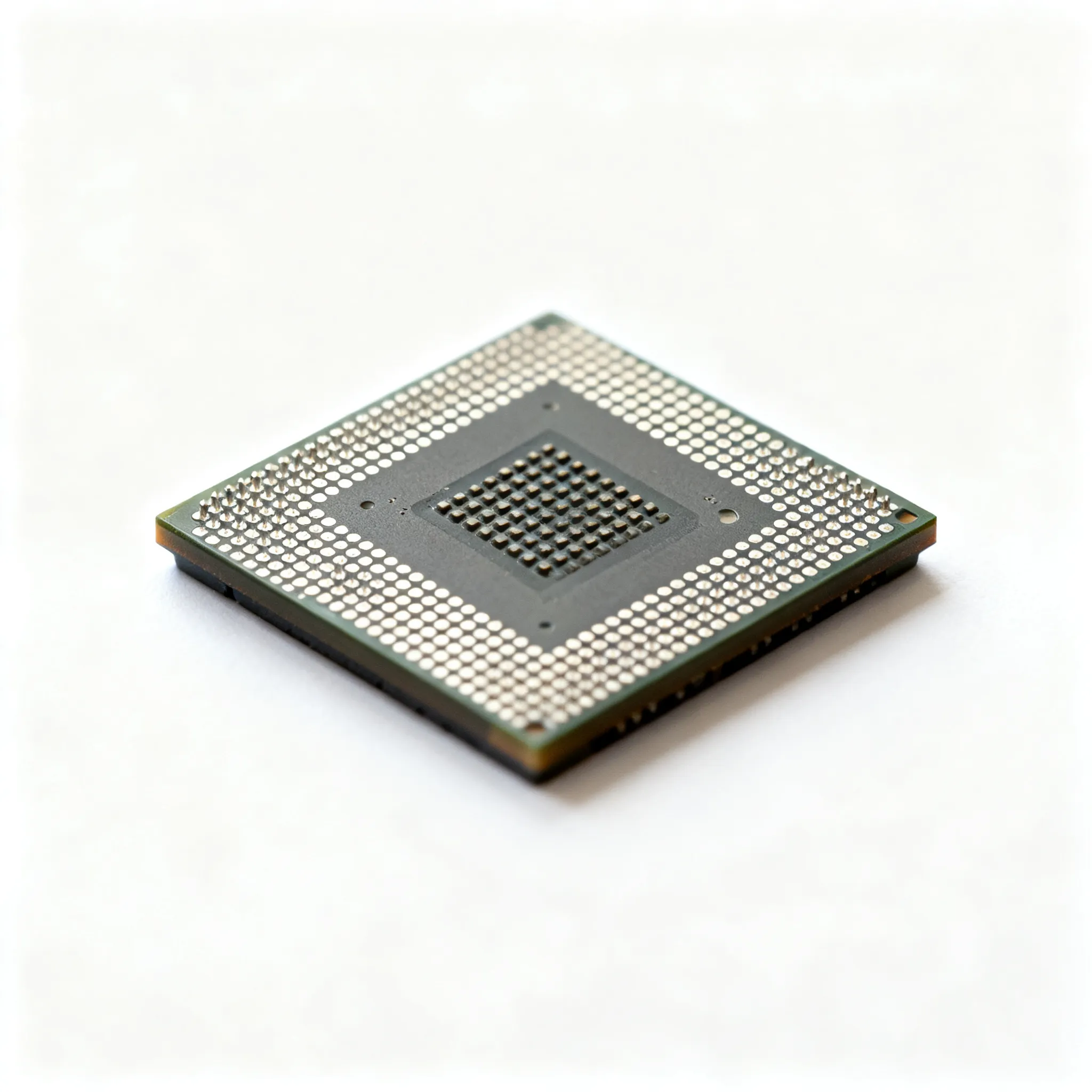
Why Japanese Semiconductor Jargon Trips Up Even Experienced Engineers
You’ve found the perfect transistor for your bias network—a 2SC1815 from a Japanese datasheet. The electrical specs match, the footprint looks right, and the price is unbeatable. Then the reels arrive and your pick-and-place machine rejects every third part. The culprit? A single suffix letter that changed the package from a standard TO-92 to a surface-mount mini-mold you didn’t expect. Multiply that by a full BOM, and you’re looking at a line-down situation, an urgent re-spin, and a procurement scramble that could have been avoided with a working knowledge of Japanese semiconductor terminology.
Japanese discretes, optoelectronics, and mixed-signal ICs remain the backbone of power supplies, motor drives, and automotive subsystems. As global supply chains diversify and regional sourcing becomes a strategic priority, engineers and buyers who cut their teeth on JEDEC-registered parts are encountering Japanese numbering systems, package codes, and lot-traceability conventions with increasing frequency. EE Times has tracked this shift, noting that manufacturers in Japan continue to supply a disproportionate share of high-reliability discretes and specialty analog ICs, even as wafer fabrication expands elsewhere. Yet the documentation conventions that Japanese vendors use—rooted in JIS, JEITA, and decades of internal practice—rarely align with the Western norms engineers expect.
The friction is real. A misinterpreted hFE rank suffix can push a linear regulator into oscillation. A misread lot number can derail a failure analysis investigation. A package code that looks like a date code can trigger a costly last-time-buy panic. This guide unpacks the logic behind Japanese semiconductor part numbers, compares terminology across major manufacturers, and gives you the cross-referencing skills to read a Toshiba, Renesas, Rohm, or Sanken datasheet as confidently as you read a Texas Instruments or ON Semiconductor document.
Decoding Japanese Part Numbers: Suffixes, Prefixes, and Hidden Specs
Japanese semiconductor part numbers follow a layered structure that embeds device type, polarity, package, gain ranking, and ordering options into a single string. The foundation is the Japanese Industrial Standards (JIS) semiconductor designation system, originally defined in JIS C 7012 and later harmonized with JEITA (Japan Electronics and Information Technology Industries Association) guidelines. While many newer parts use manufacturer-specific numbering, the classic JIS format remains pervasive in discrete transistors, FETs, diodes, and thyristors.
A typical JIS transistor number breaks down like this: 2 S C 1815 - Y - TP. The leading “2” indicates a three-terminal semiconductor (a diode would start with “1”). “S” denotes a semiconductor. The third character defines the device type and polarity: “A” for PNP high-frequency transistors, “B” for PNP low-frequency, “C” for NPN high-frequency, “D” for NPN low-frequency, “K” for N-channel FETs, and “J” for P-channel FETs. The numeric portion (1815) is a registration sequence. After a hyphen, you’ll find suffixes that specify hFE classification, package variant, and taping orientation—exactly the details that cause confusion when they’re overlooked.
The table below decodes the most common prefixes you’ll encounter when sourcing Japanese discretes. Memorizing these patterns will let you glance at a part number and immediately know the device family, saving you from scrolling through a datasheet just to confirm polarity.
| Prefix | Device Type | Typical Application | Notes |
|---|---|---|---|
| 2SA | PNP high-frequency transistor | Audio preamplifiers, RF stages | Often paired with 2SC complements |
| 2SB | PNP low-frequency power transistor | Audio output stages, voltage regulators | Larger die, lower fT |
| 2SC | NPN high-frequency transistor | General-purpose amplification, switching | Ubiquitous; 2SC1815 is a classic |
| 2SD | NPN low-frequency power transistor | Darlington pairs, motor drivers | High current, low VCE(sat) |
| 2SK | N-channel MOSFET / JFET | Switching regulators, RF amplifiers | Includes both enhancement and depletion types |
| 2SJ | P-channel MOSFET / JFET | Load switches, complementary stages | Less common; check availability |
| 1SS | Diode (signal / switching) | High-speed switching, clamping | 1SS133, 1SS400 series |
| 1SR | Rectifier diode | Power supplies, snubbers | Often in axial or surface-mount packages |
| CR | Zener diode (older Renesas/Hitachi) | Voltage reference, ESD protection | Modern parts use “HZ” or “RD” series |
| µPC / HA / M | Linear IC (manufacturer-specific) | Op-amps, comparators, voltage regulators | µPC = Renesas (formerly NEC), HA = Renesas/Hitachi, M = Mitsubishi |
Once you’ve identified the base part, the real work begins: interpreting the suffix. Japanese manufacturers use suffix codes to bin parts by current gain, specify lead-forming options, and define packaging for automated assembly. For example, the 2SC1815 transistor is available in three common hFE ranks: “Y” (120–240), “GR” (200–400), and “BL” (350–700). Ordering a “2SC1815-Y” when your circuit needs the higher gain of a “GR” rank can result in marginal biasing, reduced output swing, or outright oscillation in feedback loops. Similarly, a “TP” suffix on a Toshiba part typically indicates a through-hole TO-92 in tape-and-reel (ammo pack), while “FM” denotes a surface-mount SOT-23 or similar mini-mold. Missing that distinction means your PCB footprint won’t match the physical part.
Datasheet ordering information tables are your decoder ring. Look for a section titled “Ordering Information,” “Part Numbering System,” or “Type Name Indication.” These tables map every character in the full ordering code to a specific attribute. Toshiba, for instance, publishes a “Semiconductor Package Code” document that translates codes like “TP,” “FM,” “TE85L,” and “S1” into package outlines and taping specifications. Renesas provides similar guides, often referencing JEITA package codes (e.g., “PRSS0003” for a TO-220 variant). Bookmark these manufacturer-specific resources—they’re the difference between a smooth procurement cycle and a costly re-order.
Cross-Reference Table: Japanese Terms vs. Western Equivalents and Manufacturer-Specific Codes
Japanese semiconductor terminology doesn’t just use different words; it reflects a different organizing philosophy. Where Western manufacturers tend to treat gain ranking as an optional binning service, Japanese vendors embed it directly into the part number. Where JEDEC package codes like “SOT-23” or “TO-252” are universal, Japanese datasheets may use JEITA designations or proprietary codes that look nothing like their Western counterparts. The table below maps the most frequently encountered terms and codes across four major Japanese suppliers—Renesas, Toshiba, Rohm, and Sanken—and compares them to the Western conventions you already know.
| Comparison Metric | Japanese Terminology / Code | Western Equivalent | Manufacturer-Specific Notes |
|---|---|---|---|
| hFE classification | O, Y, GR, BL, P (rank suffix) | Gain bin (e.g., “-25” for hFE 250–500) | Toshiba: O (70–140), Y (120–240), GR (200–400), BL (350–700). Rohm uses similar letters but check datasheet for exact ranges. Renesas often uses numeric codes or no rank suffix. |
| Package code (through-hole) | TP (Toshiba), AT (Rohm), T (Sanken) | TO-92, TO-126, TO-220, etc. | “TP” = TO-92 tape & reel (Toshiba). “AT” = TO-92 ammo (Rohm). Sanken “T” often means TO-220. |
| Package code (surface-mount) | FM (Toshiba), TL (Rohm), S (Sanken), PT (Renesas) | SOT-23, SC-70, SOT-89, etc. | “FM” = SOT-23 or mini-mold (Toshiba). “TL” = SOT-23 (Rohm). Renesas “PT” = SC-59. Always verify dimensions. |
| Lot number format | Alphanumeric, often 4–5 digits | Date code + plant code (JEDEC) | Renesas: 4-digit code (YWWx). Rohm: 3- or 4-digit separate date mark. Toshiba: lot code may embed year/month. No universal standard. |
| Date code | Often embedded in lot number or separate marking | YYWW or YYWWLL (JEDEC) | Sanken uses a 2-digit year + 2-digit week on many discretes. Toshiba may use a single-character year code. Cross-reference the manufacturer’s lot interpretation guide. |
| Ordering suffix (tape/reel) | TE85L (Toshiba), Q (Rohm), S1 (Renesas) | T&R, TR, T/R | “TE85L” = 8 mm tape, 5,000 pcs/reel (Toshiba). Rohm “Q” = embossed tape. Renesas “S1” = standard tape orientation. Mismatch can cause pick-and-place errors. |
| JEITA package code | SC-59, SC-70, SC-88, PRSS0003 | SOT-23, SOT-323, SOT-363, TO-220 | JEITA SC-59 = SOT-23. SC-70 = SOT-323. Renesas PRSS0003 = TO-220 (non-isolated). Use JEITA-to-JEDEC cross-reference charts. |
| RoHS / lead-free marking | “G” suffix, “Pb-free” logo, or no explicit mark | “G” suffix, “-E3”, “-LF” | Toshiba often appends “G” to the ordering code. Rohm uses a green package symbol. Always check the datasheet for plating composition. |
This table underscores a critical point: a suffix that means “tape and reel” on a Toshiba part may indicate a completely different package orientation on a Rohm device. When you’re cross-referencing a Japanese transistor to a Western equivalent, you must translate not just the base part number but the entire ordering string. A 2SC2712-Y(TE85L,F) from Toshiba is not the same as a 2SC2712-Y from Rohm, even if the die is functionally identical. The procurement team needs the full, manufacturer-specific ordering code to receive the correct physical part.
For Renesas bipolar ICs, the situation is even more nuanced. Legacy parts like the µPC4570 op-amp or the HA17358 dual comparator carry prefixes that reflect their original NEC or Hitachi heritage. Renesas maintains discontinued-part cross-reference tools and “Part Number Conversion Guide” PDFs that map these older numbers to current ordering codes. If you’re trying to find a Western equivalent for a Renesas linear IC, start with the parametric search on Digi-Key or Mouser, then verify the package and pinout against the original Japanese datasheet. Never assume that a functional equivalent from a Western vendor will be pin-compatible—especially with older single- and dual-op-amp layouts.
Reading Japanese Datasheets Like a Native: Practical Tips for Sourcing and Substitution
Japanese datasheets have a reputation for being dense, but they’re remarkably consistent once you understand the layout. The first page typically gives you the maximum ratings in a table that uses standard symbols (VCEO, IC, PC) and units that are language-independent. The electrical characteristics table follows the same pattern. The real challenge lies in the ordering information, package dimensions, and lot-traceability sections, which are often written in Japanese or use manufacturer-specific abbreviations.
Here’s a practical workflow that experienced component engineers use when sourcing or substituting a Japanese semiconductor:
- Locate the official ordering guide. Search the manufacturer’s website for “Part Numbering Guide” or “Package Code List.” Toshiba’s semiconductor portal and Renesas’s support section host these documents. Download the PDF and keep it on your desktop.
- Extract the full ordering code from the datasheet. Look for a table that maps each character position to a parameter. For example, a Toshiba MOSFET might be listed as “TK12A50D(STA4,Q,M)”—the parentheses enclose the taping and packing options.
- Verify the package dimensions against your footprint. Even if the package code translates to a familiar JEDEC outline, check the mechanical drawing. Japanese mini-mold packages sometimes have subtle differences in lead coplanarity or body thickness that affect solder joint reliability. IPC Standards such as IPC-A-610 provide acceptance criteria for solderability, but the footprint must match the physical part first.
- Decode the lot number for traceability. If you’re qualifying a new source or investigating a field failure, you need to know when the part was made. Most Japanese manufacturers encode the production date in the lot number or a separate date code. Renesas often uses a 4-digit alphanumeric code where the first digit represents the year and the second the month (e.g., “3A” could mean 2023, January). Rohm may print a separate 3- or 4-digit date mark. The only reliable way to interpret these codes is to obtain the manufacturer’s lot interpretation guide—usually available through your authorized distributor.
- Beware of counterfeit and mismarked parts. Counterfeiters exploit the complexity of Japanese suffix codes. A common scam involves re-marking a low-gain “Y” transistor as a “GR” or “BL” rank, or relabeling a commercial-grade part as an industrial temperature range device. Legitimate Japanese parts have consistent font, alignment, and lot-code logic. If the lot code on a Toshiba part doesn’t follow the format published in the lot interpretation guide, or if the marking appears laser-etched when the original was ink-stamped, flag the lot for authenticity testing.
The table below summarizes the key checks you should perform before approving a substitute Japanese semiconductor for production. Run through these items with your procurement and quality teams to avoid the most common pitfalls.
| Check Item | What to Look For | Common Pitfall |
|---|---|---|
| hFE rank suffix | Letter code (Y, GR, BL, etc.) in ordering code; gain range in datasheet | Assuming all ranks are interchangeable; circuit bias may shift outside tolerance |
| Package code | Manufacturer-specific suffix (TP, FM, TL, etc.); mechanical drawing | Confusing through-hole and surface-mount variants; footprint mismatch |
| Tape/reel orientation | Suffix like TE85L, Q, S1; tape width and quantity per reel | Incorrect orientation causes pick-and-place errors; wrong reel size jams feeders |
| Lot number / date code | Format per manufacturer’s lot guide; consistency across parts | Assuming JEDEC date code format; missing a lot-specific reliability alert |
| Maximum ratings | VCEO, IC, PC at specified TA or TC | Overlooking derating curves; Japanese datasheets often specify at TC=25°C, not TA |
| Safe operating area (SOA) | Graph with VDS vs. ID; pulse width limits | Assuming DC SOA covers switching pulses; missing secondary breakdown limits |
| RoHS / lead finish | “G” suffix, Pb-free symbol, or plating table | Ordering a non-RoHS part for an RoHS-compliant assembly; solderability failures |
| Pinout / pin assignment | Package drawing with pin numbering; comparison to substitute part | Japanese transistors often use E-C-B or E-B-C pinout; Western parts may differ |
After you’ve cleared these checks, the final step is to verify electrical compatibility in-circuit. Japanese datasheets often include characteristic curves that are labeled in English or use standard symbols. The SOA graph, for example, will have axes labeled “VDS (V)” and “ID (A),” with curves for different pulse widths. You don’t need to read Japanese to extract the critical data points. Overlay the candidate substitute’s SOA curve and confirm that it remains within the original part’s boundaries under your worst-case operating conditions.
Senior Engineer FAQ: Cross-Referencing Japanese Semiconductors Without the Guesswork
Q: How can I decode the hFE classification suffix on a Japanese transistor like 2SC1815-Y?
The suffix letter (Y, GR, BL, etc.) indicates a current gain (hFE) range bin, defined in the datasheet. For 2SC1815, ‘Y’ typically covers hFE 120–240, ‘GR’ 200–400, and ‘BL’ 350–700. Always check the manufacturer’s original datasheet, as binning ranges can vary between Toshiba, Renesas, and other suppliers. Some manufacturers use ‘O’ for the lowest gain bin (70–140) and ‘P’ for the highest. Never assume the same letter means the same range across different part numbers or vendors.
Q: What is the difference between Toshiba's 'TP' and 'FM' package codes?
‘TP’ usually denotes a through-hole TO-92 variant with a specific lead form (often tape and reel or ammo pack), while ‘FM’ indicates a surface-mount package like SOT-23 or a mini-mold. The exact meaning is defined in Toshiba’s package code documentation; cross-reference the ordering guide to confirm footprint and height. For instance, a 2SC1815-TP is a TO-92 in tape, while a 2SC1815-FM is a surface-mount device in a SOT-23-like package. The mechanical drawings in the datasheet are the final authority.
Q: Are Japanese semiconductor lot numbers traceable to wafer fabrication dates?
Most Japanese manufacturers encode the production date (year/week or year/month) within the lot number or a separate date code, but the format is not standardized. Renesas often uses a 4-digit alphanumeric code, while Rohm may use a separate 3- or 4-digit date mark. Traceability requires the manufacturer’s lot interpretation guide. Authorized distributors can provide these guides and help you decode a specific lot. For high-reliability applications, request a Certificate of Conformance that includes the date code explanation.
Q: Where can I find official cross-reference data for Renesas bipolar ICs to Western part numbers?
Renesas provides discontinued part cross-reference tools on their website, and many distributors (Digi-Key, Mouser) maintain parametric search with ‘similar parts’ functions. For legacy bipolar ICs, the Renesas ‘Part Number Conversion Guide’ PDFs and JEITA/JIS standard documents are the most reliable starting points. Be aware that pinouts may not match; a µPC4570 might be functionally equivalent to an LM833, but the pin assignment could differ. Always compare the datasheet pin configuration before substituting.
Q: How do I verify that a substitute Japanese MOSFET meets the original’s safe operating area without a translated datasheet?
Extract the key SOA parameters—VDSS, ID, RDS(on), and thermal resistance—from the Japanese datasheet using the numerical tables and graphs. Most critical values are numeric and language-independent. Compare these against the candidate substitute’s datasheet, and use the maximum ratings and derating curves to confirm margin. If the SOA graph is only in Japanese, the axis labels and curve notes are usually in English or use standard symbols. Focus on the DC line, the 10 ms pulse line, and the 1 ms pulse line. Ensure the substitute’s curves fall inside the original’s boundaries at your operating voltage and current. Pay special attention to the thermal resistance (RθJC or RθJA), as Japanese datasheets often specify junction-to-case values that require heatsink calculations to translate to real-world conditions.
Working with Japanese semiconductor documentation is a skill that pays for itself the first time you avoid a line stoppage or a re-spin. The part numbers are systematic, the datasheets are thorough, and the quality is exceptional—once you know how to read the codes. For engineers and procurement teams managing mixed BOMs with both Western and Japanese discretes, having a reliable sourcing partner that understands these nuances is essential. IC-Online supports flexible MOQs and cross-referencing across manufacturers, helping you secure authentic Japanese components with the correct suffix, package, and lot traceability your design demands.
References & Further Reading
- EE Times — Electronics Engineering News
- IPC Standards — IPC-A-610 and Electronics Manufacturing Standards
- Toshiba Semiconductor & Storage — Package Code Guides
- Renesas Electronics — Part Number Conversion Guides
- ROHM Semiconductor — Datasheets and Package Information
- Sanken Electric — Discrete Semiconductor Documentation
- Digi-Key Electronics — Parametric Search and Cross-Reference Tools
- Mouser Electronics — Similar Parts and Cross-Reference
- JEITA — Japan Electronics and Information Technology Industries Association
- ← Previous ArticleNext Article >>
Related Articles
 Blog
BlogWhy the Continuity Symbol Matters in Everyday Devices
The symbol for continuity on a multimeter, often sound waves or a speaker, helps you quickly test and repair broken connections in everyday electronic devices.
 Blog
BlogKey Trends Shaping the Semiconductor Landscape: Top 10 Predictions for 2026 You Can’t Ignore
Expert guide on Key Trends Shaping the Semiconductor Landscape: Top 10 Predictions for 2026 You Can’t Ignore. Technical specs, applications, sourcing tips for engineers and buyers.
 Blog
BlogMaximize Your Design Efficiency with an Authorized Electronic Component Distributor
Expert guide on Maximize Your Design Efficiency with an Authorized Electronic Component Distributor. Technical specs, applications, sourcing tips for engineers and buyers.
 Blog
BlogCost-Effective Sourcing Strategies Using Newark Electronics for Your Next Project
Expert guide on Cost-Effective Sourcing Strategies Using Newark Electronics for Your Next Project. Technical specs, applications, sourcing tips for engineers and buyers.
 Blog
BlogDriving with Bad Purge Valve Simple Tips for Everyday Drivers
Driving with bad purge valve can cause rough idle, fuel odors, and poor mileage. Know the risks, symptoms, and when to fix it for safe driving.
 Blog
BlogBrushed or Brushless Which Motor Type Is Right for You
Understand the difference between brushed and brushless motors, including efficiency, cost, and maintenance, to choose the right motor for your needs.