ADR421BRZ Obsolescence Risk Checklist: Verify Lifecycle Status and Mitigate Supply Risk
ADR421BRZ lifecycle and obsolescence risk checklist. What to verify before redesign or last-time-buy — without assuming drop-in replacements.
From Hospital Equipment Recalls to Production Halts: The ADR421BRZ Obsolescence Risk You Can’t Ignore
When an infusion pump or a patient monitor silently disappears from the market because a single voltage reference went obsolete, the result isn’t an inventory adjustment—it’s a safety recall. The FDA Early Alerts database documents how medically certified devices are pulled from service when a critical component can no longer be sourced, and the CPSC tracks similar consumer product actions across many industries. In both cases, the ripple starts with a part that seems too small to matter: an ultraprecision voltage reference like the ADR421BRZ.
Voltage references are often the quiet heartbeat of signal conditioning, data acquisition, and control loops. If the ADR421BRZ vanishes from the supply chain, calibration accuracy, noise performance, and even functional safety can collapse. Yet many engineering teams react only after a distributor flags “non-stock” or “end of life.” Proactive lifecycle tracking—using Z2Data lifecycle history that ties every status change to a manufacturer PCN or distributor notice—transforms this gamble into a managed process. This article presents a practical obsolescence risk checklist built around the ADR421BRZ, grounded in datasheet facts and proven mitigation workflows.
The risk isn’t hypothetical. FDA market withdrawals often trace back to a component that became unavailable during a production run, forcing a rushed redesign or an expensive last-time-buy panic. For precision analog front-ends relying on the ADR421BRZ, the consequence of ignoring lifecycle signals can mean scrap, revalidation, or losing certification on a medical device that serves thousands of patients.
Inside the ADR421BRZ: Precision Specs and the Lifecycle Signals You Must Monitor
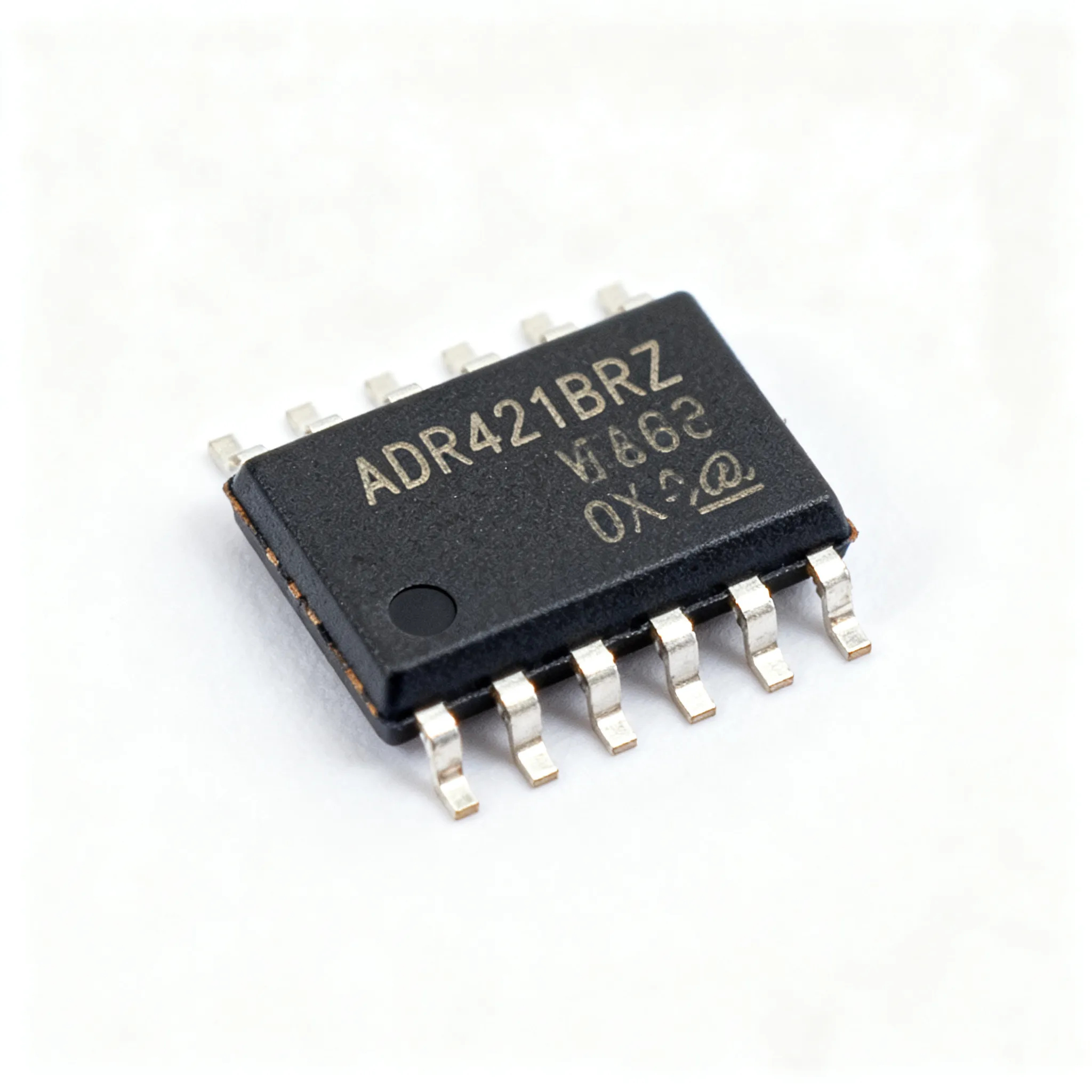
The ADR421BRZ is an ultraprecision, low-noise 2.500 V XFET® voltage reference from Analog Devices. Its datasheet—available from Alldatasheet and RadioLocman—details a device with an initial accuracy of ±0.04%, a temperature coefficient of just 3 ppm/°C, and excellent long-term stability. These parameters make it a frequent choice in precision instrumentation, medical electronics, and test equipment. Yet the same datasheet doesn’t tell you when the part will stop being manufactured. That intelligence must come from lifecycle monitoring.
Before you can read an EOL warning, you need to know which parameters matter for your system and what signals precede a discontinuance. The table below consolidates the key specifications of the ADR421BRZ so you can immediately map them to your error budget and understand what a substitute must deliver.
| Parameter | Value (ADR421BRZ) | Unit / Condition |
|---|---|---|
| Output Voltage | 2.500 | V |
| Initial Accuracy | ±0.04 | % |
| Temperature Coefficient | 3 | ppm/°C (max, B grade) |
| 0.1 Hz to 10 Hz Noise | 1.75 | µV p-p |
| Voltage Noise (10 Hz to 1 kHz) | 15 | µV rms |
| Dropout Voltage | 300 | mV (typical at 1 mA) |
| Quiescent Current | 500 | µA (max) |
| Line Regulation | 10 | ppm/V (max) |
| Load Regulation | 10 | ppm/mA (max) |
| Package | 8-lead SOIC | Tape & Reel options |
| Operating Temperature Range | −40 to +125 | °C |
These figures, verified through the official datasheet and distributor listings such as DigiKey, form the baseline for any alternative evaluation. Lifecycle intelligence adds another dimension: the same distributor portal may show “active” today, but without a PCN trail you’re blind to an upcoming PDN (Product Discontinuance Notice). Analog Devices typically issues a PDN 6–12 months before a last-time-buy deadline, but the exact window varies. That’s why forward-looking teams cross-reference manufacturer PCN feeds with lifecycle databases like Z2Data, which preserve a full status change history and attribute every move to a source document.
Tip: When you’re auditing your BOM, don’t equate “available on distributor shelves” with “lifecycle healthy.” The ADR421BRZ can be in stock today while its manufacturer has already progressed it to “not recommended for new designs.” Always verify lifecycle via RFQ and third-party risk platforms.
ADR421BRZ vs. ADR421BR vs. ADR420BR: A Practical Alternative Comparison for Second Sourcing
When lifecycle flags appear, the natural first step is to look for a close relative inside the same product family. The ADR421BRZ has two immediate siblings that often appear in sourcing discussions: the ADR421BR (a lower accuracy grade) and the ADR420BR (a 2.048 V alternative). The following matrix, built from Utmel comparison and Ovaga specification comparison, highlights the critical differences. No device is a compatibility must be verified (package, pinout, firmware); each must be validated against your system’s error budget and firmware calibration.
| Metric | ADR421BRZ | ADR421BR | ADR420BR | Selection Note / Failure Boundary |
|---|---|---|---|---|
| Output Voltage | 2.500 V | 2.500 V | 2.048 V | System gain scaling and ADC reference must accept the different level |
| Initial Accuracy | ±0.04% | ±0.12% | ±0.05% | Looser accuracy may exceed calibration margins in high-precision front-ends |
| Temperature Coefficient | 3 ppm/°C | 3 ppm/°C | 3 ppm/°C | Comparable drift; verify over full operating range |
| Noise (0.1 Hz–10 Hz) | 1.75 µV p‑p | 1.75 µV p‑p | 1.75 µV p‑p | Similar low-noise XFET core; confirm via datasheet measurements |
| Package | 8‑SOIC | 8‑SOIC | 8‑SOIC | Footprint identical but pinout verification required for auxiliary pins |
| RoHS | Yes | Yes | Yes | Both are RoHS compliant as per manufacturer documentation |
| Lifecycle Status | Verify via RFQ | Verify via RFQ | Verify via RFQ | Grade-specific discontinuance is possible; confirm individually with ADI |
While the ADR421BR shares the same output voltage and package, its ±0.12% initial accuracy is three times looser than the BRZ grade. In a 16‑bit data acquisition system where the reference error directly limits INL, that difference can push the design out of spec. The ADR420BR, on the other hand, supplies a 2.048 V reference perfectly matched to many SAR ADCs, but the voltage shift means every gain stage that relied on 2.500 V must be re‑scaled. Pinout compatibility of the SOIC‑8 package is a starting point, not a conclusion—always require an engineering evaluation that includes board‑level noise characterization before committing to a second source.
Structured alternative vetting should follow a formal obsolescence checklist such as the one proposed by OboTechGroup, which mandates verifying part numbers, revisions, approved alternatives, software dependencies, certification roles, lead time, and lifecycle status. That methodology is especially valuable when substituting the ADR421BRZ in safety‑critical designs where a simple datasheet comparison isn’t enough.
Your ADR421BRZ Obsolescence Mitigation Checklist: Five Steps Before the Last-Time-Buy Deadline
Waiting until the ADR421BRZ hits a stock‑out before taking action turns an orderly transition into an emergency. The following five‑step plan, inspired by the risk‑screening logic from PCBCart’s ATE obsolescence risk framework and lifecycle history tools, gives you a repeatable process that procurement and engineering can execute jointly.
- Verify Lifecycle Status Through Primary Sources. Start at the official Analog Devices product page to pull any active PCN or PDN. Cross‑reference that information with a lifecycle intelligence platform like Z2Data, which archives the full trajectory of the ADR421BRZ and attributes each change to a manufacturer document. A manual check of authorized distributor EOL bulletins provides a secondary confirmation layer.
- Define Trigger Points That Initiate the Mitigation Process. Following the PCBCart risk framework, set quantitative triggers: lead‑time extension beyond a predetermined threshold, receipt of an allocation notice, or a published PCN that moves the part to “not recommended for new designs.” Don’t wait for a stock‑out; action should start at the first verified lifecycle signal.
- Evaluate Form/Fit/Function Alternatives Against an Approved Checklist. Use the ADR421BR and ADR420BR comparisons above as a starting point, but also screen cross‑manufacturer references if they appear in authorized distributor cross‑reference tools. Apply the OboTechGroup checklist to document fit, form, function, software impact, and certification dependencies. No alternative should be accepted without a bench evaluation of reference noise, temperature drift under your thermal envelope, and long‑term stability.
- Calculate a Defensible Last‑Time‑Buy Quantity. Determine the LTB volume by projecting a minimum 12‑24 month production forecast, adding repair‑and‑warranty buffer stock, and subtracting any reliable alternative introduction schedule. Factor in the ADR421BRZ’s shelf‑life specifications from the datasheet and consider staging a partial LTB if the manufacturer supports split deliveries, to avoid tying up capital in inventory that might outlive the transition.
- Plan the Redesign Path While the Part Is Still Active. If no alternative meets precision requirements, initiate a reference migration project immediately. Map the existing error budget to candidate replacements, verify the PCB layout can accommodate a different SOIC‑8 pinout if needed, and re‑qualify the entire signal chain. Align engineering milestones with the last‑time‑buy deadline so that production never halts.
To make the five steps easier to track in a shared spreadsheet, the table below pairs each action with the verification evidence and owner.
| Step | Action | Verification / Document | Owner |
|---|---|---|---|
| 1 | Confirm lifecycle status | ADI PCN/PDN page, Z2Data report, distributor bulletin | Procurement / Component Engineer |
| 2 | Set internal trigger points | Approved lead‑time threshold, allocation flag definition | Supply Chain Manager |
| 3 | Qualify alternatives | Approved checklist (OboTechGroup), bench characterization report | Design Engineer |
| 4 | Compute LTB volume | Demand forecast, warranty model, split delivery confirmation | Procurement / Finance |
| 5 | Launch redesign if unavoidable | Project plan with prototype schedule and re‑validation gate reviews | Engineering Manager |
Note: Every step requires documentation that auditors and certification bodies can review later. For medical devices, maintaining a traceable decision trail around the ADR421BRZ life‑cycle is not optional—it’s a regulatory expectation.
ADR421BRZ Obsolescence Risk FAQs: Expert Answers for Engineers and Buyers
The following questions reflect real discussions that happen when a precision voltage reference suddenly appears in a PCN bulletin. The answers are grounded in datasheet limits, manufacturer practices, and field experience managing analog signal-chain obsolescence.
-
Q: How can I verify the ADR421BRZ lifecycle status in real time and avoid relying solely on distributor stock flags?
A: Cross-reference the official Analog Devices product page for PCN/PDN notices, then feed the part number into a lifecycle intelligence tool (e.g., Z2Data) that preserves a status change history with source attribution. Manual checks against authorized distributor EOL bulletins add a secondary confirmation layer. Because stock positions can linger after a PDN is published, a “buy now” button does not equal an active lifecycle. -
Q: What is the typical EOL notice window from Analog Devices for the ADR421BRZ, and how quickly do PCNs arrive?
A: Analog Devices commonly issues a Product Discontinuance Notice (PDN) 6–12 months before a last-time-buy deadline, but this varies by product family. Monitoring PCN feeds and setting alerts directly on ADI’s website or through aggregator services ensures you don’t miss a narrowing window. Some advanced risk platforms integrate with PLM/ERP systems so the alert becomes a task for the responsible buyer on the day of publication. -
Q: Can I use the ADR421BR as a evaluation candidate (verify before adopting) for the ADR421BRZ, and what specification trade-offs should I expect?
A: The ADR421BR shares the same 2.5 V output and SOIC‑8 footprint but carries a looser initial accuracy (±0.12% vs. ±0.04% for the BRZ grade) and slightly different temperature drift specifications. Always compare the full datasheet limits against your end-equipment error budget rather than treating it as a compatibility must be verified (package, pinout, firmware). In high‑resolution measurement systems, the accuracy shift alone can drive a design re‑qualification. -
Q: Is the ADR420BR a viable alternative if my application can accept 2.048 V instead of 2.500 V?
A: The ADR420BR offers an ultraprecision 2.048 V reference in the same package with comparable low-noise XFET architecture. It can be a strong candidate for data converters expecting a 2.048 V reference, but the system’s gain scaling and any firmware calibration must be re-validated. Pinout compatibility and output voltage difference require a full design review, not a blind swap. Verify pin 3 (TRIM) and pin 5 (NR) functionality against your existing layout. -
Q: What is a rational last-time-buy quantity for the ADR421BRZ, and how do I balance inventory cost with production continuity?
A: Base the LTB on a rolling 12–24 month forecast plus buffer stock for repair/warranty obligations, factoring in the part’s shelf-life and the lead time of any certified redesign. Avoid overcommitting by staging a partial LTB if the manufacturer supports split deliveries, and pair it with a formal redesign trigger date so capital isn’t tied up in obsolete inventory indefinitely. Include a consumption audit every quarter to adjust if the redesign slips. -
Q: What services can automate ADR421BRZ lifecycle alerts and integrate them into my BOM management workflow?
A: Platforms like Z2Data, SiliconExpert, or IHS Markit allow you to load a BOM and receive automated alerts when a component’s lifecycle status changes. Many can interface with ERP/PLM systems, so the moment a PCN appears for the ADR421BRZ, your procurement team gets a task rather than discovering the obsolescence during a shortage. Choose a service that provides a full audit trail connecting each alert to the manufacturer’s original document.
References & Further Reading
- FDA Medical Device Recalls and Early Alerts
- CPSC Recalls & Product Safety Warnings
- FDA Recalls, Market Withdrawals & Safety Alerts
- Z2Data Lifecycle Status and History
- ADR421BRZ Datasheet – Alldatasheet
- ADR421BRZ Datasheet – RadioLocman
- ADR421BRZ-REEL7 Product Page – DigiKey
- ADR421BRZ vs. ADR421BR Comparison – Utmel
- ADR421BRZ and ADR420BR Specification Comparison – Ovaga Technologies
- Component Obsolescence, EOL, Last-Time-Buy, and Redesign Checklist – OboTechGroup
- Semiconductor ATE Obsolescence Risk Management – PCBCart
Every obsolescence risk checklist is only as good as the data feeding it. Whether you’re securing a last‑time‑buy for the ADR421BRZ or qualifying an alternative, the difference between a controlled transition and a production halt lies in early, verifiable lifecycle intelligence. Don’t let a small voltage reference become the single point of failure in your next product recall.
To request a quote for the ADR421BRZ or upload a full bill of materials for multi‑vendor allocation review, visit IC-Online. Our mixed‑BOM RFQ process lets you confirm current availability and allocation risk without committing until you see the data.