Op Amp Circuits 2026 Market Outlook and Buying Guide: Trends, Pricing, and Key Specs
Expert guide on Op Amp Circuits 2026 Market Outlook and Buying Guide: Trends, Pricing, and Key Specs. Technical specs, applications, sourcing tips for engineers and buyers.
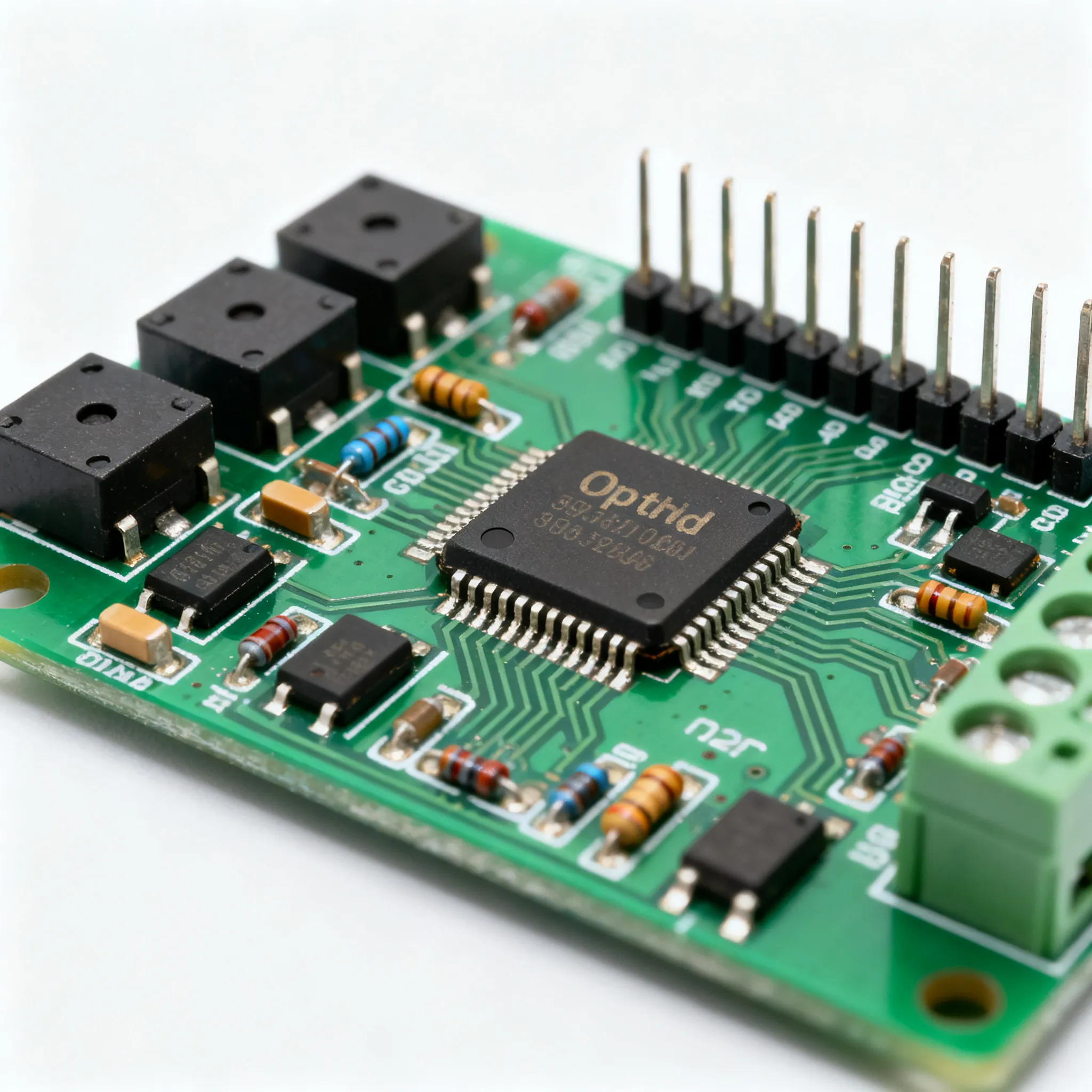
Why Op Amp Supply Chains Are Under Pressure in 2026
Operational amplifiers remain one of the most ubiquitous building blocks in electronics, yet the procurement landscape in 2026 looks nothing like the predictable, low-drama market of five years ago. The global op amp market was valued at $9.81 billion in 2025 and is projected to reach $15.88 billion by 2033, expanding at a CAGR of 6.2% [1]. That growth, however, masks deep friction in the supply chain. Over 140 billion op amp units shipped globally in 2025 across more than 85 semiconductor application domains [2], yet availability remains uneven. The reason isn’t a simple capacity shortage—it’s a collision of surging demand, raw-material constraints, and a pricing war that is reshaping the supplier base.
Three numbers tell the story. First, 31% of manufacturers report direct pricing pressure from an influx of low-cost alternatives, particularly in the general-purpose segment [3]. Second, 59% of procurement organizations cite cost sensitivity as the dominant constraint in their op amp sourcing decisions, while 54% have experienced supply chain disruptions in the last 18 months [4]. Third, 51% of market participants point to raw-material dependency—specifically on specialty silicon processes and packaging substrates—as a structural vulnerability that won’t resolve quickly [4]. Together, these pressures mean that the old playbook of single-sourcing a jellybean part and expecting 8‑week lead times no longer works.
The application mix is shifting, too. Industrial control systems still account for 38% of op amp usage, while consumer electronics represent 27% [2]. Automotive electrification and IoT edge nodes are pulling high-precision and low-power variants into new designs, even as legacy 5V general-purpose parts face aggressive price erosion from Asian fabs. The result is a bifurcated market: one half is a commodity brawl where every tenth of a cent matters, the other half is a supply-constrained niche where lead times can stretch past 26 weeks. For engineers and buyers, understanding where your design falls on that spectrum is the first step to avoiding a line-down situation.
Tip: Don’t assume a “standard” op amp is low-risk just because it’s been around for decades. The same part number may now be sourced from multiple fabs with different quality baselines, and the cheapest reel on a spot-buy platform may carry hidden qualification debt.
The Specs That Actually Move the Needle on Cost and Lead Time
Not all datasheet parameters are created equal when you’re staring at a BOM cost target or a 20‑week lead time. While design engineers naturally focus on noise density and gain-bandwidth product, procurement teams quickly learn that package type, offset voltage grade, and temperature range often have a larger impact on landed cost and availability than the headline AC specs. Understanding these levers lets you make informed trade-offs without sacrificing circuit performance.
High-precision op amps—those with input offset voltages below 100 µV and drift under 1 µV/°C—rely on specialized trimming and bipolar-CMOS processes that are concentrated in a handful of fabs. When demand spikes, these lines don’t scale quickly, which is why precision parts still carry lead times of 20–30 weeks in many cases. General-purpose parts, by contrast, are built on mature CMOS nodes with massive wafer capacity, but the flood of new suppliers from Asia has turned pricing into a race to the bottom. 31% of manufacturers are feeling that pricing squeeze, and it’s forcing even tier‑1 OEMs to re‑evaluate their approved vendor lists [3].
The table below maps common specification choices to their typical cost and lead-time implications. Use it as a quick reference when a long-lead-time part threatens your production schedule.
| Spec Parameter | General-Purpose Range | High-Precision Range | Relative Cost Impact | Lead-Time Risk |
|---|---|---|---|---|
| Input Offset Voltage | 1 mV – 5 mV | 10 µV – 100 µV | 2×–5× higher for precision | High for precision grades |
| Gain-Bandwidth Product | 1 MHz – 10 MHz | 10 MHz – 50 MHz | Moderate increase with BW | Moderate; wideband parts can be allocation‑constrained |
| Slew Rate | 0.5 V/µs – 5 V/µs | 10 V/µs – 50 V/µs | Higher slew rate adds cost | Low to moderate |
| Package Type | SOIC‑8, TSSOP‑8 | MSOP‑8, WLCSP | WLCSP can be 1.5×–3× more | WLCSP and MSOP are most vulnerable |
| Temperature Range | ‑40°C to +85°C | ‑40°C to +125°C | Extended temp adds 10–30% | Automotive‑grade parts face allocation risk |
| Voltage Noise (1 kHz) | 20–50 nV/√Hz | 5–15 nV/√Hz | Low‑noise parts carry premium | Moderate; niche processes limit supply |
What the table doesn’t show is the interaction between package and test flow. A precision op amp in a tiny WLCSP package demands more handling and tighter process control, which amplifies both cost and lead-time variability. Many buyers are surprised to learn that switching from a 5‑pin SOT‑23 to an 8‑pin SOIC can cut lead times by 8–12 weeks, even for the same silicon, simply because the latter flows through higher‑volume assembly lines. This kind of cross‑qualification is exactly the sort of lever we’ll explore in the buyer’s playbook later.
Competitive dynamics further complicate the picture. Exchange rate fluctuations and trade tariffs can swing landed costs by 5–15%, and the constant jockeying among suppliers for design‑win slots means that today’s bargain part may be tomorrow’s allocation headache [5]. Keeping a close eye on the spec‑versus‑cost trade‑off is no longer a once‑a‑year exercise; it’s a monthly discipline for any team managing a mixed BOM.
General-Purpose vs. Precision Op Amps: Where the Pricing War Is Hottest
If you’re buying op amps in 2026, you’re effectively operating in two parallel markets. The general‑purpose segment—think LM358, LM324, and their modern CMOS equivalents—is a high‑volume, low‑margin battlefield where 68% of demand comes from consumer electronics and 61% from automotive systems [4]. The precision segment, on the other hand, is driven by 57% reliance on precision circuits in industrial and medical applications, where performance trumps price [4]. The pricing dynamics in each could hardly be more different.
General‑purpose op amps have seen an influx of suppliers from China, Taiwan, and Korea, many of whom are willing to accept single‑digit gross margins to capture market share. This has compressed ASPs (average selling prices) to levels that make it difficult for legacy Western suppliers to compete on cost alone. The result is a buyer’s market in terms of price, but a risky one in terms of consistency: some low‑cost alternatives meet datasheet specs, while others exhibit wider part‑to‑part variation, weaker ESD protection, or shorter operational lifetimes. For precision op amps, the opposite holds. The barrier to entry is high—both in process technology and in the trust required from medical and aerospace customers—so the supplier base remains concentrated. Lead times are longer, prices are stickier, and second‑sourcing requires careful qualification.
The table below contrasts the two segments across the dimensions that matter most to procurement and engineering teams.
| Comparison Metric | General-Purpose Op Amp (e.g., LM358, MCP6001) | High-Precision Op Amp (e.g., OPAx197, ADA4522) | Selection Criteria & Failure Boundary |
|---|---|---|---|
| Typical Application Split | 68% consumer, 61% automotive | 57% precision circuits (industrial, medical, test) | Match to end‑market reliability expectations |
| Unit Price (1k reel, 2026) | $0.08 – $0.35 | $0.80 – $4.50 | Cost gap can exceed 10×; verify BOM impact early |
| Lead Time (typical) | 8–16 weeks | 20–30 weeks | Buffer stock critical for precision types |
| Supplier Landscape | Highly fragmented; 30+ active suppliers | Concentrated; top 5 hold >70% share | Second‑source qualification is harder for precision |
| Pricing Trend (2026) | Flat to slight decline (price war) | Stable to slight increase (supply constraint) | Lock in contracts for precision; spot‑buy general‑purpose |
| Key Risk | Quality variance from new entrants | Single‑source dependency and allocation | In‑circuit validation mandatory for new suppliers |
Notice that the “sweet spot” for many designs—a part with moderate precision (500 µV offset, 5 MHz GBW) in a robust SOIC package—sits right at the intersection of these two worlds. These mid‑range op amps are often sourced from both established and emerging suppliers, giving you negotiating leverage if you’ve done the qualification work upfront. The 38% industrial and 27% consumer electronics usage split [2] suggests that many applications can be served by either segment, so don’t default to the most expensive option without a clear performance justification.
Key Takeaway: The pricing war in general‑purpose op amps is a double‑edged sword. It lowers your unit cost but demands more rigorous incoming inspection. In precision op amps, the real battle isn’t price—it’s availability. Plan your buffer stock accordingly.
A Buyer’s Playbook for 2026: Multi-Sourcing, Spec Trade-Offs, and Lead-Time Hedges
With 59% of buyers citing cost sensitivity as their top concern and 54% having already been hit by supply chain disruptions [4], the only viable strategy is one that builds flexibility into every line item on the BOM. The following playbook distills the approaches that seasoned procurement teams are using right now to keep production lines moving without blowing the budget.
1. Qualify second sources before you need them. This sounds obvious, but many teams still treat alternate‑source qualification as a reactive fire drill. For general‑purpose op amps, identify at least two pin‑compatible alternatives from different geographical fabs. For precision parts, where drop‑in replacements are rare, work with your engineering team to identify a “good enough” fallback that may require a minor PCB layout change but can be qualified in parallel. The time to do this is when lead times are 8 weeks, not when they hit 26.
2. Trade a little slew rate for a lot of availability. Many designs over‑specify the op amp’s dynamic performance. A circuit that works perfectly with a 10 V/µs slew rate may function just as well with 5 V/µs, and that relaxation can open up a much wider pool of available parts. Similarly, relaxing the offset voltage from 50 µV to 200 µV can move you from a single‑source precision part to a multi‑source general‑purpose device with 8‑week lead times. Always verify the impact on signal integrity, but don’t let “specsmanship” drive you into a corner.
3. Cross‑qualify package types. As highlighted earlier, package choice is a powerful lever. If your design currently uses a WLCSP or MSOP package, qualify an SOIC or TSSOP version as a backup. The silicon is often identical, but the assembly and test flow is far more resilient. This single step can cut lead‑time risk by half for many precision op amps.
4. Use distributor inventory data as a leading indicator. Major distributors provide real‑time stock levels and lead‑time trends. Set up automated alerts for the op amp part numbers on your BOM. When inventory at two or more distributors drops below a 4‑week supply, it’s time to pull forward orders or activate your second source. This simple practice has saved more than one production schedule.
5. Lock in pricing with adjustment clauses. With a 6.2% CAGR and persistent cost sensitivity [1], general‑purpose op amp prices are likely to remain flat or decline slightly, while precision parts may inch upward. Multi‑year agreements that include quarterly price‑adjustment mechanisms tied to a raw‑material index or exchange rate can protect both sides. Avoid fixed‑price contracts longer than 12 months unless you have a clear view of the supplier’s cost structure.
The table below summarizes the most effective mitigation actions, when to deploy them, and the trade‑offs involved.
| Action | When to Use | Trade‑off |
|---|---|---|
| Qualify a second‑source op amp | Lead times exceed 12 weeks or single‑source risk is high | Engineering time; possible minor PCB changes |
| Relax slew rate or offset voltage spec | Long‑lead precision part is gating production | May reduce signal fidelity; validate thoroughly |
| Cross‑qualify a different package | WLCSP/MSOP allocation is tight | Board space increase; thermal performance may shift |
| Build 4–6 weeks of buffer stock | Precision op amps with 20+ week lead times | Working capital impact; risk of obsolescence |
| Negotiate multi‑year agreement with price adjustment | Stable BOM with predictable volumes | Less flexibility to spot‑buy if market softens |
| Monitor distributor inventory and set alerts | Ongoing for all critical op amp lines | Requires discipline; false alarms possible |
These actions aren’t theoretical. They’re drawn from the playbooks of companies that navigated the 2021–2023 semiconductor shortage and have since institutionalized the lessons. The op amp market in 2026 isn’t in crisis, but it is structurally tighter than the headline growth numbers suggest. A proactive, data‑driven approach to sourcing will separate the teams that ship on time from those that don’t.
Op Amp Procurement FAQs: What Senior Engineers and Buyers Ask in 2026
Q: How long are lead times for high-precision op amps right now, and are they expected to improve?
High‑precision parts still see 20–30 week lead times due to constrained fab capacity for specialized bipolar‑CMOS and thin‑film resistor processes. Market analysis shows 57% reliance on precision circuits across industrial and medical applications [4], so demand remains robust. Improvement is slow; most forecasts don’t anticipate a return to sub‑10‑week lead times before late 2027. Second‑sourcing and maintaining 4–6 weeks of buffer stock are the most practical hedges.
Q: What’s the real risk of using low-cost general-purpose op amps from new Asian suppliers?
While 31% of manufacturers report pricing pressure from these alternatives [3], the risk isn’t uniform. Many parts meet datasheet specifications and perform reliably in non‑safety‑critical applications. However, some low‑cost suppliers cut corners on ESD protection, latch‑up immunity, or long‑term drift. The safe approach is to verify datasheet specs with in‑circuit testing—especially for offset drift over temperature and noise—before committing to production volumes. A few extra cents per unit can be cheap insurance against field failures.
Q: How are trade tariffs and geopolitical events affecting op amp landed costs in 2026?
Exchange rate fluctuations and tariffs can swing landed costs by 5–15%, according to market analysis [5]. The impact is most pronounced for parts assembled in one region and tested in another. Procurement teams are mitigating this by diversifying assembly locations and using regional distribution hubs to minimize cross‑border friction. When negotiating contracts, include a foreign‑exchange adjustment clause to avoid margin erosion.
Q: Should we lock in annual pricing contracts now, or is the market softening?
With a 6.2% CAGR and persistent cost sensitivity [1], general‑purpose op amp prices are likely to stay flat or decline slightly through 2027, while precision parts may see modest increases. Multi‑year agreements with quarterly price‑adjustment clauses are becoming the norm. If your volumes are predictable, locking in a 12‑month contract with a reputable supplier can provide budget certainty. If you expect design changes, stay flexible with spot‑buying supplemented by buffer stock.
Q: Which op amp package types are most vulnerable to supply chain disruptions?
Small‑outline packages such as SOIC‑8, MSOP‑8, and wafer‑level chip‑scale packages (WLCSP) face the tightest supply because they’re heavily used in portable electronics and IoT devices. DIP packages, while less space‑efficient, are more stable due to lower demand and mature assembly infrastructure. Buyers are increasingly cross‑qualifying multiple package options for the same silicon to maintain flexibility. If your design can accommodate a slightly larger footprint, keeping a DIP or SOIC alternative approved can save weeks of lead time during an allocation crunch.
References & Further Reading
- Operational Amplifiers (Op-Amps) Market Size, Share | Forecast & Trends [2033] – SkyQuest
- Operational Amplifier (op amp) Market Size, Share & Report [2034] – Global Market Statistics
- General-Purpose Op Amp Market Report | Forecast 2025-2033 – Global Growth Insights
- Operational Amplifier Market Size, Share, Trend Report, 2035 – Business Research Insights
- Operational Amplifier Market Analysis – Market Research Future
- Operational Amplifiers (Op-Amps) Market Size, Share, and Growth Analysis – GII Research
- Operational Amplifier Market Size, Share & Outlook – Reanin
- Operational Amplifier (OP-AMP) Market Size, SWOT & Market Insights & Forecast 2033 – Verified Market Reports
- Electronic Operational Amplifier Market Size | Industry Trends [2034] – Global Market Statistics
- IC-Online – Mixed BOM and Flexible MOQ Sourcing
The op amp market in 2026 rewards preparation and punishes complacency. Whether you’re designing a high‑precision analog front‑end or sourcing millions of general‑purpose amplifiers for consumer devices, the same principle applies: understand the spec‑versus‑cost trade‑offs, qualify alternatives before you’re forced to, and use real‑time market data to stay ahead of disruptions. For teams managing mixed BOMs with varying MOQ requirements, platforms like IC-Online provide a consolidated view of availability and pricing across multiple suppliers, helping you make faster, more informed decisions. The parts