2026 Market Outlook: The Future of RF Modules and Their Applications in Wireless Communication
Expert guide on 2026 Market Outlook: The Future of RF Modules and Their Applications in Wireless Communication. Technical specs, applications, sourcing tips for engineers and buyers.
Introduction
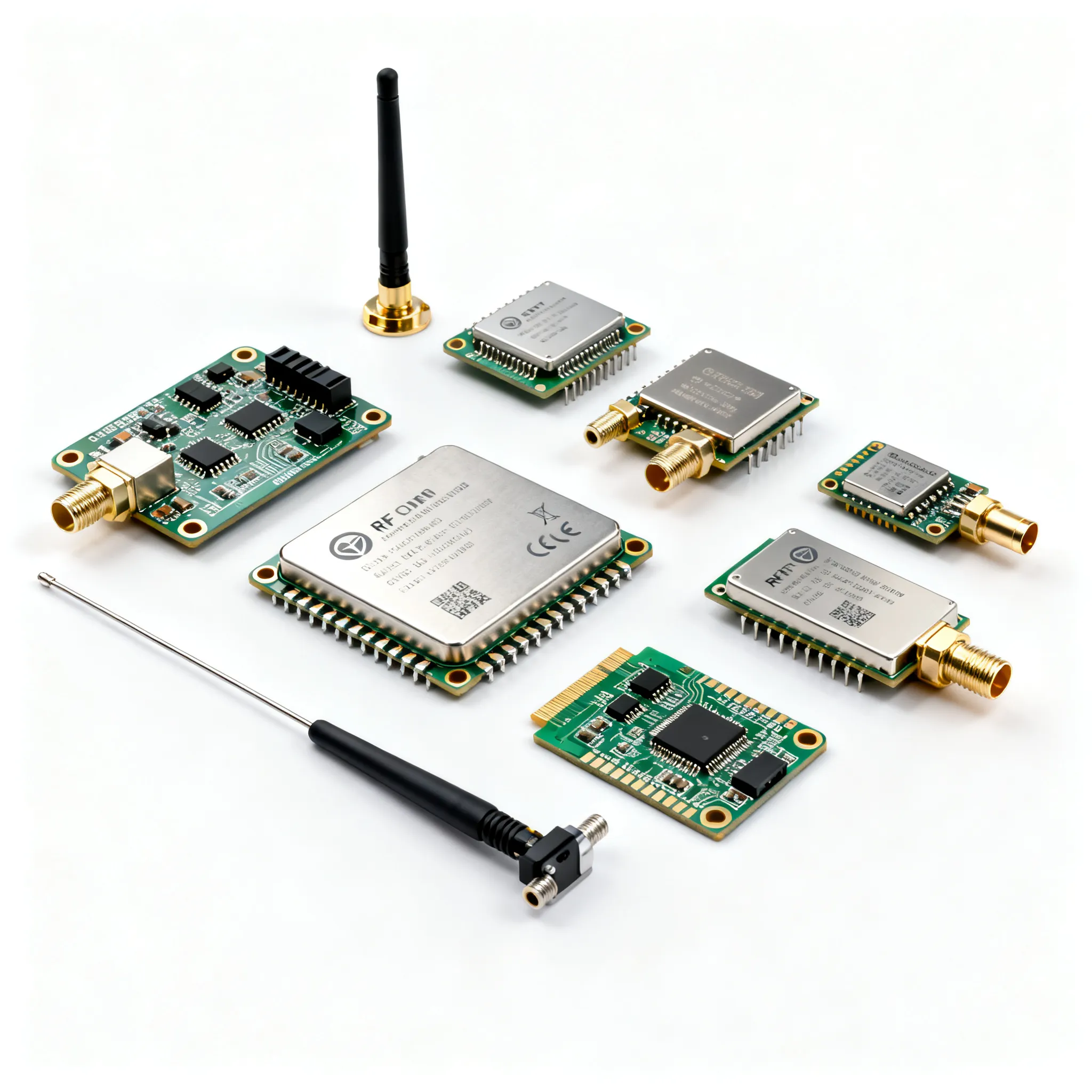
As we advance towards 2026, the realm of wireless communication continues to evolve at an unprecedented pace. RF modules, critical components in this domain, are pivotal in enabling seamless connectivity across various devices and platforms. These modules play a crucial role in the functionality of wireless communication systems, including IoT devices, smartphones, and smart home technologies. Understanding their specifications and applications is essential for engineers and designers aiming to leverage the full potential of RF technology.
Technical Overview
RF modules are integral components that manage radio frequency communication in numerous electronic devices. They function by converting data into radio waves and transmitting them across designated frequencies. The core concepts involve modulation, frequency range, power output, and sensitivity. Modulation techniques such as Amplitude Modulation (AM) and Frequency Modulation (FM) are used to encode data onto carrier waves. The frequency range determines the spectrum over which the module operates, influencing its application in different wireless communication scenarios.
Additionally, power output is a critical specification affecting the range and efficiency of the RF module. A higher power output generally translates to a broader communication range. Sensitivity, on the other hand, refers to the module's ability to detect weak signals, impacting its performance in environments with considerable interference. Understanding these principles is vital for selecting the right RF module for specific applications.
Detailed Specifications
| Parameter | Specification | Units | Notes |
|---|---|---|---|
| Frequency Range | 2.4 - 2.5 | GHz | Typical for Wi-Fi and Bluetooth |
| Modulation Type | FSK, GFSK | N/A | Common in low-power applications |
| Output Power | 20 | dBm | Max output; varies by model |
| Receiver Sensitivity | -98 | dBm | Indicates ability to detect weak signals |
| Data Rate | 1 - 2 | Mbps | Dependent on modulation technique |
| Operating Voltage | 1.8 - 3.6 | V | Varies by power source |
| Current Consumption | 15 | mA | During transmission |
| Channel Bandwidth | 1 | MHz | Defines data capacity |
| Impedance | 50 | Ohms | Standard for RF circuits |
| Operating Temperature | -40 to 85 | °C | Industrial range |
| Parameter | Specification | Units | Notes |
|---|---|---|---|
| Package Type | QFN-32 | N/A | Quad Flat No-leads |
| Dimensions | 5 x 5 | mm | Compact design |
| Weight | 0.15 | g | Lightweight |
| Thermal Resistance | 30 | °C/W | Efficient heat dissipation |
| Mounting Type | Surface Mount | N/A | Common for PCB assembly |
| Shock Resistance | 1500 | G | High durability |
| Vibration Resistance | 20 | G | Rugged environments |
| Moisture Sensitivity Level | 3 | N/A | JEDEC standard |
| Application | RF Module | Frequency | Data Rate | Notes |
|---|---|---|---|---|
| IoT Devices | RF2401 | 2.4 GHz | 1 Mbps | Low power consumption |
| Smartphones | RF9001 | 5 GHz | 1 Gbps | High-speed data transfer |
| Smart Home | RF433 | 433 MHz | 100 kbps | Long-range communication |
| Industrial Automation | RF868 | 868 MHz | 200 kbps | Reliable in harsh environments |
| Wearable Tech | RFBLE | 2.4 GHz | 2 Mbps | Bluetooth Low Energy |
Design Considerations
When designing systems that incorporate RF modules, several key considerations must be taken into account to ensure optimal performance. Firstly, selecting the appropriate frequency band is crucial, as it determines the module's compatibility with existing infrastructure and regulatory compliance. For instance, 2.4 GHz is universally accepted for consumer electronics, whereas 868 MHz is often used in industrial applications.
Power management is another vital aspect. RF modules typically consume significant power during transmission, which can impact the overall power budget of battery-operated devices. Implementing efficient power management strategies, such as duty cycling and low-power modes, can mitigate this issue.
Interference and signal integrity must also be addressed. In densely populated RF environments, interference can degrade communication quality. Employing advanced modulation techniques and robust error correction protocols can enhance signal integrity. Additionally, proper antenna design and placement are crucial for maximizing range and minimizing signal loss.
Thermal management is essential, especially in high-power applications. RF modules can generate substantial heat, which must be dissipated effectively to prevent performance degradation. Utilizing heat sinks and ensuring adequate ventilation are standard practices in thermal management.
Step-by-Step Guide
- Define Application Requirements: Determine the specific requirements of the application, including frequency range, data rate, and power output. This will guide the selection of the appropriate RF module.
- Choose the Right RF Module: Use the specifications and application comparisons provided to select an RF module that meets the defined requirements. Consider factors such as frequency compatibility, power consumption, and data rate.
- Design the Antenna: Design an antenna that matches the module's frequency and impedance specifications. Proper antenna design is critical for maximizing communication range and minimizing interference.
- Implement Power Management: Incorporate power management strategies to enhance battery life in portable devices. This may include implementing sleep modes and optimizing transmission power.
- Address Interference: Use advanced modulation techniques and error correction protocols to minimize the impact of interference in crowded RF environments.
- Ensure Thermal Management: Design for adequate heat dissipation by incorporating heat sinks and ensuring proper airflow around the RF module.
- Test and Validate: Conduct thorough testing to validate the performance of the RF module within the system. This includes verifying signal integrity, range, and reliability under various conditions.
- Optimize for Production: Once validated, optimize the design for mass production, focusing on cost-effectiveness and ease of assembly.
Common Issues & Solutions
- Issue: Signal Interference
Solution: Implement frequency hopping and spread spectrum techniques to reduce the impact of interference from other devices. - Issue: Limited Range
Solution: Optimize antenna design and increase output power, while ensuring regulatory compliance. - Issue: High Power Consumption
Solution: Use low-power modes and duty cycling to reduce power consumption during idle periods. - Issue: Thermal Overload
Solution: Enhance thermal management with heat sinks and proper ventilation to prevent overheating. - Issue: Poor Signal Quality
Solution: Improve signal quality by using high-quality components and ensuring proper impedance matching. - Issue: Regulatory Non-compliance
Solution: Ensure that the RF module and system design comply with relevant regulatory standards for the target market.
Applications & Use Cases
RF modules find applications across a wide range of industries and use cases. In IoT devices, they enable wireless connectivity, allowing devices to communicate with each other and with cloud services. Smartphones utilize RF modules for high-speed data transfer over cellular networks and Wi-Fi. In smart homes, RF modules facilitate the integration of various smart devices, enabling seamless automation and control.
Industrial automation systems rely on RF modules for reliable communication in harsh environments, where wired solutions may not be feasible. Wearable technology, such as fitness trackers and smartwatches, uses RF modules to connect with smartphones and other devices, providing real-time data and notifications.
Selection & Sourcing Guide
When selecting and sourcing RF modules, it is crucial to consider the specific requirements of the application, including frequency, power, and data rate. Utilize authorized distributors like IC Online to access a wide range of RF modules from reputable manufacturers. Ensure that the selected module meets the necessary specifications and regulatory standards for the intended application.
FAQ
- Q: What is an RF module?
A: An RF module is a component that facilitates wireless communication by converting data into radio waves and transmitting them over designated frequencies. - Q: What factors should I consider when choosing an RF module?
A: Consider frequency range, power output, data rate, modulation type, and application-specific requirements. - Q: How can I reduce interference in RF communication?
A: Use frequency hopping, spread spectrum techniques, and robust error correction protocols. - Q: What is the typical operating voltage for RF modules?
A: RF modules typically operate between 1.8 to 3.6 volts, depending on the power source. - Q: How do I ensure regulatory compliance for RF modules?
A: Ensure that the module and system design adhere to the relevant regulatory standards for your target market. - Q: What are common applications for RF modules?
A: RF modules are used in IoT devices, smartphones, smart homes, industrial automation, and wearable technology. - Q: How can I improve the range of an RF module?
A: Optimize antenna design, increase output power, and ensure proper impedance matching. - Q: What is the role of modulation in RF modules?
A: Modulation encodes data onto carrier waves, allowing for effective transmission over radio frequencies. - Q: Why is thermal management important in RF modules?
A: Effective thermal management prevents overheating, which can degrade performance and reliability. - Q: Where can I source RF modules?
A: Authorized distributors like IC Online offer a wide range of RF modules from reputable manufacturers.
Conclusion
The future of RF modules in wireless communication is promising, with applications spanning various industries and technologies. Understanding the specifications, design considerations, and challenges associated with these modules is crucial for developing effective and reliable wireless communication systems. By leveraging the right RF modules, engineers can create innovative solutions that drive the next wave of connectivity.