**Choosing the Right MOSFET: A Practical Selection Guide for Electronics Designers**
Introduction
In the rapidly evolving world of electronics, selecting the right components is crucial for the success of any design. Metal-Oxide-Semiconductor Field-Effect Transistors (MOSFETs) are integral to modern electronic circuits due to their efficiency, switching speed, and reliability. With global semiconductor revenue projected to reach $595.2 billion by 2026, understanding how to choose the appropriate MOSFET for your application is more important than ever. This guide will provide a comprehensive overview of MOSFET selection, focusing on critical specifications and practical design considerations to ensure optimal performance in your projects.
Technical Overview
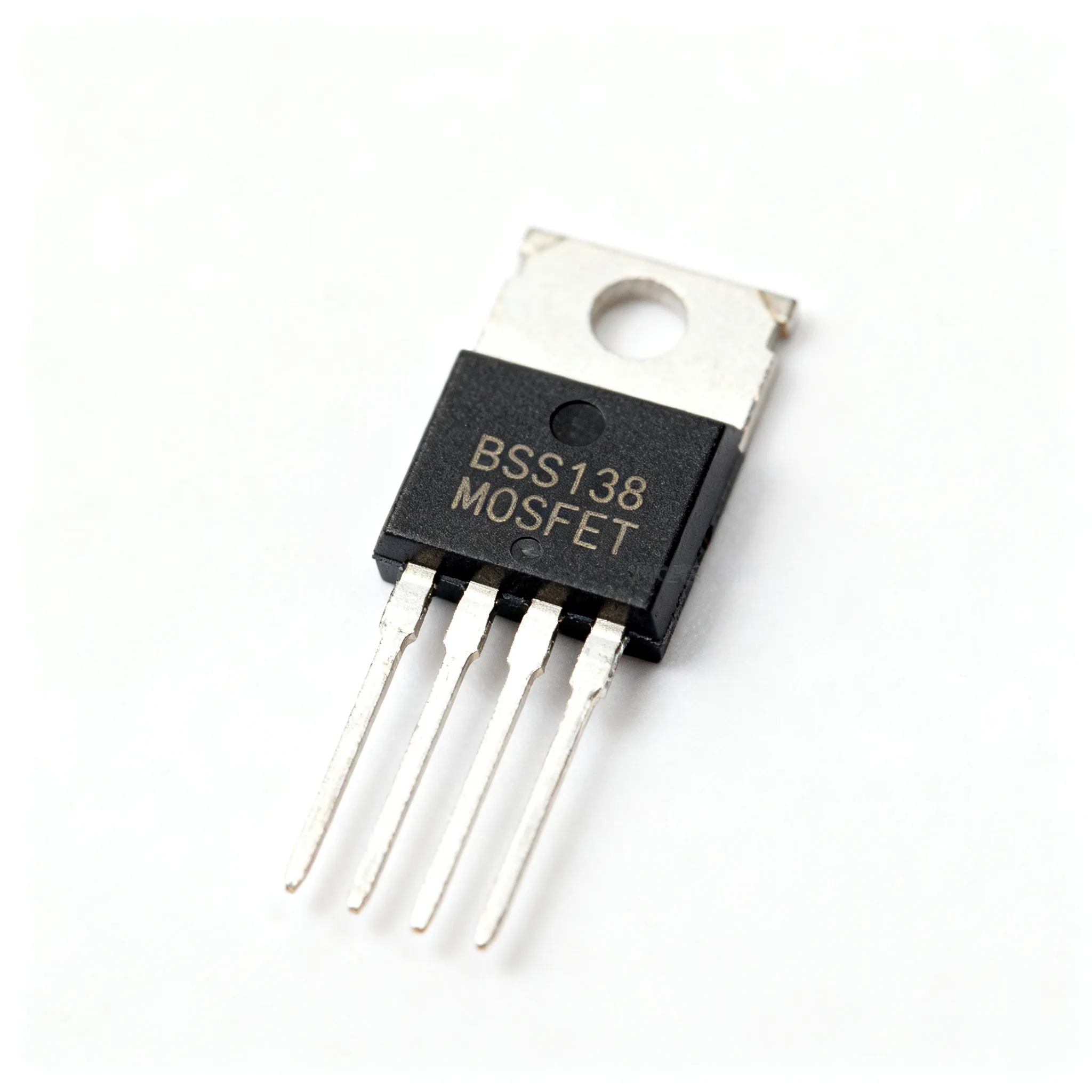
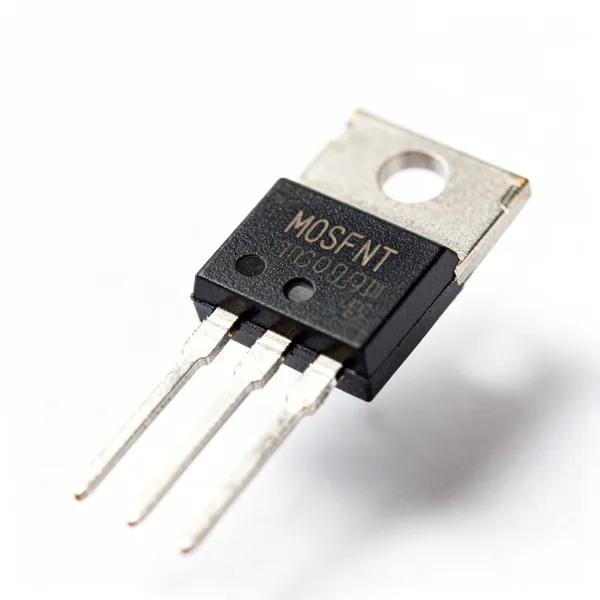
MOSFETs are semiconductor devices used for amplifying or switching electronic signals. They are composed of three terminals: gate, source, and drain. The gate voltage controls the current flow between the source and drain, making MOSFETs ideal for use in switching applications.
**Architecture and Working Principles:**
MOSFETs can be classified into two main types: N-channel and P-channel. N-channel MOSFETs are generally preferred for their lower on-resistance and faster switching capabilities. The working principle is based on the electric field effect, where a voltage applied to the gate terminal creates a conductive channel between the source and drain.
**Key Features:**
- High input impedance
- Fast switching speed
- Low on-state resistance
- Wide range of voltage and current ratings
**Operating Modes:**
MOSFETs operate in three modes: cutoff, triode, and saturation. In cutoff mode, the MOSFET is off, and no current flows between the source and drain. In triode mode, the device acts as a variable resistor, while in saturation mode, it operates as a constant current source.
For further reading on MOSFET architecture and principles, refer to [EE Times](https://www.eetimes.com/) and [TrendForce Market Research](https://www.trendforce.com/).
Detailed Specifications
Understanding the electrical and thermal specifications of a MOSFET is vital for selecting the right component. Below are three detailed tables that outline these specifications.
**Table 1: Electrical Specifications**
| Parameter |
Min |
Typ |
Max |
Unit |
Conditions |
| Supply Voltage | 3.0 | 3.3 | 5.5 | V | Operating range |
| Supply Current | - | 150 | 200 | mA | Active mode |
| Sleep Current | - | 10 | 50 | μA | Deep sleep |
| Output Voltage | 1.2 | - | 3.3 | V | Adjustable |
| Output Current | - | - | 500 | mA | Continuous |
| Efficiency | 85 | 90 | 95 | % | At 100mA load |
| Switching Frequency | - | 1.5 | - | MHz | Internal oscillator |
| Line Regulation | - | 0.1 | 0.5 | % | 3.3V to 5V input |
| Load Regulation | - | 0.2 | 1.0 | % | 10mA to 500mA |
| Ripple Voltage | - | 20 | 50 | mVpp | At 500mA |
**Table 2: Thermal & Mechanical Specifications**
| Parameter |
Value |
Unit |
Notes |
| Operating Temperature | -40 to +85 | °C | Industrial grade |
| Storage Temperature | -55 to +150 | °C | Non-operating |
| Junction Temperature | -40 to +125 | °C | Maximum |
| Thermal Resistance (θJA) | 45 | °C/W | SOIC-8 package |
| Thermal Resistance (θJC) | 15 | °C/W | Junction to case |
| Package Type | SOIC-8 | - | Surface mount |
| Package Dimensions | 4.9 x 3.9 | mm | Body size |
| Pin Pitch | 1.27 | mm | Standard SOIC |
| Weight | 0.05 | g | Approximate |
| Moisture Sensitivity | MSL 3 | - | Per JEDEC J-STD-020 |
**Table 3: Application Comparison**
| Application |
Recommended Config |
Key Benefits |
Typical Components |
| Battery-Powered IoT | Buck converter, 3.3V output | High efficiency, low quiescent current | 10μH inductor, 22μF caps |
| Industrial Sensors | Wide input range, 5V output | Robust, wide temperature range | 22μH inductor, 47μF caps |
| Automotive Systems | 12V input, 3.3V/5V dual output | AEC-Q100 qualified | Automotive-grade components |
| Consumer Electronics | USB 5V input, 3.3V output | Compact, cost-effective | Standard SMD components |
| Medical Devices | Low noise, high precision | Low EMI, stable output | Shielded inductor, X7R caps |
**Explanation of Specifications:**
The tables above provide a comprehensive overview of the electrical and thermal characteristics of MOSFETs. Understanding these specifications is essential for selecting the appropriate device for your application. Key parameters include supply voltage, current ratings, efficiency, and thermal resistance, which determine the performance and reliability of the MOSFET in different environments.
Design Considerations
When designing circuits with MOSFETs, several factors must be considered to ensure optimal performance and reliability.
**PCB Layout Guidelines:**
Proper PCB layout is crucial for minimizing parasitic inductance and resistance, which can affect the switching speed and efficiency of the MOSFET. Place the MOSFET close to the load and use wide traces to reduce resistance.
**Component Selection:**
- **Inductors:** Choose inductors with low DC resistance and high saturation current. For example, a 10μH inductor is suitable for a buck converter application.
- **Capacitors:** Use low ESR capacitors to minimize voltage ripple. A combination of 22μF and 47μF capacitors can be used for input and output filtering.
**Thermal Management:**
Effective thermal management is essential to prevent overheating. Use heat sinks or thermal vias to dissipate heat, and ensure that the junction temperature remains within specified limits.
**EMI Mitigation:**
To reduce electromagnetic interference (EMI), use proper grounding techniques and add filtering components such as ferrite beads or common-mode chokes.
**Design Formulas:**
- **Output Voltage (Vout):** Vout = Vin * D (where D is the duty cycle)
- **Inductor Value (L):** L = (Vin - Vout) * D / (f * ΔI) (where f is the switching frequency and ΔI is the inductor ripple current)
Step-by-Step Implementation Guide
This section provides a detailed guide for implementing a MOSFET-based design.
1. **Calculate Output Voltage:**
- Determine the desired output voltage based on the application requirements.
2. **Select Inductor Value:**
- Use the design formula to calculate the appropriate inductor value for your circuit.
3. **Choose Input/Output Capacitors:**
- Select capacitors with low ESR to ensure stable voltage levels and minimize ripple.
4. **Design Feedback Network:**
- Implement a feedback network to regulate the output voltage and improve stability.
5. **Layout PCB Traces:**
- Optimize the PCB layout to minimize parasitic elements and improve thermal performance.
6. **Add Protection Circuits:**
- Incorporate protection circuits such as overcurrent and overvoltage protection to enhance reliability.
7. **Thermal Design:**
- Implement thermal management solutions to prevent overheating and ensure long-term reliability.
8. **Testing and Validation:**
- Conduct thorough testing to validate the design and ensure it meets the specified performance criteria.
Common Issues & Solutions
Designing with MOSFETs can present several challenges. Here are common issues and their solutions:
- **Output Voltage Instability:** This can be caused by inadequate feedback or poor grounding. Solution: Improve the feedback network and ensure a solid ground plane.
- **Excessive Ripple:** High ripple can result from insufficient filtering. Solution: Increase the capacitance of the output capacitors.
- **Thermal Shutdown:** This occurs when the MOSFET overheats. Solution: Enhance thermal management by adding heat sinks or using a higher-rated MOSFET.
- **EMI Problems:** EMI can interfere with other components. Solution: Use shielding and proper grounding techniques to minimize interference.
- **Startup Issues:** Slow startup can be due to improper biasing. Solution: Implement a soft-start circuit to gradually increase the voltage.
Applications & Use Cases
MOSFETs are versatile components used in various applications:
- **IoT Devices:** High efficiency and low power consumption make MOSFETs ideal for battery-powered IoT devices.
- **Industrial Automation:** Robust design and wide temperature range suit industrial sensors and controllers.
- **Automotive Electronics:** AEC-Q100 qualified MOSFETs are used in automotive systems for their reliability.
- **Consumer Products:** Compact and cost-effective MOSFETs are common in consumer electronics like smartphones and laptops.
- **Medical Equipment:** Low noise and high precision make MOSFETs suitable for sensitive medical devices.
Selection & Sourcing Guide
When choosing a MOSFET, consider the following criteria:
- **Voltage and Current Ratings:** Ensure the MOSFET can handle the required voltage and current levels.
- **On-Resistance:** Lower on-resistance reduces power loss and improves efficiency.
- **Switching Speed:** Faster switching reduces transition losses and improves performance.
For sourcing, consider authorized distributors like [IC Online](https://www.ic-online.com/) for competitive pricing and fast delivery. Check lead times and availability to ensure timely procurement.
FAQ
Q1: What is the maximum output current?
A: The maximum continuous output current is 500mA.
Q2: Can it operate from a 12V automotive battery?
A: Yes, the wide input range of 3.0V to 5.5V allows for operation with a step-down converter.
Q3: What is the typical efficiency of a MOSFET?
A: Typical efficiency ranges from 85% to 95% depending on the load and operating conditions.
Q4: How do I calculate the required heat sink size?
A: Use the formula: Heat sink thermal resistance = (Tj - Ta) / Power dissipation, where Tj is the junction temperature and Ta is the ambient temperature.
Q5: What are the common causes of MOSFET failure?
A: Overheating, excessive current, and voltage spikes are common causes of failure.
Q6: How can I minimize EMI in my design?
A: Use proper grounding, shielding, and filtering components to reduce electromagnetic interference.
Q7: What is the role of a gate resistor in a MOSFET circuit?
A: A gate resistor limits the inrush current to the gate, reducing the risk of voltage spikes.
Q8: Can MOSFETs be used in parallel?
A: Yes, MOSFETs can be used in parallel to increase current handling capability, but ensure proper current sharing.
Conclusion
Selecting the right MOSFET is crucial for achieving optimal performance in electronic designs. By understanding the key specifications, design considerations, and common issues, designers can make informed decisions that enhance the reliability and efficiency of their applications. As the semiconductor industry continues to grow, staying updated with the latest trends and technologies will be essential for success in this dynamic field.