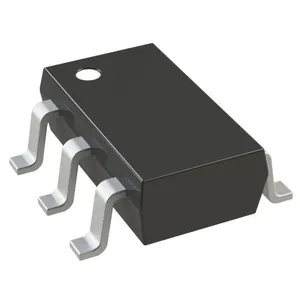

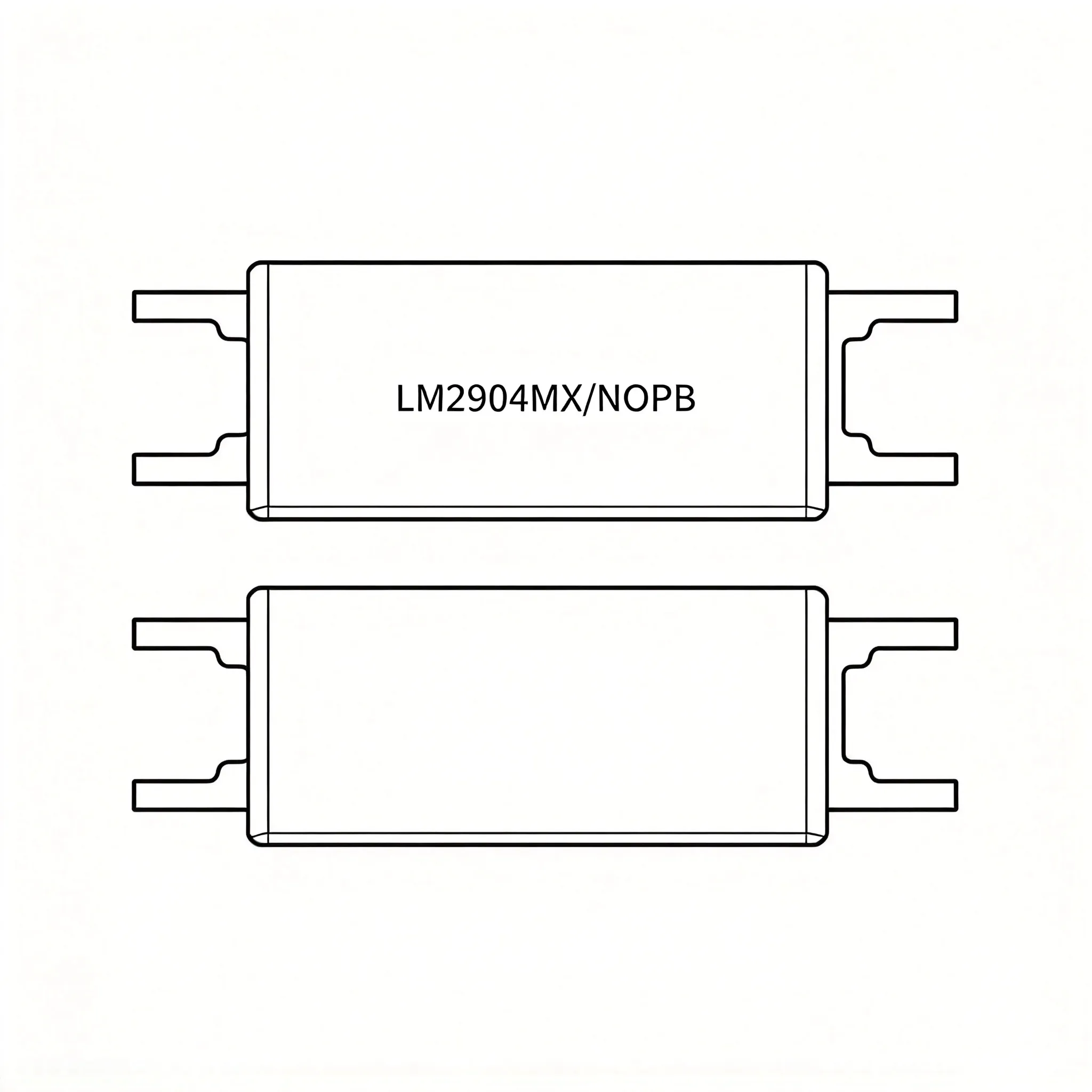
LM2904MX/NOPB
LM2904MX/NOPB pinout, package, and datasheet limits buyers actually check — plus lot inspection notes. Request a quote on IC-Online; no invented stock claims.
Why the LM2904MX/NOPB Still Lands on BOMs When Faster Op-Amps Exist
The LM2904MX/NOPB is the kind of part that refuses to leave a bill of materials. It is a dual bipolar operational amplifier in a SOIC-8 package, and it survives not because it is fast or precise, but because it is predictable, cheap to qualify, and available in a supply range that covers almost everything a 5V or 12V rail can throw at it. Engineers who have spent a decade designing industrial sensors, motor-control front ends, and automotive body electronics keep coming back to this part because the requalification cost of switching away is almost always higher than the savings from a newer amplifier.
The analog supply chain has been under pressure for several years, and mature bipolar parts like this one sit in an awkward position: they are not leading-edge, so they do not get priority wafer starts, yet they are still designed into thousands of active boards. EE Times has documented the recurring squeeze on legacy analog and discrete devices as fabs reallocate capacity toward higher-margin products (EE Times). For a buyer, that means the LM2904MX/NOPB is rarely the part that makes headlines, but it is frequently the part that delays a line restart. Treating it as a strategic commodity rather than a background item is the first step toward sourcing it reliably.
This article walks through the datasheet mechanics that actually shape a design, compares the part against three realistic socket alternatives, and then hands buyers a procurement playbook for verifying reels, date codes, and second-source risk. The goal is not to convince you to keep the LM2904 forever — it is to help you specify it correctly and source it without surprises.
Key Takeaways:
- The LM2904MX/NOPB is a dual bipolar op-amp optimized for single-supply operation across a wide voltage range, not for bandwidth or precision.
- The NOPB suffix is an environmental designation (lead-free, RoHS), not a temperature grade or performance bin.
- Requalifying a mature amplifier usually costs more than the unit-price delta of a newer part — factor that into any migration decision.
- Reel verification, date-code discipline, and a pre-qualified fallback are the three levers that keep this part out of line-down territory.
Inside the LM2904MX/NOPB: Dual Bipolar Op-Amp Specs That Actually Shape Your Design
The LM2904MX/NOPB belongs to the LM2904 family, a dual operational amplifier built on a bipolar process and intended for single-supply applications. The datasheet-level parameters that matter most are not the headline numbers marketing teams like to quote — they are the ones that show up in your error budget and your stability analysis. Input offset voltage, input bias current, unity-gain bandwidth, slew rate, and output swing near the rails each bite in a different way, and understanding them is what separates a working design from a marginal one.
Input offset voltage (Vos) is the differential voltage you must apply to force the output to zero. On a bipolar part like this, Vos is specified at a few millivolts maximum over temperature, and it drifts. In a high-gain DC application — say a 100x instrumentation front end — a 3 mV offset becomes 300 mV at the output before you even consider drift. That is why the LM2904 is a poor choice for precision DC signal chains and a perfectly good choice for AC-coupled or comparator-adjacent roles where offset is trimmed or ignored.
Input bias current (Ib) is the current flowing into each input terminal. Bipolar inputs draw current, and on the LM2904 that current is in the tens-of-nanoamps range at room temperature but rises with temperature. In a high-impedance feedback network, Ib multiplied by the source resistance produces an offset error that can dominate Vos. This is the single biggest reason designers migrate to CMOS parts in high-impedance sensor interfaces.
Unity-gain bandwidth and slew rate define the dynamic envelope. The LM2904's gain-bandwidth product is modest — on the order of 1 MHz — and its slew rate is around 0.3 V/µs. That is fine for audio-band filtering, loop compensation, and slow control loops, but it will not support fast transimpedance stages or high-frequency active filters. If your signal content lives above a few hundred kilohertz, this is the wrong socket.
Output swing near the rails matters in single-supply designs. The LM2904's output can swing close to the negative rail but does not reach the positive rail cleanly under load, and the datasheet's output-voltage swing curves show the dependence on load current. If your ADC front end needs full rail-to-rail swing, you will either lose codes at the top of the range or need a CMOS rail-to-rail part.
| Parameter | Typical / Spec Range | Unit / Notes |
|---|---|---|
| Supply voltage range | 3 V to 32 V (single or split) | V; split-supply operation supported |
| Input offset voltage (Vos) | ±2 mV typical, ±7 mV max over temperature | mV; grade-dependent, drifts with temperature |
| Input bias current (Ib) | ~20 nA typical at 25 °C | nA; rises sharply with temperature |
| Input offset current | ~5 nA typical | nA; matters when source impedances are mismatched |
| Unity-gain bandwidth (GBW) | ~1 MHz | Hz; limits usable closed-loop bandwidth |
| Slew rate | ~0.3 V/µs | V/µs; constrains large-signal step response |
| Output swing (single supply, light load) | ~0 V to V+ − 1.5 V | V; load-dependent, see datasheet curves |
| Supply current (both amplifiers) | ~0.7 mA typical | mA; quiescent, per package |
| Package | SOIC-8 (MX suffix = tape and reel) | 8-pin surface mount |
| Operating temperature range | −40 °C to +85 °C (LM2904 grade) | °C; verify grade in datasheet |
The table above is the working set for a design review. Notice that none of these numbers are impressive in isolation — the value of the LM2904MX/NOPB is that all of them are adequate simultaneously across a wide supply range, which is exactly what a mature industrial design needs. The moment you push one parameter (bandwidth, precision, or rail-to-rail swing), you leave the part's comfort zone and should be looking at the alternatives in the next section.
Tip: When you build the error budget, run Vos and Ib at both 25 °C and the maximum operating temperature. Bipolar bias current roughly doubles every 10 °C, so a design that looks comfortable on the bench can drift out of spec in a hot enclosure.
LM2904MX/NOPB vs LM358, TLV2372, and MCP6002: Which Dual Op-Amp Belongs in Your Socket
The most common question from engineers evaluating this part is whether to stay with the bipolar LM2904 family or migrate to a CMOS rail-to-rail device. The answer depends on which error term dominates your design. The table below compares the LM2904MX/NOPB against three realistic socket candidates: the LM358 (the same family lineage at a different grade), the TLV2372 (a CMOS part with rail-to-rail input and output), and the MCP6002 (a low-power CMOS dual op-amp). None of these should be treated as a compatibility must be verified (package, pinout, firmware); each requires a pinout and error-budget check before you commit.
| Metric | LM2904MX/NOPB (bipolar) | LM358 (bipolar, same family) | TLV2372 (CMOS, RRIO) | MCP6002 (CMOS, low power) |
|---|---|---|---|---|
| Input stage | Bipolar | Bipolar | CMOS | CMOS |
| Supply range | 3–32 V | 3–32 V | ~2.7–16 V | ~1.8–6 V |
| Input offset (Vos) | ±2 mV typ, ±7 mV max | ±2 mV typ, ±7 mV max (grade-dependent) | ~±0.5 mV typ | ~±1.5 mV typ |
| Input bias current | ~20 nA (rises with temp) | ~20 nA (similar) | ~1 pA | ~1 pA |
| Rail-to-rail input | No | No | Yes | Yes |
| Rail-to-rail output | Partial | Partial | Yes | Yes |
| GBW | ~1 MHz | ~1 MHz | ~2.4 MHz | ~1 MHz |
| Supply current (dual) | ~0.7 mA | ~0.7 mA | ~1.2 mA | ~0.2 mA |
| Best fit | Wide-supply industrial, cost-sensitive | Legacy sockets, same family | Precision RRIO at moderate supply | Battery-powered, low-voltage |
Read the table as a decision aid, not a ranking. The LM2904 and LM358 share a family lineage, which is why they appear so similar — the practical difference is grade and temperature range, and a buyer must verify the specific LM358 variant's Vos and Ib against the worst-case error budget before treating it as a substitute. The TLV2372 wins on precision and rail-to-rail swing but costs more supply current and tops out at a lower supply voltage, so it is a poor fit for a 24 V industrial rail. The MCP6002 is the low-power choice for battery equipment but its 6 V supply ceiling rules it out of anything running on a 12 V bus.
Assembly and quality context matters too. When you change an amplifier in a mature board, you are also re-qualifying the solder joint, the stencil, and the reflow profile. IPC-A-610 workmanship expectations for SOIC-8 gull-wing leads are consistent across these parts, but any change to the package or lead finish still triggers an incoming-inspection update (IPC Standards). That hidden cost is why many teams stay with the bipolar LM2904 unless a CMOS part solves a specific, quantified error problem.
Note: The comparison above is a starting point for evaluation. Verify pinout, package, and electrical limits against the current datasheet for each candidate before you commit a socket, and confirm single-source risk through manufacturer and distributor documentation rather than assuming a second source exists.
Procurement Playbook: Verifying LM2904MX/NOPB Reels, Date Codes, and Second-Source Risk
Sourcing the LM2904MX/NOPB is less about finding a listing and more about proving that the parts in the box are what the label claims. The part is a commodity bipolar op-amp, which makes it a frequent target for counterfeiters and for grey-market relabeling. A disciplined incoming-inspection routine is the cheapest insurance you can buy.
Start with the suffix. The NOPB designation is Texas Instruments' lead-free, RoHS-compliant marking with a specific lead-frame finish; it is not a performance grade or a temperature code. Buyers should confirm the full orderable part number on the reel label and cross-check the datasheet's environmental section before assuming RoHS status for a customer's compliance file. The MX portion of the orderable code denotes tape-and-reel SOIC-8 packaging, so a tube of parts sold as "MX" is already a red flag.
Reel and label inspection is where most counterfeit problems surface. Legitimate reels carry a manufacturer label with a lot number, date code, quantity, and often a 2D barcode that traces to the fab. Font inconsistencies, missing lot codes, or labels that peel cleanly off the reel are warning signs. For the SOIC-8 tape, verify pin 1 orientation against the datasheet's tape drawing and confirm the tape pocket dimensions match the package outline.
Date-code discipline is a procurement policy decision, not a datasheet fact. Buyers should require a maximum age on date codes appropriate to the program — many industrial customers set 2 years from the manufacturer's date code — and should request a certificate of conformance with each lot. For high-reliability programs, a sample test against the datasheet's Vos and supply-current limits provides a cheap functional gate before the reel reaches the line.
Second-source risk deserves an explicit answer rather than an assumption. Verify single-source risk through manufacturer and distributor documentation, and pre-qualify a pin-compatible fallback only after confirming package, pinout, and electrical limits. The LM358 family is the natural evaluation candidate because it shares the same dual bipolar architecture and SOIC-8 footprint, but the grade differences mean it is a candidate to evaluate, not a guaranteed substitute.
| Inspection Step | What to Check | Acceptance Criterion | Owner |
|---|---|---|---|
| Orderable part number | Full MPN on reel label matches PO, including NOPB and MX suffixes | Exact match; no substitutions without written approval | Buyer |
| Reel label integrity | Lot number, date code, quantity, 2D barcode present and legible | All fields present; label not re-applied | Incoming inspection |
| Date code | Manufacturer date code vs. program maximum age | Within program policy (e.g., 2 years) | Buyer / quality |
| Tape orientation | Pin 1 position against datasheet tape drawing | Matches drawing; pocket dimensions correct | Incoming inspection |
| Moisture sensitivity | MSL level on label vs. floor-life policy | Sealed bag intact; bake if floor life exceeded | Manufacturing |
| Certificate of conformance | Lot traceability to manufacturer | CoC on file for every lot | Quality |
| Sample functional test | Vos and supply current vs. datasheet limits | Within datasheet min/max at 25 °C | Test engineering |
| Solderability / workmanship | Lead finish and coplanarity per IPC-A-610 | No oxidation, no bent leads, coplanarity in spec | Incoming inspection |
The table above is the checklist to attach to your incoming-inspection procedure. The steps are deliberately ordered from paperwork to physical verification to functional test, so a problem is caught as early and as cheaply as possible. A reel that fails at step one never reaches the line; a reel that passes paperwork but fails the sample test triggers a supplier conversation before the lot is consumed.
Tip: Keep a small "golden sample" of known-good LM2904MX/NOPB units from a franchised lot. Comparing label fonts, reel color, and tape texture against a known reference catches relabeled grey-market stock faster than any database lookup.
LM2904MX/NOPB Questions Senior Engineers and Buyers Actually Ask
The questions below come up repeatedly in design reviews and sourcing meetings. Each answer is written to be actionable rather than textbook.
What does the NOPB suffix on LM2904MX/NOPB actually guarantee?
NOPB is Texas Instruments' lead-free (Pb-free), RoHS-compliant designation with a specific lead-frame finish; it is not a grade or temperature code. Confirm the full orderable part number and the datasheet's environmental section before assuming RoHS status. If your compliance file needs a formal declaration, request the manufacturer's RoHS certificate rather than inferring it from the suffix alone.
Can I drop an LM358 into an LM2904MX/NOPB socket without requalification?
Electrically they are close relatives, but input offset, bias current, and temperature range differ by grade. Verify the LM358 variant's Vos and Ib against your worst-case error budget, and re-check the SOIC-8 pinout before treating it as a substitute. In practice, requalification is usually limited to a bench verification of the error budget at temperature extremes plus a paperwork update — but it is still requalification, not a free swap.
How do I keep the LM2904MX/NOPB stable in a high-gain, low-frequency filter?
The bipolar input bias current and finite open-loop gain create DC offset that a CMOS part would avoid. Budget for input offset drift over temperature, and consider a CMOS rail-to-rail alternative if offset dominates your error stack. For a Sallen-Key or multiple-feedback filter, also check the gain-bandwidth margin: a 1 MHz GBW part at a 100x gain stage leaves only about 10 kHz of usable closed-loop bandwidth, which may be marginal for your corner frequency.
What reel quantity and orientation should I expect for LM2904MX/NOPB?
The MX suffix denotes tape-and-reel SOIC-8; typical reels are 2,500 units with pin 1 orientation per the datasheet's tape drawing. Verify reel labels, date codes, and moisture-sensitive level before releasing to the line. If your line runs a different reel size, confirm the orderable variant with the supplier rather than assuming the standard reel applies.
How do I audit an unfamiliar distributor selling LM2904MX/NOPB below market?
Check traceability to the manufacturer, request a certificate of conformance, inspect reel and label fonts, and sample-test a few units against the datasheet's Vos and supply-current limits. Cross-reference against IPC-A-610 workmanship expectations for incoming inspection. A distributor that cannot produce a CoC or refuses a sample test is not a sourcing option, regardless of price.
Tip: When auditing a new distributor, start with a small evaluation order rather than a full reel. One reel of known-good parts from a franchised channel is a cheap reference standard for every future lot.
Conclusion: Specify It Correctly, Source It Deliberately
The LM2904MX/NOPB refuses to quit for a simple reason: it is good enough across a wide supply range, cheap enough to keep on a BOM, and familiar enough that requalifying away from it rarely pays back. That does not mean it is the right amplifier for every socket. It means the design decision should be explicit — confirm that Vos, Ib, GBW, and output swing fit your error budget, and confirm that the NOPB environmental designation matches your compliance file.
On the sourcing side, the discipline is equally simple. Verify the orderable part number, inspect the reel and label, enforce a date-code policy, request a certificate of conformance, and pre-qualify a fallback candidate before you need one. Treat supply as allocation-sensitive and confirm current availability and allocation-backed lead time through an RFQ rather than assuming a listing reflects reality. Those steps cost a few hours and prevent the line-down scenario that a commodity op-amp can still cause.
If you are building a BOM around this part or comparing it against a CMOS alternative, IC-Online can help. Upload your BOM or send an RFQ for the LM2904MX/NOPB and related dual op-amps — mixed BOMs and flexible MOQs are supported, and our team will confirm availability, date-code options, and documentation requirements directly with you.
Request a quote or upload your BOM at IC-Online →
References & Further Reading
- Texas Instruments — LM2904 dual operational amplifier product page and datasheet
- EE Times — electronics engineering news and analog supply-chain analysis
- IPC Standards — IPC-A-610 acceptability of electronic assemblies
- Analog Devices — op-amp selection and error-budget application notes
- Digi-Key — LM2904 family availability and packaging options
- Mouser — dual op-amp product families and datasheet access
- IC-Online — RFQ and BOM upload for mixed electronic component sourcing