Actuators Demystified Understanding Their Meaning in Electronics
Meaning actuator in electronics: a component that converts energy into motion, enabling control and automation in electronic systems.
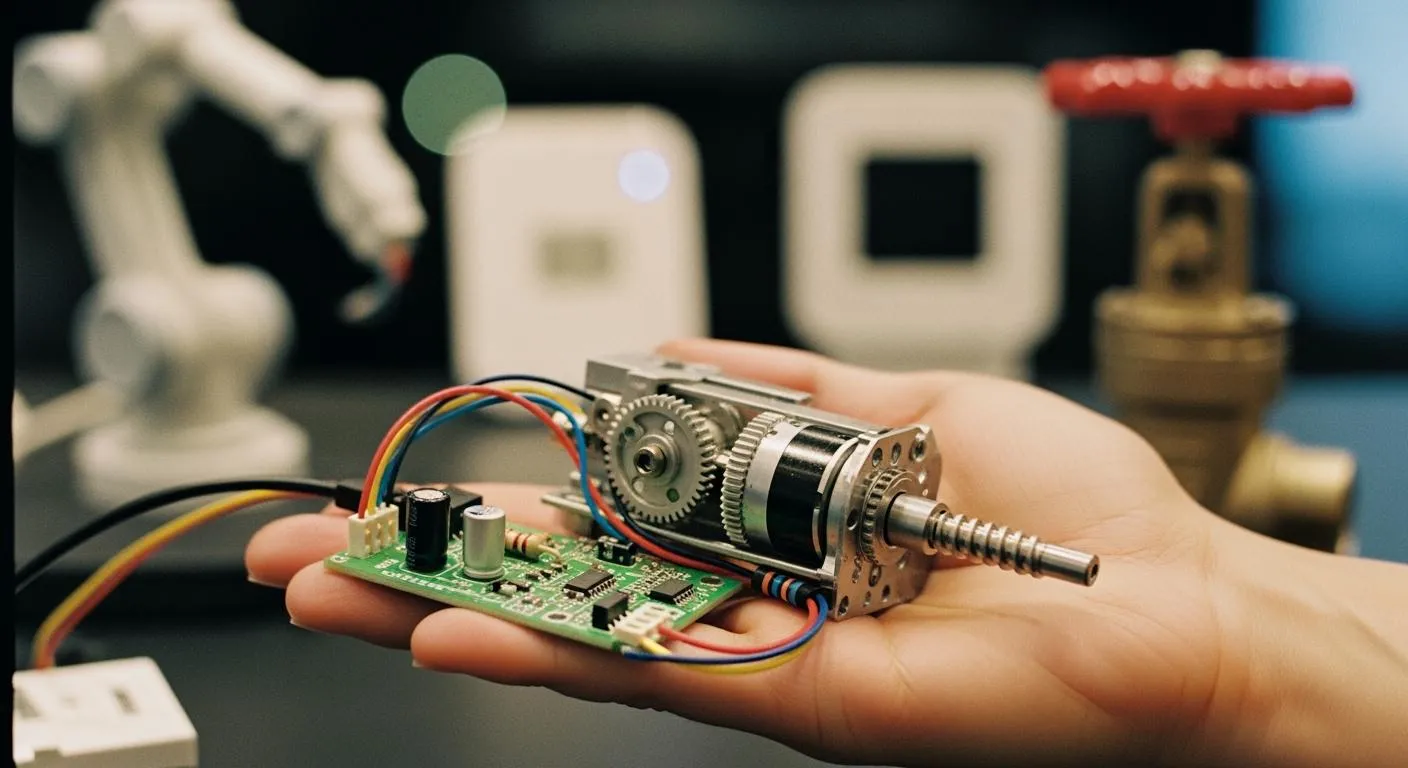
You encounter actuators in nearly every electronic system that requires movement or physical change.
An actuator is a component of a machine that produces force, torque, or displacement, when an electrical, pneumatic or hydraulic input is supplied to it in a system. The effect is usually produced in a controlled way.
The meaning actuator centers on its ability to transform energy into mechanical motion. You rely on actuators to execute commands from a control system. Sensors detect changes, but actuators make things happen. The meaning actuator stands out in automation because it acts as the bridge between digital instructions and real-world actions.
- The meaning actuator extends to devices that operate using electrical, pneumatic, or hydraulic energy.
- Actuators play vital roles in control and automation applications.
You see the meaning actuator everywhere, from industrial robots to smart home devices.
| Category | Market Share (%) | Projected CAGR (%) | Estimated Value (USD) |
|---|---|---|---|
| Industrial Automation | 60 | 6.5 | 11 billion |
| Automation Control | 45 | N/A | N/A |
| Automotive | 25 | N/A | N/A |
The meaning actuator shapes modern application design and influences how you interact with automated systems.
Key Takeaways
- Actuators convert electrical signals into mechanical motion, enabling machines to perform tasks like opening doors or adjusting equipment.
- Different types of actuators, including electric, hydraulic, and pneumatic, serve various applications based on their unique features and energy sources.
- Selecting the right actuator involves considering factors like load capacity, speed, stroke length, and environmental conditions to ensure optimal performance.
- Actuators play a crucial role in automation, allowing machines to operate independently and efficiently in industries like manufacturing, healthcare, and automotive.
- Regular maintenance and understanding common issues can prevent actuator failures and enhance the reliability of electronic systems.
Meaning Actuator in Electronics
Definition and Role
You interact with actuators every day, often without realizing it. An actuator is one of the key components in electronic systems that transforms energy into mechanical motion. When you press a button to open a car window or adjust a hospital bed, you activate an actuator. These components convert electrical signals into movement, allowing machines to perform tasks with precision and speed.
Actuators come in many forms, including electric, hydraulic, and pneumatic types. Electric actuators are especially common in modern electronics because they offer high precision and require minimal maintenance. You can find them in devices that need accurate positioning, such as robotics and automated manufacturing lines. Electric actuators can achieve positioning accuracy within 0.1% of their stroke length, making them ideal for tasks that demand exact control.
You will notice that actuators only consume power during movement, which makes them energy efficient. Their compact design allows you to integrate them into a wide range of applications, from consumer electronics to industrial automation. They operate quietly and cleanly, which is important in environments like hospitals or laboratories.
Here are the primary functions of actuators in electronic systems:
- Convert electrical signals into mechanical motion for precise control.
- Provide fast response times for dynamic applications.
- Offer high energy efficiency, consuming power only during movement.
- Integrate easily with various control systems to enhance automation.
- Operate quietly and without fluids, making them suitable for sensitive environments.
- Require less maintenance compared to hydraulic or pneumatic components.
You can find actuators in many types, such as linear, rotary, solenoid, and piezoelectric. Linear actuators move objects in a straight line, while rotary actuators create circular motion. This variety allows you to match the right actuator to your specific application.
Actuators differ from sensors in their roles within a system. Sensors monitor and measure changes in the environment, such as temperature or position. Actuators respond to this data by performing actions, like opening a valve or moving a robotic arm. You can think of sensors as the eyes and ears of a system, while actuators serve as the hands and muscles.
Importance in Automation
You rely on actuators to bring automation to life. In automated systems, actuators receive commands from a controller and translate them into physical motion. This process allows machines to perform repetitive or complex tasks without human intervention. Actuators provide the movement that makes automation possible, whether you are controlling a conveyor belt, adjusting a camera lens, or operating a robotic arm.
The integration of actuators with advanced control systems, such as those using artificial intelligence or machine learning, opens new possibilities. For example:
The convergence of actuation technology with artificial intelligence and machine learning opens possibilities for fundamentally new capabilities. Actuators that learn optimal motion profiles for specific loads, adapt to wear and changing conditions, and coordinate autonomously with other system components represent a significant departure from traditional programmed operation.
You can see actuators in action across many industries and applications. The table below shows some common uses:
| Industry | Applications |
|---|---|
| Industrial Automation | Controlling valves, moving conveyor belts, operating machinery, robotics, material handling. |
| Automotive Industry | Functions like braking, steering, electronic throttle control, power windows, suspension systems. |
| Aerospace and Defense | Controlling flight surfaces, landing gear, weapon systems, aircraft components. |
| Consumer Electronics | Adjusting camera lenses, controlling disk drives, haptic feedback in smartphones. |
| Healthcare | Adjustable hospital beds, surgical robots, patient lifts, respiratory devices. |
| Home Automation | Automated lighting, climate control, motorized window treatments, security systems. |
| Energy Sector | Wind turbine blade pitch control, solar panel tracking, oil and gas valve control. |
| Marine and Offshore | Steering systems, deck machinery, shipboard automation. |
You will find actuators in automotive seat and trunk adjustments, medical bed positioning, ergonomic furniture like standing desks, home automation systems, solar panel tracking, recreational vehicle slideouts, and industrial positioning tasks. In modern automobiles, actuators control functions such as fuel injection, braking, and steering, enabling advanced features like adaptive cruise control and automatic emergency braking.
Actuators are essential for automation because they:
- Provide foundational movement that brings machines to life.
- Enable higher precision in operations.
- Enhance automation and reliability in various applications.
You depend on actuators to make electronic systems smarter, faster, and more reliable. Their ability to convert electrical signals into controlled linear or rotary motion makes them indispensable in both industrial and consumer applications.
Actuator Operation and Energy Conversion

How Actuators Work
You see an actuator as the heart of any system that needs controlled movement. When you send an electrical signal, the actuator converts this energy into mechanical motion. This process allows machines to perform tasks like pushing, pulling, lifting, or rotating objects. You often find two main types: linear actuators and rotary actuators. A linear actuator creates straight-line motion, which is perfect for opening doors or positioning equipment. A rotary actuator produces rotational motion, which you use in robotic arms or valve control.
Here is a simple table to help you understand how each actuator type works:
| Type of Actuator | Function | Applications |
|---|---|---|
| Linear Actuators | Convert electrical energy into linear force | Opening/closing doors, lifting objects, positioning equipment |
| Rotary Actuators | Convert electrical energy into torque | Robotic arms, conveyor systems, valve control |
You can power actuators with different energy sources. The most common input is electricity, but you also see pneumatic and hydraulic options. No matter the source, the output is always mechanical energy that creates motion.
| Input Energy | Output Energy |
|---|---|
| Electricity | Mechanical Energy |
You rely on actuators to deliver precise linear motion in many electronic systems. For example, you use a linear actuator to move a hospital bed up and down or to adjust a solar panel’s angle. Each time you need accurate and repeatable motion, you turn to these devices.
Actuator vs Sensor
You often hear about sensors and actuators together, but they serve different roles. A sensor detects changes in the environment, such as temperature or position, and sends this information to the system. An actuator receives a command and creates motion based on that signal.
Here’s a table to clarify the differences:
| Sensor | Actuator |
|---|---|
| Senses and measures changes in physical quantities. | Converts an electrical signal into mechanical movement. |
| Takes input from the environment. | Takes input from the system or signal conditioning unit. |
| Provides output to a system. | Provides output to the environment. |
| May or may not require extra power source to operate. | Requires extra power source to operate. |
You can think of the sensor as the system’s eyes and ears, while the actuator acts as its muscles. When you combine both, you create a smart system that can sense and respond to its surroundings with precise linear motion.
Types of Actuators

You encounter several types of actuators in electronic systems. Each type offers unique features and fits specific applications. Understanding these differences helps you select the right actuator for your needs.
Electric Actuator and Linear Motion
You often use an electric linear actuator when you need precise linear motion. This actuator converts electrical energy into straight-line movement. You find electric linear actuators in robotics, medical beds, adjustable workstations, and automated manufacturing. These actuators offer high precision and easy integration with controllers. You can tune their force and speed for different tasks.
Electric linear actuators provide energy efficiency and require minimal maintenance. You benefit from quiet operation and real-time feedback, which is important for complex automation.
Here is a table that highlights the main characteristics and applications of electric linear actuators:
| Characteristic/Application | Description |
|---|---|
| Movement Control | Managed by electric drives and feedback systems for accuracy |
| Force Capability | Torque output matches motor power for effective force |
| Applications | Robotics, automotive, food processing, medical devices |
| Advantages | Easy installation, precise control, quiet, energy efficient |
| Smart Features | Programmable, real-time feedback for advanced tasks |
You see electric linear actuators in food and beverage manufacturing, where precision and cleanliness matter. In agriculture, rugged electric linear actuators replace hydraulic systems for reliable linear motion in harsh environments.
Hydraulic Actuator
A hydraulic actuator uses pressurized fluid to create linear or rotational motion. You choose this type when you need high force output, such as in heavy machinery or industrial presses. Hydraulic actuators deliver precise control and handle heavy loads with ease.
| Advantages | Disadvantages |
|---|---|
| High force output | Complex and costly maintenance |
| Precise control | Risk of fluid leaks |
You rely on hydraulic actuators for applications that demand strength and durability. However, you must consider the maintenance and potential for leaks when using them in electronic systems.
Pneumatic Actuator
A pneumatic actuator uses compressed air to produce linear or rotational motion. You benefit from fast operation and a simple design. Pneumatic actuators are common in manufacturing, automotive, pharmaceuticals, and food processing. They excel in environments where safety and speed are priorities.
- You use pneumatic actuators to automate machinery.
- You find them in robotics for controlling arms and grippers.
- They help maintain cleanliness in food processing.
Pneumatic actuators offer high speed and force, but they require a continuous supply of compressed air. You may notice they are less precise than electric linear actuators, but they remain cost-effective for many linear motion applications.
Tip: When you select from the types of actuators, always match the actuator’s motion, force, and control features to your application’s requirements.
Choosing an Actuator
Selection Factors
You need to consider several factors when selecting an actuator for your electronic applications. Each application requires specific components to achieve the right motion and precise control. The table below summarizes the main factors you should evaluate:
| Factor | Description |
|---|---|
| Load Capacity | The force the actuator must exert, including weight, friction, and external loads. |
| Speed Requirements | The required motion speed for your application. |
| Stroke Length | The total distance the actuator's rod or shaft must travel. |
| Duty Cycle | The percentage of time the actuator operates versus rests, which affects longevity. |
| Environmental Conditions | Temperature, moisture, dust, and chemicals that impact reliability and performance. |
| Cost Considerations | Initial costs, maintenance, and integration with control systems. |
You should always match the actuator’s force and speed to your application requirements. For example, linear actuators work well for applications that need straight-line motion, such as adjustable desks or medical beds. Electric actuators are ideal for tasks that require precise control and quick feedback. If your application involves heavy lifting or harsh environments, hydraulic or pneumatic actuators may be better choices.
Here are some practical tips to help you select the right actuator:
- Factor in duty cycle to prevent overheating and extend component life.
- Know the required force and velocity for your application to choose the correct electric or linear actuator.
- Use proper guides and avoid side loading to reduce wear on components.
- Set speed limits to prevent oscillation and maintain performance.
- Match the actuator’s peak force to your application requirements.
- Consider environmental factors, such as temperature and humidity, to ensure reliable operation.
You should also remember that torque, force, and speed are closely related. Optimizing one may require you to compromise another. Understanding these relationships helps you achieve the best performance for your system.
Compatibility with Electronics
You must ensure that your actuator is compatible with your electronic control system. Compatibility issues can affect performance, feedback, and reliability. The table below highlights common challenges:
| Compatibility Issue | Description |
|---|---|
| Protocol Compatibility | Different communication protocols may cause errors if not matched with your control system. |
| Software Glitches | Bugs in actuator software can lead to incorrect motion or failures. |
| Control Signal Interference | External interference can disrupt signals, affecting actuator operation and feedback. |
You should check that the actuator supports the same communication protocols as your control system. Reliable feedback is essential for precise control, especially in applications that require accurate positioning or real-time adjustments. Always test for signal interference and software stability before final integration.
When you design advanced electronic systems, you may need support from industry experts. Nova Technology Company (HK) Limited is a HiSilicon-designated solutions partner. This company specializes in chip-level solutions, system integration, and application scenarios across the IC industry. You can rely on their expertise for integrating actuators and other components into high-performance electronic systems.
Selecting the right actuator impacts the overall performance, energy efficiency, and reliability of your application. You should always consider how each component interacts with your control system and the environment to achieve the best results.
Troubleshooting and Misconceptions
Common Issues
You may face several common problems when working with actuators in electronic systems. Most issues fall into predictable categories, such as complete failure to move, reduced speed, mechanical noise, or loss of position under load. You might notice actuators not responding, overheating, or moving in a jerky or unstable way. Sometimes, you hear unusual noise during operation or see inconsistent actuator speed. These problems often relate to the actuator’s motor, belts, or the presence of particulates inside the device. Burned-out motors and failed components can also cause trouble, especially in applications that require precise linear movement.
To troubleshoot actuator malfunctions, you should follow a systematic approach:
- Check the power supply. Make sure the actuator receives the correct voltage and current. Inspect wiring for any faults.
- Check the control signal. Verify that the control signal matches your system and transmits correctly.
- Check the mechanical components. Look for wear, misalignment, or lack of lubrication in moving parts.
- Check the feedback system. Ensure the feedback mechanism works accurately for proper positioning.
Tip: Regular maintenance and proper sizing of components help you avoid many actuator failures and improve energy efficiency.
Misunderstandings
You may encounter several misconceptions about actuators. Some people believe that if an actuator worked well before, it will always perform the same way. This thinking can lead to outdated designs that do not meet current system demands. Others focus only on load capacity, ignoring important factors like actuator stiffness and the effect of load positioning. For example, in linear applications, the position of the load can change the forces acting on the actuator, which affects both performance and efficiency.
You should also remember that maintenance needs do not disappear just because an actuator has a high IP rating. Environmental sealing does not replace regular upkeep. When you select an actuator, consider both the initial investment and ongoing costs, including maintenance and possible repairs. This approach helps you make smart choices for long-term reliability and efficiency.
Safety remains a top priority. Material failure, control system malfunctions, and pressure regulation issues can all create risks. You must pay special attention to vertical linear applications, where a motor failure could cause the load to drop unexpectedly.
By understanding these issues and misconceptions, you can improve system performance and ensure safe, reliable operation.
You now understand that actuators transform signals into real-world motion, making electronic systems interactive and powerful. Knowing the differences between electric, hydraulic, and pneumatic actuators helps you match the right type to your project. Use the table below to review key selection criteria:
| Selection Criteria | Description |
|---|---|
| Load Capacity | Maximum force the actuator can handle |
| Stroke Length | Distance the actuator moves |
| Travel Speed | How fast the actuator operates |
| Duty Cycle | How often the actuator runs |
| Environmental Factors | Temperature, dust, and moisture resistance |
Always consider your application’s needs, compare actuator types, and check compatibility with your control system. Stay curious—explore new actuator technologies and apply your knowledge to real-world projects!
FAQ
What is an actuator and how does it work?
You use an actuator to turn electrical signals into movement. It receives commands from a control system and creates motion, such as pushing, pulling, or rotating. You see actuators in robotics, automotive systems, and home automation.
What are the most common types of actuators?
You find three main types: electric, hydraulic, and pneumatic. Electric actuators offer precise control. Hydraulic actuators deliver high force. Pneumatic actuators provide fast action. You select the type based on your application needs.
How do you choose the right actuator for your project?
You consider load capacity, speed, stroke length, and environment. You match the actuator’s features to your system requirements. You check compatibility with your control electronics.
Tip: Always review common questions about actuators before making your choice.
What problems can occur with actuators?
You may notice issues like overheating, noise, or loss of position. You check power supply, control signals, and mechanical parts. Regular maintenance prevents most failures.
Note: Reviewing common questions about actuators helps you troubleshoot faster.
Can actuators be used in smart devices?
You use actuators in smart devices for tasks like adjusting camera lenses or opening windows. They connect to control systems and respond to commands. You see them in home automation, medical equipment, and industrial robots.