Optimizing Your Bill of Materials: Cost-Effective Strategies for Sourcing Analog Devices' AD8429 Instrumentation Amplifier
Expert guide on Optimizing Your Bill of Materials: Cost-Effective Strategies for Sourcing Analog Devices' AD8429 Instrumentation Amplifier. Technical specs, applications, sourcing tips for engineers and buyers.
Introduction
In the fast-paced world of electronics design, optimizing your Bill of Materials (BOM) is crucial for both cost management and performance enhancement. As the semiconductor industry continues to grow, reaching a projected revenue of $595.2 billion by 2026, sourcing high-quality components like the Analog Devices' AD8429 instrumentation amplifier becomes of utmost importance. This article delves into the strategies for sourcing the AD8429, focusing on its specifications, applications, and cost-effective procurement methods.
Technical Overview
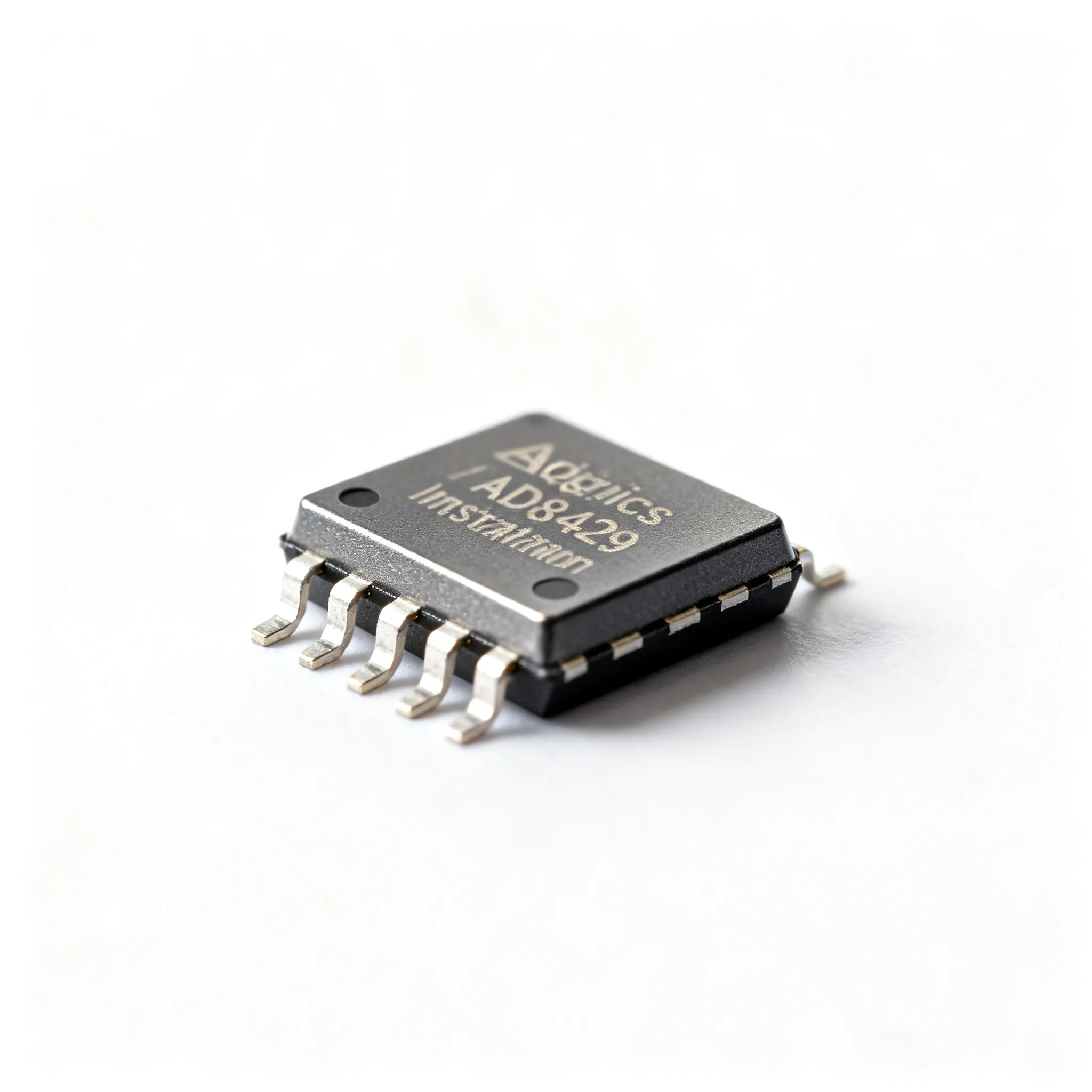
Instrumentation amplifiers, such as the AD8429, are integral components in precision measurement applications. These amplifiers are designed to amplify low-level signals in the presence of a noisy environment, ensuring accurate data acquisition. The AD8429 stands out due to its low noise, high gain, and exceptional common-mode rejection ratio (CMRR), making it ideal for medical instrumentation, industrial process controls, and data acquisition systems. Understanding the core principles and specifications of this component is essential for engineers aiming to optimize their designs.
Detailed Specifications
| Parameter | Value | Units | Notes |
|---|---|---|---|
| Gain Range | 1 to 1000 | Adjustable via external resistor | |
| Gain Accuracy | ±0.01% | At G = 1 | |
| Input Offset Voltage | 50 | µV | Typical value |
| Input Bias Current | 10 | nA | Typical value |
| CMRR | 126 | dB | At G = 1000 |
| Bandwidth | 3.5 | MHz | At G = 1 |
| Supply Voltage | ±5 to ±18 | V | Dual supply |
| Quiescent Current | 2.6 | mA | Typical value |
| Output Voltage Swing | ±13.5 | V | At VS = ±15V |
| Slew Rate | 22 | V/µs | Typical value |
| Parameter | Value | Units | Notes |
|---|---|---|---|
| Operating Temperature Range | -40 to 85 | °C | Industrial grade |
| Package Type | SOIC-8 | Standard package | |
| Thermal Resistance | 120 | °C/W | Junction to ambient |
| Maximum Junction Temperature | 150 | °C | |
| Weight | 0.06 | g | Approximate |
| Pin Count | 8 | Pins | |
| Lead Finish | Matte Tin | RoHS compliant | |
| Moisture Sensitivity Level (MSL) | 1 | Unlimited floor life |
| Application | Use Case | Benefits | Example Circuit |
|---|---|---|---|
| Medical Instrumentation | ECG Amplifiers | High CMRR reduces noise | ECG Circuit |
| Industrial Process Control | Sensor Signal Conditioning | Wide bandwidth for fast signals | Sensor Circuit |
| Data Acquisition | Precision Measurements | Low noise for accurate data | DAQ Circuit |
| Audio Applications | Microphone Preamplifiers | Low distortion | Audio Circuit |
| Seismic Monitoring | Geophone Amplifiers | High gain accuracy | Seismic Circuit |
Design Considerations
When designing circuits with the AD8429, several considerations must be taken into account to ensure optimal performance. Firstly, the gain setting resistor must be chosen carefully to match the application's required gain, as this directly influences the amplifier's bandwidth and noise performance. Additionally, attention should be paid to the power supply decoupling to minimize noise interference. Proper layout techniques, such as minimizing trace lengths and using a ground plane, are essential to reduce parasitic capacitance and inductance, which could affect the amplifier's stability. Furthermore, thermal management is crucial, particularly in high-temperature environments, to prevent thermal drift and maintain accuracy. Finally, component selection for the surrounding circuit, such as resistors and capacitors, should be made with precision to match the high-performance nature of the instrumentation amplifier.
Step-by-Step Guide
- Define Application Requirements: Clearly outline the signal characteristics and gain requirements of your application.
- Select the Gain Resistor: Use the formula Gain = 1 + (49.4kΩ/RG) to determine the appropriate resistor value for the desired gain.
- Design Power Supply Circuit: Ensure a stable dual power supply of ±15V with adequate decoupling capacitors close to the power pins.
- Layout Design: Use a ground plane and minimize trace lengths to reduce noise and parasitic effects.
- Thermal Management: Consider heat sinks or thermal vias if operating near the upper temperature limits.
- Simulate the Circuit: Use simulation software to verify performance parameters before prototyping.
- Prototype and Test: Build a prototype and conduct thorough testing under various conditions to ensure performance meets specifications.
- Iterate and Optimize: Make necessary adjustments based on test results to optimize the design for production.
Common Issues & Solutions
Engineers often encounter several challenges when working with the AD8429, but many of these can be mitigated with careful design and troubleshooting:
- Offset Voltage Drift: Use precision resistors to minimize drift and ensure temperature stability.
- Noise Interference: Implement proper shielding and use twisted-pair cables for input connections.
- Gain Error: Verify resistor values and connections, and consider using a calibration routine if necessary.
- Thermal Issues: Ensure adequate ventilation and consider active cooling methods if operating in high-temperature environments.
- Power Supply Rejection: Use low-noise power supplies and add additional filtering if required.
Applications & Use Cases
The AD8429 is widely used across various industries due to its precision and reliability. In medical instrumentation, it is commonly employed in ECG amplifiers, where its high CMRR is crucial for filtering out noise from the patient's body. In industrial settings, it is used for sensor signal conditioning, providing accurate readings in process control systems. Its low noise and high bandwidth make it suitable for data acquisition systems, where precise measurements are critical. Additionally, in audio applications, it serves as a microphone preamplifier, ensuring low distortion and high fidelity sound reproduction. Lastly, in seismic monitoring, its high gain accuracy is essential for amplifying weak geophone signals.
Selection & Sourcing Guide
When it comes to sourcing the AD8429, it is essential to consider authorized distributors that offer competitive pricing and reliable delivery. One such distributor is IC Online, which provides a comprehensive selection of electronic components, ensuring that you receive genuine parts with full traceability.
FAQ
- What is the typical input offset voltage of the AD8429? The typical input offset voltage is 50 µV.
- Can the AD8429 operate on a single supply? No, it requires a dual supply of ±5V to ±18V.
- What is the maximum gain setting for the AD8429? The maximum gain can be set to 1000.
- What packaging options are available for the AD8429? It is available in an SOIC-8 package.
- How does temperature affect the AD8429? It operates within -40°C to 85°C, but thermal management is necessary to maintain accuracy.
- What is the CMRR of the AD8429 at G = 1000? The CMRR is 126 dB.
- How can I reduce noise in my design using the AD8429? Use proper shielding and layout techniques, and ensure adequate power supply decoupling.
- Is the AD8429 RoHS compliant? Yes, it features a matte tin finish and is RoHS compliant.
Conclusion
Optimizing the BOM for precision components like the AD8429 requires a deep understanding of its specifications, careful design considerations, and strategic sourcing. By following best practices in design and procurement, engineers can ensure high performance and cost-effectiveness in their applications, ultimately leading to successful product development and deployment.