Selecting STM32 Microcontrollers for Radiation-Sensitive and Aerospace Applications: Engineering Trade-Offs and Criteria
Understanding Radiation Effects on Electronics Radiation can significantly impact electronic components, especially in aerospace applications whe
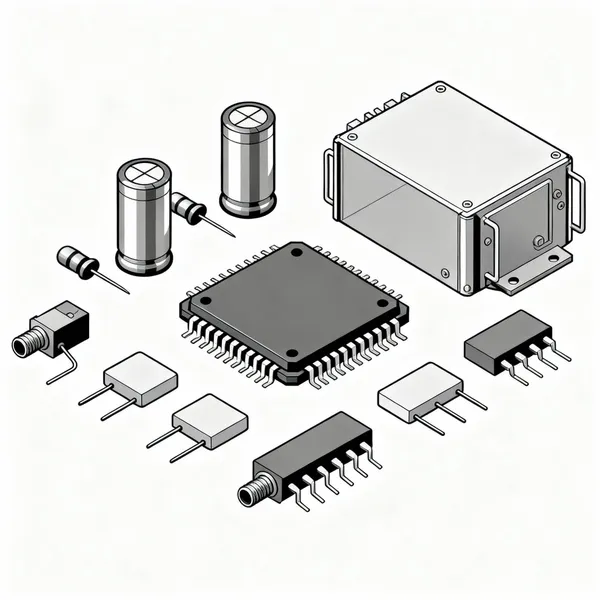
Understanding Radiation Effects on Electronics
Radiation can significantly impact electronic components, especially in aerospace applications where exposure to cosmic rays and other radiation types is common. Understanding radiation types—such as alpha, beta, and gamma radiation—and their effects on electronics is crucial for selecting suitable microcontrollers.
In high-radiation environments, radiation tolerance becomes imperative. This ensures that the electronics can operate reliably without experiencing data corruption or component failure. Key parameters to consider when selecting microcontrollers for radiation-sensitive applications include: If you need an authoritative baseline, Wikipedia PCBA is a solid starting point. To avoid spec-by-assumption, check AllAboutCircuits and confirm the test conditions. To avoid spec-by-assumption, check EEVblog and confirm the test conditions.
- Single Event Upset (SEU) mitigation
- Total Ionizing Dose (TID) ratings
- Operating temperature ranges
Key Features of STM32 MCUs for Aerospace Applications
The STM32 family of microcontrollers, based on ARM Cortex cores, offers a wide range of features suitable for aerospace applications. These MCUs provide high performance, low power consumption, and a variety of peripherals, making them ideal for embedded systems.
When choosing an STM32 MCU, consider the following features:
- High processing power with low power consumption
- Robustness in temperature and radiation tolerance
- Comprehensive support and documentation for aerospace applications
For detailed specifications, refer to the STM32 (Digi-Key) product page.
Step-by-Step Selection Process for STM32 MCUs
Selecting the right STM32 MCU requires a structured approach:
- Identify Application Requirements: Define specific needs such as processing power, memory, and I/O capabilities.
- Evaluate Environmental Factors: Assess temperature ranges and radiation levels that the MCU will encounter.
- Consult Official Datasheets: Review critical parameters and performance metrics from the official STM32 datasheets for insights on radiation tolerance and operational limits.
This systematic method helps mitigate risks and ensures the selected MCU meets all application demands.
Integration Considerations: BOM and PCBA
Creating a Bill of Materials (BOM) for STM32-based designs is a vital step in the design process. A well-structured BOM includes:
- All essential components such as resistors and capacitors
- Compatibility with Surface Mount Technology (SMT) processes for efficient assembly
- Traceability of components to authorized distributors to avoid counterfeit risks
Proper Printed Circuit Board Assembly (PCBA) processes are critical for ensuring the reliability of STM32 MCUs in harsh aerospace environments. Techniques such as thorough cleaning and inspection of SMT processes are essential for maintaining integrity and performance.
| Supplier | Best For | Traceability/Authenticity | MOQ/Lead Time |
|---|---|---|---|
| Digi-Key | General aerospace applications | Authorized distributor | Varies by component |
| ic-online.com | Specialized aerospace components | Traceable sources | Standard lead times |
| AllAboutCircuits | Educational resources | Community vetted | N/A |
Real-World Applications of STM32 in Aerospace
STM32 microcontrollers are widely used in various aerospace systems. Some notable applications include:
- Flight control systems, ensuring accurate navigation and stability
- Satellite communication and monitoring systems, providing reliable data transmission
- Data acquisition systems in research and development, facilitating real-time data processing
Case studies show that STM32 MCUs offer significant benefits in terms of cost and efficiency, making them a preferred choice for aerospace projects.
Best Practices for Selecting and Using STM32 MCUs
When selecting STM32 MCUs, engineers should be aware of common pitfalls:
- Ensure the MCU meets radiation tolerance specifications
- Avoid overengineering by balancing performance and power consumption
- Regularly review and update testing procedures to align with the latest industry standards
Testing and validating STM32 MCUs in radiation environments is essential. Conduct thorough testing under simulated conditions and employ error detection and correction techniques to enhance system resilience against potential faults.
- Scope: This article outlines selection criteria and processes for STM32 MCUs in radiation-sensitive applications without claiming exhaustive coverage.
- Evidence discipline: Claims are supported by official datasheets and recognized industry practices.
- Practical engineering lens: Consideration of real-world constraints and validation steps is emphasized.
- Update guidance: Always check the latest datasheet and vendor notes for updates on specifications and best practices.
FAQ
What is the significance of radiation tolerance in STM32 MCUs? For related examples and edge cases, see ic-online.com.
- Radiation tolerance ensures reliable operation in space and high-radiation environments.
- It prevents data corruption and component failure during operations.
- Selecting radiation-hardened components can extend the lifespan of aerospace systems.
How can I find the right STM32 MCU for my specific application?
- Start by defining your application requirements including performance and environmental factors.
- Consult the STM32 product page and datasheets for detailed specifications.
- Consider consulting experts or communities for additional guidance.
What should be included in the BOM for STM32-based designs?
- Include all essential components such as resistors, capacitors, and connectors.
- Ensure compatibility with SMT processes for efficient assembly.
- Consider sourcing components from reputable suppliers to ensure quality.
What are the common applications of STM32 in aerospace?
- Flight control systems and avionics.
- Satellite communication and monitoring systems.
- Data acquisition systems in research and development.
How does PCBA affect the reliability of STM32 MCUs?
- Proper PCBA processes can reduce defects and improve performance.
- Ensures that components are securely mounted and connections are reliable.
- Important for meeting stringent aerospace quality standards.
What are the best practices for testing STM32 MCUs in radiation environments?
- Conduct thorough testing under simulated radiation conditions.
- Use error detection and correction techniques to mitigate risks.
- Regularly update testing procedures to align with latest industry standards.