What Is an Electronic Resonator and How Does It Work
An electronic resonator is a specialized component. It naturally oscillates at a specific, stable frequency. This action is
An electronic resonator is a specialized component. It naturally oscillates at a specific, stable frequency. This action is similar to a tuning fork ringing at a single pitch. Its main purpose in modern electronics involves creating precise timing signals, known as clocks. It also filters communication signals in devices like smartphones and computers. This precision is fundamental for high-frequency communication networks.
Note: The market for these frequency control components is growing fast. Projections show an expansion of USD 9.15 billion between 2024 and 2029. This growth highlights the increasing need for precise signal management in our technology.
The resonator ensures devices operate correctly. A specific type, the saw resonator, is crucial for handling high frequencies. The stability of a resonator makes our digital world possible.
Key Takeaways
- An electronic resonator is a special part. It helps devices work at a steady speed. It also cleans up signals in phones and computers.
- Resonance is a physics rule. It makes things vibrate strongly at one special speed. Electronic resonators use this rule to store and move energy.
- There are different types of resonators. Quartz resonators are very exact. Ceramic resonators are cheaper. SAW resonators are good for very fast signals.
- Resonators do two main jobs. They create steady clock signals for computers. They also act like filters to pick out the right radio signals.
- Resonators are getting smaller and better. This helps new tech like 5G and smart devices. SAW resonators are very important for these fast technologies.
The Principle of Resonance
Resonance is a core principle in physics. It describes the tendency of a system to vibrate with greater energy at one specific frequency. This frequency is called its natural or resonant frequency. This concept is easy to see in everyday life. Imagine pushing a child on a swing. Pushing at random times does very little. A push at the right moment in each swing, however, adds energy efficiently. The swing goes higher and higher. This perfect timing is the swing's resonant frequency. An electronic resonator works in a very similar way.
Energy Storage and Transfer
A resonator stores and transfers energy to sustain its oscillation. The swing stores energy by converting it between motion (kinetic) and height (potential). An electronic resonator does the same with electrical energy. It shifts energy back and forth between two forms, such as an electric field and a magnetic field. This constant transfer allows the resonator to vibrate continuously with minimal external power. The saw component relies on this efficient energy cycle.
How It Works: In a simple resonator, energy is stored in a capacitor's electric field. It then transfers to an inductor's magnetic field. This back-and-forth movement creates an oscillation. The saw device perfects this transfer for stable timing. The saw action is incredibly precise.
A quality saw component maintains this energy transfer with very little loss. This efficiency is key to the function of a saw resonator. The saw element must be stable.
The Resonant Frequency
Every resonator has a unique resonant frequency. This is the frequency where it oscillates most easily and strongly. The physical properties of the resonator determine this frequency. For a simple LC (inductor-capacitor) circuit, engineers calculate this frequency using a specific formula. The saw design follows these fundamental principles. The saw component is built to a specific frequency. A saw device is tuned for its task.
The mathematical formula for calculating the resonant frequency ($f_0$) of an LC circuit is $f_{0} = \frac{1}{2\pi\sqrt{LC}}$. In this equation, L represents the inductance of the inductor, and C represents the capacitance of the capacitor. Changing these values changes the resonant frequency. This principle allows engineers to design a saw resonator for nearly any required frequency, from radio receivers to computer clocks.
Common Types of Electronic Resonator
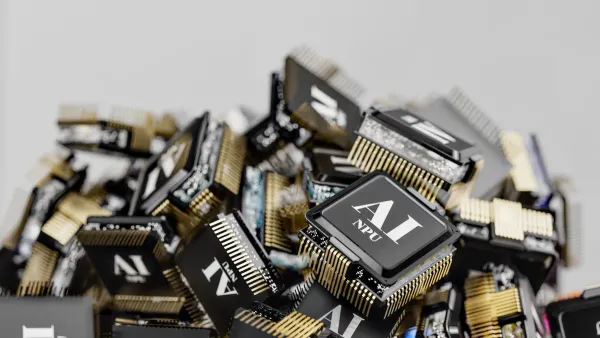
Engineers use several types of electronic resonators. Each type offers different benefits for cost, size, and performance. The choice of resonator depends entirely on the application's specific needs, from a simple digital watch to a complex 5G base station.
LC Resonator Circuits
The LC resonator circuit is the most basic form of electronic resonator. It consists of two simple components: an inductor (L) and a capacitor (C). As explained earlier, this circuit stores and transfers energy between the inductor's magnetic field and the capacitor's electric field. This energy exchange creates a natural oscillation at a specific frequency. While simple and easy to design, this type of resonator is less stable and precise compared to other modern alternatives.
Quartz Crystal Resonators
Quartz crystal resonators offer exceptional precision and stability. These components are central to countless high-performance electronics. They operate using a special property of quartz called the piezoelectric effect.
An applied voltage physically changes the shape of the quartz crystal. When the voltage is removed, the crystal returns to its original form and generates a small voltage. This process allows the quartz to vibrate at an extremely stable resonant frequency with very high accuracy.
This mechanical vibration converts back into an electrical signal. The signal is then amplified and fed back to the crystal, which sustains a continuous and pure oscillation. The crystal's physical dimensions, such as its size and cut, precisely determine its frequency. This makes it an excellent resonator for creating stable clock signals in computers and communication equipment.
Ceramic Resonators
A ceramic resonator is a popular alternative to quartz. It also uses the piezoelectric effect but is made from a ceramic material like lead zirconium titanate (PZT). Ceramic resonators provide a good balance of performance and cost, making them common in consumer electronics where pinpoint accuracy is not the top priority. Their properties differ significantly from quartz.
| Feature | Ceramic Resonator | Quartz Crystal Resonator |
|---|---|---|
| Material | Lead Zirconium Titanate (PZT) | Quartz |
| Accuracy | 0.1% - 1% | 10ppm - 1000ppm (Very High) |
| Stability | Good, but sensitive to temperature | Excellent, very low temperature dependency |
| Cost | Lower | Higher |
| Durability | High tolerance to shock & vibration | Less tolerant to shock & vibration |
| Size | Often smaller | Can be larger |
In short, a ceramic resonator is a durable and affordable choice for many applications, while quartz is the go-to option for tasks requiring the highest frequency stability.
SAW Resonator for High Frequencies
Surface Acoustic Wave (SAW) resonators are specialized components designed for high-frequency applications, typically from 50 MHz to several GHz. The global saw resonator market is expanding rapidly to meet the demands of modern wireless technology. A saw device does not oscillate through its entire volume. Instead, it generates waves that travel across the surface of a piezoelectric substrate. The saw resonator market benefits from this unique design.
The operation of a saw device is elegant and efficient:
- Interdigital transducers (IDTs), which are like tiny metal fingers, convert electrical signals into acoustic waves.
- These waves travel along the surface of a piezoelectric material like lithium niobate.
- Reflectors on the surface trap the wave, creating a standing wave and a very precise resonance.
This structure makes the saw resonator ideal for the high-frequency filtering needed in 5G systems, IoT devices, and advanced communication networks. The saw resonator market is driven by this need. High-quality saw components enable faster data speeds and clearer signals. The saw resonator market reflects the growth in these technologies. For companies developing advanced solutions, leveraging the right saw technology is critical. For instance, Nova Technology Company (HK) Limited, a HiSilicon-designated solutions partner, works with such advanced frequency control components to build next-generation systems. The saw resonator market continues to innovate.
Key performance advantages make the saw resonator a superior choice for these demanding jobs. The saw resonator market values these features. A modern saw device offers:
- High Quality Factor (Q value): This ensures very low energy loss and precise frequency selection.
- Excellent Signal Integrity: A quality saw device effectively suppresses unwanted frequencies, leading to a cleaner output.
- Compact Size: The saw design allows for very small components, perfect for mobile devices.
The saw resonator market is poised for continued growth as the demand for high-frequency communication rises. The precision of a saw resonator is fundamental to our connected world, and the saw resonator market will supply the necessary components.
Key Functions in a Circuit
A resonator performs two critical jobs inside an electronic circuit. It can generate a steady beat, like a metronome for digital components. It can also act as a gatekeeper, allowing only the correct frequencies to pass through. These functions are fundamental to modern electronics.
Generating Clock Signals (Oscillators)
One of the most important roles for a resonator is creating clock signals. A clock signal is a steady, rhythmic pulse that synchronizes all operations within a digital system, like a computer's central processing unit (CPU). Without this precise timing, a device cannot function. An oscillator circuit, built around a resonator, produces this essential pulse. The saw resonator is often used for this purpose in high-speed devices.
An oscillator is an electronic circuit that produces a periodic, oscillating electronic signal. The resonator is the heart of this circuit, providing the stable frequency reference.
The process of generating a clock signal is very precise. The stability of the saw component is key.
- An oscillation source, usually a quartz or ceramic resonator, provides an initial raw clock signal. A saw device is a common choice.
- These frequency control components are chosen for their excellent frequency stability. The saw resonator excels here.
- The circuit processes this raw signal. It may divide or multiply the frequency to meet the needs of different parts of the system. The saw component's purity helps this process.
This timing function is everywhere in the technology we use daily. The saw resonator is vital for many of these applications. Devices that rely on resonator-based oscillators include:
- Computing Devices: Laptops, desktop PCs, and data storage systems.
- Consumer Electronics: iPhones, video game consoles, and audio equipment.
- Networking and Communications: GPS systems, mobile phones, and Wi-Fi routers. A saw device is crucial for these.
- Data Communications: USB ports, Ethernet connections, and cable modems. The saw resonator ensures data integrity.
- Industrial Systems: Smart meters for gas and electricity. The saw component provides reliable timing.
Selecting Frequencies (Filters)
A resonator also functions as a highly effective filter. In communications, countless radio waves fill the air. A device like a smartphone needs to tune into one specific frequency while ignoring all others. A resonator makes this possible. It naturally vibrates at one frequency and resists others. This property allows it to "select" the desired signal and block out unwanted noise.
A filter built with a saw resonator is especially useful for this task. The saw design allows it to be very selective. When an incoming mix of frequencies reaches a saw filter, only the frequency that matches the saw resonator's natural frequency can pass through efficiently. All other frequencies are significantly weakened or blocked entirely. This ensures a clean, clear connection. The saw component is perfect for filtering in 5G and other wireless technologies. The precision of the saw resonator is unmatched for high-frequency filtering.
The Future of Resonators in 2025
The future of the electronic resonator is evolving quickly. Innovations in materials and manufacturing are pushing these components to become smaller, more efficient, and more precise. The saw resonator market is at the forefront of this change. The saw resonator market is driven by new demands.
Miniaturization and Efficiency
A major trend is the move toward smaller components. Acoustic-wave resonators are very attractive for mobile phones because their compact size fits well in modern devices. The saw resonator market benefits from this characteristic. This trend addresses the need for compact, high-performance solutions in a growing number of applications. The saw resonator market continues to innovate in this area.
- Engineers constantly shrink component sizes. For example, a smaller SMD saw resonator was introduced in 2018 to meet this need.
- This miniaturization allows for more features in smaller devices. The saw resonator market supports this progress.
At the same time, researchers are developing new materials to improve efficiency. They are modifying piezoelectric ceramics to enhance their performance. This work aims to boost energy harvesting and reduce power consumption in every saw device. A more efficient saw component uses less battery power. The saw resonator market is watching these developments closely. A better saw resonator is always the goal.
Supporting High-Frequency Demand
These advancements directly support the growing demand for high-frequency applications. Technologies like 5G, the Internet of Things (IoT), and advanced wireless communications require components that can operate at very high frequencies with extreme precision. The saw resonator market is expanding to meet this challenge. A quality saw device is essential for these systems.
These advanced frequency control components enable faster data speeds and more reliable connections. The saw resonator market provides the necessary parts for this technological leap.
Companies are building the next generation of technology using these improved parts. For instance, Nova Technology Company (HK) Limited, a HiSilicon-designated solutions partner, works with such advanced components to create cutting-edge systems. The saw resonator market is a key supplier for these innovators. The precision of a saw resonator makes modern communication possible. The saw design is perfect for the high-frequency world of 2025 and beyond.
A resonator is a frequency-specific part. It is essential for timing and filtering in modern electronics. These frequency control components are fundamental building blocks for everything from simple clocks to complex communication systems. The saw is a perfect example. As technology advances, the role of the saw resonator becomes more critical. The saw design is vital for high-frequency needs. A quality saw device ensures system performance. The modern saw component is a tiny powerhouse. The saw itself is key to our connected future. This makes the saw a critical technology.
FAQ
What makes a saw resonator special?
A saw resonator uses surface waves. This design makes the saw component very small and efficient for mobile devices. The saw resonator market values this compact size. The saw resonator market sees growth from this saw technology. A good saw is very efficient.
Why is the saw resonator market growing so fast?
The saw resonator market is growing because of 5G and IoT. These technologies need high-frequency parts like a saw. A quality saw device meets this need. The saw resonator market supplies these essential saw components. The saw resonator market is expanding quickly.
Can a saw resonator be used as a filter?
Yes, a saw resonator is an excellent filter. The saw design selects one frequency and blocks others. This saw function ensures clear signals in phones. The saw resonator market supports this application. The saw resonator market provides many filter options.
How does the saw resonator market impact technology?
The saw resonator market drives innovation. It provides the saw parts for faster communication systems. The saw resonator market helps create smaller gadgets. A modern saw device is a key part of this technological progress.