Why the RC Constant Is Essential in Modern Electronics
You rely on the rc constant every time you use modern electronics. The rc constant decides how fast circuits respo
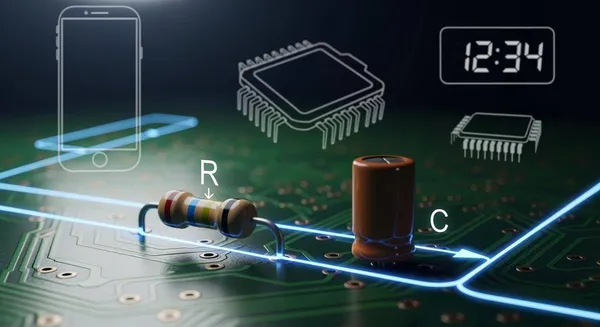
You rely on the rc constant every time you use modern electronics. The rc constant decides how fast circuits respond, making it essential for timing and signal processing. Imagine a faucet filling a glass: the size of the glass and how far you turn the knob control how quickly water fills up. In the same way, rc shapes how devices handle electrical signals. You see its effects in real-world applications like smartphones, audio systems, and medical equipment.
Key Takeaways
- The RC constant is crucial for timing in electronic devices, affecting how quickly circuits respond to signals.
- You can calculate the time constant using the formula τ = R × C, where R is resistance and C is capacitance.
- RC circuits filter signals, allowing low frequencies to pass while blocking high frequencies, which enhances audio quality.
- Adjusting resistor and capacitor values in RC circuits gives you control over timing and signal processing in various applications.
- RC circuits are found in everyday devices like smartphones, medical equipment, and audio systems, ensuring reliable performance.
Understanding the RC Constant
What Is the RC Constant?
You encounter the rc constant every time you use devices that rely on precise timing. The rc constant represents the time constant in electrical engineering. You calculate the time constant by multiplying the resistor value in ohms by the capacitor value in farads. The formula looks like this:
Time Constant Formula:
$$\tau = R \times C$$
The time constant, symbolized by τ, tells you how long it takes for the voltage across a capacitor to reach about 63.2% of its maximum value after a sudden change. This measurement helps you predict how quickly a circuit responds to signals. When you see the term time constant, you know it describes the speed of charging and discharging in rc circuits.
The Time Constant Formula
Calculating the time constant gives you a clear idea of how fast a capacitor charges or discharges. You use the formula τ = R × C, where R stands for resistor and C stands for capacitor. If you increase either the resistor or the capacitor, the time constant grows larger. This means the circuit responds more slowly.
The time constant plays a key role in many applications. For example, you see it in timing circuits, filters, and signal processing systems. When you design a circuit, you often adjust the resistor and capacitor values to achieve the desired time constant. This adjustment lets you control how quickly the charge on the capacitor changes.
After one time constant, the voltage across the capacitor reaches about 63% of its final value. If you wait for five time constants, the capacitor almost reaches its steady state. You use this principle to design circuits that need precise timing, such as clocks or pulse generators.
How RC Circuits Work
RC circuits combine a resistor and a capacitor to control the flow of charge. When you apply a voltage, the capacitor starts to charge. The resistor slows down the charging process, so the charge builds up gradually. You can see this behavior in the following table:
| Process | Description |
|---|---|
| Charging | The capacitor charges according to the equation (q(t) = \epsilon C(1 - e^{-t/RC})), showing an exponential increase in charge over time. |
| Discharging | The capacitor discharges following the equation (q(t) = Qe^{-t/\tau}), indicating an exponential decrease in charge as time progresses. |
During charging and discharging, the charge on the capacitor changes in an exponential way. You notice that the rate depends on the time constant. If you use a larger resistor or capacitor, the process slows down. The circuit reaches a steady state when the charge stops changing.
Think of the capacitor as a bucket and the resistor as a narrow pipe. When you pour water into the bucket, the pipe controls how fast the water flows. The time constant tells you how quickly the bucket fills up or empties. This analogy helps you understand why rc circuits are so important in electronics.
You find rc circuits in many application scenarios. They help you filter signals, create delays, and manage timing. When you design electronic systems, you rely on the time constant to ensure reliable performance. The charge on the capacitor and the resistor values determine how the circuit behaves during charging and discharging. You see these principles at work in everything from simple timers to advanced integrated circuits.
Why RC Circuits Are Everywhere
Timing and Delays in Electronics
You see rc circuits everywhere because they control timing in electronic devices. When you press a button on your phone, the circuit uses the rc constant to manage how quickly the signal travels. This timing ensures your device responds at the right moment. RC circuits use a time constant, which depends on resistance and capacitance. The time constant determines how fast capacitors charge and discharge. You rely on this process for precise timing in both digital and analog electronics.
As technology advances, rc delay becomes more important. Smaller chips need faster timing, so engineers adjust the rc constant to match the speed of integrated circuits. You benefit from this in devices like smartphones, IoT gadgets, and 5G communication systems. RC circuits help you achieve accurate timing in practical applications such as clocks, pulse generators, and microcontrollers.
Tip:
RC circuits enable reliable timing by controlling how signals propagate. You can tune the response by changing resistor or capacitor values.
You find rc circuits in many practical applications, including:
- Communication systems
- Signal processing
- Radio wave transmitters
- RF amplifiers
- Oscillator circuits
- Filtering circuits
- Medical devices
Filtering and Signal Processing
RC circuits play a key role in filtering and signal processing. You use them to remove unwanted frequencies and clean up signals. In audio systems, rc circuits act as low-pass filters, letting low-frequency sounds pass while blocking high-frequency noise. The interaction between resistance and capacitance sets the filter's response, which depends on the time constant.
At low frequencies, capacitors charge and discharge fully, allowing large voltage changes. At high frequencies, capacitors cannot charge completely, so the voltage response drops. You use this property to design filters for audio, communication, and medical equipment.
| Feature | Low-Pass Filter (LPF) | High-Pass Filter (HPF) |
|---|---|---|
| Frequency Range | Allows low frequencies to pass while attenuating high frequencies. | Allows high frequencies to pass while attenuating low frequencies. |
| Stop-band Attenuation | Attenuates high frequencies at a rate of 20 dB per decade. | Attenuates low frequencies at a rate of 20 dB per decade. |
| Applications | Used for removing high-frequency noise and smoothing signals. | Used for removing DC offsets and enhancing high-frequency signals. |
You see rc circuits in practical applications such as voltage magnification, variable tune circuits, and resonant LC circuits. These circuits help you process signals in devices ranging from radios to medical monitors.
Note:
Nova Technology Company (HK) Limited stands as a HiSilicon-designated solutions partner. You benefit from their expertise in chip-level solutions and system integration for advanced integrated circuits. Their technology supports filtering, timing, and signal processing in modern electronic systems.
Biological and Everyday Examples
RC circuits do not just exist in electronics. You find similar behavior in biological systems. Your nerves use timing to send signals, just like rc circuits manage timing in devices. The cell membrane acts as a capacitor, and the membrane resistance controls how fast signals travel.
| Parameter | Value |
|---|---|
| Membrane Capacitance (Cm) | Approximately 1 μF/cm² |
| Membrane Resistance (Rm) | Ranges from 1 to 10 kΩ·cm² |
| Time Constant (τ) | Ranges from 1 to 10 ms |
| Characteristic Frequency | Approximately 16–160 Hz |
You see rc circuit principles in everyday technology. When you adjust the volume on a speaker, the circuit uses timing to filter and amplify signals. Medical devices rely on rc circuits for accurate timing and signal processing. You depend on these circuits for reliable performance in phones, computers, and even smart home devices.
RC Constant in Devices
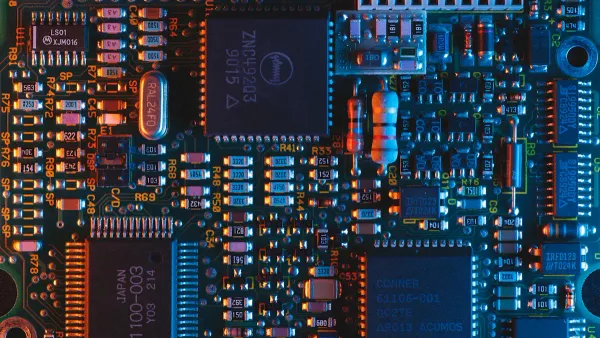
Nova Technology Company (HK) Limited stands as a HiSilicon-designated solutions partner. You benefit from their expertise in chip-level solutions and system integration for advanced integrated circuit applications. Their technology supports timing, filtering, and signal processing functions in modern devices, making them a key player in the integrated circuit industry.
Applications in Smartphones
You rely on the rc constant every time you use your smartphone. The rc circuit manages timing and filtering functions that keep your device running smoothly. Capacitors and resistors work together to control how fast signals move and how clean those signals stay. You see these effects in touchscreens, sensors, and communication chips.
Here is a table showing how rc circuits operate in smartphones:
| Function Type | Description |
|---|---|
| Timing and Oscillation | Capacitors in rc circuits determine the rate of charge/discharge, affecting timing intervals and oscillator frequencies. |
| Signal Processing | Capacitors are used in filtering operations to shape frequency responses and remove unwanted harmonics. |
You notice that the rc circuit helps your phone respond quickly and filter out unwanted noise. Engineers use the rc constant to set the timing for each circuit, ensuring reliable performance.
Use in Audio and Medical Equipment
You experience clear sound in audio equipment because the rc circuit shapes the quality of the signal. RC low pass filters remove high-frequency noise, allowing low-frequency signals to pass. This process enhances sound clarity and ensures accurate audio reproduction.
- RC low pass filters are essential in audio systems.
- They filter out high-frequency noise.
- This process allows low-frequency signals to pass, enhancing sound clarity.
- The ability of rc circuits to filter signals is crucial for sound quality.
- They ensure clear and accurate audio reproduction.
Medical devices also depend on rc circuits for precise timing and signal processing. You see these circuits in heart monitors and diagnostic equipment. The rc constant controls how signals are filtered and processed, which helps doctors get accurate readings.
Other Common Devices
You find rc circuits in many other consumer devices. Each circuit serves a specific function, from filtering signals to controlling timing.
| Device/Application | Function/Use |
|---|---|
| Low pass and high-pass filters | Signal filtering |
| LM555 timer | Timing and pulse generation |
| Traffic lights | Control of light sequences |
| Pacemakers | Heart rhythm regulation |
| Audio equipment | Signal processing and filtering |
| Integrator and differentiator | Mathematical signal manipulation |
You depend on the rc circuit in everyday technology. Traffic lights use rc circuits to manage light sequences. Pacemakers rely on rc circuits to regulate heart rhythms. The rc constant ensures each circuit operates with the right timing and signal quality.
RC and Circuit Performance
Impact on Timing Accuracy
You depend on the RC constant for accurate timing in digital clocks and timers. The time constant controls how quickly circuits respond to voltage changes. If you select a larger RC value, the circuit responds more slowly, which can cause timing errors. A smaller RC value allows faster responses, improving precision. You ensure the capacitor fully discharges before the next cycle, preventing leftover charge from causing inaccuracies. Incomplete discharge can lead to undefined start points and unreliable timing. Engineers often use a Darlington pair to achieve higher resistor values and lower capacitor values, which reduces leakage and boosts timing accuracy.
- Variations in resistor and capacitor values can shift timing characteristics.
- In a simple RC filter, a 10% tolerance on the capacitor can change the cutoff frequency from 909 Hz to 1.11 kHz.
- In a 555 timer, a 20% tolerance on a 10 μF capacitor can cause a frequency deviation of up to 20%.
Signal Quality and Noise Reduction
RC circuits help you achieve clean signals by filtering out unwanted noise. You rely on these circuits to preserve the fidelity of transmitted data, which is essential for reliable communication. Both wired and wireless systems use RC circuits to manage signal integrity. In medical imaging, RC filters significantly improve the signal-to-noise ratio, making readings clearer and more accurate.
- RC circuits filter out unwanted noise, enhancing signal quality.
- They preserve the fidelity of transmitted data.
- Their ability to manage signal integrity is essential in communication systems.
- RC filters improve signal-to-noise ratio in applications like magnetic resonance imaging.
Tip:
You can use RC filters to clean up audio signals, remove interference, and ensure data transmission stays reliable.
Design Flexibility
You gain flexibility in circuit design by adjusting the RC constant. The time constant (τ = R × C) lets you tailor circuit behavior for different applications. A small time constant gives you quick responses, ideal for high-speed digital circuits. A large time constant slows down responses, which helps filter and smooth voltage fluctuations in analog systems.
| Configuration Type | Behavior Description | Application Example |
|---|---|---|
| Low-pass filter | Allows low frequencies to pass while attenuating high frequencies | Audio signal processing |
| High-pass filter | Allows high frequencies to pass while attenuating low frequencies | Signal conditioning |
| Timing circuit | Controls the timing of events in a circuit | Delay circuits in microcontrollers |
You must balance speed, accuracy, and power consumption when selecting RC values. Ripple Carry Adders offer power efficiency but have longer delays. Carry Lookahead Adders reduce latency but use more power. Carry Select Adders are faster but consume more energy. Hybrid designs combine these features to optimize performance and minimize power-delay product.
You see the RC constant at work in every device you use. It shapes timing circuits, filters signals, and protects sensitive components. RC circuits improve audio and video quality, stabilize power, and extend device life.
- RC circuits enable precise timing in oscillators and pulse generators.
- They filter signals for clear audio and reliable data transmission.
- They smooth voltage spikes, enhancing reliability in automotive and renewable energy systems.
If you want to learn more, you can explore hands-on labs, circuit simulators, and PCB design resources. These tools help you understand how capacitors and resistors work together in real-world applications.
FAQ
What does the RC constant control in a circuit?
You use the RC constant to set how fast a circuit responds. It controls timing, charging, and discharging rates for capacitors. This helps you manage delays and signal processing in electronic devices.
How do you calculate the RC time constant?
You multiply the resistor value (R) by the capacitor value (C).
Formula:
τ = R × C
You get the time constant in seconds.
Why are RC circuits important in smartphones?
You depend on RC circuits for timing and filtering. They help your phone process touch signals, manage communication, and filter out noise. Engineers use RC circuits to keep your device fast and reliable.
Can RC circuits filter signals?
You use RC circuits as filters. Low-pass filters let low frequencies pass and block high frequencies. High-pass filters do the opposite. You improve audio quality and remove unwanted noise with these circuits.
Where else do you find RC circuits?
You see RC circuits in medical devices, audio systems, traffic lights, and computers. They help you control timing, filter signals, and manage power in many everyday technologies.