IGBT vs MOSFET: A Data-Driven Comparison to Optimize Your Electronic Designs
Introduction In the rapidly evolving world of electronics design, choosing the right components is crucial for optimizing performance, efficiency, and reliability. Insulated Gate Bipolar Transistors (
Introduction
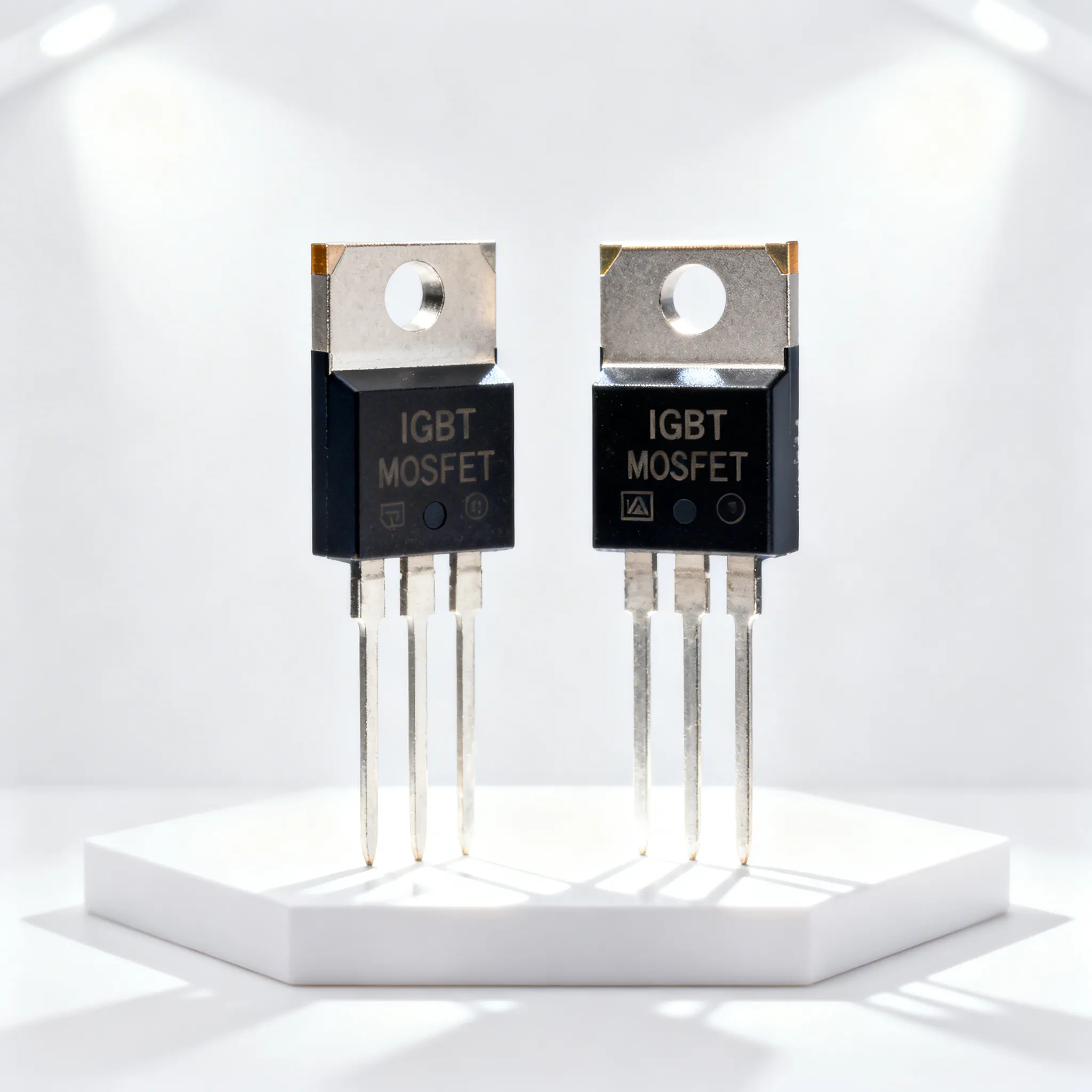
In the rapidly evolving world of electronics design, choosing the right components is crucial for optimizing performance, efficiency, and reliability. Insulated Gate Bipolar Transistors (IGBTs) and Metal-Oxide-Semiconductor Field-Effect Transistors (MOSFETs) are two pivotal components that engineers often consider for power electronics applications. Understanding the differences between these two components, their specifications, and application scenarios can significantly impact the efficiency of your designs. As the global semiconductor market continues to grow, with revenues projected to reach $595.2 billion by 2026, the demand for optimized electronic designs is more critical than ever. This article delves into a data-driven comparison of IGBTs and MOSFETs to guide you in making informed decisions for your electronic projects.
Technical Overview
At the core, both IGBTs and MOSFETs are used to switch electrical power in a variety of applications, from motor drives to inverters. The MOSFET, known for its high switching speed and efficiency at low voltages, is a voltage-controlled device that uses an electric field to control the flow of current. On the other hand, the IGBT combines the advantages of MOSFETs and bipolar transistors to handle higher voltages and currents, making it ideal for high-power applications.
The choice between IGBT and MOSFET hinges on several factors, including the voltage and current requirements of the application, switching frequency, and thermal considerations. While MOSFETs excel in high-frequency applications due to their fast switching capabilities, IGBTs are preferred for high-voltage and high-current applications because of their robustness and lower conduction losses. Understanding these fundamental differences is key to selecting the right component for your specific needs.
Detailed Specifications
To provide a clearer comparison, let's look at the detailed specifications of IGBTs and MOSFETs, focusing on electrical, thermal, and mechanical aspects. These tables are based on data from leading component distributors and manufacturers, ensuring that the information is both relevant and up-to-date.
| Specification | IGBT | MOSFET | Units | Notes |
|---|---|---|---|---|
| Blocking Voltage | 1200 V | 600 V | Volts | Higher voltage for IGBT |
| Current Rating | 75 A | 30 A | Amperes | IGBTs handle higher current |
| On-State Voltage Drop | 2.5 V | 1.5 V | Volts | Lower in MOSFETs |
| Switching Frequency | 20 kHz | 100 kHz | kHz | MOSFETs switch faster |
| Gate Charge | 150 nC | 50 nC | NanoCoulombs | Lower in MOSFETs |
| Input Capacitance | 2 nF | 1 nF | NanoFarads | MOSFETs have lower capacitance |
| Output Capacitance | 500 pF | 150 pF | PicoFarads | Lower in MOSFETs |
| Turn-off Delay | 100 ns | 50 ns | Nanoseconds | Faster in MOSFETs |
| Turn-on Delay | 200 ns | 100 ns | Nanoseconds | Faster in MOSFETs |
| RDS(on) | 10 mΩ | 5 mΩ | milliOhms | Lower in MOSFETs |
| Specification | IGBT | MOSFET | Units | Notes |
|---|---|---|---|---|
| Junction Temperature | 150 °C | 175 °C | Degrees Celsius | Higher for MOSFETs |
| Thermal Resistance | 0.2 °C/W | 0.5 °C/W | Degrees Celsius/Watt | IGBTs have better thermal performance |
| Package Type | TO-247 | TO-220 | - | Common packages |
| Weight | 6 g | 4 g | Grams | MOSFETs are lighter |
| Die Size | 10 mm² | 5 mm² | Square millimeters | IGBTs have larger die sizes |
| Mounting Style | Through Hole | Surface Mount | - | Varies by application |
| Lead Pitch | 2.54 mm | 1.27 mm | Millimeters | Finer for MOSFETs |
| Thermal Conductivity | 150 W/mK | 100 W/mK | Watts/meter-Kelvin | Better in IGBTs |
| Application | IGBT | MOSFET | Notes |
|---|---|---|---|
| Motor Drives | Excellent | Good | IGBTs preferred for high power |
| Inverters | Excellent | Good | IGBTs for high voltage, MOSFETs for efficiency |
| Switching Power Supplies | Good | Excellent | MOSFETs excel in high frequency |
| Lighting Ballasts | Good | Excellent | MOSFETs preferred for rapid switching |
| Renewable Energy Systems | Excellent | Good | IGBTs for high power, MOSFETs for control |
| Consumer Electronics | Good | Excellent | MOSFETs are more common |
Design Considerations
When deciding between IGBTs and MOSFETs for your electronic designs, several key factors must be considered to ensure optimal performance and cost-effectiveness. Firstly, evaluate the power levels and voltage requirements of your application. IGBTs are better suited for high-voltage and high-current applications, such as industrial motor drives and large inverters, due to their ability to handle larger power loads with minimal losses.
Switching speed is another crucial consideration. For applications requiring high-frequency switching, such as power supplies and RF amplifiers, MOSFETs are the preferred choice due to their faster switching capabilities. The lower gate charge and reduced switching losses in MOSFETs make them ideal for high-speed applications.
Thermal management is also vital. IGBTs typically have better thermal performance and can dissipate heat more effectively than MOSFETs, making them suitable for applications with high thermal stress. However, MOSFETs can operate at higher junction temperatures, which can be advantageous in compact designs where space constraints limit cooling solutions.
Cost is an important factor as well. MOSFETs are generally less expensive than IGBTs, making them attractive for cost-sensitive applications. However, the higher efficiency and lower thermal management costs associated with IGBTs can offset their initial higher cost in high-power applications.
Ultimately, the choice between IGBT and MOSFET should be guided by a holistic view of the application's requirements, including electrical, thermal, and economic considerations. Engaging with component suppliers and leveraging resources like [EE Times](https://www.eetimes.com/) and [DigiKey Electronics](https://www.digikey.com/) can provide valuable insights and access to the latest component data and trends.
Step-by-Step Guide
- Define Requirements: Begin by clearly defining the voltage, current, and switching frequency requirements of your application. This will help narrow down whether an IGBT or MOSFET is more suitable.
- Analyze Load Characteristics: Consider the load characteristics, such as inductive or resistive loads, as this will influence the choice of component. IGBTs are more effective for inductive loads due to their robustness.
- Evaluate Thermal Management: Assess the thermal management needs of your design. If the application involves high thermal stress, an IGBT may be preferable due to its superior thermal handling capabilities.
- Consider Switching Speed: If your application requires high-speed switching, a MOSFET is likely the better choice. Analyze the switching frequency and ensure that the selected MOSFET can meet these demands without excessive losses.
- Review Cost and Availability: Compare the cost and availability of suitable IGBTs and MOSFETs. Use resources like [IC Online](https://www.ic-online.com/) to source components with competitive pricing and quick delivery.
- Prototype Testing: Build a prototype circuit using the selected component and test it under actual operating conditions. Monitor parameters such as efficiency, thermal performance, and reliability.
- Iterate Design: Based on prototype testing results, iterate on your design to address any issues or inefficiencies. This may involve selecting a different component or optimizing the circuit layout.
- Finalize Design: Once satisfied with the performance of the prototype, finalize the design and proceed to production. Ensure that all components are sourced and documented for manufacturing.
Common Issues & Solutions
Despite careful planning, engineers often encounter issues when integrating IGBTs or MOSFETs into their designs. Here are some common problems and their solutions:
- Overheating: This can occur due to insufficient thermal management. Ensure adequate heat sinking and consider forced air or liquid cooling if necessary.
- Parasitic Oscillations: These can be mitigated by using gate resistors and proper PCB layout techniques to minimize inductance and capacitance in the gate drive circuit.
- Gate Drive Issues: Ensure the gate drive circuit provides adequate voltage and current to switch the IGBT or MOSFET efficiently. Consider using dedicated gate driver ICs for better performance.
- High Switching Losses: These can be reduced by selecting components with lower gate charge and optimizing the switching frequency to balance efficiency and performance.
- EMI/RFI Interference: Implement filtering and shielding techniques to minimize electromagnetic interference, especially in high-frequency applications.
- Component Mismatch: Ensure that the selected IGBT or MOSFET matches the application's electrical and thermal requirements by reviewing datasheets and consulting with suppliers.
Applications & Use Cases
IGBTs and MOSFETs are integral to a wide range of applications across various industries. In the automotive sector, IGBTs are commonly used in electric vehicle inverters and motor drives due to their ability to handle high power levels. MOSFETs, with their fast switching capabilities, are preferred in consumer electronics for power supply and audio amplification applications.
In renewable energy systems, such as solar inverters and wind turbine converters, both IGBTs and MOSFETs play crucial roles. IGBTs handle the high power conversion required, while MOSFETs are used for control and signal processing tasks. Understanding the specific requirements of these applications will guide engineers in selecting the appropriate component for optimal performance and reliability.
Selection & Sourcing Guide
When selecting IGBTs or MOSFETs for your design, it's essential to consider factors such as electrical specifications, thermal performance, and cost. Utilize resources like [IC Online](https://www.ic-online.com/) to search and source components efficiently. Their comprehensive database and parametric search tools enable engineers to find the right components with competitive pricing and fast delivery.
FAQ
- What is the main difference between an IGBT and a MOSFET? An IGBT is better for high-voltage and high-current applications, while a MOSFET excels in high-frequency switching applications.
- Can I replace a MOSFET with an IGBT? It depends on the application requirements. IGBTs are suitable for higher power levels, but may not perform as well in high-frequency applications compared to MOSFETs.
- Why are MOSFETs preferred for low-voltage applications? MOSFETs have lower on-state resistance and faster switching speeds, making them ideal for low-voltage, high-frequency applications.
- Are IGBTs more expensive than MOSFETs? Generally, yes. However, the efficiency and performance benefits of IGBTs in high-power applications can justify the higher cost.
- What are common applications of IGBTs? IGBTs are commonly used in motor drives, inverters, and renewable energy systems due to their ability to handle high power levels.
- What are common applications of MOSFETs? MOSFETs are widely used in power supplies, RF amplifiers, and consumer electronics for their fast switching capabilities.
- How do I manage thermal issues in IGBT designs? Use adequate heat sinking and consider additional cooling methods like forced air or liquid cooling to manage thermal stress.
- What is the role of gate drive circuits in IGBT and MOSFET applications? Gate drive circuits provide the necessary voltage and current to switch the devices efficiently and minimize switching losses.
- Can MOSFETs be used in high-voltage applications? While MOSFETs can be used in high-voltage applications, IGBTs are generally preferred for their better performance at higher voltages.
- Where can I find detailed datasheets for IGBTs and MOSFETs? Datasheets can be found on distributor websites like [DigiKey Electronics](https://www.digikey.com/) and [IC Online](https://www.ic-online.com/).
Conclusion
Choosing between IGBTs and MOSFETs is a critical decision in electronic design, impacting performance, efficiency, and cost. By understanding the specific requirements of your application and leveraging detailed component specifications, you can make informed decisions that enhance your design's success. Utilize resources such as [EE