Troubleshooting A Dim .22 Capacitor
You installed a new .22 capacitor, but the tone is not what you expected. Your problem of a .22 capacitor not dark enough is
You installed a new .22 capacitor, but the tone is not what you expected. Your problem of a .22 capacitor not dark enough is common. This capacitor value offers a neutral sound with a good midrange. It provides high resolution and high quality. The capacitor performance depends on other parts. Your guitar's potentiometer value or pickup characteristics often cause a bright sound. A faulty capacitor or bad connection can also affect the sound. This capacitor value gives a neutral bass and midrange.
Note: A .22 capacitor is a standard value. It gives a neutral bass and midrange. A higher value capacitor, like a .047uF, will produce a more dramatic dull sound. This higher value capacitor cuts more high frequencies. It creates a deeper bass sound and a lower midrange sound. This capacitor offers less high-end sparkle.
Key Takeaways
- Check your guitar's potentiometers first. Use a 250k audio taper pot for a darker sound and better control.
- Adjust your pickup height. Lowering pickups can make your tone warmer and more dynamic.
- Inspect solder joints for problems. A bad connection can stop your capacitor from working right.
- Consider a higher value capacitor. A .047uF or .1uF capacitor will give you a deeper, warmer tone.
Potentiometer Problems
Before you blame the capacitor, you should inspect your guitar's potentiometers (pots). The pot's value and taper directly control how the capacitor performs. A mismatch here is often the source of a weak tone control. The quality of these components affects the final sound.
High Pot Value
Your potentiometer's value is a key factor. Guitar pots usually come in two common values: 250k and 500k. A 500k pot has a high impedance. This high impedance results in a brighter overall sound because it allows more high frequencies to pass through. Even with the tone knob rolled off, a 500k pot's high impedance can prevent your .22 capacitor from creating a deep, dark sound. The high value has less impact on the pickup's impedance.
For a darker tone, you should switch to a 250k pot. This lower value pot has a lower impedance. It lowers the pickup's resonant peak and bleeds more high frequencies to ground. This action gives you a noticeably warmer sweep and a deeper bass and midrange sound from your capacitor. The lower value has a greater effect on the pickup's impedance. This change alone often provides the high quality, darker sound you want, giving your capacitor a more neutral starting point. The resolution of the sound will improve.
Wrong Pot Taper
The pot's taper determines how the sound changes as you turn the knob. You will find two main types: audio taper and linear taper.
Pro Tip 🎸: For tone controls, always choose an audio taper pot. It provides a smooth, intuitive response that matches how your ears perceive changes in sound.
An audio taper pot gives you a gradual and smooth roll-off. You can finely control the tone from bright to dark. A linear taper pot, however, often feels like an on/off switch. The sound might not change much until you turn the knob almost all the way down, where it suddenly becomes dark. This prevents you from dialing in those subtle, in-between tones. If your control feels abrupt, you likely have a linear taper pot.
- Audio Taper: Smooth, gradual change. Ideal for volume and tone.
- Linear Taper: Abrupt, "on/off" feel. Not recommended for tone control.
Switching to an audio taper pot can ensure your .22 capacitor delivers its full potential. This is different from a treble bleed cap, which preserves high frequencies on your master volume. A proper taper for your tone capacitor will give you high resolution control over your bass and midrange. This simple swap may have dramatically changed the sound for many players. The neutral value of the capacitor works best with the correct pot. The high impedance of the pickup interacts with the capacitor value. The wrong taper limits the quality of your sound. A treble bleed cap is not related to this capacitor issue. The neutral value of the capacitor needs the right pot to shape the sound. The high impedance interacts with the capacitor value. The neutral bass and midrange sound depends on this part.
Pickup and Tone Interaction
Your potentiometers might be perfect, but the sound still isn't right. The next place to look is your guitar's pickups. The inherent voice of your pickups and their physical height create the foundational sound that your tone capacitor has to work with. A bright pickup will always give your capacitor a bright signal to tame.
Overly Bright Pickups
Some pickups are designed to be bright. This is not a flaw; it is a feature. Single-coil pickups, for example, reproduce high frequencies very well. This quality gives them a clear and highly detailed sound that cuts through a mix. The brightness of a pickup comes from its inductance, not its DC resistance. Pickups with low inductance, often between 3 to 6 Henries (H), produce a brighter, "twangier" sound. If your pickups fall into this category, they produce a signal with a strong high frequency extension.
Your .22uF capacitor has to work harder to darken this already bright sound. The capacitor provides a neutral tone shaping tool. However, starting with an extremely high frequency detail can make the capacitor's effect seem subtle. The resulting sound may lack the deep bass and warm midrange you desire. The quality of the final sound depends on this initial signal.
Pickup Height
You can change your guitar's sound without spending any money. Just adjust your pickup height. This adjustment has a huge impact on performance and tone.
- Moving a pickup closer to the strings creates a more powerful, high-output signal.
- Moving a pickup farther from the strings results in a weaker, more subdued sound.
A pickup set too high can sound harsh and thin. This high position emphasizes aggressive high frequencies, which can overshadow the natural midrange of your instrument. Lowering your pickups slightly can solve this. This small change creates a warmer, more dynamic and open sounding tone. It provides a more neutral starting point for your .22 capacitor. This allows the capacitor to deliver better resolution and a smoother sweep from bright to dark. The quality of your bass and midrange sound will improve.
Quick Tip 💡: A good starting point for any pickup is a height of 3/32” (2.381mm) from the string. Adjust from there to find your perfect sound.
Use the chart below for more specific starting measurements.
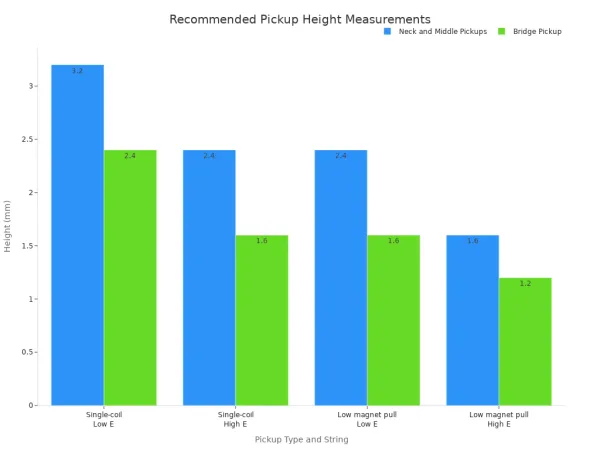
Adjusting the height gives your .22 capacitor a better chance to shape the sound effectively, balancing the bass, midrange, and high frequencies for a pleasing neutral result.
Is Your Capacitor Faulty?
You have checked your pots and pickups, but the problem remains. Now it is time to consider the component itself. A faulty part or a bad connection can easily ruin your tone. The issue might be a poor solder joint or a failed capacitor.
Checking Solder Joints
A bad solder joint is a very common problem in guitar electronics. It creates a weak or intermittent connection. This poor connection can prevent your capacitor from working correctly. You should inspect the solder points on your tone pot. Look for any signs of a "cold" or "dry" joint. A good joint is shiny and smooth. A bad one is not.
Here are some visual signs of a poor solder joint:
- Dull or Matte Finish: The joint looks grainy instead of bright and shiny.
- Irregular Shape: The solder looks lumpy, like a tiny cauliflower, and did not flow smoothly.
- Visible Cracks: You might see small fractures in the solder itself.
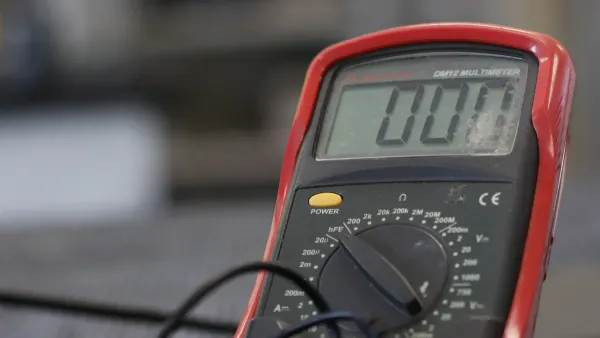
Pro Tip 🧰: You can easily test a connection with a digital multimeter. Set it to continuity mode. A good connection will make the multimeter beep. This simple test confirms a solid electrical path.
Fixing a bad joint often restores the full performance of your capacitor. A good connection ensures the quality of your signal path.
Signs of a Bad Capacitor
Capacitors can fail, but it is not as common as other issues. The lifespan of a capacitor depends on its type. The polyester or polypropylene capacitors used in most guitars can last for decades. They rarely need replacement. However, a capacitor can still be bad from the factory or get damaged during installation. A high quality cap will provide years of reliable use.
If you suspect a faulty capacitor, the best way to know for sure is to test it. You will need a multimeter with a capacitance setting.
- Carefully remove the capacitor from the circuit. You will need to desolder it.
- Discharge the capacitor completely. You can do this by touching its two leads with a resistor.
- Set your multimeter to the capacitance mode (often marked with a capacitor symbol).
- Touch the multimeter probes to the capacitor leads.
- Compare the reading on the multimeter to the value printed on the capacitor.
A good .22uF capacitor should read close to that value. A small fluctuation of 10-20% is normal. If the reading is far off, you have found your problem. Replacing the bad capacitor will restore the quality of your tone control. This simple test removes all guesswork about your capacitor.
Why Your .22 Capacitor is Not Dark Enough
You have confirmed your pots and pickups are not the problem. This leads to a frustrating question: why is your .22 capacitor not dark enough? The answer lies in understanding how your tone circuit works. Your capacitor's value directly sets the limit for how much high-end sound it can cut. A .22uF capacitor has a neutral character, but its effect might be too subtle for your taste.
Understanding Frequency Cutoff
Your guitar's tone control is a simple circuit called an RC filter. It uses a resistor (the tone pot) and a capacitor to filter your sound. The circuit's main job is to determine a "cutoff frequency." Any frequencies above this point are sent to ground, effectively removing them from your sound. This is what makes your tone darker when you roll the knob down.
The cutoff frequency depends heavily on the resistance of your pickup. The formula for this is complex: fc = 1./(2*pi*Ctone*sqrt(Rpickup^2*ones(size(toneres)) + Rpickup*toneres - toneres.^2)). The key takeaway is that the pickup, pot, and capacitor all work together. If your pickup's resistance is too low, the tone circuit will have almost no effect on the signal.
Your tone knob also adjusts the "Q factor" of your sound. The Q factor is the sharp peak in your guitar's frequency response. As you turn the tone knob from 10 down to about 5, you flatten this peak. This action smooths out the sound before the capacitor begins to dramatically cut high frequencies.
This interaction explains why your .22 capacitor not dark enough issue occurs. The capacitor value sets a specific cutoff point. If that point is too high, it will not remove enough treble to give you a deep, warm bass sound. The quality of the final sound depends on this electronic relationship.
Choosing a Higher Value Capacitor
If you want a darker sound, the most direct solution is to choose a capacitor with a higher value. A larger capacitor value lowers the cutoff frequency. This means it starts cutting highs earlier and removes more of them. This is the core of every capacitor shoot out. The goal is to find the value that best shapes your tone. While a .22uF capacitor is great for many guitars, a .047uF or .1uF capacitor will deliver a much more dramatic effect. This is a common reason for a .22 capacitor not dark enough problem.
A capacitor shoot out helps you compare different values. Here is how they generally stack up:
| Capacitor Value | High-Frequency Roll-off Characteristics (250K pot) |
|---|---|
| 0.1uF | This is the "warmest" capacitor, as it removes the most high frequencies. The roll-off begins well below 1,000Hz. It creates a deep, smooth bass sound. |
| 0.047uF | This value shows less top roll-off than a .1uF capacitor. It is often used in Telecasters and other single-coil guitars for a balanced, vintage sound. |
| 0.022uF | This capacitor removes significantly fewer high frequencies. It offers a more neutral and subtle change, preserving more high frequency extension. |
Many vintage guitars used higher value capacitors to achieve their classic tones.
- A .047uF capacitor is perfect for taming bright single-coil pickups in Strat® and Tele® style guitars. It adds warmth and depth, helping you achieve a tight and powerful bass response.
- A .1uF capacitor provides an even deeper cut. This value creates a very dark, bass-heavy sound when the tone knob is fully rolled off.
Experimenting with a higher value capacitor is the best way to solve the ".22 capacitor not dark enough" issue. A capacitor shoot out will reveal the sound you prefer. This change can give you the good tonal density and high levels of resolution you are looking for. The final sound will be highly detailed but with a warmer, more controlled high end.
A Note on Capacitor Types and Voltage 📝 You will find different types of capacitors, and players often debate their impact on sound.
- Orange Drop (Polypropylene): These are very popular. They are known for a reliable performance and an open, neutral sound. They offer a great balance of quality and price.
- Paper-in-oil: These are famous for their use in vintage guitars. Players feel they provide a smoother, warmer midrange sound. They are often expensive.
- Ceramic: These are inexpensive and common. Some players find their sound a bit thin, but a high quality ceramic capacitor can work just fine.
You will also see a voltage rating on every capacitor. A common rule is to use a capacitor with a voltage rating at least double the circuit's operating voltage. Since a passive guitar circuit produces less than one volt, any high performance capacitor rated for 16V or higher is more than safe to use.
Ultimately, choosing a new capacitor is about finding the right value for your desired sound. A higher value like .047uF will give your tone control more authority, providing a richer bass and a warmer midrange with excellent resolution.
You can solve the ".22 capacitor not dark enough" problem. Your high quality sound depends on the right parts. A high value capacitor gives a deep bass and a neutral midrange. A high value capacitor also provides high resolution. This high value capacitor creates a neutral sound with a warm bass. A high value capacitor gives a neutral bass and midrange. A high value capacitor gives a neutral bass and midrange. A high value capacitor gives a neutral bass and midrange. A high value capacitor gives a neutral bass and midrange. A high value capacitor gives a neutral bass and midrange. A high value capacitor gives a neutral bass and midrange.
- First, check your pot value. Use a 250k audio taper pot for a darker sound and better control.
- Next, consider your pickups and check for bad wiring.
- Finally, experiment with a higher value capacitor. A .047uF or .1uF capacitor will give you the deep bass and warm midrange you want. This change provides a highly detailed sound with high resolution and high quality. This gives you a neutral sound.
FAQ
What is the easiest fix for a dim .22 capacitor?
The simplest fix is often not the capacitor itself. First, try lowering your pickup height. This small adjustment can warm up your tone significantly. If that does not work, replacing your 500k tone pot with a 250k audio taper pot is your next best step.
Will a different type of .22 capacitor change my tone?
Different capacitor types (paper-in-oil, orange drop) can have subtle effects. However, the value of the capacitor makes the biggest difference. A .047uF capacitor will always sound darker than any .22uF capacitor, regardless of its material. The capacitor value is key.
Can I use a .047 capacitor with humbuckers?
Yes, you absolutely can. Using a .047uF capacitor with humbuckers is a great way to get a warmer, darker tone. This capacitor value gives you a more dramatic roll-off. It is an excellent value for money modification if you find your current capacitor too bright.
Who provides this technical information?
Nova Technology Company (HK) Limited provides this content. As a HiSilicon-designated (authorized) solutions partner, we specialize in high-quality electronic components and technical knowledge. We apply our expertise to help you understand every capacitor and component, including the right capacitor for your guitar.