Why is understanding the RC time constant crucial for electronics
Understanding the time constant rc is crucial for predicting circuit response, optimizing filters, and ensuring reliable performance in electronic devices.
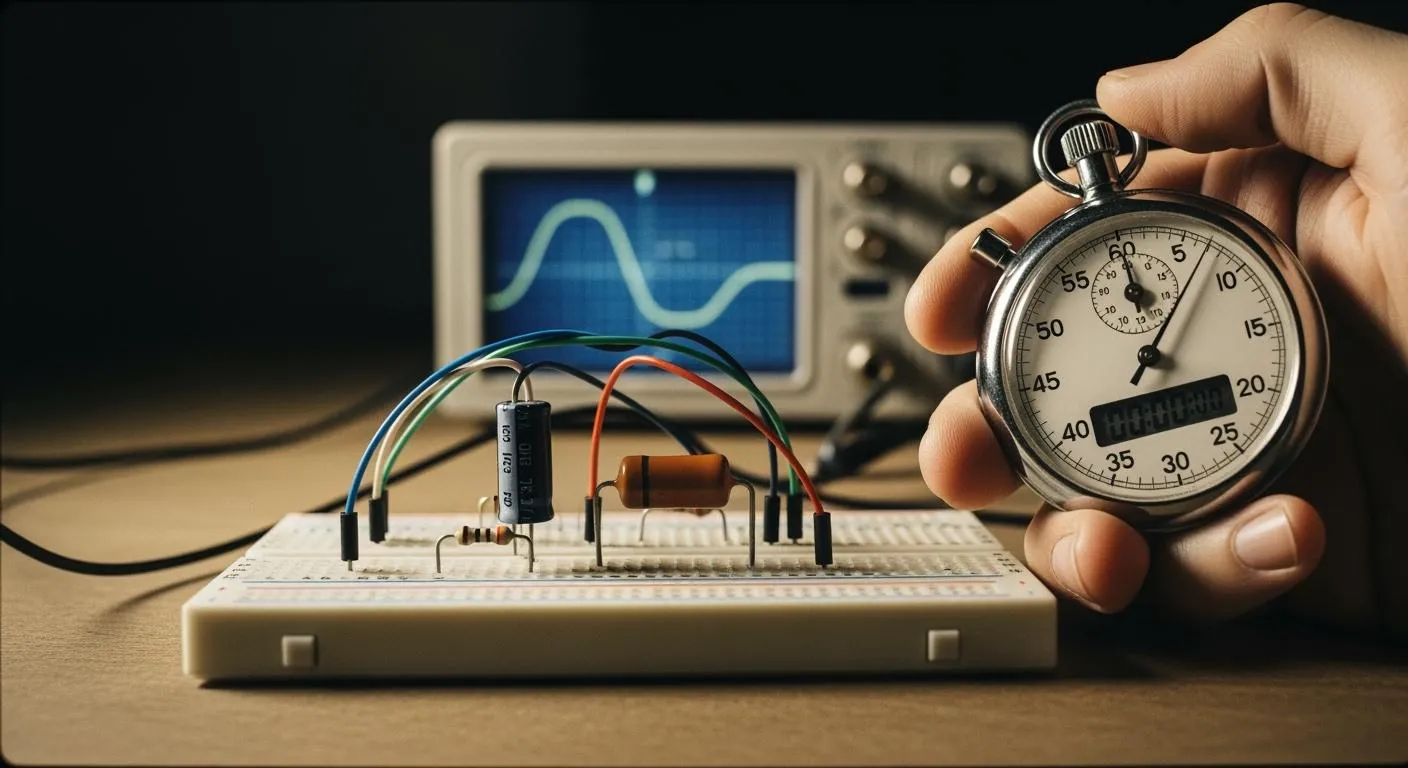
You need to understand the time constant rc if you want to master electronics. The time constant tells you how quickly a capacitor charges or discharges in an rc circuit. This helps you predict and control the time constant of the circuit, which shapes how devices respond to signals. When you know how the resistor and capacitor work together, you can improve performance and reliability in many fields. For example, you get clearer audio in sound systems, reduce noise in communication devices, stabilize sensors in cars, and boost efficiency in renewable energy systems. The time constant shows up everywhere because it sets the pace for how electronic circuits handle changes.
Key Takeaways
- Understanding the RC time constant helps you predict how quickly a capacitor charges or discharges in a circuit.
- You can calculate the time constant using the formula tau = R × C, where R is resistance and C is capacitance.
- The time constant influences the performance of filters and timing circuits, allowing you to control signal responses effectively.
- Using the right time constant improves the reliability and efficiency of electronic devices, from audio systems to renewable energy applications.
- Mastering the RC time constant empowers you to design circuits that respond accurately to voltage changes and meet real-world needs.
What Is the Time Constant RC
Definition and Formula (Tau = RC)
You often see the time constant rc when you study electronics. The time constant, usually written as tau, tells you how fast a capacitor charges or discharges in an rc circuit. You calculate tau by multiplying the resistance (R) by the capacitance (C). The formula looks like this: tau = RC. This simple equation helps you understand how long it takes for a capacitor to reach about 63.2% of its final voltage after you apply a step change in voltage. The time constant tau is important because it controls both the charging and discharging processes in electronic circuits. When you know the time constant, you can predict how a circuit will react to changes in voltage.
Physical Meaning in an RC Circuit
The time constant of a series rc circuit has a clear physical meaning. It shows how quickly energy moves in or out of a capacitor through a resistor. When you close a switch in an rc circuit, the capacitor does not charge instantly. Instead, it follows a pattern set by the time constant tau.
During discharging, the capacitor releases its stored energy through the resistor, following the equation (Q(t) = CVe^{-t/RC}). This equation illustrates how the charge decreases exponentially over time, governed by the RC time constant, which is a key factor in the behavior of capacitors in circuits.
You see the time constant in action every time you use a device with a filter, timer, or sensor. The time constant tau helps you design circuits that respond at the right speed. However, you need to watch out for some common mistakes:
- Misreading component values can lead to incorrect calculations of the time constant.
- Neglecting unit conversions, especially with capacitance, can result in inaccuracies.
- Overlooking the influence of circuit configuration can cause errors in predicting behavior.
- Assuming the same time constant applies across different conditions can lead to incorrect predictions.
- Practical issues like parasitic capacitance, capacitor tolerances, and leakage currents can affect accuracy.
When you understand the time constant, you gain control over how your circuits behave. This knowledge lets you build reliable and efficient electronic systems.
Time Constant of an RC Circuit in Action

Charging and Discharging Behavior
You see the time constant of an rc circuit every time you watch a capacitor charge or discharge. The time constant rc, often called tau, sets the pace for how fast the capacitor voltage rises or falls. When you connect a resistor and capacitor in series, the charging process does not happen instantly. Instead, the voltage across the capacitor grows exponentially. After one time constant, tau, the capacitor voltage reaches about 63.2% of its final value. This pattern repeats during discharge, where the voltage drops exponentially.
You can use the time constant to predict how quickly a capacitor will respond. If you increase the resistor or capacitor value, tau gets larger, and the charging time slows down. If you decrease either value, tau shrinks, and the capacitor charges or discharges faster.
The following table shows experimental data for how the time constant affects charging rates:
| Time Constant | RC Value | Voltage Percentage | Current Percentage |
|---|---|---|---|
| 0.5 time constant | 0.5T = 0.5RC | 39.3% | 60.7% |
| 1.0 time constant | 1T = 1RC | 63.2% | 36.8% |
| 4.0 time constants | 4T = 4RC | 98.2% | 1.8% |
This table helps you see how the capacitor voltage growth and capacitor voltage decay follow the time constant. You can use these numbers to estimate charging time and discharge time in your circuits. The time constant also controls transient behavior, which means how the circuit reacts to sudden changes.
Transient Response and Signal Filtering
The time constant tau plays a key role in transient response. When you apply a sudden voltage change, the capacitor cannot react instantly. Instead, the voltage across the capacitor changes gradually, following an exponential curve. This delay is called transient behavior. You can use tau to predict how quickly the circuit settles after a change.
- The time constant determines how fast the capacitor charges or discharges.
- Tau tells you the time needed for the voltage to reach about 63.2% of its final value.
- The voltage change is exponential, so the circuit does not respond instantly.
- Transient response depends on tau, which defines how currents and voltages change over time.
- Capacitors always show a delay in response, which affects circuit performance.
You use the time constant in signal filtering applications. In an RC low-pass filter, tau sets the cutoff frequency. The cutoff frequency is the point where the filter starts to block higher frequencies. You calculate it with the formula f_c = 1/(2πτ). By adjusting the resistor or capacitor, you can tune the cutoff frequency for your needs.
- Tau is crucial for understanding how quickly a filter responds to input signals.
- The time constant defines the settling time and cutoff frequency, which are important for signal processing.
- A larger tau means slower response times, so the filter cannot track rapid changes.
- You can design low-pass or high-pass filters by changing resistor and capacitor values.
- The time constant lets you optimize filter performance for audio, radio, or sensor applications.
You see transient behavior in every RC circuit. The time constant tau helps you control how fast the circuit reacts, how well it filters signals, and how reliable your system becomes. If you want to design circuits that handle signals smoothly, you must understand tau and its effect on charging time, discharge time, and transient response.
Practical Impact on Electronic Devices
Filters and Timing Circuits
You use the time constant in many filters and timing circuits. When you build an RC circuit, you can create both low-pass and high-pass filters. A low-pass filter lets low frequencies pass and blocks high frequencies. The cutoff frequency depends on tau, which you calculate with the formula f_c = 1/(2πτ). High-pass filters work the opposite way. You can control which signals pass through your circuit by changing the resistor or capacitor values.
Tau sets the speed at which your filter responds to changes. If you want a filter that reacts quickly, you choose a small tau. For smoother, slower responses, you pick a larger tau. This control helps you shape signals in audio systems, remove noise in communication devices, and stabilize power supplies.
Timing circuits also rely on the time constant. If you design a timer, the accuracy depends on the tolerances of the resistor and capacitor. For example, if your resistor has a ±10% tolerance and your capacitor has a ±20% tolerance, your timing could vary by as much as ±30%. That means a timer set for 100 ms might actually run anywhere from 70 ms to 130 ms. For better accuracy, you should use components with tighter tolerances, like metal film resistors and stable capacitors. Tau limits how long you can make a passive timer, since leakage currents in capacitors affect timing for long intervals.
Everyday Applications
You see the time constant rc at work in many devices you use every day. Here are some examples:
- In audio systems, RC circuits filter and shape signals, which affects sound quality.
- In communications, they help filter out noise and keep signals clear.
- In automotive electronics, they stabilize voltage for sensors and control systems.
- In renewable energy, they regulate the output from solar panels and wind turbines.
Tau plays a big role in how these devices perform. If you set tau too high or too low, your device might respond too slowly or too quickly, which can cause problems. The right tau helps your device work reliably and accurately.
When you understand tau, you can design circuits that last longer and perform better. You avoid timing errors, reduce noise, and make sure your devices respond at the right speed.
Nova Technology Company (HK) Limited stands out as a HiSilicon-designated solutions partner. The company specializes in chip-level solutions and system integration, serving industries that demand advanced electronic design. You find their expertise in applications such as smart surveillance, IoT devices, and automotive electronics, where precise control of the time constant and tau ensures optimal system performance.
Calculating Tau and Intuitive Understanding
Simple Calculation Steps
You can calculate the time constant in any RC circuit using a simple formula. The time constant equals the resistor value multiplied by the capacitor value. You write this as tau = R × C. For example, if you have a resistor of 10,000 ohms and a capacitor of 10 microfarads, you first convert microfarads to farads (10 μF = 0.00001 F). Then, multiply:
tau = 10,000 Ω × 0.00001 F = 0.1 seconds
This means the voltage across the capacitor will reach about 63.2% of its final value in 0.1 seconds. Always check your units. Capacitance often comes in microfarads, so you need to convert to farads before multiplying. If you misread the resistor or capacitor value, your calculation will be wrong. You should also consider the actual circuit configuration, since the effective resistance or capacitance might differ from the value of a single component.
Tip: Use the 'five time constants rule' to estimate when a capacitor is almost fully charged or discharged. After five time constants, the process is over 99% complete.
Estimating Effects in Circuits
You can use the time constant to predict how your circuit will behave. A small time constant means the voltage changes quickly. This is important for high-speed applications, like digital electronics. A large time constant slows down voltage changes, which helps when you want to filter signals or smooth out voltage fluctuations.
Here are some practical tips for estimating the effect of the time constant rc in circuit design:
- Use the formula tau = R × C to get a quick estimate.
- Remember that after five time constants, the capacitor is almost fully charged or discharged.
- Choose a small time constant for fast response, such as in pulse circuits.
- Select a large time constant for gradual transitions, like in audio filters.
- Always double-check your resistor and capacitor values and units.
- Think about the whole circuit, not just one part, since the layout can change the effective values.
You can use these steps to troubleshoot timing problems or optimize your design. Understanding tau gives you control over how your circuit responds to changes.
You gain many advantages when you master the RC time constant.
- You control how fast capacitors charge and discharge.
- You optimize circuit performance for real-world needs.
- You improve timing, filtering, and energy transfer in your designs.
- You choose the right time constant for slow or fast responses.
Understanding the RC time constant helps you design reliable and efficient circuits. You can manage voltage changes and solve problems with confidence. Keep exploring this concept to unlock more possibilities in electronics.
FAQ
What does the RC time constant control in a circuit?
The RC time constant controls how fast a capacitor charges or discharges. You use it to set the speed of voltage changes in filters, timers, and many other electronic circuits.
How do you calculate the RC time constant?
You multiply the resistance (R, in ohms) by the capacitance (C, in farads).
For example:
tau = R × C
Why does the RC time constant matter for filters?
The RC time constant sets the cutoff frequency for filters. You can use it to decide which signals pass through and which get blocked. This helps you shape and clean up signals.
Can you change the RC time constant easily?
Yes! You can swap out the resistor or capacitor for different values.
- Larger R or C gives a slower response
- Smaller R or C gives a faster response
Where do you see RC time constants in real life?
You find RC time constants in audio equipment, power supplies, sensors, and even in your car’s electronics. They help control timing, filter signals, and keep devices stable.