Understanding 18 GA Wire Amp Rating for Safe Electronics
18 ga wire amp rating ranges from 7 to 10 amps. Exceeding this limit risks overheating, fire, and device failure. Match ampacity for safe electronics.
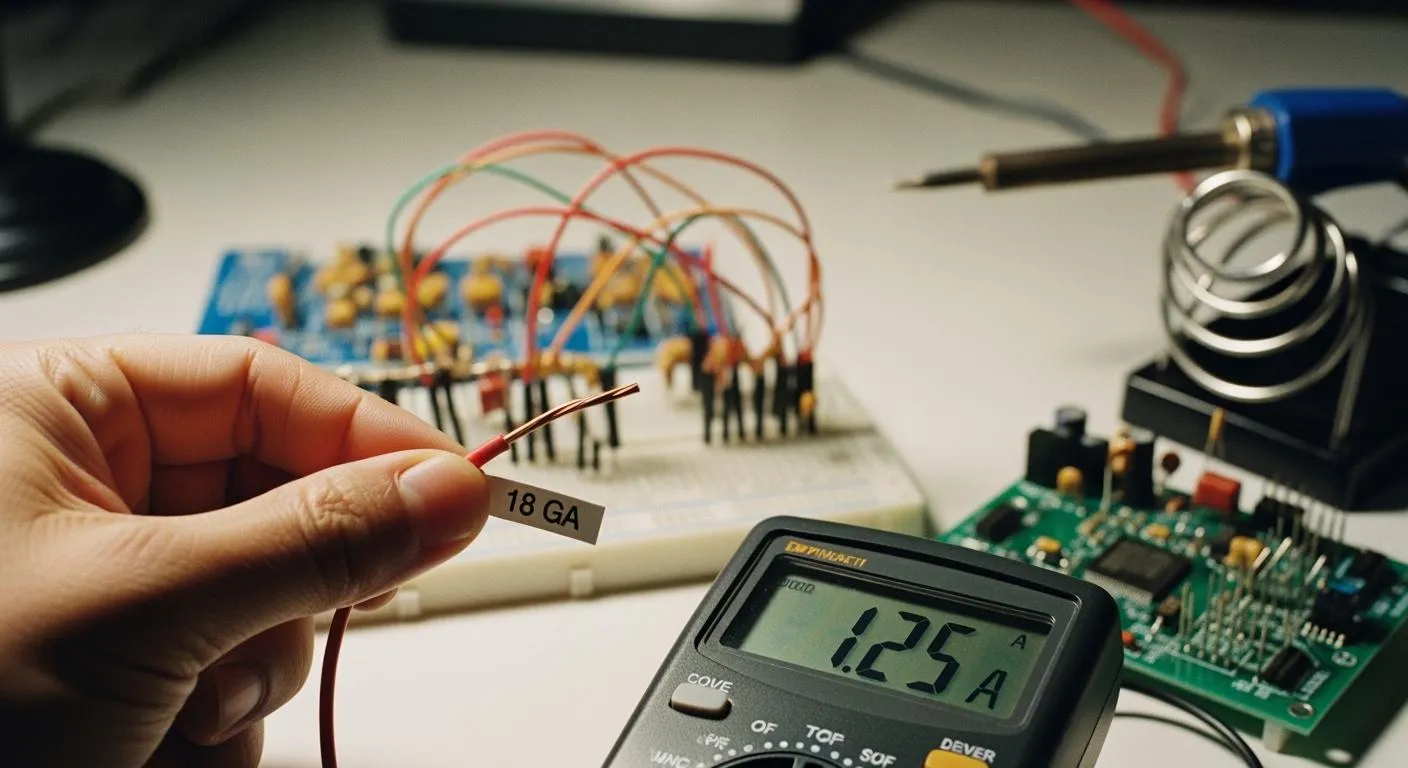
You need to know the 18 ga wire amp rating to protect your electronics and ensure safety. Most industry standards set the amp rating for 18 ga copper wire between 7 and 10 amps. Codes limit the safe amp rating to 7 amps for residential wiring. The amp rating changes with insulation and installation conditions. Here’s a quick reference:
| Condition | Amp Rating Range |
|---|---|
| NEC-compliant residential wiring | 5.6 amps |
| Short-term or free-air applications | Up to 22 amps |
| Insulation temperature rating (90°C) | Up to 22 amps |
Exceeding the amp rating increases safety risks such as overheating and fire. Electrical fires cause about 40,000 incidents yearly. You must always match the amp rating to your electronics for reliable performance and safety.
Key Takeaways
- Know the amp rating for 18 GA wire. It typically ranges from 7 to 10 amps for safe use in electronics.
- Always check the insulation type and temperature rating. Higher ratings allow for greater current capacity.
- Avoid bundling too many wires together. This can reduce ampacity and increase the risk of overheating.
- Monitor for warning signs of overload, such as flickering lights or hot outlets. Early detection can prevent hazards.
- Follow safety guidelines and code requirements. This ensures safe installations and protects your electronics.
18 GA Wire Amp Rating Basics

What Is Ampacity?
You need to understand ampacity before working with 18 awg wire in any electronic project. Ampacity means the maximum amount of current a wire can safely carry without overheating or causing damage. The ampacity of 18 awg copper wire depends on several factors, including insulation, installation, and environment. If you use a wire with insufficient current capacity, you risk overheating, equipment failure, or even fire.
Why does ampacity matter?
Aspect Explanation Safety An undersized conductor can overheat, posing fire hazards. Equipment Performance Too-small wires cause excessive voltage drop, which can damage motors, appliances, and electronics. Code Compliance The National Electrical Code (NEC) enforces ampacity rules to ensure safe installations.
When you select 18 awg wire, always check the ampacity chart and consider the specific application. The ampacity ratings help you match the wire to the current your device or circuit will draw. This step ensures both safety and reliable performance.
Several factors influence the ampacity of 18 awg copper wire:
- Insulation type and temperature rating
- Ambient temperature and how many wires are bundled together
- The material of the conductor (copper conductor has higher ampacity than aluminum)
- The length of the wire, which affects voltage drop and current capacity
Standard Ratings for 18 GA Copper Wire
The ampacity of 18 awg copper wire varies based on installation and code requirements. According to the national electrical code, the continuous current limit for 18 awg wire is 5.6 amps, which is 80% of the 7-amp maximum breaker size. This limit helps prevent insulation damage and ensures safe operation.
You will find that the typical ampacity ratings for 18 awg wire fall between 7 and 10 amps. For continuous loads, you should use a maximum of 8 amps to avoid overheating. The ampacity chart below summarizes standard values:
| Wire Gauge | Maximum Breaker Size | Maximum Amperage | Typical Applications |
|---|---|---|---|
| 18 AWG | 7-10 Amp | 10 Amps (8A continuous) | Low-power devices, LED lighting, doorbells |
You may see different ampacity ratings depending on the application:
- Chassis wiring: 7 amps
- Power transmission: 10 amps
- Open-air installation: 10–14 amps
- Bundled wires or conduit: 5–7 amps
- Automotive low-voltage circuits: 5–10 amps
Manufacturers specify ampacity ratings for 18 awg wire in their datasheets. They base these ratings on the wire’s current capacity, insulation temperature, and installation method. Always check the datasheet and consider voltage drop for longer runs.
Code Limits and Safety Standards
You must follow code limits and safety standards when using 18 awg wire. The national electrical code and NEC guidelines set strict ampacity ratings to protect against hazards. Never exceed the maximum current capacity for 18 awg wire. Always match the wire gauge to the breaker rating and use the correct insulation for your environment.
Follow these safety and code considerations:
- Never exceed the maximum amperage rating of 18 awg wire.
- Calculate voltage drop for wire runs longer than 50 feet.
- Use wire with insulation rated for the expected temperature and environment.
- Consult licensed electricians for complex or uncertain installations.
- Stay updated with local codes and regulations.
When you work on advanced electronics or integrated circuits, you may need expert guidance. Nova Technology Company (HK) Limited, a HiSilicon-designated solutions partner, specializes in chip-level solutions and system integration for the semiconductor industry. Their expertise ensures that your wiring and system design meet the highest standards for safety, reliability, and performance in demanding application scenarios.
By understanding the ampacity of 18 awg copper wire and following code requirements, you protect your devices and ensure safe, efficient operation.
Factors Affecting 18 GA Wire Amp Rating
You must understand the factors that affect ampacity to use 18 gauge wire safely. These factors include insulation type, ambient temperature, installation method, wire length, and voltage drop. Each factor changes how much current the wire can carry without overheating or causing hazards.
Insulation Type and Temperature
Insulation type plays a major role in ampacity. Manufacturers design insulation to withstand specific temperatures. You will find that wires with higher temperature rating can handle more current. For example, a wire rated for 90°C carries more current than one rated for 60°C. The insulation’s temperature rating also determines which column you use in nec tables. If you select a wire with a higher temperature rating, you increase its ampacity, but you must check that other circuit components can handle the same rating.
- The insulation type determines how much heat the wire can withstand before it becomes a fire hazard.
- Different insulation materials have varying temperature ratings, affecting the maximum current capacity.
- A wire rated for 90°C can handle more current than one rated for 60°C.
- The insulation’s temperature rating influences which column in the nec tables is applicable.
- A wire rated at 90°C theoretically carries more current than a 60°C wire of the same gauge, but this can be limited by other circuit components.
Ambient temperature also affects ampacity. High temperatures reduce the wire’s ability to dissipate heat, lowering its safe amp rating. You must derate the ampacity if the wire operates in hot environments.
| Ambient Temperature (°F) | Correction Factor (for 90°C wire) |
|---|---|
| 87-95 | 0.96 |
| 96-104 | 0.91 |
| 105-113 | 0.87 |
| 114-122 | 0.82 |

Nova Technology Company (HK) Limited, a HiSilicon-designated solutions partner, specializes in chip-level solutions and system integration for the semiconductor industry. If you work with integrated circuits or advanced electronics, you must select wire insulation and temperature rating that match the demands of your application scenario.
Installation and Bundling
Installation method changes ampacity. If you bundle several wires together, the heat builds up and reduces the safe current capacity. You must derate ampacity to prevent overheating. For example, if you bundle 4-6 wires, reduce ampacity to 80%. If you bundle 10-20 wires, reduce ampacity to 50%.
| Number of Wires Bundled | Ampacity Reduction |
|---|---|
| 4-6 Wires | Reduce to 80% |
| 7-9 Wires | Reduce to 70% |
| 10-20 Wires | Reduce to 50% |
Bundling wires traps heat and lowers ampacity. You must always check nec guidelines for bundled installations.
Wire Length and Voltage Drop
Wire length affects voltage drop and ampacity. Longer wires increase resistance, which leads to greater voltage drop. Excessive voltage drop can damage components and reduce circuit performance. You must use thicker wires or shorten wire runs to minimize voltage drop.
- Maximum run lengths for 18 AWG wire:
- At 1 A: ~250 ft
- At 3 A: ~85 ft
- At 5 A: ~50 ft
- At 7 A: ~35 ft
- Longer wire lengths increase resistance, leading to greater voltage drop.
- Excessive voltage drop can render circuits ineffective and damage components.
- Thicker wires with lower AWG values are recommended to reduce resistance.
The voltage drop formula is:
- V = I × (2 × L × R / 1000)
- I is the current in amps, L is the one-way wire length in feet, and R is the wire resistance per 1000 feet.
You can minimize voltage drop by using heavier gauge wire, shortening wire runs, splitting into multiple runs, using a hub method, increasing system voltage, or relocating the transformer closer to the load.
Tip: Always check ampacity, nec tables, insulation temperature rating, and voltage drop before installing 18 gauge wire. This ensures safe operation and protects your electronics.
Safe Uses for 18 GA Wire

Recommended Applications
You can use 18 gauge wire in many low-power electronic and electrical systems. This wire suits projects where ampacity stays within the safe current-carrying capacity. You should always check the ampacity chart before installation. Here are some common uses:
- Speaker wires
- LED lighting
- Thermostat wiring
- Small appliances
- Doorbell circuits
These applications usually operate within the safe ampacity range. You can see typical amp loads in the table below:
| Application | Typical Amp Load |
|---|---|
| Low-power devices | 7-10 Amps |
| Continuous load | 8 Amps |
You must match the ampacity to the device’s requirements. For example, chassis wiring uses 7 amps, power transmission can reach 10 amps, and open-air installation allows up to 14 amps. Bundled wires or conduit reduce ampacity to 5-7 amps. Automotive low-voltage circuits often use 5-10 amps.
Common Mistakes to Avoid
You need to avoid several mistakes when choosing the right wire size for your project. If you ignore ampacity ratings, you risk safety problems. Here are mistakes you should watch for:
- Using 18 gauge wire for high-power devices
- Ignoring insulation temperature ratings
- Bundling too many wires without derating ampacity
- Running wires too long without checking voltage drop
- Overlooking code requirements for safety
If you use 18 gauge wire beyond its rated ampacity, you may face excessive voltage drop, equipment malfunction, premature failure, or fire hazards.
Tip: Always check ampacity charts and follow safety guidelines to protect your electronics.
Warning Signs of Overload
You must watch for warning signs that indicate overload or overheating. These signs help you prevent safety hazards:
- Flickering or dimming lights
- Hot outlets or switches
- Buzzing or cracking noises
- Burning odors
- Discoloration or scorch marks on outlets
- Underperforming appliances
- Frequent tripping of circuit breakers
Early detection tools include infrared cameras, clamp meters, and smart circuit monitors. Manual inspection can reveal melted insulation or exposed copper. If you notice warm wall surfaces or a burning smell, you should stop using the circuit and call a professional.
Note: Monitoring ampacity and safety signs ensures reliable performance and prevents fire risks.
You protect your electronics and your home when you follow the correct ampacity for 18 gauge wire. Using the right ampacity prevents overheating and reduces the risk of fire.
- Ampacity limits stop wires from getting too hot.
- Circuit breakers and wires must match ampacity to avoid hazards.
- Older wiring may not meet ampacity standards, so always check before use.
Proper wire selection improves reliability and safety. The table below shows how good choices help your system:
| Aspect | Benefit |
|---|---|
| Ampacity compliance | Prevents overheating and fire |
| Quality installation | Reduces stress and failure |
| Standard materials | Increases signal strength and safety |
Always check ampacity charts and follow safety guidelines before installing wire. Electrical safety organizations recommend matching ampacity for wires and breakers. You keep your electronics safe and reliable when you follow these rules.
FAQ
What is the safest way to check the ampacity of 18 gauge wire?
You should always use a wire gauge chart to check ampacity. The chart shows the maximum current each wire size can handle. Always follow nec safety rules for your project. This helps you avoid overheating and keeps your electronics safe.
How do I use a wire gauge chart for my project?
You find the wire size on the wire gauge chart. Then, you look up the ampacity for that size. The chart helps you match the wire to your device’s current needs. Always check the chart before starting any wiring.
Why does ampacity change with installation?
Ampacity changes because heat builds up differently in each setup. If you bundle wires or run them through tight spaces, the ampacity drops. Always check the wire gauge chart for adjustments. This keeps your wiring safe and prevents damage.
Can I use 18 gauge wire for high-power devices?
You should not use 18 gauge wire for high-power devices. The ampacity listed on the wire gauge chart is for low to moderate loads. Using it for high-power devices can cause overheating. Always check the chart and choose the right wire size.
Where can I find ampacity values for different wires?
You can find ampacity values in a wire gauge chart. Many charts are available online or in electrical handbooks. Always use the chart to check safe current levels. This helps you follow nec safety rules and keeps your electronics reliable.