Choosing the Right Power Supply IC: A Detailed Comparison of the LT3080 and LM317 for Precision Applications
Expert guide on Choosing the Right Power Supply IC: A Detailed Comparison of the LT3080 and LM317 for Precision Applications. Technical specs, applications, sourcing tips for engineers and buyers.
Introduction
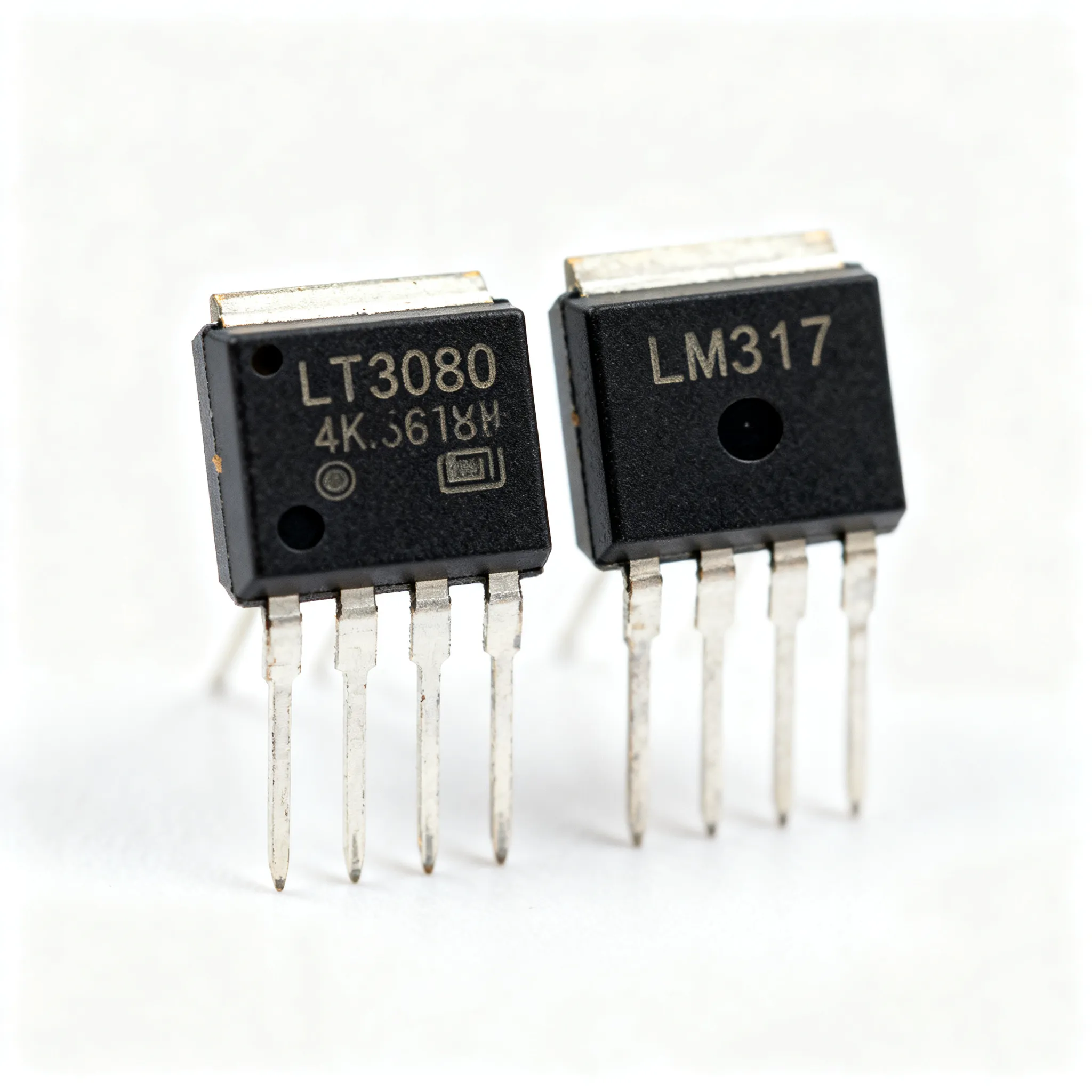
In the realm of precision electronics, selecting an appropriate power supply IC is crucial for ensuring optimal performance and reliability. Two popular choices for linear voltage regulators are the LT3080 and the LM317. These components are renowned for their versatility, ease of use, and ability to deliver stable voltage outputs in various applications. As the electronics industry continues to evolve, driven by advancements in semiconductor technology, the demand for precision and efficiency in power management solutions has never been greater. This article delves into the specifications, design considerations, and applications of the LT3080 and LM317, providing a comprehensive guide for engineers and designers.
Technical Overview
The LT3080 and LM317 are both linear voltage regulators, a class of devices used to maintain a constant voltage level. Linear regulators are essential in applications where noise and ripple rejection are critical, offering simplicity and low output noise compared to their switching counterparts. The LT3080 is a newer design, featuring an adjustable output with a single resistor, and is known for its low dropout voltage and high precision. The LM317, on the other hand, has been a staple in the industry for decades, valued for its robustness and ease of implementation. Understanding the core principles behind these devices is pivotal for making an informed decision when integrating them into precision applications.
Detailed Specifications
Table 1: Electrical Specifications
| Specification | LT3080 | LM317 | Units | Notes |
|---|---|---|---|---|
| Input Voltage Range | 1.2 - 36 | 3 - 40 | V | Max input voltage for LM317 is higher |
| Output Voltage Range | 0 - 35 | 1.25 - 37 | V | LT3080 can output 0V |
| Output Current | 1.1 | 1.5 | A | LM317 supports higher current |
| Dropout Voltage | 350 | 2.0 | mV | LT3080 offers lower dropout |
| Load Regulation | 0.5% | 0.1% | % | LM317 has better load regulation |
| Line Regulation | 0.01% | 0.01% | % | Both offer excellent line regulation |
| Quiescent Current | 1.0 | 5.0 | mA | LT3080 is more efficient |
| PSRR | 60 | 80 | dB | LM317 has higher PSRR |
| Noise | 40 | 160 | μV | LT3080 has lower noise |
| Temperature Range | -40 to 125 | 0 to 125 | °C | LT3080 operates in a wider temperature range |
Table 2: Thermal & Mechanical Specs
| Specification | LT3080 | LM317 | Units | Notes |
|---|---|---|---|---|
| Thermal Resistance (Junction to Ambient) | 40 | 45 | °C/W | LT3080 has slightly better thermal management |
| Package Options | TO-220, SOT-223 | TO-220, TO-3 | - | LM317 offers more package options |
| Junction Temperature | 150 | 150 | °C | Both have the same maximum junction temperature |
| Weight | 0.8 | 1.0 | g | LT3080 is lighter |
| Height | 1.5 | 2.0 | mm | LT3080 is more compact |
| Width | 4.6 | 4.8 | mm | Similar width for both |
| Length | 6.5 | 8.0 | mm | LT3080 is shorter |
| Pin Count | 3 | 3 | - | Standard pin count for linear regulators |
Table 3: Application Comparison
| Application | LT3080 | LM317 | Notes |
|---|---|---|---|
| Battery-Powered Devices | Excellent | Good | LT3080's low dropout is advantageous |
| Precision Instrumentation | Excellent | Good | Lower noise of LT3080 is preferred |
| General-Purpose Power Supply | Good | Excellent | LM317 is a versatile option |
| Industrial Control | Good | Excellent | LM317's higher current is beneficial |
| Audio Equipment | Excellent | Good | LT3080's low noise is ideal |
Design Considerations
When designing with linear regulators such as the LT3080 and LM317, several factors must be considered to ensure optimal performance. First, the dropout voltage is a critical parameter, especially in low-voltage applications where every millivolt counts. The LT3080's low dropout voltage makes it suitable for battery-powered devices where efficiency is paramount.
Thermal management is another essential consideration. The thermal resistance from junction to ambient can significantly affect the regulator's ability to dissipate heat. The LT3080 offers slightly better thermal performance, which can be advantageous in compact designs with limited airflow.
Noise performance is also crucial, particularly in precision and audio applications. The LT3080's low output noise makes it an excellent choice for these environments. However, the LM317's robust design and higher power supply rejection ratio (PSRR) can still make it a viable option in less noise-sensitive applications.
Finally, consider the availability of package options, as they can influence the ease of assembly and the overall size of the final product. The LM317's broader range of packages, including TO-220 and TO-3, offers flexibility for various design constraints.
Step-by-Step Guide
Implementing a linear regulator in your design involves several steps to ensure proper operation and reliability. Here's a step-by-step guide for using the LT3080 and LM317:
- Determine Output Voltage: Use the formula Vout = Vref * (1 + R2/R1) + Iadj * R2 for the LM317, where Vref is typically 1.25V. For the LT3080, simply use a single resistor to set the output voltage.
- Select Appropriate Resistors: Choose resistor values that provide the desired output voltage. Ensure they can handle the power dissipated across them.
- Check Thermal Requirements: Calculate the power dissipation using P = (Vin - Vout) * Iout and ensure the chosen package and heat sinking can handle this power.
- Choose Capacitors for Stability: Add input and output capacitors to improve stability and transient response. Typically, a 0.1μF capacitor on the input and a 10μF on the output are recommended.
- Layout Considerations: Ensure the layout minimizes the length of the traces carrying high current to reduce inductance and resistance. Keep the feedback path short to reduce noise.
- Test Under Load: Once assembled, test the regulator under different load conditions to ensure it maintains the output voltage and doesn't overheat.
- Evaluate Noise Performance: Measure the output noise to confirm it meets the application requirements, especially in precision applications.
- Document and Review: Document the design and test results. Review the design to ensure all requirements are met and no issues are present.
Common Issues & Solutions
Designing with linear regulators can present challenges, but understanding common issues can aid in troubleshooting. Here are some typical problems and their solutions:
- Overheating: If the regulator overheats, check the thermal design. Ensure adequate heat sinking and airflow. Consider using a package with lower thermal resistance.
- Output Instability: Instability can occur if the output capacitor is not properly chosen. Ensure the capacitor meets the ESR requirements specified in the datasheet.
- Voltage Drop: An unexpected voltage drop might indicate excessive dropout. Verify the input voltage is sufficient above the dropout voltage for the desired output.
- Noise Issues: Excessive noise can affect sensitive applications. Use low-ESR capacitors and ensure proper layout to minimize inductive and capacitive coupling.
- Current Limit Exceeded: If the output current exceeds the regulator's maximum, it may shut down or become unstable. Ensure the load current is within the specified limits.
Applications & Use Cases
The LT3080 and LM317 find applications across various domains. The LT3080, with its low noise and dropout, is ideal for precision instrumentation and audio equipment. Its ability to output 0V also makes it suitable for applications requiring complete shutdown.
The LM317, known for its robustness, serves well in general-purpose power supplies and industrial control systems, where higher current capacity is required. Its versatility and availability in multiple packages make it a go-to choice for many engineers.
Selection & Sourcing Guide
When choosing between the LT3080 and LM317, consider the specific requirements of your application, such as output voltage, current, noise, and thermal performance. For sourcing these components, visit IC Online to explore competitive pricing and availability.
FAQ
- What is the main difference between LT3080 and LM317? The LT3080 offers lower dropout voltage and noise, while the LM317 provides higher current capability and a wider input voltage range.
- Can the LT3080 output 0V? Yes, the LT3080 can be configured to output 0V, which is not possible with the LM317.
- Which regulator is better for battery-powered devices? The LT3080 is generally better due to its lower dropout voltage and quiescent current.
- How do I choose the right package for my application? Consider thermal requirements, space constraints, and ease of assembly when selecting a package.
- Is external compensation needed for these regulators? No, both the LT3080 and LM317 are internally compensated.
- What are the typical applications for the LM317? It is commonly used in general-purpose power supplies, industrial controls, and consumer electronics.
- How do I improve the noise performance of a linear regulator? Use low-ESR capacitors and ensure a clean layout to minimize noise coupling.
- What is the maximum output current for the LT3080? The LT3080 can deliver up to 1.1A, while the LM317 can deliver up to 1.5A.
- Can I use these regulators in parallel to increase current? Yes, but additional circuitry is required to balance the load current.
- Where can I find more detailed technical information? Check the datasheets available on DigiKey for comprehensive technical details.
Conclusion
Choosing the right power supply IC is crucial for the success of precision applications. Both the LT3080 and LM317 offer unique advantages, making them suitable for different scenarios. Understanding their specifications, design considerations, and application potential ensures that engineers can make informed decisions to optimize their designs. As the industry continues to innovate, keeping abreast of the latest developments in power management solutions is essential for maintaining a competitive edge.