Electric Motor Stator: The Unsung Hero in Electronics
Electric motor stator boosts device efficiency and reliability by generating a magnetic field for smooth, energy-saving performance in modern electronics.
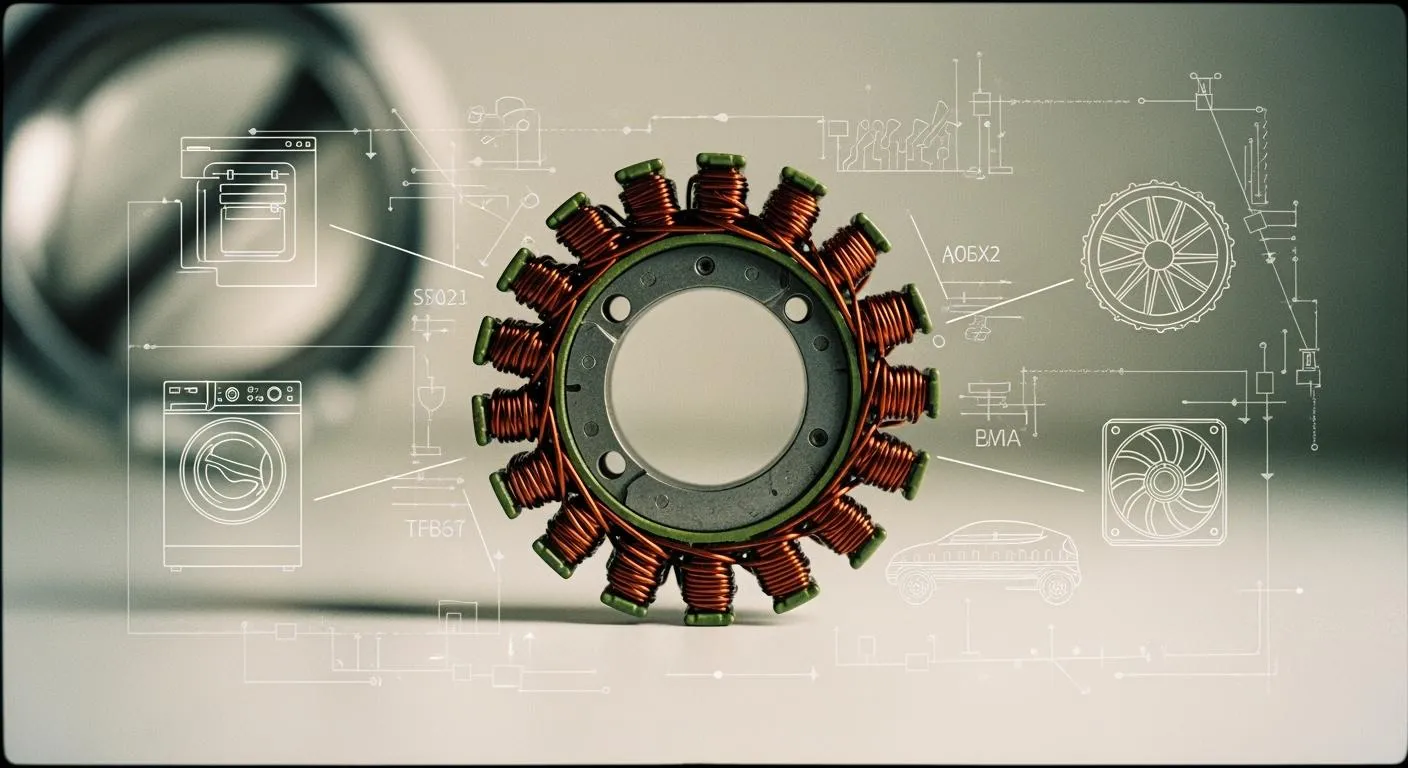
You encounter the electric motor stator every time you use a device powered by an electric motor. This essential part stays still inside the motor, but it drives everything into motion. The electric motor stator creates a rotating magnetic field, which makes the motor work efficiently. You rely on this part for energy savings and smooth performance.
- The electric motor stator uses high-grade steel and copper windings for better conductivity.
- Thin laminations inside the stator reduce wasted energy from eddy currents.
- Its design manages heat, protecting the motor from overheating.
- Advanced stator construction allows the motor to control speed and torque with precision.
The electric motor stator stands at the heart of many modern electronics, making it vital for you to understand how it works.
Key Takeaways
- The stator is crucial for creating the magnetic field that powers electric motors, enabling them to convert electrical energy into mechanical energy.
- High-quality materials like laminated silicon steel and insulated copper wire enhance the stator's efficiency and reduce energy losses.
- Regular maintenance of the stator, including checking for overheating and inspecting insulation, ensures reliable motor performance and longevity.
- Innovations in stator design, such as smart sensors and advanced materials, improve motor efficiency and allow for real-time performance monitoring.
- Understanding the role of the stator helps you appreciate its importance in everyday devices, from home appliances to industrial machines.
Electric Motor Stator Basics

Stator Structure and Components
You find the stator at the core of every electric motor. This motor part stays stationary while the rotor spins inside it. The stator forms the foundation for the motor’s operation. You rely on its structure to channel energy and create motion.
The stator consists of several motor components, each with a specific function. You can see these main parts in the table below:
| Component | Material Example | Primary Function |
|---|---|---|
| Stator Core | Laminated Silicon Steel | Channels the magnetic field and reduces energy loss |
| Stator Windings | Insulated Copper Wire | Carries electric current to generate the magnetic field |
| Insulation | Varnish, Slot Liners | Prevents short circuits between windings and the core |
| Stator Frame | Cast Iron or Aluminum | Provides structural support and heat dissipation |
You notice that the stator core uses laminated silicon steel sheets. This design channels the magnetic field and minimizes energy losses. The stator windings, made from insulated copper wire, carry the electric current needed to generate the magnetic field. Insulation materials protect the windings and prevent electrical short circuits. The stator frame, often made from cast iron or aluminum, supports the motor and helps manage heat.
You often see silicon steel used for stator laminations because it offers low core losses and high magnetic permeability. Copper wire is the top choice for stator windings due to its excellent conductivity. In specialized motors, nickel or cobalt alloys may appear in stator laminations for unique performance needs.
Tip: When you select motor parts for high-performance applications, pay attention to the slot fill ratio. This factor affects heat dissipation and efficiency. Proper winding arrangement improves electrical performance and current capacity. Choosing the right insulation class ensures durability in high-temperature environments.
How the Stator Generates a Magnetic Field
You depend on the stator to create the magnetic field that drives electric motors. The stator windings receive electric current, which produces a magnetic field inside the motor. In an ac motor, the stator uses three sets of coils spaced 120 degrees apart. This arrangement allows the magnetic fields from each coil set to merge, forming a rotating magnetic field.
The rotating magnetic field interacts with the rotor, causing it to spin and produce mechanical energy. You see this process in many ac motor designs, including induction motors and synchronous motors. Brushless dc motors use multi-phase windings controlled electronically, replacing mechanical brushes with electronic commutation.
- The number of coil turns and their connections directly influence the strength and shape of the magnetic field.
- Advanced stator designs maximize energy efficiency and reduce losses.
- Lamination stacks in the stator core minimize eddy currents, improving energy use.
You benefit from superior stator designs because they help reduce maintenance costs and extend motor lifespan. Efficient stators lead to energy savings and reliable performance in electric motors.
Note: Electric motor systems account for over 40% of global electricity consumption. Average efficiency is around 75%. Inefficient motor systems waste about 10% of global electricity. You can improve energy use by choosing motors with advanced stator designs.
You see different stator designs across motor types:
| Motor Type | Stator Design Description | Key Difference |
|---|---|---|
| AC Induction Motor | Three-phase windings create a rotating field. | No physical electrical connection between stator and rotor. |
| Synchronous Motor | Similar to induction motor. | Rotor speed equals stator field speed (no slip). |
| Brushless DC Motor | Multi-phase winding controlled electronically. | Electronic commutation replaces mechanical brushes. |
You understand that the stator’s stationary role and its ability to generate a rotating magnetic field make it a vital motor component. The stator forms the backbone of electric motor operation, ensuring efficient energy conversion and reliable performance.
How Electric Motors Work with the Stator
Stator and Rotor Interaction
You see the stator and rotor as the two main motor parts inside every electric motor. The stator stays fixed, while the rotor spins inside it. When you supply electric current to the stator windings, the stator creates a strong magnetic field. This field surrounds the rotor, which sits on the motor shaft. The magnetic field from the stator interacts with the rotor and causes it to turn. This process forms the heart of how electric motors work.
The stator can use electromagnetic windings or permanent magnets to generate its magnetic field. The rotor responds to the magnetic forces from the stator. As the field changes, the rotor starts to rotate. This rotation is what makes the motor produce movement. You rely on this interaction for everything from fans to industrial machines.
You can compare different types of electric motors by looking at how the stator and rotor work together. The table below shows the main types of stator-rotor configurations and their differences:
| Motor Type | Stator Description | Rotor Description | Key Difference |
|---|---|---|---|
| AC Induction Motor | Three-phase windings create a rotating field. | Squirrel-cage type with induced current. | No physical electrical connection between stator and rotor. |
| Synchronous Motor | Similar to induction motor. | Contains DC-excited winding or permanent magnets. | Rotor speed equals stator field speed (no slip). |
| DC Motor | Provides stationary magnetic field (via magnets or field windings). | Carries current and rotates through commutator and brushes. | Current directly supplied to rotor via brushes. |
| Brushless DC Motor | Multi-phase winding controlled electronically. | Permanent magnets. | Electronic commutation replaces mechanical brushes. |
You notice that in an ac motor, the stator uses three-phase windings to create a rotating magnetic field. The rotor in an ac induction motor does not connect directly to the stator. Instead, the magnetic field induces a current in the rotor, which makes it spin. In a dc motor, the stator provides a stationary magnetic field, and the rotor receives current through brushes and a commutator. Brushless dc motors use electronic controls to switch the current in the stator windings, which interact with permanent magnets on the rotor.
You depend on the precise interaction between the stator and rotor for efficient energy conversion. The design of these motor components affects the performance, speed, and torque of the motor.
Converting Electrical to Mechanical Energy
You can understand how a motor changes electrical energy into mechanical energy by looking at the role of the stator. When you supply alternating current (AC) to the stator windings, the stator produces a rotating magnetic field. This field moves around the inside of the motor at a speed set by the frequency of the AC power. The rotor, placed inside the stator, feels the force from this rotating field.
Here is how the process works in simple steps:
- The stator receives AC power and creates a rotating magnetic field.
- The magnetic field interacts with the rotor, which sits on the motor shaft.
- The rotor experiences a force, called electromagnetic torque, that makes it turn.
- As the rotor spins, the motor converts electrical energy into mechanical energy you can use.
You see this process in both ac motor and dc motor designs. In an ac motor, the stator’s rotating field induces a current in the rotor, which produces torque and movement. In a dc motor, the stator’s magnetic field interacts with the current in the rotor, causing it to spin. This is the basic principle behind how a dc motor works and how an ac motor works.
The stator’s main job is to create a magnetic field that interacts with the rotor’s armature. This interaction is essential for generating motion in electric motors. The rotating magnetic field from the stator causes the rotor to spin, which turns electrical energy into mechanical power.
You can see the importance of alternating current in energizing the stator:
- Alternating current energizes the stator by creating a magnetic field that rotates as the current changes direction.
- The stator’s fixed windings are arranged to produce this rotating field, and the speed of rotation depends on the AC frequency.
- The rotating field interacts with the rotor, inducing a current and causing it to turn in a set direction.
You rely on this process every time you use electric motors in daily life. The stator and rotor work together to deliver the power and movement you need in everything from home appliances to industrial machines. Understanding how electric motors work helps you appreciate the importance of each motor part and the role of advanced motor components in modern technology.
Stator in Electronic Devices

Applications in Modern Electronics
You see the stator at work in many electronic devices. Electric motors power everything from smartphones to industrial robots. The stator forms the heart of each electric motor. You rely on its steady performance in home appliances, medical equipment, and electric vehicles. The stator helps drive the rotor, turning electrical energy into motion. You find electric motors in cooling fans, washing machines, and even drones. DC motor designs use stators to control speed and torque with precision. Electric machine systems depend on stator efficiency for smooth operation.
Nova Technology Company (HK) Limited stands out as a HiSilicon-designated solutions partner. You benefit from their expertise in the integrated circuit industry. They deliver chip-level solutions and system integration for advanced electronic devices. You see their work in smart home systems, automotive electronics, and industrial automation. Their focus on semiconductor technology ensures reliable performance in electric machine applications.
You notice that stators play a key role in motor parts for robotics and automation. Electric motors with optimized stator designs improve energy savings and reduce maintenance. You depend on these motor components for high-speed, low-noise operation in modern electronics.
Impact on Device Performance and Reliability
You experience better device performance when the stator uses advanced materials and winding arrangements. The stator’s design affects how efficiently the motor works. You see this impact in electric vehicles, where high-performance stators boost acceleration and extend battery life. Electric motors with thin laminations of electrical steel in the stator reduce energy losses. This feature increases efficiency and reliability.
- The stator’s design directly affects motor performance capabilities.
- High-performance stators use advanced materials and optimized windings to minimize energy losses.
- Thin laminations in stators reduce eddy current losses, vital for efficiency and long-term reliability.
You depend on the stator to keep the rotor running smoothly. Electric machine systems with well-designed stators last longer and require less maintenance. You notice fewer breakdowns and more consistent operation in devices with quality motor parts. The stator ensures that electric motors deliver steady power and reliable movement.
Tip: When you choose devices, look for electric motors with efficient stator designs. You gain better performance and longer device life.
Innovations and Challenges in Electric Motor Stators
Advances in Stator Materials and Design
You see rapid progress in the materials and design of the stator, which drives improvements in electric motor efficiency. New materials like Soft Magnetic Composite (SMC) combine with laminated steel to boost performance. SMC materials give you 3D magnetic properties, which help in complex motor shapes. The insulating layer in SMC reduces eddy current losses, especially at high frequencies. You also benefit from better heat management because SMC structures allow heat to escape more easily. These changes help electric motors run cooler and last longer.
Smart stator technology brings even more innovation. You find smart sensors inside the stator that monitor temperature, vibration, and performance in real time. IoT features let you check and control motor parts remotely, which makes maintenance easier. Advanced materials like polymers and composites add durability and efficiency to electric motors.
| Innovation Type | Description |
|---|---|
| Smart Sensors Integration | Real-time monitoring of temperature, vibration, and performance |
| IoT Implementation | Remote monitoring and control of stator equipment |
| Advanced Materials Usage | Polymers and composites for higher durability and efficiency |
You notice that these advances in stator design support the development of lightweight, high-performance motors for many applications.
Common Stator Issues and Future Trends
You may face several challenges with the stator in electric motors. The most common problems include:
- Overheating, which can damage insulation and lower efficiency.
- Insulation failure, leading to short circuits and reduced performance.
- Mechanical wear, which affects efficiency and can cause failure.
You also see winding failures, insulation degradation, and core damage as frequent issues. Engineers work hard to select the right materials, customize lamination stacks, and ensure precise coil winding. They must test each motor to meet strict electrical and mechanical standards.
Looking ahead, you will see more high-temperature materials in stator construction. New winding techniques, such as hairpin windings, will improve efficiency. Lightweight designs using advanced materials will become common. Additive manufacturing, like 3D printing, will allow for complex shapes and faster prototyping. You can expect more use of amorphous steel and nanocrystalline materials to cut energy losses. Digital twin technology and AI will help with quality control and predictive maintenance. These trends will make electric motors more reliable, efficient, and sustainable.
Tip: Stay updated on new stator technologies to get the best performance and reliability from your electric motors.
You see the stator as the core of every motor. The stator creates the rotating magnetic field that lets the motor work. You depend on the stator for stable and efficient motor operation. The stator supports the rotor and keeps the motor running smoothly. You notice that innovations in stator design, like better insulation and cooling, help the motor save energy and avoid overheating. The motor needs a strong stator to convert energy with high efficiency. You find the stator in every motor, from small devices to large machines. The stator gives the motor reliability and long life. You should recognize the stator as the foundation of every motor. As technology advances, you will see even more progress in motor stator design. You play a part in the future of electronics by understanding the motor and its stator.
FAQ
What is the main function of a stator in an electric motor?
You rely on the stator to create a magnetic field. This field interacts with the rotor and produces motion. The stator helps convert electrical energy into mechanical energy.
How does stator design affect motor efficiency?
You benefit from advanced stator designs. Thin laminations and optimized windings reduce energy losses. Efficient stators improve performance and extend motor lifespan.
What materials are commonly used in stator construction?
You usually see laminated silicon steel for the stator core. Insulated copper wire forms the windings. High-performance motors may use special alloys or composites for better durability.
How can you maintain a stator for reliable operation?
You should check for overheating, inspect insulation, and clean dust from motor parts. Regular maintenance prevents failures and keeps your electric motor running smoothly.
Where can I find more answers to electric motor faq?
You can explore manufacturer websites, technical guides, and industry forums. These resources help you understand electric motor stator basics and advanced topics.