The 2025 Guide to the Brushless DC Motor Hall Sensor
The market for brushless DC motors is booming, reflecting a strong demand for a high-performance motor with precision contr
The market for brushless DC motors is booming, reflecting a strong demand for a high-performance motor with precision control. The growth of brushless DC motors is undeniable.
| Metric | Value |
|---|---|
| Market size value in 2025 | USD 22,220.9 million |
| Growth rate (CAGR from 2025 to 2030) | 6.8% |
A brushless dc motor hall sensor provides accurate rotor position data. This rotor position sensing from the hall sensor is vital for any BLDC motor. The hall effect sensor informs the motor control system. This process gives the BLDC motor its high efficiency. The brushless motor relies on its hall sensors. A BLDC motor uses this sensor for smooth operation. The brushless motor needs this hall sensor. A BLDC motor is a precision motor. The hall data helps this BLDC motor. The brushless motor achieves great performance because its hall sensors provide accurate rotor position feedback. The hall sensors are a key part of the motor. The hall sensors are critical for the motor.
Key Takeaways
- Hall sensors give accurate rotor position data. This data helps the motor controller. It makes brushless DC motors work well and efficiently.
- Hall sensors allow motors to start smoothly. They also provide strong power at low speeds. This is important for robots and other machines.
- Hall sensors help control motor speed and position very precisely. They also make motors more efficient. This means less energy is wasted.
- A bad Hall sensor can make a motor run poorly. It might be jerky or lose power. Testing sensors with a multimeter can find problems.
- Motors can run without Hall sensors. This is called sensorless control. But Hall sensors are better for tasks needing precise low-speed power.
The Core Function of a Brushless DC Motor Hall Sensor
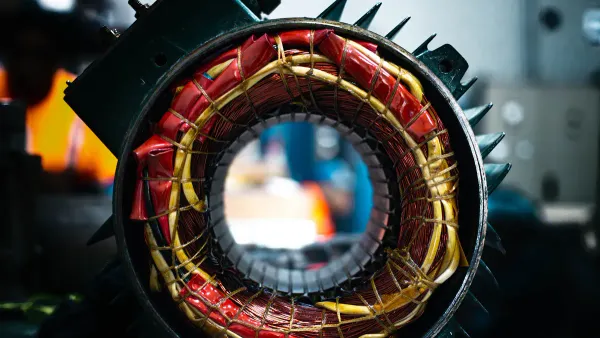
The core function of a brushless dc motor hall sensor is to provide constant, accurate rotor position data. This information is not just a helpful metric; it is the essential language the motor's controller needs to understand. The controller uses this data to orchestrate the commutation sequence. This precise timing allows brushless dc motors to generate smooth torque and operate with high efficiency. The entire performance of the bldc motor depends on this critical feedback loop.
How a Hall Effect Sensor Detects Rotor Position
A hall effect sensor operates on a simple yet powerful principle. Edwin Hall discovered this effect in 1879. When a current flows through a conductor and a magnetic field is applied perpendicular to that current, a voltage appears across the conductor. This voltage is the Hall voltage. A hall effect sensor uses this phenomenon to detect magnetic fields. The sensor generates an output voltage when the magnetic field strength around it crosses a certain point.
In brushless dc motors, this principle is applied perfectly.
- The rotor contains permanent magnets. These magnets provide the necessary magnetic field.
- Three hall sensors are embedded in the stator. They are typically placed 120 electrical degrees apart.
- As the rotor spins, its magnets pass by each hall sensor.
Each hall sensor acts like a digital switch. It outputs a HIGH signal (binary '1') when it detects a magnet's pole and a LOW signal (binary '0') when it does not. The three hall sensors together create a unique 3-bit digital code. This code changes every 60 electrical degrees of rotation, creating six distinct codes for one full electrical cycle. This 3-bit code provides the bldc controller with accurate rotor position information, enabling precise rotor position sensing. The brushless motor relies on this system for its operation. The hall data gives the motor its precision.
The BLDC Commutation Sequence
Commutation is the process of switching the electric current between the stator windings in the correct sequence. The motor controller is the brain behind this operation. It reads the 3-bit code from the hall sensors to determine the accurate rotor position. Based on this rotor position sensing, the controller energizes the next pair of windings to keep the motor turning. This process is what makes a brushless motor spin.
This sequence is often called six-step commutation. The bldc motor completes one electrical rotation in six steps. During each step, the controller directs current to two of the three stator windings. This creates an electromagnetic field that attracts the rotor's permanent magnets, generating torque and causing the brushless motor to rotate. The hall feedback ensures the controller always knows which step to execute next. This keeps the bldc motor synchronized.
Pro Tip: Advanced motor controllers are essential for optimizing the bldc commutation sequence, reducing torque ripple, and maximizing efficiency. Companies that specialize in sophisticated semiconductor solutions are key players in this field. For instance, Nova Technology Company (HK) Limited is a HiSilicon-designated (authorized) solutions partner, focusing on developing advanced motor control solutions that leverage powerful processors to perfect this commutation process for high-performance brushless dc motors.
The relationship between the hall sensor code and the energized windings is predictable and fundamental to bldc motor control. The following table illustrates how each unique 3-bit hall state tells the controller which phases to power next.
| Hall State (H3, H2, H1) | Energized Phases |
|---|---|
101 | Phase A to B |
100 | Phase A to C |
110 | Phase B to C |
010 | Phase B to A |
011 | Phase C to A |
001 | Phase C to B |
This six-step sequence is the foundation of control for a vast number of bldc applications. The constant updates from the hall sensors allow the controller to make rapid adjustments, ensuring the brushless motor performs reliably from startup to full speed. The hall sensor is indispensable for the bldc motor. The hall sensor makes the motor smart.
Key Advantages and Performance Gains
The brushless dc motor hall sensor is not just a component; it is a catalyst for major performance benefits. The data from the hall sensors unlocks a higher level of control. This control directly translates into superior motor performance for brushless dc motors. The hall effect sensor provides the foundation for reliability, precision, and efficiency in a modern brushless motor.
Reliable Startup and High Low-Speed Torque
A key advantage of using a hall sensor is powerful and reliable starting. The bldc motor knows the rotor's exact position from zero RPM. This allows the controller to apply torque smoothly from a complete stop. Sensorless motors often struggle at low speeds, but brushless dc motors with a hall sensor excel.
- They produce greater torque at very low speeds.
- They ensure smooth acceleration from a standstill.
- This performance is critical for demanding tasks.
Many applications depend on this low-speed precision. Industrial machinery like robotic arms and CNC machines requires consistent torque for accurate, repeatable movements. The robust startup performance of a bldc motor with a hall sensor makes it ideal for these high-stakes environments. The hall feedback gives the brushless motor its strength.
Precise Speed and Position Control
The hall sensors are fundamental to creating a closed-loop control system. This system allows for exceptional precision in managing the motor's speed and position. The controller constantly receives timing events from the hall effect sensor. It uses this data to calculate the motor's real-time RPM. The system then compares the actual speed to the desired speed. If the bldc motor slows down under load, the controller automatically increases power to maintain the target RPM. This constant adjustment ensures unwavering motor performance, which is vital for applications demanding steady operation. This level of advanced motor control is a direct result of the hall sensor feedback.
Improving Motor Efficiency and Reducing Waste
Properly utilizing hall sensor data is key to improving motor efficiency. The precision timing from the hall sensors allows the controller to optimize the commutation sequence. This optimization ensures the current is applied to the windings at the most effective moment. Correct alignment minimizes electrical current ripple, which is a primary source of wasted energy.
Did You Know? 💡 Wasted energy in a motor often appears as heat. Heat generation is proportional to the square of the current (
Heat ∝ Current²). By using the hall sensor to perfect commutation timing, a bldc controller reduces excess current, leading to a cooler and more efficient brushless motor.
This boost in motor efficiency means less energy is wasted. The bldc motor converts more electrical power into mechanical work. This enhanced efficiency is one of the most significant performance benefits of a sensored brushless design. The bldc motor achieves peak performance and motor efficiency with this system. The brushless motor runs better. The bldc motor is more efficient. The bldc motor has better performance. The bldc motor is a top choice.
Diagnosing Hall Sensor Failures
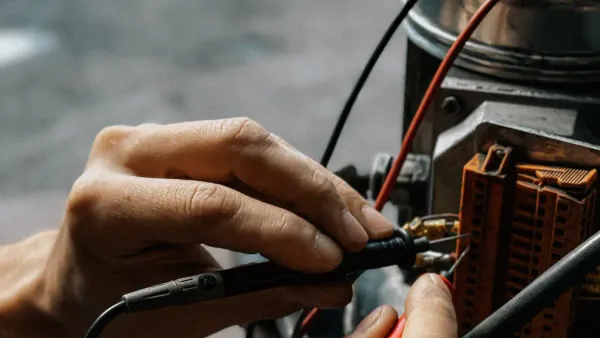
While hall sensors are highly reliable, they are not immune to failure. Understanding the signs of a faulty sensor is the first step in troubleshooting hall sensor issues. A problem with a hall sensor can degrade motor performance or stop the bldc motor completely. Timely diagnosis prevents further damage and restores the motor's function.
Common Symptoms of a Faulty Sensor
A failing hall sensor provides incorrect position data to the motor controller. This bad information disrupts the commutation sequence. The bldc motor then behaves erratically. Operators may notice several common symptoms that point to a problem with the hall sensors.
- Jerky or Hesitant Operation: The brushless motor may stutter or cog, especially during startup or at low speeds.
- Reduced Power and Efficiency: The motor might feel weak or draw more power than usual for the same task.
- Unusual Motor Noises: Grinding or whirring sounds can indicate the electromagnetic fields are out of sync due to a bad hall sensor signal.
- Complete Failure to Start: The controller may not start the bldc motor at all if it receives illogical data from the hall sensors.
- Unexpected Direction Changes: An abnormal hall signal can even cause the brushless motor to jitter or try to spin in reverse.
Why Do They Fail? 🧐 The primary causes of hall sensor failure are often heat and electrical stress. A motor that overheats can "cook" the delicate sensor. Incorrect wiring during the process of installing hall sensors or voltage spikes can also cause immediate damage to the hall sensor.
How to Test Your Motor's Hall Sensors
Testing the hall sensors is a straightforward process for confirming a failure. The most common tool for this job is a digital multimeter. More advanced diagnostics can be done with a dedicated sensor tester or an oscilloscope. The goal of the test is to perform a basic calibration check on the hall sensor output. This calibration ensures the sensor is switching correctly.
A technician can follow these general steps for a basic calibration test with a multimeter:
- Power the bldc motor controller but do not run the motor. Connect the multimeter to the hall sensor power and ground wires. It should read a steady voltage (typically 5V), confirming the sensor has power. This is the first step in calibration.
- Move the multimeter's positive probe to the first hall signal wire.
- Slowly turn the brushless motor shaft by hand. The voltage should pulse, switching between HIGH and LOW (e.g., 5V and 0V). This pulsing is a successful calibration signal.
- Repeat this calibration test for the other two hall signal wires.
If any hall sensor fails to produce a pulsing signal, it is defective. A failed test means that calibrating hall sensors is not possible, and the faulty hall sensor must be replaced. The process of installing hall sensors requires careful work to avoid damaging the new component. Proper calibration of the new hall sensor is key.
The Alternative: Sensorless Control
While hall sensors provide excellent performance, an alternative method exists: sensorless control. This approach eliminates the hall sensor components entirely. Instead, the bldc motor controller infers the rotor's position by monitoring electrical properties within the motor itself. This design choice offers a different set of trade-offs in cost, complexity, and performance for brushless dc motors. The brushless motor can operate without a physical hall sensor.
Understanding Back-EMF in Sensorless Control
Sensorless control for a bldc motor relies on a phenomenon called Back-Electromotive Force (Back-EMF). A spinning brushless motor acts like a generator. According to Faraday's Law of Induction, the rotor's magnets moving past the stator windings induce a voltage. This voltage, the Back-EMF, opposes the main voltage driving the motor and is directly proportional to the motor's speed. A sensorless bldc controller cleverly measures the Back-EMF on the one unpowered winding to calculate the rotor's position.
The Catch: ⚠️ The Back-EMF method has a significant limitation. Because the signal's strength depends on speed, it is very weak or completely absent when the bldc motor is stopped or turning slowly. Without a usable signal, the controller cannot determine the rotor's starting position. It must use an open-loop starting sequence, which often results in jerky movement or a failure to start under load. True sensorless commutation is only reliable once the bldc motor reaches a speed of 500–1000 RPM. This makes the hall sensor superior for low-speed tasks.
Sensored vs. Sensorless Brushless DC Motors
The choice between a sensored bldc motor (using a hall sensor) and a sensorless bldc motor depends entirely on the application's requirements. A sensored brushless motor with hall sensors offers superior low-speed performance. A sensorless brushless motor provides simplicity and cost savings. A hall sensor adds complexity but also precision. The hall sensor is a key differentiator.
The following table highlights the core differences between these two control strategies for brushless dc motors.
| Feature | Sensored (with Hall Sensor) | Sensorless (uses Back-EMF) |
|---|---|---|
| Low-Speed Torque | ✅ Excellent and smooth | ❌ Poor and unreliable |
| Startup Reliability | ✅ Very reliable, even under load | ❌ Can stutter or fail to start |
| Cost | Higher (typically 15-30% more) | Lower |
| Component Count | More components (motor, hall sensors) | Fewer components (motor only) |
| Best Applications | Robotics, CNC, electric vehicles | Fans, pumps, high-speed tools |
Ultimately, the hall sensor is what gives many brushless dc motors their reputation for precision. While sensorless technology improves efficiency and lowers costs for constant-speed applications, the robust performance provided by hall sensors makes them essential for any task demanding reliable torque from a standstill. The hall sensor ensures top motor performance. The bldc motor needs its hall sensor for demanding jobs.
The brushless dc motor hall sensor is the key to unlocking the high performance, precision, and reliability expected from modern brushless dc motors. The hall effect sensor provides the data for powerful startup and the precision for robotics. This hall sensor feedback ensures optimal motor efficiency and overall bldc motor performance.
The hall sensor's precision and the bldc motor's performance depend on this hall feedback. The hall effect sensor is critical for the brushless bldc motor. The hall sensor gives the brushless bldc motor its precision and high efficiency. This hall sensor makes the bldc motor a superior brushless motor for advanced motor control.
While sensorless brushless motor tech improves, the robust hall sensor remains vital for any demanding brushless bldc motor. The hall sensors are indispensable for the bldc motor. The hall sensors make the motor smart. The hall sensors are a key part of the motor. The hall sensors are critical for the motor.
FAQ
Can a BLDC motor run without a Hall sensor?
Yes, a brushless DC motor can operate without Hall sensors. This type of motor uses sensorless control. The controller measures Back-EMF to find the rotor's position. However, this method works poorly at low speeds, making the motor less reliable for certain tasks.
How many Hall sensors does a BLDC motor need?
A standard brushless DC motor uses three Hall effect sensors. These sensors are placed 120 electrical degrees apart around the stator. This arrangement allows the controller to detect six distinct rotor positions for each electrical rotation of the motor, ensuring precise control.
What happens if one Hall sensor fails in a motor?
A single failed sensor sends bad data to the controller. This disrupts the commutation sequence. The motor will likely run erratically, with jerky movements and reduced power. In some cases, the motor may not start at all, as the controller cannot properly energize the windings.