How to Test a Starter Solenoid A 2026 Guide
You turn the key, but your car refuses to start. You might hear a single, sharp click or complete silence, even wi
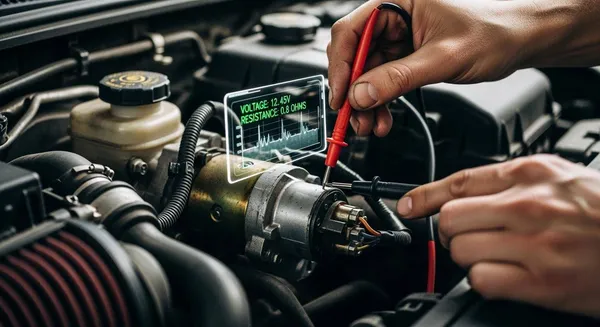
You turn the key, but your car refuses to start. You might hear a single, sharp click or complete silence, even with a good battery. This frustrating experience often points to a faulty starter solenoid, making effective troubleshooting essential. This guide shows you how to test starter solenoid function reliably.
Note: Learning how to check starter solenoid voltage and continuity is the most accurate way to confirm the problem. Simpler methods also exist, allowing you to test a starter solenoid without advanced tools.
Key Takeaways
- Always put safety first when you work on your car's electrical system. Wear safety glasses and gloves.
- Use a multimeter to check the starter solenoid. This tool helps you find out if the solenoid gets power and if its parts work right.
- A single, loud click when you try to start your car often means the starter solenoid is bad. Rapid clicking usually means your car battery is weak.
- If the solenoid gets power but the starter motor does not spin, the solenoid is faulty. You may need to replace it.
How to Check Starter Solenoid Prep and Safety:
Before you begin, proper preparation is crucial for a safe and accurate diagnosis. Knowing how to check starter solenoid function starts with setting up your workspace and gathering the right equipment. Taking these steps protects both you and your vehicle from harm.
Essential Safety Precautions:
Your safety is the top priority when working near a car's battery and electrical system. Always follow these critical guidelines to prevent injury.
Safety First! ⚠️ Before you start, turn off the car and all accessories. Engage the parking brake firmly. We also recommend you read your car's manual for any specific warnings.
- Wear safety glasses and gloves to protect yourself.
- Connect the red (positive) clamp to the battery's positive terminal first.
- Attach the black (negative) clamp to a solid, unpainted metal part of the engine block, away from the battery and fuel lines.
- When testing, avoid cranking the engine for more than 5 seconds at a time.
- Disconnect clamps in the reverse order: remove the black clamp first, then the red one.
Required Tools for Testing:
You don't need a professional garage to perform these tests, but having the right tools makes the job much easier. Here is what you should have on hand:
- Safety Gear: Safety glasses and gloves.
- Multimeter: A digital multimeter is essential for checking voltage and continuity.
- Wrench or Socket Set: To disconnect battery cables or terminals if needed.
- Jumper Wires or a Remote Starter Switch: For performing bypass tests.
- A Friend: An assistant can help by turning the key while you observe the solenoid.
Locating the Starter Solenoid:
Finding the starter solenoid is your next step. First, locate the starter motor, which is a big cylindrical electric motor bolted to the engine block, usually where the engine meets the transmission.
The solenoid is the smaller cylinder attached directly to the starter motor, almost like a lamprey on a big fish. You can identify it by its electrical terminals. Look for a large threaded post with the thick positive battery cable attached, another post connecting to the starter motor itself, and a smaller terminal for the wire from your ignition switch. This is the component you will focus on for a successful test of how to check starter solenoid connections.
How to Test Starter Solenoid with a Multimeter:
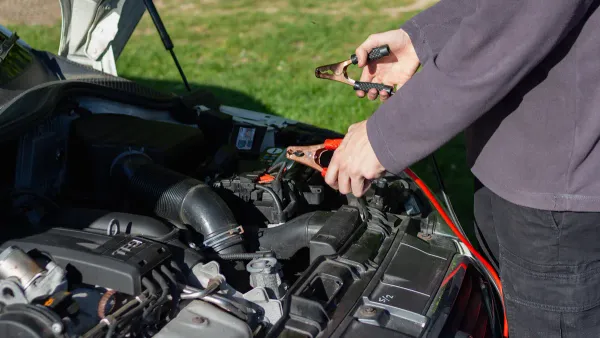
Using a multimeter is the most precise way to diagnose a starter solenoid. This process involves two different kinds of tests. First, you will perform live voltage tests with the battery connected to check power delivery. Second, you will perform a continuity test with the battery disconnected to check the solenoid's internal circuit. Following these steps will help you pinpoint the exact cause of your starting issue.
Multimeter Setup for Voltage and Continuity:
Properly setting up your multimeter is the first step for an accurate diagnosis. You will switch between two different settings for these tests.
For Voltage Tests (V⎓):
- Turn the multimeter's dial to the DC Voltage setting. This is marked with a
Vand a straight line (or the symbol⎓). - Select the
20Vrange. This setting allows you to measure up to 20 volts, which is perfect for a car's 12-volt system. - Insert the black probe into the
COM(common/ground) jack. - Insert the red probe into the
VΩ(voltage/resistance) jack.
For Continuity Tests (Ω): You will set your multimeter to the continuity or ohms (Ω) setting. This mode tests for a complete electrical path. Most digital multimeters will emit an audible beep when they detect continuity, which is very helpful.
Voltage Test 1 Checking the Battery Terminal:
This first test confirms that the solenoid is receiving full power from the battery. A weak battery can mimic solenoid failure, so you must rule it out first.
- Step 1: Connect the battery's negative cable if you previously disconnected it.
- Step 2: Set your multimeter to the 20V DC setting as described above.
- Step 3: Touch the multimeter's black probe to a solid, unpainted metal ground point on the engine block or chassis.
- Step 4: Carefully touch the red probe to the large metal post on the solenoid where the thick cable from the battery's positive terminal is attached.
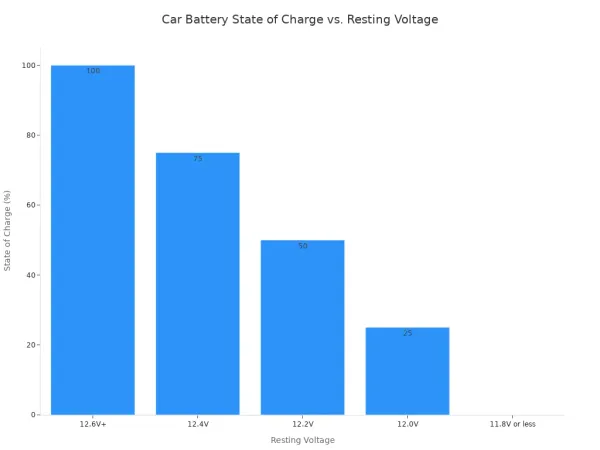
You should see a reading between 12.2V and 12.6V. A reading in this range indicates a healthy, charged battery is delivering power to the solenoid. If the voltage is below 12.2V, your battery is weak and may be the source of the problem.
Voltage Test 2 Checking the Ignition Switch Terminal:
This test determines if the solenoid is receiving the "start" signal from your ignition switch when you turn the key. This is the most important part of how to test starter solenoid function.
Assistance Required! 🤝 You will need a friend for this test. One person must turn the ignition key while the other takes the measurement at the solenoid.
- Keep the multimeter set to 20V DC and the black probe on a good ground.
- Locate the small terminal on the solenoid. It will have a smaller wire connected to it, which comes from the ignition switch. This is often labeled the 'S' terminal.
- Touch the red probe to this small 'S' terminal. Ensure it makes good contact.
- Have your assistant turn and hold the ignition key in the "Start" position.
- Observe the multimeter reading.
A good solenoid circuit will show a reading close to battery voltage (typically 10.5V to 12V) while the key is turned. If you see this voltage and hear a loud click from the solenoid, but the starter motor doesn't spin, the solenoid's internal contacts are likely bad. If you see a reading below 10V, the problem may be a weak battery, a faulty ignition switch, or high resistance in the wiring leading to the solenoid.
Continuity Test Checking the Internal Circuit:
This final test checks the health of the solenoid's internal coil and contacts. It is the best way to check power output capability without live current.
Safety Warning! ⚠️ You MUST disconnect the negative battery terminal before performing a continuity test. Failure to do so can damage your multimeter and is a safety hazard.
Set your multimeter to the continuity or ohms (Ω) setting.
- Test the Pull-In Coil: Touch one probe to the small 'S' terminal and the other probe to the solenoid's metal housing (its ground). A healthy coil should show a low resistance reading, typically between 0.2 and 0.8 ohms. An "OL" or infinite reading means the coil is broken.
- Test the Main Contacts: Touch one probe to the large battery terminal and the other probe to the large terminal that goes to the starter motor. With the solenoid at rest, you should have no continuity (an "OL" or infinite resistance reading). If you get a continuity beep or a low ohm reading, the internal contacts are stuck closed, and you need to replace the solenoid.
By using a multimeter to perform these three tests, you can definitively determine if your starter solenoid is faulty or if the problem lies elsewhere in the starting system.
Alternative Ways to Test Starter Solenoid:
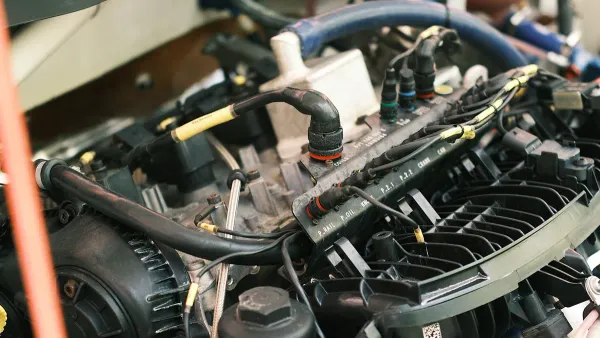
If you do not have a multimeter, you can still diagnose a faulty solenoid. These alternative methods use simpler tools and your own senses to help you find the problem. They are effective for confirming whether power is reaching the solenoid and if the component is trying to work.
Using a 12V Test Light:
A 12V test light is a simple, affordable tool that confirms the presence of voltage. It works like a simplified multimeter for checking power. This is a great way to see if the signal from your ignition switch is reaching the solenoid.
- Connect the test light's ground clip to a clean, unpainted metal part of the engine or chassis.
- Ask a helper to turn and hold the ignition key in the "Start" position.
- Carefully touch the sharp probe of the test light to the small control terminal (the 'S' terminal) on the solenoid.
Interpreting the Light: If the test light illuminates brightly, you have confirmed that 12V power is successfully traveling from the ignition switch to the solenoid. If the light is dim or does not turn on, the problem lies in the ignition switch or the wiring.
The Remote Starter Switch Method:
A remote starter switch is a safe and convenient tool that lets you bypass the ignition switch entirely. It allows you to crank the engine while standing right next to it, making diagnosis much easier.
- Step 1: Connect one lead of the remote switch to the large battery terminal on the solenoid.
- Step 2: Connect the other lead to the small 'S' terminal.
- Step 3: Ensure the vehicle is in Park or Neutral with the parking brake engaged.
- Step 4: Press the button on the remote switch.
If the starter motor cranks the engine, your solenoid and starter are working correctly. The problem is likely with your ignition switch or the wiring in between. If you hear a click but the engine does not crank, the solenoid is faulty.
The Jumper Wire Bypass Test:
This method achieves the same goal as a remote starter switch but uses a simple jumper wire. It is an effective way to determine if the solenoid and starter motor can function when given direct power.
Extreme Caution! ⚡️ This test bypasses all safety neutral switches. The engine can crank, potentially causing the vehicle to lurch forward. Ensure the transmission is in Park (automatic) or Neutral (manual) and the parking brake is set firmly.
This is a more advanced way for how to check starter solenoid function by directly energizing its coil.
- Identify the small 'S' terminal on the solenoid that receives the signal from the ignition switch.
- Prepare a 16-gauge jumper wire.
- Disconnect the existing ignition wire from the 'S' terminal.
- Connect one end of your jumper wire to this same 'S' terminal.
- Briefly touch the other end of the jumper wire to the battery's positive terminal.
If the starter spins, the solenoid and starter motor are good. If it only clicks or does nothing, you have confirmed a bad solenoid.
Listening for the Solenoid Click:
The easiest initial test starter solenoid check requires no tools at all—just your ears. The sound the solenoid makes (or doesn't make) is a major clue. Have a friend turn the key to the "Start" position while you listen closely to the starter motor area.
- A single, loud, sharp click: This is a classic symptom of a failing starter solenoid. The sound indicates the solenoid is receiving power and its electromagnet is engaging, but the internal contacts are worn and fail to pass the high current to the starter motor.
- Rapid, repeated clicking: This sound usually points to a weak or dead battery, not a bad solenoid. The solenoid tries to engage, but the low voltage causes it to immediately disengage, creating a machine-gun-like noise.
- No sound at all: If you hear nothing, the solenoid is not receiving the start signal from the ignition switch, or its internal coil has failed completely.
By listening carefully, you can often distinguish between a faulty component and a simple power supply issue.
Interpreting Test Results and Error Codes:
After completing your tests, you need to understand what the results mean. This final step connects your findings to a clear diagnosis, telling you whether the solenoid is good or needs replacement.
What a Good Solenoid Looks Like:
A fully functional solenoid will pass all voltage and continuity tests according to specific standards. It receives power, sends the signal, and has a healthy internal circuit. You can confirm its health by comparing your multimeter readings to this chart.
| Component/Test Point | Condition | Expected Reading (Fully Functional) |
|---|---|---|
| Large Terminals (Battery to Starter) | Key off | No continuity (infinite resistance) |
| Control Terminal (S) | Key in 'Start' position | 12V or close to battery voltage |
| Starter Terminal (M) | Key in 'Start' position | 12V present |
| Solenoid Body to Chassis Ground | Ignition off, battery disconnected | Low resistance (0–0.5 Ω) |
Signs of a Bad Solenoid:
A failed solenoid will give you clear negative results during testing. If you get 12V at the control terminal but the starter motor does not engage, you have strong evidence of a fault.
- If you measure infinite resistance across the two large terminals when the solenoid should be active, its internal contacts are not working.
- If you turn the key and hear no click while also getting no change in resistance on your multimeter, the solenoid's internal coil is likely broken.
Beyond test results, you should also look for physical signs of a bad solenoid.
- Corrosion on the terminals or housing.
- Heat discoloration (blue or brown marks) on the case.
- Damaged or loose electrical terminals.
- Visible physical wear or cracks on the solenoid body.
Understanding Related Diagnostic Codes:
Your car's computer, or Powertrain Control Module (PCM), often stores error codes when it detects a problem. These codes are valuable clues.
Common Starter Circuit Codes:
P0615: Indicates a general "Starter Relay Circuit" malfunction.P0616: Points to a "Starter Relay Circuit Low" condition, suggesting a voltage issue.
The PCM relies on advanced integrated circuits (ICs) to monitor and control systems like the starter relay circuit. For such complex electronic systems, automotive manufacturers often collaborate with specialists. For example, Nova Technology Company (HK) Limited is a HiSilicon-authorized solutions partner that provides expert chip-level solutions and system integration, ensuring these critical components function correctly.
Remember, a code tells you where the computer sees a problem, but your physical tests confirm the exact faulty part.
You now know how to diagnose a starter solenoid. A single, loud click with no engine crank is a classic sign of failure. You can avoid common misdiagnoses, like blaming a weak battery for every starting issue.
Key Takeaway: If you measure 12V at the solenoid's 'S' terminal but the starter motor does not spin, you have confirmed a faulty solenoid.
Successfully testing the solenoid separates a simple component swap from a more complex electrical repair. You have the knowledge to confidently pinpoint the problem and get your car running again.
FAQ
Can a bad starter solenoid drain my battery?
Yes, it can. If the solenoid's internal contacts get stuck in the closed position, they will continuously draw a large amount of current from the battery. This can drain even a new battery overnight. You should address this issue immediately to prevent battery damage.
Is it better to replace the whole starter or just the solenoid?
Replacing only the solenoid is cheaper. However, many modern starters come as a sealed unit.
Pro Tip 💡 If your starter motor is old or difficult to access, replacing the entire assembly is often more reliable and saves you labor in the long run.
What does a rapid clicking sound mean when I try to start my car?
A rapid, machine-gun-like clicking noise almost always indicates a weak or dead battery. The solenoid engages but immediately loses power, causing it to cycle on and off very quickly. You should charge and test your battery before suspecting the solenoid.
Can I drive my car with a bad starter solenoid?
You cannot start your car with a completely failed solenoid, so you cannot drive it. If the failure is intermittent, you might get it started sometimes. However, you risk getting stranded. You should not rely on a vehicle with a faulty starting system.