L1154F vs LR44 Battery Comparison for Precision Medical Equipment
Comparing L1154F vs LR44 batteries: While both share 11.6x5.4mm dimensions, the L1154F offers a flat base and steady voltage required for medical equipment.
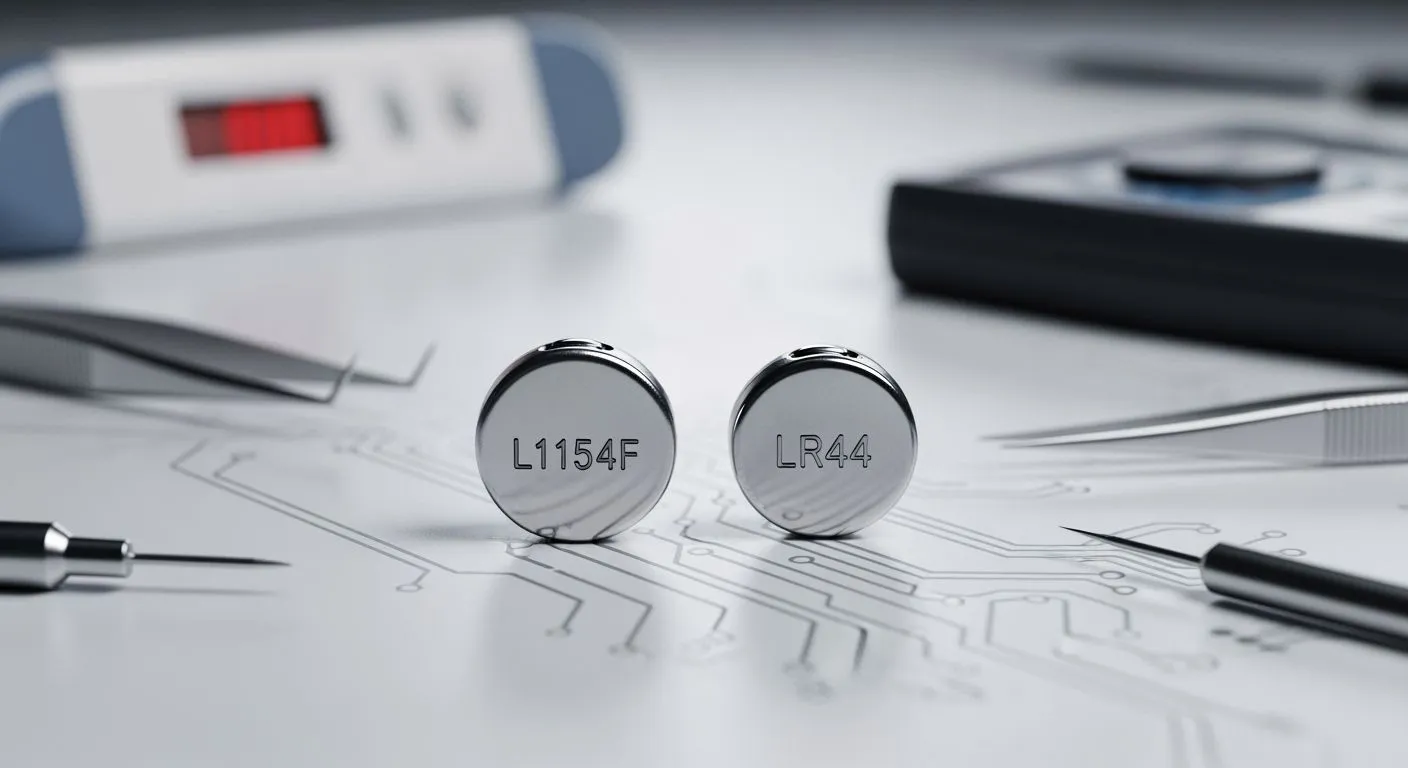
The l1154f vs lr44 comparison clarifies vital differences for a button battery. Both cell types share identical 11.6mm by 5.4mm dimensions. Standard consumer electronics make these units interchangeable. Everyday electronics accept either cell because both designs remain interchangeable in general use.
However, precision medical devices require steady voltage. A standard lr44 battery uses alkaline chemistry with a rounded contact. A basic lr44 cell lacks flat geometry. Conversely, a dedicated l1154f battery offers a flat base for reliable battery output. High-accuracy medical devices rely on this flat l1154f profile for stable fit in a clinical device. Operators choose specialized l1154f units over standard lr44 options to protect every diagnostic device.
💡 Tip: Check terminal geometry to maintain strong battery contact in medical equipment.
Key Takeaways
- L1154F and LR44 batteries share identical outer dimensions, but L1154F features a flat base for better contact.
- L1154F silver oxide batteries maintain a steady voltage output to keep medical diagnostic devices accurate.
- Standard LR44 alkaline batteries drop voltage quickly and work best in non-critical auxiliary tools like timers.
- Using proper L1154F cells prevents sudden device shutoffs, sensor calibration errors, and dangerous chemical leaks.
Technical L1154F vs LR44 Battery Specifications
A detailed technical l1154f vs lr44 comparison reveals critical distinctions between these common power sources. Engineers evaluate cell dimensions, structural tolerances, and discharge capabilities to maintain system stability. Standard consumer devices treat both options as interchangeable power cells. However, precision electronic hardware requires exact chemical and mechanical performance.
+-----------------------------------------------------------------------------------+
|                           CELL DIMENSION SCHEMATIC                                |
|                                                                                   |
|           [ Standard LR44 ]                           [ Precision L1154F ]        |
|             +-----------+                                 +-----------+           |
|            /  ( + ) Top  \                               /  ( + ) Top  \          |
|           |               |                             |               |         |
|           | 11.6mm x 5.4mm|                             | 11.6mm x 5.4mm|         |
|            \             /                               \             /          |
|             +----( )----+                                 +-----------+           |
|              Domed Base                                    Flat Base              |
+-----------------------------------------------------------------------------------+
Dimensional Tolerances and Geometry
Both power units feature outer measurements of 11.6mm in diameter and 5.4mm in height. These identical outer physical measurements establish physical interchangeability across basic consumer products. Standard devices accommodate either cell style without mechanical failure.
| Technical Parameter | Standard LR44 Battery | Enhanced L1154F Battery |
|---|---|---|
| Nominal Voltage | 1.50 Volts | 1.50V to 1.55 Volts |
| Diameter | 11.6 mm | 11.6 mm |
| Height | 5.4 mm | 5.4 mm |
| Chemistry | Alkaline (Manganese Dioxide) | Enhanced Alkaline / Silver Oxide Equivalents |
| Base Geometry | Curved / Domed Contact | Flat Contact Surface |
| Typical Capacity | 110 mAh – 130 mAh | 145 mAh – 200 mAh |
Despite matching outer boundaries, terminal base geometry differs significantly between these options. A standard lr44 battery features a slight curve on its negative terminal base. This rounded contact area functions reliably inside flexible spring compartments. In contrast, an l1154f battery incorporates a flat negative terminal surface. Precision equipment housings require this flat profile to secure continuous contact alignment. Loose mechanical fit in high-vibration environments disrupts signal stability.
📌 Note: Proper mechanical fit ensures stable physical contact inside tight instrument compartments.
Electrical Parameters and Chemistry
The specifications comparison highlights key chemical performance factors between these cells. An lr44 cell relies on alkaline chemistry. Alkaline formulations deliver a gradual voltage decline over time. This sloping discharge curve degrades measurement accuracy in sensitive sensors.
Voltage Output Over Time
1.55V |================== (L1154F Silver Oxide Equivalent - Flat Discharge)
1.50V |---------------\
      |                \
1.20V |                 \ (Standard LR44 Alkaline - Sloping Discharge)
      +------------------------------------> Time
An l1154f designation often denotes enhanced alkaline formulations or silver oxide equivalents. Silver oxide variants maintain steady 1.55V output throughout active discharge cycles. Flat discharge profiles prevent calibration drift in clinical hardware. Standard lr44 units drop toward 1.2V prematurely, which causes reading errors in diagnostic sensors.
Advanced semiconductor integrated circuits demand continuous voltage stability. Nova Technology Company (HK) Limited serves as a HiSilicon-designated (authorized) solutions partner. The firm develops high-performance semiconductor solutions, integrated circuit designs, and system-level power management architectures. Medical monitoring application designs require stable energy input to power precision microcontrollers and sensor processing ICs.
Medical equipment manufacturers verify battery compatibility before approving field deployment. High-capacity l1154f units deliver stable output for low-power microcontrollers and wireless transmitters. Standard lr44 cells fail early during continuous current draw in clinical equipment. High-drain applications benefit directly from the superior energy density of silver oxide chemistries.
Choosing the right button battery impacts clinical operational lifespan directly. Medical facilities prefer premium l1154f options to reduce operational maintenance cycles. Precise power delivery preserves internal circuitry and protects diagnostic tools against sudden power drops.
Key Differences in Performance and Physical Geometry
Engineers evaluate physical design and electrical characteristics when selecting small power supplies. A practical l1154f vs lr44 comparison reveals distinct manufacturing choices. These choices directly impact performance in various devices across different operating conditions.
+---------------------------------------------------------------------------------+
|                       TERMINAL CONTACT PROFILE COMPARISON                       |
|                                                                                 |
|   Standard LR44 Contact                        L1154F Contact                   |
|   +-------------------+                        +-------------------+            |
|   |   Battery Body    |                        |   Battery Body    |            |
|   +-------     -------+                        +-------------------+            |
|           \   /  <-- Curved Base                      |   |   <-- Flat Base     |
|            ---                                        -----                     |
|     Narrow Contact Point                       Broad Surface Contact            |
+---------------------------------------------------------------------------------+
Terminal Fit and Bottom Contours
The physical geometry of a small button battery determines mechanical connection stability inside tight compartments. A standard lr44 battery features a slightly domed negative base profile. Many general consumer electronics rely on simple spring terminals to absorb physical variations. However, narrow battery housings in clinical devices require consistent contact alignment.
💡 Tip: Verify negative terminal contour shape before installing button cells into medical diagnostic tools.
The flat-bottom l1154f design increases total contact surface area. A flat base prevents shifting inside small spring assemblies under physical vibration. Standard lr44 units suffer intermittent contact losses during movement due to their curved lower shape. Physical interchangeability allows both styles to fit identical slots, but mechanical stability varies significantly.
| Physical Feature | Standard LR44 | Flat L1154F |
|---|---|---|
| Bottom Profile | Rounded / Curved | Flat Surface |
| Contact Surface Area | Small Point Contact | Wide Surface Area |
| Vibration Resistance | Low | High |
| Terminal Alignment | Variable | Fixed / Stable |
Unintended movement causes signal drops in portable hardware. An l1154f battery maintains continuous contact pressure against internal clips. Standard consumer electronics benefit from simple interchangeable cells, but clinical tools demand exact geometry. Proper mechanical fit reduces equipment recalibration needs.
Discharge Curves and Leak Resistance
Chemical formulation drives electrical performance across demanding temperature environments. A standard alkaline lr44 cell experiences a steady voltage drop during continuous operation. Sloping discharge behavior leads to premature system shutoffs in sensitive monitoring devices.
[Battery Discharge Slope Comparison]

Voltage Output
  |
1.5V|======== (L1154F Silver / Premium Chemistry: Flat Discharge Curve)
  |        \
1.2V|         \____ (Standard LR44 Alkaline Chemistry: Sloping Curve)
  |__________________ Time
Premium l1154f cells offer stable voltage delivery over extended operating periods. Higher chemical stability provides strong temperature adaptability in varied field conditions. Lower self-discharge rates allow technicians to store backup supplies without rapid capacity loss.
- High voltage stability protects delicate sensor inputs.
- Low self-discharge rates extend total storage shelf life.
- Enhanced seal construction prevents corrosive chemical leakage.
An l1154f power source resists electrolyte leakage far better than a standard lr44 battery. Alkaline potassium hydroxide solution inside basic cells can seep past degraded seals. Corrosive fluid ruins sensitive circuit boards and destroys electronic components. Choosing superior l1154f construction avoids expensive device repairs.
Knowing key differences helps technicians choose proper power options for critical diagnostic tools. Excellent cell chemistry ensures dependable device compatibility across critical healthcare equipment. Understanding key differences in battery construction preserves internal electronic components over long operational lifespans. Standard interchangeability does not guarantee identical electrical stability under heavy continuous loads.
Medical Device Battery Applications

Selecting the best battery for device types ensures optimal performance in healthcare environments. Medical applications demand proper energy choices. Standard consumer electronics often rely on basic button power. However, clinical electronics require strict power reliability and proper physical compatibility.
High-Precision Diagnostic Instruments
Critical medical diagnostic equipment requires steady power supplies to deliver accurate sensor readings. Pulse oximeters, blood pressure units, and glucose monitors depend on precise voltage delivery. A specialized l1154f unit powers each sensitive monitoring device efficiently. The flat-bottom l1154f battery maintains solid contact inside compact hardware.
💡 Tip: Sensitive diagnostic devices require stable flat-discharge cells to prevent measurement errors.
Unstable voltage causes calibration shifts in a sensitive clinical device. An l1154f cell avoids sudden power drops during testing procedures. Diagnostic medical applications demand reliable chemical performance to protect patient safety. Therefore, technicians avoid putting a standard lr44 into high-precision monitoring tools. The l1154f cell provides perfect mechanical compatibility and electrical stability for sensitive clinical instruments.
| Diagnostic Tool Category | Recommended Power Cell | Key Performance Requirement |
|---|---|---|
| Blood Glucose Monitors | High-Grade L1154F | Voltage Stability |
| Digital Thermometers | Standard LR44 / L1154F | Basic Energy Draw |
| Pulse Oximeters | Silver-based L1154F | Continuous Signal Accuracy |
Standard Auxiliary Clinical Tools
General medical tools feature broader operational tolerances. Auxiliary applications of lr44 cells include non-critical tools. Clinical facilities use an lr44 battery in standard timers, LED penlights, and simple digital thermometers. An auxiliary lr44 battery supplies standard gear reliably. These basic devices tolerate minor voltage changes without losing functional capacity.
- Standard penlights and portable examination devices
- Basic clinical countdown timers
- Auxiliary temperature recording devices
Common uses in everyday hospital equipment include simple handheld tools. Devices compatible with lr44 cells often feature flexible spring terminals inside each battery compartment. These flexible springs ensure solid contact despite the curved base of an lr44 cell. Standard equipment accepts a standard lr44 cell easily. However, technicians always check equipment guidelines to confirm battery compatibility before changing any battery in critical care hardware. Every diagnostic device, monitoring device, auxiliary device, and handheld device functions best with correct power.
Silver Oxide vs Alkaline Battery Comparison
A chemistry comparison reveals clear energy differences between small power sources.
Superiority of Silver Oxide Formulations
Healthcare equipment demands constant energy accuracy. A standard lr44 battery uses manganese dioxide alkaline chemistry. This chemistry creates a continuous drop in voltage output. In contrast, silver oxide l1154f battery formulations supply flat discharge curves. Silver l1154f equivalents maintain a steady 1.55-volt output during regular operational life. High-precision clinical applications require this exact electrical stability.
Standard lr44 units drop toward 1.2 volts quickly under continuous load. This voltage loss degrades sensitive sensor performance in a medical device. Silver-based l1154f units deliver high volumetric energy density for diagnostic tools in a compact medical device. Precision instruments avoid calibration errors when battery power stays stable. Therefore, clinical facilities select silver chemistry over basic lr44 options for critical devices.
Extended Lifespan and Voltage Stability
Silver oxide formulations provide higher capacity than basic alkaline options. A silver oxide l1154f battery holds up to 40 percent more energy capacity. This extra capacity extends total operational lifespan in compact devices. Healthcare personnel replace each l1154f battery less frequently during routine operations.
💡 Tip: Silver oxide variants maintain flat voltage output to maximize overall diagnostic device efficiency.
| Parameter | Alkaline LR44 | Silver Oxide L1154F |
|---|---|---|
| Voltage Slope | Sloping Drop | Flat Output |
| Energy Density | Moderate | High |
| Leakage Risk | Higher | Very Low |
Silver options also feature low self-discharge rates. Extended battery shelf-life advantages protect backup tools and devices in medical storage. A basic lr44 battery leaks corrosive electrolyte during long storage periods. Corrosive leaks ruin sensitive internal circuits in valuable medical device hardware. A premium l1154f battery resists leakage through enhanced seal designs. Superior chemical stability optimizes overall equipment performance in demanding healthcare applications.
Risks of Incorrect Battery Selection
Sensor Drift and Calibration Errors
Choosing an improper battery creates direct impact on device performance. Medical equipment requires precise baseline voltage to measure patient vital signs accurately. A standard lr44 cell experiences continuous voltage drops during routine operation. This steady decline causes voltage fluctuations inside sensitive instruments. Consequently, sensor circuits suffer from signal drift and calibration errors.
Diagnostic monitors fail to detect subtle voltage drops automatically. Clinicians reading data from an affected medical device might receive incorrect diagnostic results. Unstable clinical device power leads to improper patient care decisions. An l1154f power unit prevents these sudden drops by delivering steady output. High-precision healthcare devices demand continuous stability to maintain measurement accuracy. Standard alkaline battery options degrade system performance over short usage cycles. Therefore, technicians select specialized cell chemistries to protect diagnostic device operation. Proper battery selection prevents unexpected equipment shutoffs during critical clinical tests.
⚠️ Warning: Voltage drops in standard alkaline cells can cause silent calibration errors in diagnostic equipment.
Contact Failure and Circuit Damage
Physical geometry also influences internal battery contact inside each electronic device housing. A basic lr44 button cell features a domed lower surface. This curved shape reduces total contact area inside specialized diagnostic devices. Physical movement often dislodges a domed lr44 cell from tiny contact springs. Intermittent electrical connections shut down a portable device unexpectedly during critical procedures.
+---------------------------------------------------------------------------------+
|                        CONTACT FIT & LEAKAGE RISK COMPARISON                    |
|                                                                                 |
|   Standard LR44 Assembly                      L1154F Precision Assembly         |
|   +-----------------------+                   +-----------------------+         |
|   |  Curved Negative Base |                   |   Flat Negative Base  |         |
|   |  (Weak Spring Contact)|                   |  (Solid Flush Fit)    |         |
|   +-----------+-----------+                   +-----------+-----------+         |
|               |                                           |                     |
|     High Leakage Risk                             Low Leakage Seal              |
|   (Corrosive Fluid Leak)                      (Protects Internal Circuits)      |
+---------------------------------------------------------------------------------+
An l1154f cell offers a flat base design. This flat l1154f base secures solid terminal contact across various clinical devices. Furthermore, standard alkaline chemistry carries a high risk of chemical leakage. Corrosive fluid leaks out of cheap battery seals over extended storage periods. This corrosive liquid causes permanent damage to a medical device circuit. Selecting a premium l1154f battery protects vulnerable internal parts from chemical corrosion. Quality battery construction protects every critical monitoring device tool and extends total electronic device lifespan.
Medical Procurement Guide and Decision Matrix
Equipment Selection Framework
Clinical procurement teams follow strict frameworks when selecting cell supplies. A direct technical comparison helps managers select proper battery options for clinical applications. Healthcare workers evaluate each medical device to determine exact energy requirements.
Understanding when to use l1154f depends on sensor sensitivity. High-precision clinical tools require the flat voltage of an l1154f battery. Conversely, knowing when to prefer lr44 helps facilities lower procurement costs for basic tools. Non-critical timers accept a standard lr44 battery without losing operational efficiency. Correct supply decisions protect every diagnostic device from unexpected shutoffs.
💡 Tip: Procurement staff must verify physical housing parameters to ensure proper battery compatibility across clinical equipment.
Selecting the best battery for device types prevents unexpected hardware shutoffs. Standard dimensions make l1154f and lr44 physically interchangeable options in basic slots. However, true chemical compatibility varies between specific diagnostic models. Nova Technology Company (HK) Limited functions as a HiSilicon-designated solutions partner. The firm delivers chip-level solutions, integrated circuit designs, and system integration for advanced electronic power management. Their semiconductor architectures optimize energy regulation in a clinical device.
Batch Quality and Storage Guidelines
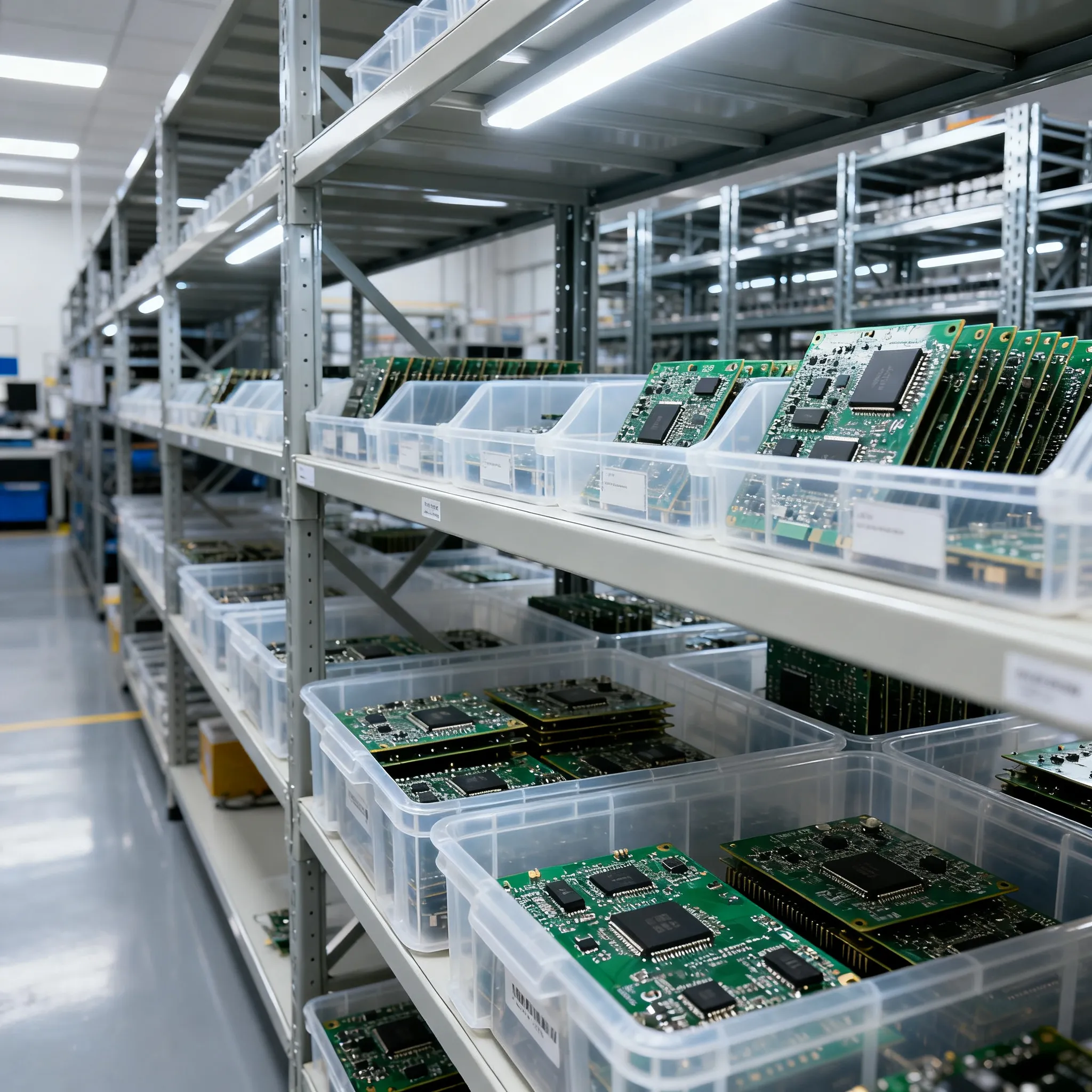
Choosing the right battery requires disciplined supply chain management. Environmental controls extend total battery shelf life in warehouse facilities. Procurement managers monitor warehouse spaces to prevent early cell degradation in a stored device.
| Environmental Parameter | Recommended Storage Condition | Potential Risk of Non-Compliance |
|---|---|---|
| Temperature | 10–25℃ | Temperatures above 30℃ speed up electrolyte breakdown and electrode degradation, leading to bulging or voltage loss. |
| Relative Humidity | 65% or lower | Humidity levels over 65% trigger metal terminal oxidation, abnormal current discharge, and leakage. |
High humidity damages outer casings and impairs stored devices. Technicians protect a monitoring device by keeping reserve battery stock in climate-controlled rooms. Uncontrolled heat damages an electronic device by altering internal chemistry inside both l1154f and lr44 cells. Basic consumer equipment treats these cells as interchangeable units. Yet, precision clinical devices demand reliable energy delivery. Proper procurement safeguards an auxiliary device across medical facilities.
Evaluating the l1154f vs lr44 choice reveals critical structural distinctions. Both cells share outer dimensions. However, key differences in terminal shape and chemistry govern performance. A specialized l1154f battery prevents connection failures inside each sensitive instrument. In contrast, a basic lr44 battery risks calibration drift in a diagnostic device.
💡 Tip: Choosing the right battery protects clinical devices from corrosive leaks and ensures accurate readings.
Facilities must follow manufacturer battery guidelines for every device while maintaining strict battery storage protocols.
FAQ
Are L1154F and LR44 cells physically interchangeable?
Yes, standard consumer electronics accept both cell types. The l1154f and lr44 options share identical outer dimensions. However, precision medical equipment needs flat terminal contacts for continuous physical connection.
💡 Tip: Verify terminal geometry before replacing cells in clinical equipment.
Why do medical tools prefer an L1154F power source?
Medical instruments require stable energy delivery. An l1154f battery provides flat voltage output and lower leak risks compared to a standard lr44 cell. This flat base design ensures secure physical contact inside sensitive device compartments.
Does battery chemistry affect equipment compatibility?
Chemical formulations dictate overall performance. Silver oxide variants offer steady voltage curves for diagnostic tools. Proper cell compatibility prevents sudden voltage drops and protects internal hardware from calibration errors during critical testing procedures.
Can an alkaline power cell damage sensitive medical hardware?
Alkaline options gradually drop voltage over time. This voltage drop causes calibration drift in a monitoring device. Corrosive electrolyte leaks also threaten delicate circuits inside healthcare equipment.