Real-World Applications of RF Modules: Case Studies in Innovative Wireless Solutions
Expert guide on Real-World Applications of RF Modules: Case Studies in Innovative Wireless Solutions. Technical specs, applications, sourcing tips for engineers and buyers.
Introduction
In the rapidly evolving field of electronics, wireless communication has become the backbone of modern technology. RF (Radio Frequency) modules play a critical role in enabling wireless solutions across diverse applications, from consumer electronics to industrial automation. With the global semiconductor market projected to reach $595.2 billion by 2026, as reported by the Semiconductor Industry Association, the demand for innovative RF solutions is at an all-time high. This article delves into the real-world applications of RF modules, exploring component specifications, datasheets, and application circuits that drive these wireless innovations.
Technical Overview
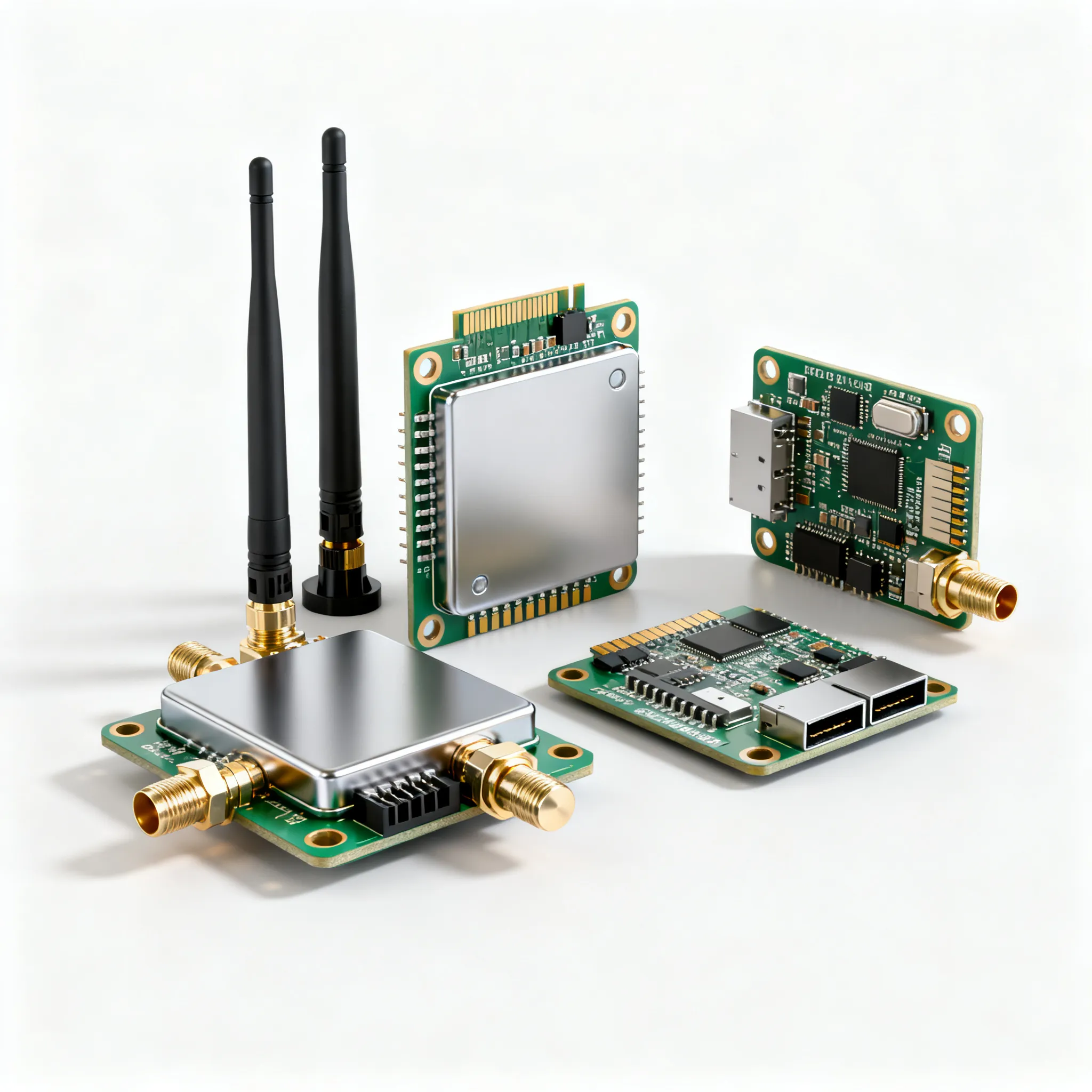
RF modules are essential components that facilitate wireless communication by transmitting and receiving radio signals. These modules operate across various frequency bands, such as 2.4 GHz and 5 GHz, making them suitable for applications like Wi-Fi, Bluetooth, and Zigbee. Core components of an RF module include a transmitter, receiver, antenna, and associated circuitry for modulation and demodulation. The efficiency of an RF module is determined by its sensitivity, power output, and range. Understanding these principles is crucial for designing and implementing effective wireless solutions.
The integration of RF modules into electronic systems involves several technical considerations. Key among these are the selection of appropriate frequency bands, modulation techniques, and power levels to meet specific application requirements. Moreover, compliance with regional regulations and standards, such as FCC and ETSI, is vital to ensure the legal operation of RF devices. By leveraging advanced RF technologies, engineers can develop robust wireless solutions that enhance connectivity, reduce latency, and increase data throughput.
Detailed Specifications
| Parameter | Specification | Units | Notes |
|---|---|---|---|
| Frequency Range | 2.4 - 2.4835 | GHz | ISM Band |
| Transmit Power | 20 | dBm | Max Output |
| Receiver Sensitivity | -95 | dBm | At 1 Mbps |
| Data Rate | 250 | kbps | Typical |
| Modulation | GFSK | - | Gaussian Frequency Shift Keying |
| Channel Spacing | 5 | MHz | - |
| Operating Voltage | 1.8 - 3.6 | V | - |
| Current Consumption | 15 | mA | Transmit Mode |
| Standby Current | 1 | μA | Low Power Mode |
| Impedance | 50 | Ω | - |
| Parameter | Specification | Units | Notes |
|---|---|---|---|
| Operating Temperature | -40 to 85 | °C | - |
| Storage Temperature | -55 to 125 | °C | - |
| Humidity | 5 to 95 | % RH | Non-condensing |
| Dimensions | 20 x 15 x 2 | mm | L x W x H |
| Weight | 5 | g | - |
| Connector Type | U.FL | - | Antenna Connector |
| PCB Material | FR4 | - | - |
| Mounting Type | SMD | - | Surface Mount Device |
| Application | Feature | Advantages | Notes |
|---|---|---|---|
| Smart Home | Low Power | Extended Battery Life | Compatible with Zigbee |
| Industrial Automation | High Sensitivity | Reliable in Noisy Environments | Supports Mesh Networking |
| Healthcare Devices | Compact Size | Portable Solutions | Meets Medical Standards |
| Consumer Electronics | High Data Rate | Fast Data Transfer | Bluetooth Compatibility |
| Automotive | Wide Temperature Range | Operational in Extreme Conditions | Robust Design |
The tables above outline the key specifications and features of RF modules, highlighting their electrical, thermal, and mechanical characteristics. These specifications are crucial for engineers to select the right module for their specific application, ensuring optimal performance and reliability.
Design Considerations
Designing with RF modules requires a comprehensive understanding of both the components and the intended application. The first step in selecting an RF module is to define the application's requirements, such as range, data rate, and power consumption. Engineers must also consider the environment in which the module will operate, as factors like interference and signal attenuation can significantly impact performance.
Proper antenna design and placement are critical to maximizing signal strength and coverage. Antennas should be positioned away from metallic objects and other sources of interference. Additionally, the choice of PCB material and layout can affect the module's performance, with materials like FR4 being common for their balance of cost and performance.
Engineers should also be mindful of regulatory compliance, ensuring that their designs meet the necessary certifications for their target markets. This includes adhering to standards set by organizations like the FCC in the United States or ETSI in Europe. Failure to comply can result in penalties and product recalls.
Finally, thermal management is essential to prevent overheating, especially in high-power applications. This can be achieved through the use of heat sinks, proper ventilation, and thermal interface materials. By considering these factors, engineers can design robust, efficient RF solutions that meet the demands of modern wireless applications.
Step-by-Step Guide
- Define Application Requirements: Determine the specific needs of your application, including range, data rate, and power consumption. This will guide your selection of an appropriate RF module.
- Select the Right RF Module: Based on the defined requirements, choose an RF module that meets your specifications. Consider factors like frequency band, transmit power, and receiver sensitivity.
- Design the Antenna: Design an antenna that is compatible with your chosen RF module. Ensure it is positioned correctly to minimize interference and maximize signal strength.
- Layout the PCB: Design the PCB layout, taking into account the placement of the RF module, antenna, and other components. Use appropriate materials and techniques to minimize signal loss.
- Ensure Regulatory Compliance: Verify that your design meets the necessary regulatory standards for your target market. This may involve testing and certification by accredited bodies.
- Implement Thermal Management: Design the system to manage heat effectively, using heat sinks, ventilation, and thermal interface materials as needed.
- Prototype and Test: Build a prototype of your design and conduct thorough testing to ensure it meets all performance and reliability criteria.
- Iterate and Optimize: Based on test results, make any necessary adjustments to improve performance, efficiency, and compliance. Iterate the design as needed to achieve the desired outcomes.
Common Issues & Solutions
-
Issue: Signal Interference
Solution: Use shielding techniques and select frequencies less prone to interference. -
Issue: Limited Range
Solution: Increase antenna gain or choose a module with higher transmit power. -
Issue: High Power Consumption
Solution: Optimize the duty cycle and use low-power modes. -
Issue: Overheating
Solution: Implement effective thermal management strategies. -
Issue: Regulatory Non-compliance
Solution: Ensure adherence to relevant standards and obtain necessary certifications.
Applications & Use Cases
RF modules are utilized in a wide range of applications, each benefiting from the unique features of wireless communication. In smart homes, RF modules enable the seamless integration of devices like smart thermostats, lighting systems, and security cameras. In industrial settings, they facilitate reliable communication between sensors and controllers, optimizing processes and reducing downtime.
The healthcare industry also benefits from RF technology, with modules used in wearable devices and remote monitoring systems to track patient health without invasive procedures. In consumer electronics, RF modules provide fast data transfer and connectivity for devices like smartphones and tablets, enhancing user experience. Finally, in the automotive sector, RF modules support advanced features like keyless entry and vehicle-to-vehicle communication, contributing to safer and more efficient transportation systems.
Selection & Sourcing Guide
Selecting the right RF module requires careful consideration of application requirements and available options. Engineers can explore a wide range of RF modules and related components at IC Online, an authorized distributor offering competitive pricing and fast delivery. By leveraging comprehensive datasheets and expert support, designers can make informed decisions that lead to successful wireless solutions.
FAQ
-
What is an RF module?
An RF module is a component that enables wireless communication by transmitting and receiving radio signals. -
What factors should be considered when selecting an RF module?
Key factors include frequency range, transmit power, receiver sensitivity, data rate, and regulatory compliance. -
How can I improve the range of an RF module?
Consider using a higher gain antenna, increasing transmit power, or selecting a module with better sensitivity. -
What are common applications of RF modules?
Applications include smart home devices, industrial automation, healthcare monitoring, consumer electronics, and automotive systems. -
How do I ensure regulatory compliance for my RF design?
Adhere to standards set by organizations like the FCC or ETSI, and obtain necessary certifications through accredited testing. -
What is the role of the antenna in an RF module?
The antenna is crucial for transmitting and receiving signals, and its design and placement significantly impact performance. -
How can power consumption be minimized in RF applications?
Optimize the duty cycle, use low-power modes, and select components with low current consumption. -
What are the thermal considerations for RF modules?
Implement heat management strategies like heat sinks, proper ventilation, and thermal interface materials to prevent overheating. -
Why is PCB layout important in RF design?
A well-designed PCB layout minimizes signal loss and interference, enhancing overall performance and reliability. -
Where can I source RF modules and components?
Explore options at IC Online for a wide range of components and expert support.
Conclusion
RF modules are integral to the development of innovative wireless solutions, enabling reliable communication across various industries. By understanding the technical specifications, design considerations, and practical applications, engineers can create effective RF systems that meet the demands of modern technology. As the electronics industry continues to expand, the role of RF modules will only grow, driving advancements in connectivity and performance.