Understanding SR44 vs LR44 and Their Role in Electronics
SR44 vs LR44: Compare battery chemistry, voltage, and performance to choose the right option for your electronics and ensure device reliability and safety.
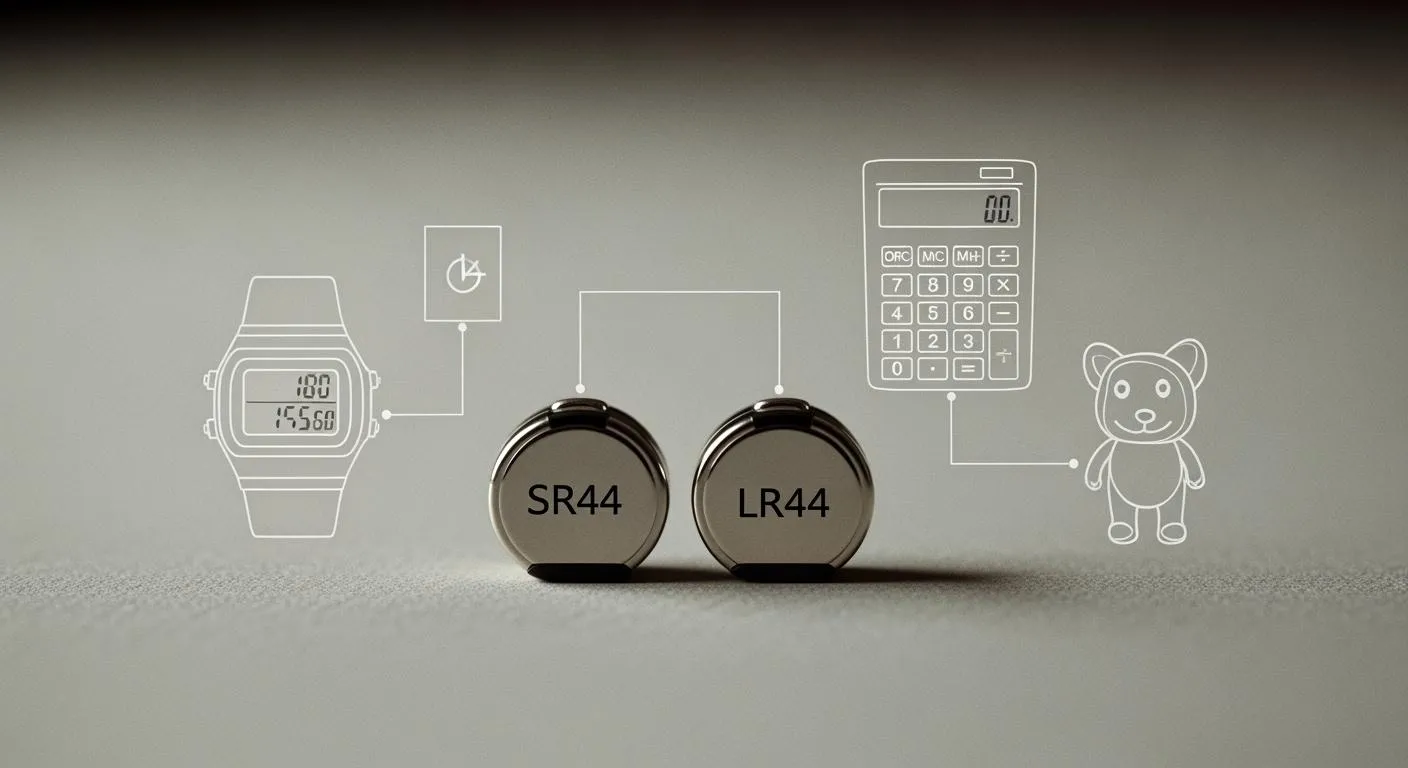
When you compare sr44 vs lr44 batteries, you see big differences in chemistry, voltage, and performance. The sr44 battery uses silver oxide and provides a stable 1.55 volts, while the lr44 battery uses alkaline chemistry and starts at 1.5 volts. This difference matters for electronics that need steady power. Your choice of battery can affect how well your device works, how long it lasts, and how safe it is. Always check your device’s battery requirements to ensure the best results.
| Battery Type | Chemistry | Standard Nominal Voltage |
|---|---|---|
| LR44 | Alkaline | 1.5 V |
| SR44 | Silver Oxide | 1.55 V |
Key Takeaways
- SR44 batteries use silver oxide chemistry, providing stable voltage of 1.55V, ideal for high-precision devices.
- LR44 batteries use alkaline chemistry, starting at 1.5V, but their voltage drops quickly, making them suitable for low-drain devices.
- Always check your device's manual for the recommended battery type to ensure optimal performance and safety.
- SR44 batteries last longer and have a shelf life of 5 to 10 years, reducing the need for frequent replacements.
- For sensitive electronics, choose SR44 batteries to avoid leakage and ensure reliable operation.
SR44 vs LR44 Battery Basics

Chemistry and Voltage
You often see the sr44 vs lr44 comparison when choosing a button battery for electronics. The sr44 battery uses silver oxide chemistry, which gives it a nominal voltage of 1.55 volts. Manufacturers design the sr44 to deliver steady voltage throughout its lifespan. The lr44 battery uses alkaline chemistry and starts with a nominal voltage of 1.5 volts. The lr44 battery voltage drops more quickly as you use it. Both batteries belong to the button battery family, but their chemical makeup affects how they perform in different applications.
The sr44 battery stands out as a silver oxide battery. It maintains stable voltage, which is important for devices that need consistent power. The lr44 battery, while more affordable, does not hold voltage as well. You should check your device’s requirements before selecting a battery. If your device needs precise voltage, the sr44 battery is usually the better choice.
Common Uses
You find sr44 and lr44 batteries in many devices. These batteries power watches, calculators, toys, and medical instruments. The sr44 battery works best in high-drain devices like high-end watches, medical instruments, advanced calculators, and hearing aids. The lr44 battery fits low-drain devices such as calculators, toys, remote controls, and small flashlights.
Tip: Always match the battery type to your device’s power needs. High-drain devices benefit from the sr44 battery’s stable voltage, while low-drain devices can use the lr44 battery for cost savings.
Here is a quick overview of common applications:
| Battery Type | Common Devices |
|---|---|
| SR44 | High-end watches, medical instruments, advanced calculators, hearing aids |
| LR44 | Calculators, digital watches, toys, remote controls, small flashlights |
The sr44 vs lr44 debate matters because both batteries look similar and fit the same slots. You must pay attention to voltage and chemistry to avoid performance issues. Watches often require the sr44 battery for accuracy. Toys and simple electronics usually work well with the lr44 battery. Understanding these differences helps you make the right choice for your electronics.
Key Differences in Battery Performance
Voltage Stability
When you compare sr44 vs lr44, voltage stability stands out as a major difference. The sr44 battery uses silver oxide chemistry, which gives it a flat discharge curve. This means the voltage stays steady until the battery is almost empty. In contrast, the lr44 battery, which uses alkaline chemistry, shows a gradual voltage drop as you use it. This drop can cause problems in devices that need constant power, such as high-end watches and sensitive instruments.
| Battery Type | Discharge Profile | Voltage Stability | Device Performance Impact |
|---|---|---|---|
| SR44 | Flat discharge curve | High stability until depletion | Reliable performance, less downtime |
| LR44 | Gradual voltage decline | Decreasing stability over time | Potential dimming, slower response, intermittent failures |
You will notice the difference in electronics like digital watches and medical instruments. Research shows that sr44 batteries provide a more consistent voltage output throughout their use. This makes them a better choice for devices that require reliable power. Silver oxide batteries, such as sr44, offer superior voltage stability over time. This is crucial for high-end watches and instruments that operate under demanding conditions. If you use an lr44 battery in these applications, you might see dimming screens or slower response times as the voltage drops.
Longevity and Storage
Battery life is another area where sr44 and lr44 differ. The sr44 battery lasts longer than the lr44 battery. You can expect up to 50–100% more capacity from sr44. This means fewer battery changes and more reliable operation for your devices. The table below shows how the two compare:
| Battery Type | Lifespan Comparison | Voltage Stability | Capacity Increase |
|---|---|---|---|
| SR44 | Longer lifespan | More stable | 50–100% more |
| LR44 | Shorter lifespan | Diminishes rapidly | Less capacity |
When you store batteries, sr44 keeps its charge longer than lr44. The shelf life of sr44 batteries can range from 5 to 10 years. Storing sr44 batteries for longer periods also reduces the risk of leakage. You should keep sr44 batteries at room temperature for best results. They can last up to 5 years or more under optimal conditions. In comparison, lr44 batteries have a shelf life of about 3 years and lose their charge faster. This makes sr44 a better choice for backup power in instruments and high-end watches that may sit unused for long periods.
- The shelf life of sr44 batteries can range from 5 to 10 years.
- Longer storage of sr44 batteries reduces the likelihood of leakage.
- Silver oxide batteries (sr44) maintain their charge longer in storage compared to alkaline batteries (lr44).
- Lr44 batteries have a shorter shelf life due to a faster loss of charge.
- The shelf life of alkaline batteries (like lr44) is typically around 3 years.
Leakage and Safety
Safety is important when you use batteries in sensitive instruments and high-end watches. The lr44 battery, with its alkaline chemistry, has a higher risk of leakage, especially as it ages or if stored improperly. Leakage can damage electronics, corrode contacts, and even ruin expensive devices. The sr44 battery, using silver oxide chemistry, is less likely to leak, making it safer for critical applications.
- Lr44 batteries use alkaline chemistry, while sr44 batteries use silver-oxide chemistry.
- The voltage stability and discharge characteristics differ, which can affect device performance.
- Understanding these differences is crucial for ensuring optimal performance and safety in sensitive electronic devices.
You should always follow safe storage practices. Keep batteries in a cool, dry place and avoid mixing old and new batteries in the same device. When you need to dispose of used batteries, use recycling facilities that handle these materials. Communities often provide battery recycling services for lr44 and sr44 batteries. Discarding batteries improperly can lead to harmful substances leaking into the environment, affecting natural habitats and water resources.
Tip: For high-end watches, medical instruments, and other sensitive electronics, choose sr44 batteries for better safety, longer battery life, and stable voltage.
Device Compatibility and Selection

Interchangeability
You often wonder if you can swap an sr44 battery for an lr44 battery in your electronics. In many cases, an sr44 can replace an lr44 without causing issues. Devices like watches, compact calculators, and toys accept both battery equivalents because they share similar dimensions and fit. However, using an lr44 battery instead of an sr44 battery may lead to improper functioning in devices that require stable voltage. Precision-dependent applications, such as medical instruments or high-end watches, demand the exact recommended battery type. Always check your device’s manual for battery compatibility guidance. Manufacturers design electronics to work best with specific battery equivalents, so substituting the wrong type can affect performance.
Note: For devices that rely on consistent voltage, such as advanced watches or sensitive electronics, you should always use the sr44 battery as specified.
Reading Device Specs
You need to read your device’s specifications before choosing a replacement battery. Check the manual for battery dimensions, chemistry, and voltage requirements. Devices may list battery equivalents like lr44, sr44, or 357, but you must match both the chemistry and designation. If your device requires silver oxide for stable voltage, select the sr44 battery. For general battery applications, lr44 is acceptable. Consider storage needs; sr44 holds its charge longer, making it ideal for backup power in electronics and watches. Always consult the device manual or manufacturer specifications to ensure battery compatibility.
| Parameter | Specification Description |
|---|---|
| Nominal Voltage | LR44: 1.5 V; SR44: 1.55 V |
| Common Capacity Range | LR44: 110-150 mAh; SR44: 150-200 mAh |
| Dimensions | 11.6 mm x 5.4 mm |
| Typical Weight | 2.0 - 2.3 grams |
| Battery Equivalents | LR44, SR44, 357 |
| Shelf Life | LR44: 3 years; SR44: 5 years |
Choosing the Right Battery
Selecting the right replacement battery ensures your electronics perform reliably. Always check your device’s manual or battery compartment label for the recommended battery type. Use trusted brands for replacement batteries to protect your device and extend its life. If voltage consistency is critical, especially in medical instruments or measurement tools, choose the sr44 battery. Ignoring manufacturer recommendations can lead to malfunctions, inaccurate readings, or voided warranties. Small mistakes in battery replacement can cause poor device performance.
| Tip | Description |
|---|---|
| Check device manual | Always check your device’s manual or battery compartment for the recommended battery type. |
| Use trusted brands | Opt for trusted brands for replacement batteries to ensure safety and longevity. |
| Choose SR44 for critical devices | If voltage consistency is crucial, prefer the sr44 battery over the lr44 battery. |
Nova Technology Company (HK) Limited stands out as a HiSilicon-designated solutions partner. The company specializes in chip-level solutions, system integration, and advanced application scenarios within the integrated circuit industry. You benefit from their expertise in battery compatibility and electronics design, especially for watches, compact calculators, and other battery applications. Their IC solutions help optimize battery equivalents and replacement strategies for high-performance electronics.
Tip: Always match the battery chemistry and designation to your device’s requirements. For precision-sensitive applications, prefer the sr44 battery for stable voltage and longer lifespan.
Choosing between SR44 and LR44 batteries affects your device’s performance, safety, and lifespan. The table below highlights the main differences:
| Feature | SR44 (Silver Oxide) | LR44 (Alkaline) |
|---|---|---|
| Voltage Stability | Nearly constant 1.55 V | Starts at 1.5 V, declines |
| Lifespan | Longer | Shorter |
| Environmental Impact | Less harmful | More harmful |
- SR44 batteries provide stable power, making them ideal for high-precision electronics.
- Always check your device manual to select the right battery for reliable operation.
FAQ
What is the main difference between SR44 and LR44 batteries?
You see the main difference in their chemistry and voltage. SR44 uses silver oxide and provides a stable 1.55 volts. LR44 uses alkaline chemistry and starts at 1.5 volts. Both batteries share the same equivalent size.
Can I use an LR44 battery as an equivalent replacement for SR44?
You can use LR44 as an equivalent in some devices. However, devices needing stable voltage, like medical instruments or high-end watches, work best with SR44. Always check your device manual for the correct equivalent battery.
Why do devices list multiple equivalent battery codes?
Manufacturers list several equivalent codes to help you find compatible replacements. Codes like LR44, SR44, and 357 refer to batteries with the same size. You must match the chemistry and voltage for the best performance from the equivalent battery.
How do I know which equivalent battery to choose for my device?
You should check your device’s manual or battery compartment label. Look for the recommended equivalent battery code and chemistry. If your device needs stable voltage, select SR44. For general use, LR44 is an acceptable equivalent.
Are all equivalent batteries safe for sensitive electronics?
Not all equivalent batteries offer the same safety. SR44 batteries leak less and provide stable voltage, making them safer for sensitive electronics. LR44 batteries may leak more as they age. Always use the recommended equivalent battery for your device.