Protection Circuit Modules and their role in battery safety for electronic devices
Protection circuit modules work like electronic guards for rechargeable lithium batteries. These modules help keep things safe by checking and controlling the electricity in battery-powered devices.

Protection circuit modules work like electronic guards for rechargeable lithium batteries. These modules help keep things safe by checking and controlling the electricity in battery-powered devices. Some recent events show what can happen if battery safety is not followed. For example:
-
In 2023, a fire in New York City with lithium-ion batteries caused 9 deaths and 64 people got hurt.
-
In 2023, a factory in South Korea exploded and 22 people died while 8 got hurt.
-
In 2023, there were 270 e-bike fires in the UK because of lithium-ion batteries.
If there are no protection circuit modules, the chances of overcharging or over-discharging go up. This can cause fires, injuries, or even death. These modules are very important for stopping these dangers and keeping devices safe.
Key Takeaways
-
Protection circuit modules (PCMs) work like safety guards for batteries. They keep rechargeable batteries safe from things like overcharging, over-discharging, and getting too hot. PCMs use sensors and switches to watch the battery all the time. They check the battery’s voltage, current, and temperature. If there is a problem, they quickly stop charging or discharging. These modules help batteries last longer by keeping each cell safe. They also keep the cells balanced and stop damage. This lowers the chance of fire. PCMs give basic safety for small devices. Battery management systems give more control and checking for bigger battery packs. If there are no PCMs, batteries can get too hot, catch fire, or stop working. So, it is very important to use devices with good protection circuits for safety and trust.
Protection Circuit Modules
What Are PCMs
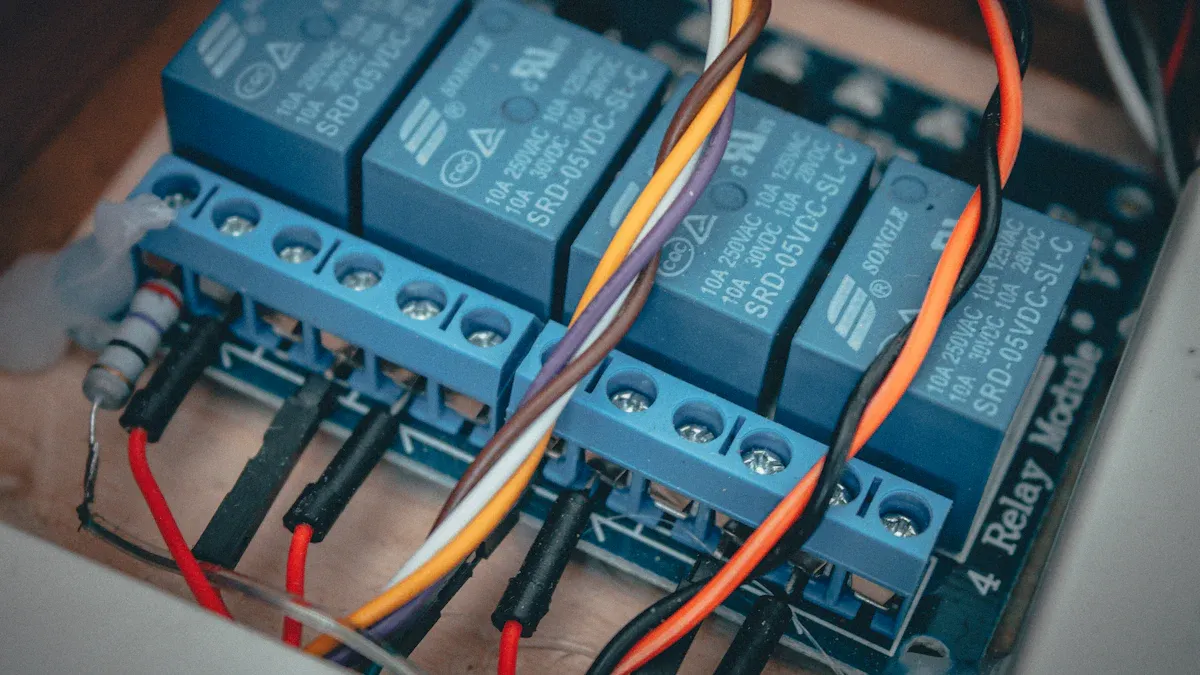
A protection circuit module is a small board that helps keep batteries safe. People also call it a battery protection board. You can find this board inside things like smartphones, laptops, and e-bikes. It always checks the battery’s voltage, current, and temperature. If the battery gets too hot or the voltage is too high, the protection circuit module will help stop any problems.
The battery protection board has many parts that work together. These include a printed circuit board, a battery management IC, MOSFETs, resistors, capacitors, and temperature sensors. Each part does something special. MOSFETs are like switches that turn electricity on or off. Temperature sensors watch for heat. The battery management IC is like the brain. It makes choices based on what the sensors find.
Here is a table that lists the main parts of a battery protection board and what they do:
|
Component |
Function |
|---|---|
|
Printed Circuit Board (PCB) |
Holds all the parts and connects them together. |
|
Battery Management IC |
Watches voltage, current, and temperature; controls protection actions. |
|
MOSFETs |
Switches that control the flow of electricity. |
|
Resistors and Capacitors |
Help keep voltage and current steady. |
|
Temperature Sensors |
Check the battery’s temperature. |
|
PTC Devices |
Increase resistance if the battery gets too hot, limiting current. |
|
Fuse or Polyfuse |
Breaks the circuit if there is a short or too much current. |
|
Indicator LEDs |
Show if the battery is charging, discharging, or has a problem. |
|
Connector Terminals |
Let the board talk to other devices or systems. |
The battery protection board looks for trouble all the time. If it finds a problem, it acts fast. For example, if the battery voltage is too high, the board tells the MOSFETs to stop charging. If the battery gets too hot, the board can disconnect the battery pack. This quick action keeps the battery and device safe.
Why They Matter
Protection circuit modules are very important for battery safety and life. Without a battery protection board, a battery pack can be unsafe. Overcharging, over-discharging, or overheating can cause fires, explosions, or damage. The protection system inside the board stops these things from happening.
A battery protection board helps the battery pack last longer. It keeps each cell working within safe limits. This means the battery does not wear out too soon. The board also makes sure no cell gets too much stress. When all cells age the same, the battery pack stays strong longer.
The protection system uses smart sensors and switches. These parts work together to watch for unsafe voltage, current, or temperature. If something is wrong, the board acts right away. For example, if the battery gets too hot, the board can disconnect it until it cools down. This keeps the battery pack safe and helps stop accidents.
Here is a list of how a protection circuit module responds to problems:
-
It checks voltage, current, and temperature all the time.
-
If the voltage is too high or too low, it stops charging or discharging.
-
If there is too much current, it cuts off the flow to stop damage.
-
If the battery gets too hot, it disconnects the battery pack.
-
It uses fast switches called MOSFETs to act quickly.
-
It can control charging and discharging paths separately for better safety.
-
This system keeps the battery pack working safely and helps it last longer.
Note: A battery protection board is not the same as a full battery management system. The protection circuit module focuses on basic safety. A battery management system can do more, like balancing cells and sharing data with other devices.
A good protection circuit module must meet strict rules. It needs to handle the right voltage and current for the battery pack. It should work in many temperatures and react fast to problems. These things help the battery protection board protect the battery pack in many devices.
Battery Safety Features
Protection circuit modules use smart technology to keep batteries safe. These modules always watch the voltage, current, and temperature. They use sensors, MOSFETs, and a battery management ic to find unsafe problems. When something goes wrong, the protection system acts fast to stop damage. The next parts show how these safety systems work for overcharge, over-discharge, and overcurrent or overheating.
Overcharge Protection
Overcharge protection is a very important safety feature. When a battery charges, its voltage goes up. If the voltage gets too high, the battery can get hot, swell, or even catch fire. The battery management ic checks each cell’s voltage. If the voltage hits the top safe value, usually 4.2V for lithium-ion cells, the ic stops charging or changes the current. This keeps the battery from overcharging and keeps it safe.
The table below shows how each part helps with overcharge protection:
|
Component |
Mechanism Description |
|---|---|
|
Battery Management IC |
Watches battery voltage and other things; stops charging or changes current if voltage is too high. |
|
MOSFETs |
Work as switches to control current and stop overcharging by cutting or limiting current. |
|
PTC Thermistors |
Raise resistance fast when temperature or current is too high, which limits current to protect the battery. |
|
Temperature Sensors |
Watch battery temperature to find overheating and start actions to stop thermal runaway. |
|
Fuses or Polyfuses |
Act as backup devices that break the circuit during overcurrent to stop damage. |
|
Cell Balancing Circuits |
Make sure each cell has the right voltage, so no cell overcharges in packs with many cells. |
Most lithium-ion batteries use a top charge voltage of 4.2V per cell. Charging above this can hurt the battery forever. The battery management ic and PTC devices work together to watch and control voltage and current. These safety systems help stop heat dangers and make batteries last longer. Makers can change overcharge protection levels for different battery types, so the system works for many uses.
Over-Discharge Protection
Over-discharge protection is another big safety feature. If a battery loses too much charge, the voltage drops too low. This can hurt the battery inside and make it weaker. The battery management ic uses voltage sensors to watch for low voltage. If the voltage drops below a set level, the ic disconnects the load to stop more discharge.
-
Protection circuit modules always check battery voltage with sensors.
-
When voltage drops below a safe level, the system finds an over-discharge event.
-
The system then disconnects the load to stop more discharge.
-
Sometimes, a low battery warning pops up before the battery disconnects.
-
These steps stop deep discharge, which can cause battery damage that cannot be fixed.
-
The system keeps the battery safe and lasting longer by checking voltage, disconnecting loads, and warning users.
If over-discharge happens again and again, bad things happen:
-
Pressure inside the battery goes up and parts stop working.
-
The liquid inside breaks down and lithium builds up, making resistance higher.
-
Battery power drops and does not come back, even after charging.
-
The inside of the battery breaks down, so lithium ions cannot move well.
-
Over-discharge causes battery power loss, more resistance, and shorter life.
-
Fire risk is lower than with overcharge, but over-discharge still causes big problems and battery failure.
The battery management ic and MOSFETs work together to give over-discharge protection. These safety systems help keep the battery charged right and stop hidden dangers in the battery pack.
Overcurrent and Overheating
Overcurrent and overheating can hurt batteries fast. The protection system uses different tools to find and stop these problems. Analog circuits and small sense resistors measure current flow. If current gets too high, the battery management ic finds the problem. The ic tells the MOSFETs to disconnect the battery pack. This gives short circuit protection and stops damage from spreading.
Thermal protection is very important in battery safety. Thermistors sense temperature changes. If the battery or MOSFETs get too hot, the system disconnects the battery to stop overheating. Non-volatile memory saves safety limits and time delays, so the system can work with different battery types. Standalone ic design lets the protection system work alone, without another controller.
|
Technology Component |
Function / Role in Protection Circuit Module |
|---|---|
|
Analog Circuits |
Help save power while watching battery status. |
|
External Low-Value Sense Resistors (1 mΩ or 5 mΩ) |
Measure current to find overcurrent with good accuracy. |
|
Thermistors |
Check temperature to find overheating; also find broken thermistors. |
|
External Power MOSFETs |
Controlled by gate drivers to disconnect battery pack during faults. |
|
Internal Gate Drivers |
Turn MOSFETs off or on fast during problems. |
|
Non-Volatile Memory (EEPROM) |
Saves safety limits and time delays for finding and fixing problems, works with many Li-ion types. |
|
Standalone IC Architecture |
Works without another controller, so it protects on its own. |
|
Cell Voltage Monitoring |
Watches each cell’s voltage to find problems. |
|
External MOSFET Overheating Detection |
Checks MOSFET temperature to stop damage from overheating. |
MOSFETs are very important in these safety systems. They act as fast switches, controlling current and giving short circuit protection. New MOSFETs switch quickly and have low resistance, which helps save power and manage heat. Monitoring ICs work with MOSFETs to give full protection. They watch voltage, temperature, and current, and help balance cells for a steady charge. All these parts make a strong protection system that keeps batteries safe in hard situations.
Thermal protection is in every part of the battery safety system. The system checks battery temperature, MOSFET temperature, and even the temperature of sense resistors. If anything gets too hot, the system acts to stop thermal runaway. This focus on thermal protection helps stop fires and keeps devices safe for people.
Tip: Always pick batteries with good thermal protection and strong battery safety circuits. These features help stop accidents and make your devices last longer.
PCM Components
Sensing Elements
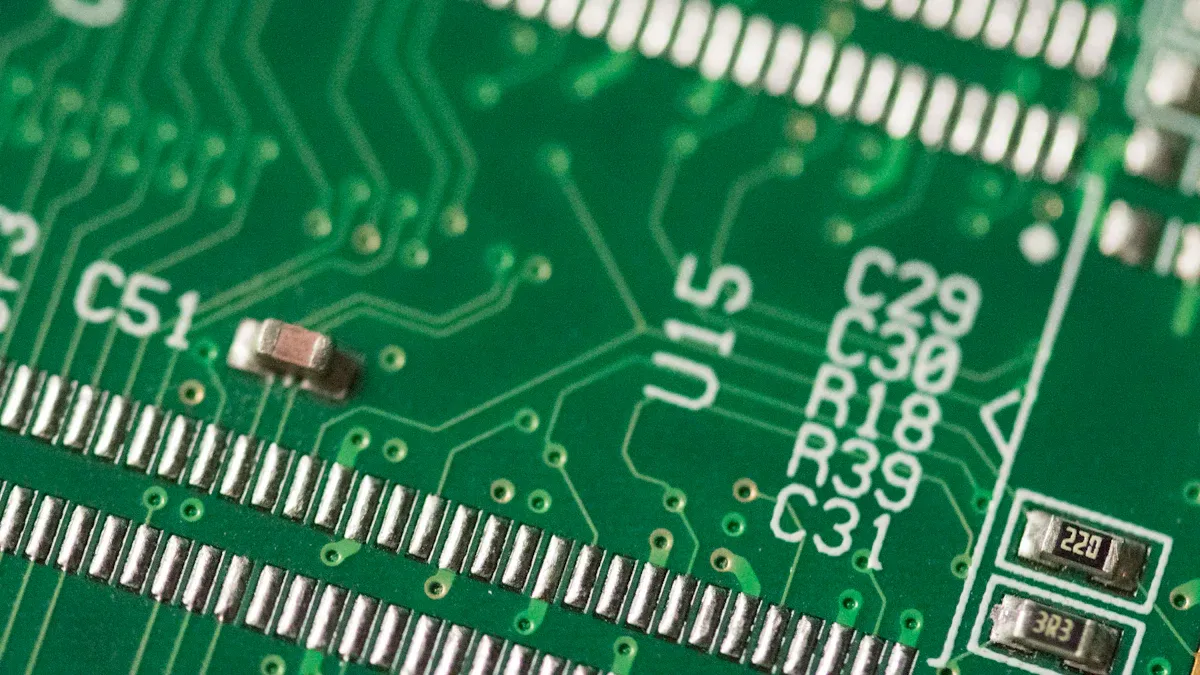
A battery protection board uses sensing elements to keep batteries safe. Thermal sensors are the main sensing elements in these systems. They sit inside the battery pack and check temperature all the time. When the temperature gets too high, these sensors send a signal to the board. This helps the board act fast if the battery gets too hot. The board also uses sensors to check voltage and current. These sensors help the board find problems like overcharging or too much current. By using thermal sensors and other sensing elements, the board can stop damage to the battery pack.
Control Circuitry
Control circuitry is like the brain of the battery protection board. It gets information from all the sensing elements, including thermal sensors. The control circuitry uses special steps to study this information. If it finds the battery pack is too hot or the voltage is too high, it acts. The board can disconnect the charger or the load to stop more problems. Sometimes, the control circuitry will turn on cooling systems to lower the temperature. This smart system lets the board make quick choices. It keeps the battery pack safe and working well.
Switching Devices
Switching devices are very important in the battery protection board. These devices, like circuit breakers, connect or disconnect the battery pack when needed. The board uses switching devices to stop electricity if it finds a problem. Circuit breakers can cut power right away if there is too much current or a short circuit. Protection relays work with these devices to watch for trouble and trigger the switches. Over time, switching devices have changed from simple parts to smart automatic systems. Today, the board uses these smart switches to keep the battery pack safe and steady. Picking the right switching device helps the board balance safety, cost, and how well it works.
PCM vs BMS
Key Differences
Protection circuit modules and battery management systems both help batteries stay safe, but they do not work the same way. PCMs give basic safety. They stop problems like too much voltage, too little voltage, or short circuits. PCMs do not watch the battery all the time or save any data. A battery management system does a lot more. It checks voltage, current, and temperature all the time. It can talk to other devices and keep records. It can also balance cells, control heat, and guess how much charge is left.
Here is a table that shows the main differences:
|
Feature/Functionality |
Protection Circuit Modules (PCMs) |
Battery Management Systems (BMS) |
|---|---|---|
|
Basic Safety Functions |
Overvoltage, undervoltage, short circuit protection only |
Includes basic protections plus advanced safety features |
|
Real-time Monitoring |
No |
Yes, monitors voltage, current, temperature, and more |
|
Communication & Data Logging |
None |
Supports communication protocols and data logging |
|
Programmability |
Typically non-programmable |
Programmable logic and firmware updates |
|
Cell Balancing |
No |
Yes, active/passive cell balancing |
|
Thermal Management |
No |
Yes, manages temperature to prevent thermal runaway |
|
State of Charge Estimation |
No |
Yes, estimates battery charge levels precisely |
|
Current Regulation |
No |
Controls charge/discharge current for optimal performance |
PCMs give simple protection. A battery management system is like a smart helper for the battery pack.
When to Use Each
PCMs are best for easy jobs. They work well in things like electric shavers, power tools, and small gadgets. They protect one cell or a small battery pack. PCMs cost less and do not need any software. They cannot show battery health or talk to other devices.
A battery management system is good for hard jobs. It is used in electric cars, big battery storage, and large battery packs. It uses a microcontroller and software to watch each cell. It can balance cells, control heat, and send data to other systems. It helps keep the battery safe, healthy, and working longer.
Here is a table that compares typical use cases:
|
Feature/Aspect |
Protection Circuit Module (PCM) |
Battery Management System (BMS) |
|---|---|---|
|
Complexity |
Simple, stand-alone protective circuit with no software |
Comprehensive management system with microcontroller and intelligent software |
|
Monitoring |
Limited; cannot provide precise battery status or SOC |
Advanced; provides SOC, SOH, and detailed battery health monitoring |
|
Protection Scope |
Basic protection against overcharge, over-discharge, short circuit, and temperature extremes |
Advanced protection including fault detection, temperature management, cell balancing, and communication |
|
Communication |
None; no communication capabilities |
Equipped with communication interfaces for remote monitoring and control |
|
Use Cases |
Simple, single or small battery packs in devices like electric shavers, power tools |
Complex, multi-cell battery packs in electric vehicles, energy storage, industrial applications |
|
Cost |
Low-cost solution |
More expensive due to advanced features |
A battery management system gives more control and safety for big or important battery packs. PCMs are good for smaller devices that need simple safety.
Troubleshooting and Risks
Signs of PCM Failure
A protection circuit module can stop working in different ways. Knowing these signs helps people keep devices safe. Some common signs are:
-
The battery pack will not charge or give power, even if the cells are good.
-
The device turns on and off by itself while you use it.
-
You see damage on the protection board, like burn marks, rust, or swollen spots.
-
In battery packs with many cells, the cell voltages are not even, which means cell balancing is bad or the protection failed.
If you see any of these signs, stop using the device and check the battery pack to stay safe.
Risks Without Protection
Batteries without protection circuit modules can be very risky. These risks can cause danger for both devices and people.
-
Open terminals or bad connections can make short circuits. This causes big currents, fast heat, and maybe fires or explosions.
-
When a short circuit happens, batteries can make smoke and dangerous gases like hydrogen and carbon monoxide.
-
Inside resistance goes up, so thermal runaway can happen faster and fuses may not work in time.
-
Weak or missing protection can let electric arcs happen again and again, hurting battery modules and making fires more likely.
-
Arc faults from loose wires or shaking can heat battery parts fast, sometimes more than 15°C each second.
-
Damaged batteries may not open safety valves during thermal runaway, so fires can start sooner and be worse.
-
Broken busbars or battery shells are more likely if there is no good protection.
These risks show why every device with a battery needs a working protection circuit module.
Basic Troubleshooting
If a device shows signs of PCM failure, people can try some easy troubleshooting steps:
-
Look at the protection board for damage, like burned or missing pieces.
-
Check the battery pack while it is working for hot spots. Use an oscilloscope to find problems with resistance.
-
Test parts like capacitors, resistors, and diodes with a multimeter. Compare the results to normal values.
-
Use an oscilloscope to test chips and compare them to a good board.
-
Write down when the problem happens and what devices are used.
-
Watch for clues like burning smells or sparks when the device is on.
-
Make sure the problem is not with wires or other devices before checking the protection module.
-
When you find the bad part, fix or change it, then turn the power back on and test the device.
Checking often and acting fast helps stop bigger problems and keeps batteries safe.
Protection circuit modules help keep battery-powered devices safe and reliable. They also help batteries last longer and work better. The table below shows how PCMs make devices safer by stopping too much current, keeping voltage steady, and lowering the chance of electric shock:
|
Protection Aspect |
Impact on Reliability |
|---|---|
|
Overcurrent & Overvoltage |
Stops damage and lowers fire risk |
|
Electric Shock |
Makes shock less likely |
|
Voltage Stability |
Helps devices work without problems |
New technology uses AI to find faults, adds better sensors, and improves heat control. These changes help devices work longer and follow strict safety rules.
FAQ
What happens if a battery does not have a protection circuit module?
If a battery does not have a protection circuit module, it can get too hot. It might catch fire or even blow up. Devices could stop working or become dangerous. People should always pick batteries with safety features built in.
Can a protection circuit module be repaired if it fails?
Most protection circuit modules are hard to fix. If one stops working, it is best to get a new one. Trying to repair it can make things worse or cause safety problems.
How does a PCM differ from a fuse?
|
Feature |
PCM |
Fuse |
|---|---|---|
|
Function |
Watches and controls |
Breaks circuit |
|
Resettable |
Yes (most of the time) |
No |
|
Protection |
Many types |
Only overcurrent |
A PCM keeps batteries safer than a fuse does.
Do all rechargeable batteries need a PCM?
All lithium-ion and lithium-polymer batteries must have a PCM for safety. Some other batteries, like nickel-metal hydride, might not need one. Companies add PCMs to keep people and devices safe.