Step-by-Step Guide to Selecting the Right MOSFET for Your Circuit Design
Introduction In the ever-evolving world of electronics, the MOSFET (Metal-Oxide-Semiconductor Field-Effect Transistor) serves as a fundamental build
Introduction
In the ever-evolving world of electronics, the MOSFET (Metal-Oxide-Semiconductor Field-Effect Transistor) serves as a fundamental building block in circuit design. As reported by the Semiconductor Industry Association, global semiconductor revenue surged to $595.2 billion in 2024, highlighting the growing demand for efficient and reliable components like MOSFETs. Selecting the right MOSFET can significantly impact the performance, efficiency, and reliability of your electronic design.
Technical Overview
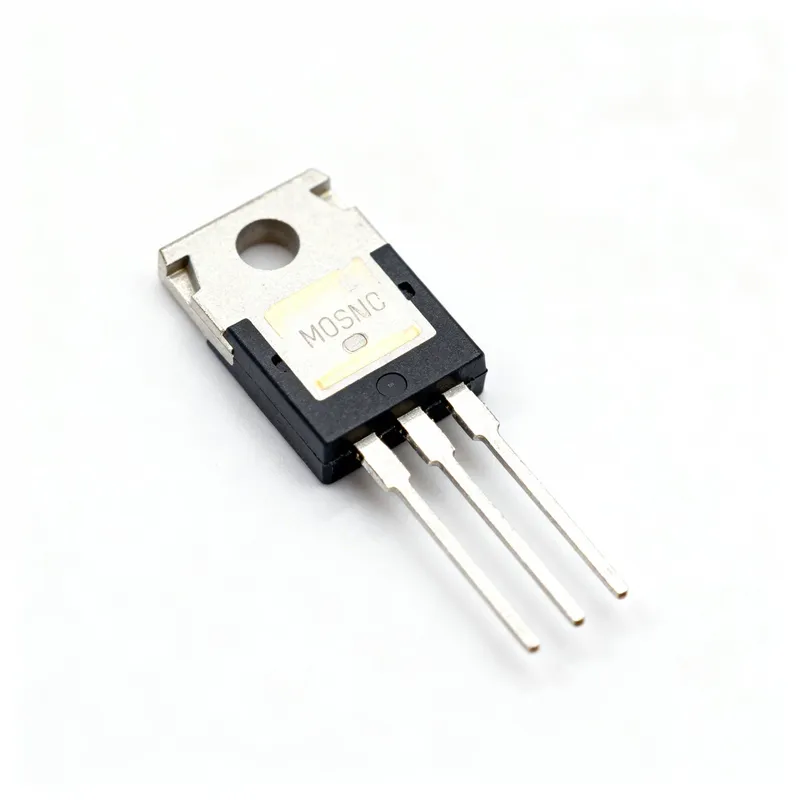
MOSFETs are voltage-controlled devices used to switch or amplify electronic signals. They consist of three terminals: Gate (G), Drain (D), and Source (S). When voltage is applied to the gate, it creates an electric field that allows current to flow between the drain and source. This mechanism makes MOSFETs ideal for applications requiring efficient power management.
Key specifications to consider include:
- Threshold Voltage (Vth): The minimum gate-to-source voltage required to create a conducting path between the source and drain.
- On-Resistance (RDS(on)): The resistance between the drain and source during the 'on' state. Lower values indicate better efficiency.
- Maximum Drain Current (ID): The maximum current the MOSFET can conduct without damage.
- Breakdown Voltage (VBR): The maximum voltage the MOSFET can withstand between the drain and source without breaking down.
Key Specifications Table
| Specification | Description | Typical Values |
|---|---|---|
| Threshold Voltage (Vth) | Minimum gate-source voltage to turn on the MOSFET | 1V to 4V |
| On-Resistance (RDS(on)) | Resistance during 'on' state | 10mΩ to 100mΩ |
| Maximum Drain Current (ID) | Max current through drain-source | 1A to 100A |
| Breakdown Voltage (VBR) | Max voltage between drain-source without breakdown | 20V to 1000V |
Applications & Use Cases
MOSFETs are versatile components used in various applications:
- Power Supply Units (PSUs): MOSFETs are used for efficient power conversion and regulation in PSUs.
- Motor Drives: They control the speed and torque of motors in industrial and consumer applications.
- Switching Regulators: MOSFETs are critical in DC-DC converters for efficient voltage regulation.
- Amplifiers: Used in audio amplifiers for signal amplification while maintaining low distortion.
Selection & Sourcing Guide
Choosing the right MOSFET involves analyzing your circuit requirements and matching them with the MOSFET specifications. Consider the following:
- Identify the voltage and current requirements of your application.
- Determine the acceptable level of power dissipation and thermal performance.
- Evaluate the switching speed and efficiency needs of the circuit.
- Check the availability and pricing from a reliable distributor.
For sourcing MOSFETs, visit IC Online to find a wide selection of components at competitive prices.
FAQ
- What is the difference between N-channel and P-channel MOSFETs?
N-channel MOSFETs require a positive voltage to turn on, while P-channel MOSFETs need a negative voltage. - How do I determine the thermal requirements for a MOSFET?
Consider the power dissipation (P = I2R) and ensure adequate heat sinking or thermal management is in place. - Can MOSFETs be used in high-frequency applications?
Yes, but ensure the MOSFET has a low gate charge and fast switching characteristics. - What causes MOSFET failure?
Common causes include over-voltage, excessive current, overheating, and improper handling. - Why is RDS(on) important?
Lower RDS(on) values reduce power losses and improve efficiency in power applications.