What Does Ohmic Mean in Electricity
Ohmic describes materials or devices where current changes proportionally with voltage, following Ohm’s Law and maintaining constant resistance.
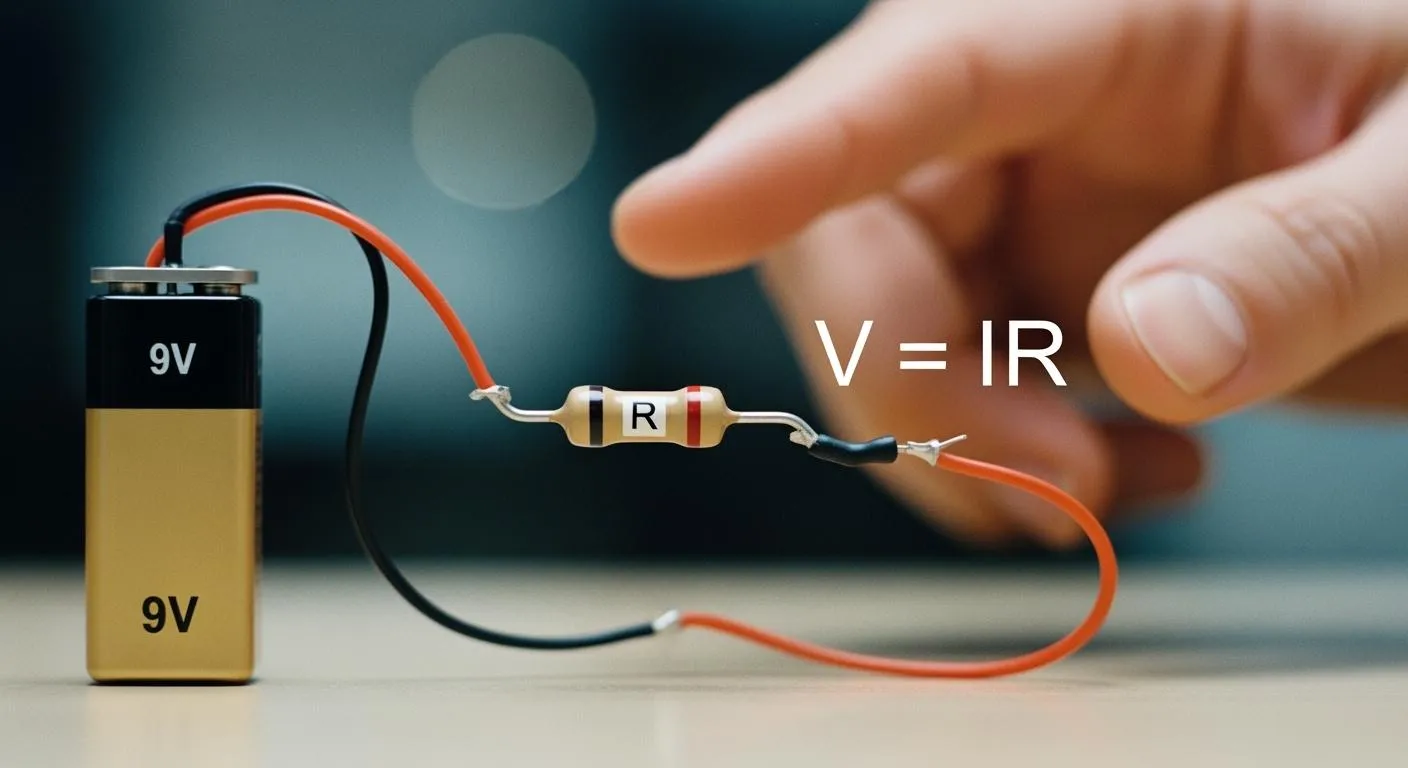
Ohmic means that the current flowing through a material changes in direct proportion to the voltage applied. You use the term ohmic to describe materials or components that follow Ohm’s Law, where resistance stays constant. Understanding ohmic resistance helps you keep machines running smoothly, tune control systems, and protect equipment from electrical hazards. You see ohmic behavior in real-world applications like ohmic contacts that improve semiconductor performance and ohmic heating used in efficient cooking devices.
Key Takeaways
- Ohmic resistance means current changes directly with voltage. This relationship helps predict circuit behavior.
- Use ohmic conductors like copper and aluminum for reliable electrical connections. They maintain constant resistance.
- Ohmic heating provides rapid, uniform heating, making it energy-efficient for cooking and industrial processes.
Ohmic Resistance

Definition and Ohm's Law
You probably hear about resistance every time you work with electricity. Ohmic resistance is the total opposition that electric charge carriers face as they move through a material or device. In electrical engineering, this resistance comes from several sources, like the wires, the connections, and even the electrolyte in batteries or fuel cells. You can think of ohmic resistance as the sum of all the little barriers that slow down the flow of electrons and ions.
Ohm's Law gives you a simple way to understand how voltage, current, and resistance relate in ohmic materials. The law says that current (I) equals voltage (V) divided by resistance (R), or I = V / R. If you increase the voltage, the current goes up. If you increase the resistance, the current goes down. This relationship stays true as long as the material behaves in an ohmic way, meaning its resistance does not change with voltage or current. Georg Simon Ohm first described this law, and it still helps you predict how circuits will behave today.
Tip: If you plot voltage against current for an ohmic resistor, you get a straight line. That means the resistance stays constant, no matter how much voltage you apply.
Ohmic Conductors and Contacts
You use ohmic conductors every day, even if you do not realize it. These are materials that follow Ohm's Law and keep their resistance steady. Here are some common examples:
- Household wiring made from copper or aluminum
- Heating elements in electric kettles and toasters, often made from Nichrome
- Filaments in light bulbs, usually tungsten
- Resistors in industrial and electronic circuits
In the world of semiconductors, ohmic contacts play a huge role. These contacts have low and constant resistance, which helps charge carriers move easily between the metal and the semiconductor. Good ohmic contacts make sure signals stay clear and power loss stays low. Manufacturers use different metals and special processes to create these contacts, choosing materials based on how well they match the semiconductor's properties. High-quality ohmic contacts are essential for chips that need to handle high power, high frequency, or high temperatures.
Ohmic vs Non-Ohmic Components
You might wonder what makes a component ohmic or non-ohmic. The main difference comes down to how the current changes with voltage. Ohmic components, like standard resistors or copper wires, show a straight-line relationship between current and voltage. Their resistance does not change, so you can always predict how they will behave.
Non-ohmic components act differently. Their current-voltage curve bends or changes shape as you increase the voltage. This happens because their resistance changes with voltage, current, or even temperature. Devices like diodes, transistors, and some types of light bulbs fall into this category. Their special structures or materials cause this non-linear behavior, which can be useful for switching, amplifying, or protecting circuits.
Here is a quick comparison:
| Feature | Ohmic Components | Non-Ohmic Components |
|---|---|---|
| Current-Voltage Curve | Straight line | Curved or non-linear |
| Resistance | Constant | Changes with voltage/current |
| Examples | Copper wire, resistor | Diode, LED, filament bulb |
When you design or troubleshoot circuits, knowing the difference helps you pick the right part for the job.
Ohmic Applications

Ohmic Resistance in Circuits
You see ohmic resistance at work in almost every electronic device you use. Engineers design resistors to have a constant resistance, which helps your circuits behave in a predictable way. Here’s how you use these resistors in real life:
- Limit current to protect sensitive parts from damage.
- Divide voltage so you can tap off just the right amount for each part of a circuit.
- Control timing in RC circuits, which affects how fast capacitors charge or discharge.
- Choose materials like carbon, metal film, or wirewound to get the right tolerance and temperature stability.
Take a look at this table showing typical resistance values for household wiring:
| AWG Wire Size | Resistance (Ω) per 1,000 Feet |
|---|---|
| 16 | 4.016 |
| 12 | 1.588 |
| 8 | 0.6282 |
| 4 | 0.2485 |
| 1 | 0.1239 |
Nova Technology Company (HK) Limited stands out as a HiSilicon-designated solutions partner. They specialize in chip-level solutions, system integration, and advanced application scenarios for semiconductors and integrated circuits. Their expertise helps you achieve reliable ohmic performance in complex electronic systems.
Ohmic Heating Technology
Ohmic heating, sometimes called joule heating, uses electric current to heat food or liquids directly. You pass current through the material, and it heats up evenly. This method gives you rapid, uniform heating, which keeps food quality high and reduces energy costs. You’ll find ohmic heating in industrial processes like blanching, thawing, fermentation, and even peeling or dehydration.
| Aspect | Ohmic Heating | Traditional Heating |
|---|---|---|
| Processing Time | Rapid and uniform heating | Slower heating rates |
| Energy Consumption | Lower energy costs | Higher energy consumption |
| Product Quality | Improved, less thermal damage | Risk of thermal degradation |

Tip: Ohmic heating can reach energy efficiencies above 90%, making it a smart choice for food processors.
Measuring and Managing Ohmic Resistance
You measure ohmic resistance using tools like multimeters or advanced instruments such as the 4200A-SCS Parameter Analyzer. In labs, Electrochemical Impedance Spectroscopy (EIS) helps you pinpoint resistance in batteries and fuel cells. For accurate results, you might use a four-wire connection to avoid errors from test leads.
To manage and minimize ohmic resistance in high-performance devices, you can:
- Use highly conductive materials for current collectors.
- Optimize the design of channels and electrodes.
- Add strong supporting electrolytes to reduce solution resistance.
Keeping ohmic resistance low boosts efficiency and protects your devices from overheating or power loss.
You see how resistance shapes every circuit you use.
- Ohm's Law helps you predict how voltage and current work together.
- Engineers rely on resistors for current limiting and voltage division.
- Materials like copper and aluminum keep devices safe and reliable.
| Component Type | Everyday Example |
|---|---|
| Wiring | Copper wires in your home |
| Heating Element | Electric kettle or toaster |
Next time you use electronics, spot the parts that make your devices work smoothly!
FAQ
What is an ohmic device?
An ohmic device lets current flow in direct proportion to voltage. You see a straight line if you plot voltage against current.
How can you tell if a component is ohmic?
You measure voltage and current. If the ratio stays the same, the component is ohmic. A straight-line graph confirms it.
Why does ohmic resistance matter in electronics?
Ohmic resistance keeps circuits predictable. You can design, troubleshoot, and protect devices more easily when resistance stays constant.