Exploring the Role of Line Out Converters in Home and Car Audio
What is a line out converter? It converts speaker-level signals to RCA outputs, enabling seamless integration of aftermarket audio equipment.
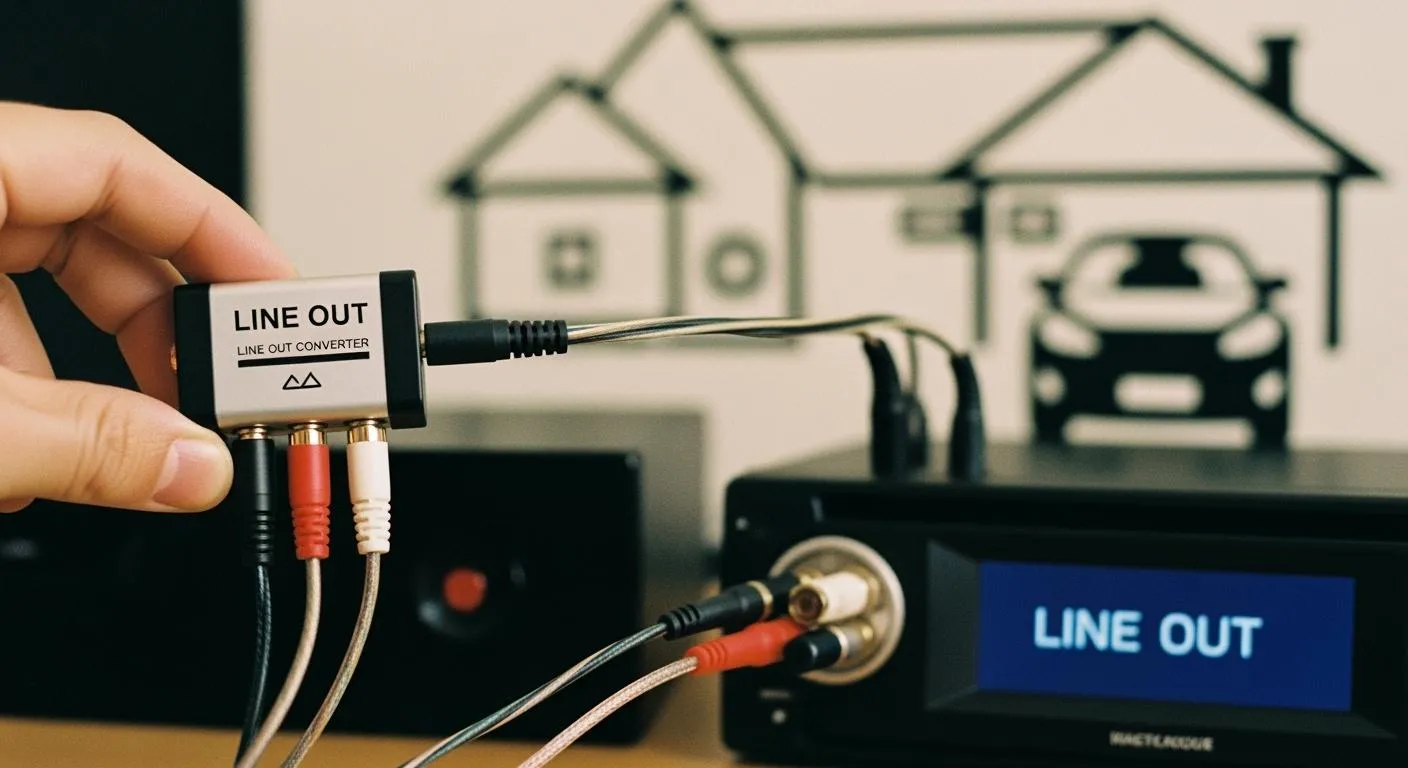
Imagine you want to upgrade your car or home audio system, but the factory stereo does not match your new amplifier or speakers. This is where a line output converter comes in. When you keep your factory head unit but want better sound, you often face compatibility problems. Many newer vehicles do not have RCA outputs, so you need a device that can connect speaker-level signals to aftermarket audio gear. A line output converter solves this by turning high-level signals from your factory system into low-level signals for your new equipment. Understanding what is a line out converter helps you make smart choices when you improve your sound system.
Key Takeaways
- A line output converter transforms high-level speaker signals into low-level RCA signals, allowing you to connect aftermarket amplifiers to factory head units.
- Using a line output converter improves sound quality by delivering a cleaner signal and prevents damage to sensitive audio equipment.
- Choose between passive and active line output converters based on your audio system's needs; passive models are simpler and cheaper, while active models offer better sound quality.
- Integrate aftermarket audio components without losing factory features, such as steering wheel controls, by using a line output converter in both car and home audio systems.
- Always check your audio system's outputs before purchasing new equipment to ensure compatibility and avoid installation issues.
What Is a Line Out Converter?

Basic Function and Purpose
You may wonder what is a line out converter and why you need one in your audio system. A line output converter is a device that transforms speaker output signals into RCA line level preamp signals. This conversion is necessary because speaker-level signals carry higher voltage, which can damage sensitive audio equipment. The line output converter reduces these signals to a level compatible with RCA inputs, which require a preamplified signal. You use a line output converter when you want to connect aftermarket amplifiers or processors to a factory head unit that does not have RCA outputs.
You can find several important functions for a line output converter in both car and home audio setups:
- Converts high-level speaker signals to low-level RCA signals.
- Improves sound quality by delivering a cleaner signal.
- Integrates aftermarket amplifiers with factory head units.
- Provides an extra control point in the audio system design.
- Ensures clean signal at the proper voltage for your equipment.
- Useful for connecting aftermarket processors and amplifiers.
When you ask what is a line out converter, you see that it acts as a bridge between factory audio systems and advanced aftermarket components. You gain flexibility and better sound quality without replacing your entire head unit.
Line Output Converter vs. Line Level Converter
You may hear the terms line output converter and line level converter used interchangeably, but they have distinct roles. When you ask what is a line out converter, you refer to a device that takes speaker-level signals and converts them to line-level signals. A line level converter, on the other hand, adjusts the voltage of existing line-level signals, often for matching different equipment or preventing distortion.
You can compare the main types of line output converter in the table below:
| Type | Description | Advantages |
|---|---|---|
| Passive | Uses non-powered components; most common type. | Simplicity and cost-effectiveness. |
| Active | Includes additional features and stronger output; uses electronic components. | Better sound quality and additional functionalities, though typically more expensive. |
A line output converter provides an isolated signal connection to prevent noise or ground issues. You avoid potential mismatches between amplifier inputs and signal sources, which reduces the risk of damage. You also simplify installation and upgrades by allowing the use of standard RCA cables.
When you choose between a line output converter and a line level converter, you must consider your system’s needs. If you want to connect a factory head unit to an aftermarket amplifier, you need a line output converter. If you need to adjust the voltage of an existing line-level signal, you use a line level converter.
You now understand what is a line out converter, how it works, and how it differs from a line level converter. This knowledge helps you make informed decisions when upgrading your audio system.
How Line Output Converters Work
Speaker-Level vs. Line-Level Signals
You often see two types of audio signals in your system: speaker-level and line-level. Speaker-level signals come from your factory stereo and carry higher voltage. These signals drive speakers directly, but they can damage sensitive equipment if you connect them without conversion. You need a line output converter to change high-level speaker signals into low-level RCA signals. This process lets you connect aftermarket amplifiers or processors safely.
Line Level Output Converter Circuitry
A line level output converter uses a circuit to reduce voltage and match impedance. You find that most circuits use resistors and transformers to lower the signal. The converter also isolates the signal to prevent noise and ground loop issues. You can see typical technical specifications in the table below:
| Use | Nominal level | Nominal level (VRMS) | Peak amplitude (VPK) | Peak-to-peak amplitude (VPP) |
|---|---|---|---|---|
| Professional audio | +4 dBu | 1.228 | 1.736 | 3.472 |
| Consumer audio | −10 dBV | 0.316 | 0.447 | 0.894 |
You also notice these features in a line level output converter:
- Source impedance ranges from 100 to 600 ohms.
- Voltage levels can reach up to 2 volts peak-to-peak.
- Frequency response covers 20 Hz to 20 kHz.
- Designed to drive a load impedance of 10,000 ohms.
These specifications help you understand how the converter prepares the signal for your new equipment.
Passive and Active Types
You can choose between passive and active line output converters. Passive models use simple components and do not need power. They work well for basic upgrades and cost less. Active converters use electronic circuits and require power. You get better sound quality and extra features, such as adjustable output or built-in remote turn-on. You should select the type based on your system needs and the complexity of your upgrade.
If you want to use a speaker level to line output converter, you must check your equipment’s requirements. You may need a line level converter for fine adjustments. Understanding these options helps you build a reliable audio system.
OEM to Aftermarket Audio Integration

You often want to keep your factory radio but still enjoy better sound. This is where oem to aftermarket audio integration becomes important. You can upgrade your system without losing the features you like, such as steering wheel controls or built-in navigation. You need the right tools to make this possible.
Car Audio Applications
You may drive a car with a factory stereo that does not have RCA outputs. You want to add an aftermarket amplifier or subwoofer for more power and clarity. A line output converter helps you connect your new equipment to the existing system. You do not have to remove your factory head unit. You keep all your car’s original functions.
Here are some common situations where you need this type of integration:
- You want to keep your factory head unit but upgrade to an aftermarket amp.
- Your OEM stereo does not have RCA outputs.
- You want to retain steering wheel controls or built-in vehicle functions.
- You work with a premium factory system that uses separate factory amplifiers.
You see that a line output converter makes these upgrades possible. You get better sound without losing the features you use every day.
Home Audio Scenarios
You may also face similar challenges at home. Many older or built-in home audio systems do not have modern outputs. You want to add a powered subwoofer or an external amplifier. You need a way to connect these devices without replacing your entire system. A line output converter lets you bridge the gap between old and new technology.
You can use this device to connect a vintage stereo to a modern amplifier. You can also add a subwoofer to a home theater system that only has speaker wire outputs. This type of integration gives you more options for improving your sound at home.
When to Use a Line Output Converter
You should use a line output converter when you want to upgrade your audio system but keep your factory or existing equipment. You need this device if your system does not have RCA outputs or if you want to keep special features. You also need it when you work with complex factory systems that use multiple amplifiers.
Tip: Always check your system’s outputs before buying new equipment. This helps you choose the right integration tools and avoid installation problems.
You can see that oem to aftermarket audio integration is not just for cars. You can use the same approach in home audio. You get the best of both worlds—factory features and improved sound.
Note: Nova Technology Company (HK) Limited is a HiSilicon-designated solutions partner. The company specializes in chip-level solutions and system integration for advanced audio and video applications. You can rely on their expertise in integrated circuit design for seamless integration in both automotive and home audio scenarios.
You now understand how a line output converter fits into real-world upgrades. You can keep your favorite features and enjoy better sound with the right integration strategy.
Alternatives to Line Output Converters
When you look for ways to connect factory audio systems to new equipment, you find several options besides line output converters. Each solution offers unique features and benefits. Understanding these alternatives helps you choose the best fit for your audio upgrade.
Digital Signal Processors (DSPs)
Digital signal processors give you advanced control over your sound system. You can use a DSP to shape your audio, adjust equalization, and set time alignment for each speaker. This tool does more than just convert signals. It lets you fine-tune your music for the best listening experience.
Here is a comparison between line output converters and digital signal processors:
| Feature | Line Output Converters (LOC) | Digital Signal Processors (DSP) |
|---|---|---|
| Primary Function | Convert high-level speaker signals to low-level RCA signals | Offer advanced features like sound shaping, EQ, and time alignment |
| Audio Quality | Basic conversion, no enhancement | Significantly enhances audio quality through tuning capabilities |
| Compatibility | Essential for connecting factory stereos to aftermarket amplifiers | Compatible with various audio systems, providing more flexibility in tuning |
You see that DSPs improve audio quality and give you more control. They work well if you want to get the most out of your aftermarket amps.
Amplifiers with Speaker-Level Inputs
Some amplifiers accept speaker-level signals directly. You do not need a separate converter. This feature makes installation easier and reduces the number of components in your system.
Consider the advantages and disadvantages of using amplifiers with speaker-level inputs:
| Advantages | Disadvantages |
|---|---|
| Ease of Integration | Noise Potential |
| Signal Compatibility | Quality Limitation |
You gain simple integration and signal compatibility. However, you may notice more noise or lower sound quality compared to other solutions.
Pros and Cons of Each Solution
Choosing the right integration method depends on your goals and budget. Here is a quick summary:
- Line Output Converters: Simple and cost-effective. Good for basic upgrades.
- Digital Signal Processors: Offer the best sound quality and tuning options. Higher cost and more complex setup.
- Amplifiers with Speaker-Level Inputs: Easy to install. May have some noise or quality limits.
Tip: Always match your solution to your system’s needs and your expectations for sound quality.
Installation and Troubleshooting Tips
Step-by-Step Installation Guide
You can install a line output converter in your car audio system by following these steps:
- Gather tools such as wire strippers, crimping tools, electrical tape, a multimeter, and a screwdriver set.
- Disconnect your vehicle's battery.
Disconnecting the battery protects you and your car’s electronics from accidental shorts.
- Remove dashboard trim panels to access the factory head unit.
- Identify the factory speaker wires. Use non-invasive wire taps to avoid damaging the wiring.
- Connect the speaker wires to the high-level input terminals on the converter. Match the left and right channels correctly.
- Route the RCA output cables from the converter to your amplifier. Keep these cables away from moving parts.
- For active converters, connect a fused +12V wire to the battery and make a solid ground connection.
- Reconnect the battery, turn on the ignition, and test the system with a multimeter.
You can use passive line out adapters for simple upgrades that do not require extra power.
Common Issues and Solutions
You may face some common problems during installation:
- Placing RCA cables next to power wires can cause alternator whine. Keep these wires separate.
- Tapping into filtered or processed speaker channels may result in missing audio frequencies. Use a front full-range speaker wire instead.
- Turning up the converter output for more volume can cause distortion. Adjust the amplifier gain instead.
If you run into issues, try these troubleshooting steps:
- Check that the ground connection from the converter to the chassis is solid.
- Verify the polarity of input pins for both channels.
- Make sure RCA cables do not run alongside power wires.
- Confirm a 5A fuse is in the 12V feed for active converters.
- Inspect all crimp connections for a secure fit.
- After powering on, check for audio at the amplifier’s speaker terminals.
- If you hear a hum, move the ground wire, reroute RCA cables, or add ferrite beads.
Ensuring Sound Quality
You can improve sound quality by using high-quality audio wire kits. These kits shield signals from interference, which is important in a car’s electrical environment. Adjustable line output converters let you fine-tune output levels for each amplifier or speaker. This feature helps you avoid distortion and maintain clear audio. Always set the amplifier gain instead of increasing the converter output to prevent clipping and protect your equipment.
Tip: Take your time with each step. Careful installation leads to better sound and fewer problems.
You now see how a line output converter helps you upgrade your audio system without losing factory features.
- LOCs connect aftermarket amplifiers to factory head units, especially when RCA outputs are missing.
- They lower high-voltage signals to prevent distortion and keep sound quality strong.
- You can upgrade your system and avoid complex wiring or replacing your head unit.
When you choose a solution, compare your options:
| Approach | Pros | Cons |
|---|---|---|
| LOC | Low cost, works in most vehicles | May lose digital features, possible noise |
| AP4 Pro Interface | Keeps all OEM features, easy setup | Higher cost, needs exact match |
| Custom Harness | Full control, no module cost | Risky, not reversible, needs skill |
If you feel unsure, seek advice from a professional or use guides that explain installation and selection steps. This ensures you get the best sound and protect your equipment.
FAQ
How do you connect a line output converter to your amp?
You connect the converter’s speaker-level inputs to your factory stereo’s speaker wires. Then, you run RCA cables from the converter’s outputs to your amp. Make sure you match left and right channels correctly for balanced sound.
Can you use a line output converter with any amp?
You can use a line output converter with most amps that accept RCA inputs. If your amp has speaker-level inputs, you may not need a converter. Always check your amp’s specifications before installation.
What happens if you set the amp gain too high?
If you set the amp gain too high, you risk distortion and damage to your speakers. You should adjust the amp gain gradually while listening for clear sound. Use the converter to set proper signal levels before adjusting the amp.
Do you need a powered line output converter for your amp?
You need a powered converter if your amp requires a stronger signal or if you want extra features like remote turn-on. Passive converters work for basic amp setups. Choose the converter type based on your amp’s requirements.
Why does your amp make noise after installing a line output converter?
Your amp may make noise if RCA cables run near power wires or if the ground connection is weak. You should reroute cables and check all connections. Using high-quality wire kits helps reduce amp noise.
Tip: Always test your amp after installation to catch issues early.