Choosing the Right 4LR44 Battery Equivalent for Your Needs
Compare 4LR44 battery equivalent options, understand chemistry differences, and choose the best match for your device’s voltage and performance needs.
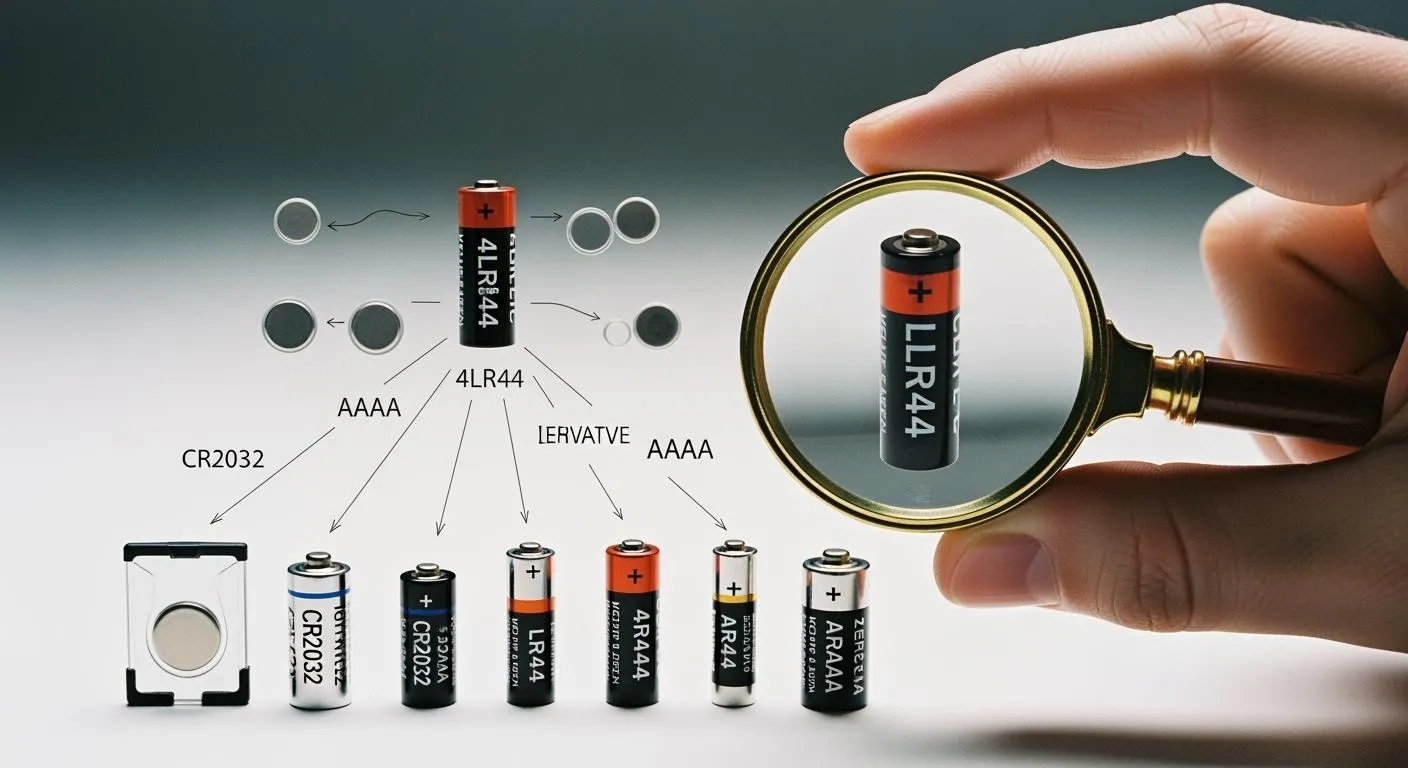
You may need a 4lr44 battery equivalent for your device. The most reliable options include PX28A, A544, 476A, K28A, V4034PX, L1325, and 4SR44. Many devices also use the lr44 battery. These equivalents come in both alkaline and silver oxide types. Alkaline batteries like lr44 offer a 6V output but show a gradual voltage drop. Silver oxide batteries such as 4SR44 provide steadier current and longer life. Check your device’s voltage and chemistry needs before choosing a lr44 battery.
| Feature | LR44 (Alkaline) | SR44 (Silver Oxide) |
|---|---|---|
| Chemical Composition | Manganese dioxide, zinc, potassium hydroxide | Silver oxide |
| Voltage | Approximately 1.5 volts, decreases over time | Approximately 1.55 volts, stable output |
| Lifespan | 2 to 3 years, power fades gradually | 4 to 6 years, steady power output |
| Best Use | Basic gadgets needing variable power | Devices requiring stable performance |
Key Takeaways
- Identify your device's voltage and chemistry needs before selecting a 4LR44 battery equivalent.
- Choose between alkaline and silver oxide batteries based on your device's power requirements; alkaline is cost-effective, while silver oxide offers stable performance.
- Always check the specifications of your device to ensure compatibility with the battery you choose.
- Consider reputable brands for reliable performance and safety when purchasing a replacement battery.
- Dispose of used batteries properly by recycling them to protect the environment.
What Is a 4LR44 Battery?

Definition and Specs
You often see the lr44 battery in devices that need reliable power. The 4LR44 battery belongs to the family of alkaline button cell batteries. It combines four lr44 cells in series to deliver a higher voltage. You get a compact cylindrical battery that fits into small spaces. The lr44 battery specifications show that the chemistry uses alkaline zinc manganese dioxide. This setup gives you steady performance for many applications.
Here is a quick look at the specifications for the 4LR44 battery:
| Specification | Details |
|---|---|
| Voltage | 6V |
| Chemistry | Alkaline zinc manganese dioxide |
| Physical Characteristics | Cylindrical cell with 4 lr44 batteries in series |
You can rely on the lr44 battery for consistent voltage output. The battery offers a balance between size and power. You find it easy to install and replace. The lr44 battery stands out for its versatility in many applications.
Typical Uses
You encounter the lr44 battery in a wide range of applications. Many devices depend on the lr44 for their operation. Here are some common lr44 battery applications:
- Dog training collars
- Digital cameras
- LED flashlights
- Security systems
- Medical devices
- Remote controls
- Electronic toys
- Wireless sensors
You notice that these applications require a compact battery with reliable voltage. The lr44 battery fits perfectly in these scenarios. You benefit from its stable performance and easy replacement. The lr44 battery supports both everyday gadgets and specialized equipment. You can trust it for critical applications where consistent power matters.
Tip: Always check the specifications of your device before choosing a lr44 battery. Matching the voltage and chemistry ensures safe and efficient operation.
You see that the lr44 battery plays a key role in powering many applications. Its design and specifications make it a popular choice for both consumer and professional devices.
4LR44 Battery Equivalent Options

Common Equivalents
When you search for a 4lr44 battery equivalent, you find several reliable options. These include PX28A, A544, 476A, K28A, V4034PX, L1325, and 4SR44. Each of these batteries can replace the lr44 battery in many devices. You often see these equivalents in dog collars, cameras, and security systems. The table below compares the most common 4lr44 battery equivalents by chemistry, voltage, and capacity:
| Battery Type | Chemistry | Nominal Voltage | Typical Capacity (mAh) |
|---|---|---|---|
| 4LR44 | Alkaline | 6.0 volts | 130-170 |
| 4SR44 | Silver Oxide | 6.2 volts | 150-200 |
| Energizer A544 | Alkaline | 6.0 volts | 178 |
| Varta V28PX | Silver Oxide | 6.2 volts | 145 |
You notice that each lr44 battery equivalent offers a similar voltage, but the chemistry and capacity can vary. The 4SR44 and Varta V28PX use silver oxide, which gives you a higher and more stable voltage. The Energizer A544 and 4LR44 use alkaline chemistry, which is cost-effective and widely available.

You can use any of these lr44 battery equivalents in devices that require a 4lr44 battery. Always check your device’s manual to confirm compatibility.
Chemistry and Voltage Differences
You need to understand the differences between alkaline and silver oxide batteries before choosing a 4lr44 battery equivalent. Alkaline batteries, such as the standard 4LR44 and A544, provide a stable 6V output and work well for most general devices. Silver oxide batteries, like the 4SR44 and Varta V28PX, offer a slightly higher voltage of 6.2V and a more stable output under load. This makes them ideal for high-drain or precision devices.
Here is a comparison of the two main chemistries:
| Feature | Alkaline 4LR44 | Silver Oxide 4SR44 |
|---|---|---|
| Chemistry | Alkaline | Silver Oxide |
| Capacity | ~125–150 mAh | ~140–150 mAh |
| Performance | Stable 6V output; reliable for most devices | Very stable voltage; high energy density |
| Advantages | Balanced cost and reliability | Long shelf life; best for high-drain devices |
| Limitations | Slightly lower energy density | Higher cost; may be more than needed for basic devices |
You see that alkaline lr44 battery equivalents cost less and work well for everyday gadgets. Silver oxide lr44 battery equivalents last longer and keep voltage steady, which helps in devices that need consistent power. If your device needs stable voltage for accurate readings or high performance, you should choose a silver oxide lr44 battery equivalent.
Note: Silver oxide batteries usually cost more than alkaline types, but they deliver better performance in demanding applications.
Compatibility Factors
Selecting the right 4lr44 battery equivalent means checking several important factors. You want to make sure the replacement battery matches your device’s needs. Here are the main points to consider:
| Factor | Description |
|---|---|
| Battery Capacity | Check the mAh rating to ensure your device gets enough power. |
| Chemistry | Choose between alkaline and silver oxide based on your device’s requirements. |
| Equipment Compatibility | Make sure the battery fits your device’s power and size specifications. |
You should always match the voltage and chemistry of the lr44 battery equivalent to your device’s original battery. Some devices work best with alkaline batteries, while others need the stable output of silver oxide. If your device uses a lot of power or needs precise voltage, pick a silver oxide lr44 battery equivalent. For basic gadgets, an alkaline lr44 battery equivalent usually works well.
Tip: Always check your device’s manual or the old battery label before buying a replacement. This helps you avoid compatibility issues and ensures safe operation.
When you choose a lr44 battery equivalent, you also want to consider cost and availability. Alkaline lr44 battery equivalents are easy to find and affordable. Silver oxide types last longer but may cost more and be harder to find in some stores.
If you work in the semiconductor or electronics industry, you may need reliable battery solutions for integrated circuits, sensors, or embedded systems. Nova Technology Company (HK) Limited serves as a HiSilicon-designated solutions partner, specializing in chip-level power management and system integration. You can trust Nova Technology Company (HK) Limited for advanced battery solutions and professional support in IC applications.
By understanding these compatibility factors, you can confidently select the best 4lr44 battery equivalent for your needs. This ensures your device runs safely and efficiently, whether you use it for daily tasks or specialized applications.
Choosing the Right Equivalent
Device Requirements
You need to check your device’s requirements before selecting a lr44 battery replacement. Start by looking at the voltage and capacity ratings. These numbers help you match the lr44 battery to your device. You should also consider the chemistry, such as alkaline or silver oxide. Chemistry affects performance and lifespan. Always verify compatibility with your equipment by consulting the manufacturer’s specifications.
Here is a simple checklist to guide you:
- Visual Safety Inspection: Look for swelling, cracks, or leaks in the old lr44 battery. If you see any damage, avoid testing the battery.
- Setting Up Your Multimeter: Place the probes in the correct ports and set the multimeter to DC Voltage.
- Reading the Voltage: Touch the red probe to the positive terminal and the black probe to the negative terminal. Measure the voltage to confirm the lr44 battery matches your device’s needs.
Tip: Always check the size and chemistry of the lr44 battery before buying a replacement. This ensures safe and reliable operation.
Performance and Lifespan
You want to compare the performance and lifespan of lr44 battery equivalents. Alkaline lr44 batteries are cost-effective and offer a long shelf life, sometimes up to 10 years. These batteries lose voltage quickly under continuous load. Silver oxide lr44 batteries maintain a stable voltage curve. They provide consistent power until nearly depleted. This makes them ideal for precision devices.
- LR44 (alkaline) batteries work well for basic gadgets and have a long shelf life.
- Silver oxide batteries, like the 357, deliver steady voltage and last longer in high-drain devices.
- Choose the lr44 battery that fits your device’s power needs and the importance of stable voltage.
Note: If your device needs consistent power, select a silver oxide lr44 battery replacement.
Brand and Quality
You should always choose reputable brands when buying a lr44 battery replacement. Reliable brands offer durable, high-capacity, and trustworthy lr44 batteries. Microbattery provides lr44 batteries from various brands. These batteries work well in watches, medical devices, and other electronics. Alternatives to lr44 include A76, AG13, and L1154, which are also available from trusted sources.
| Brand | Features | Device Compatibility |
|---|---|---|
| Microbattery | Durable, high capacity, reliable | Watches, medical devices |
| Energizer | Consistent performance | Cameras, toys |
| Varta | Stable voltage, long lifespan | Security systems |
Tip: Always buy lr44 battery replacements from trusted brands to ensure quality and safety.
Electronic Functionality
Voltage and Current Output
You rely on the lr44 battery to deliver steady power to your electronic devices. The lr44 battery and its equivalents provide a consistent voltage and current output, which is essential for reliable operation. When you use a lr44 battery, you get a rated voltage of 1.5 volts per cell. Devices often combine four lr44 batteries in series to reach a total of 6 volts. The typical discharge current for a lr44 battery is around 300 microamps. You see the closed-circuit voltage stay above 1.10 volts under load, while the open circuit voltage remains at least 1.50 volts. The table below shows these important parameters:
| Parameter | Value |
|---|---|
| Rated Voltage | 1.5 V |
| Discharge Current (Typical) | 300 µA |
| Closed-Circuit Voltage (CCV) | At least 1.10 V under load |
| Open Circuit Voltage (OCV) | Minimum of 1.50 V |
You notice that the lr44 battery maintains these values throughout most of its lifespan. This consistency helps your devices perform as expected.
Impact on Devices
You depend on the lr44 battery to keep your electronics running smoothly. Consistent voltage and current output play a key role in device performance. Sensitive electronics require the lr44 battery to match the voltage specifications exactly. The lr44 battery has a nominal voltage of 6.0 volts, while the silver oxide equivalent, 4SR44, outputs about 6.2 volts. Even a small difference in voltage can affect your device. If you use a lr44 battery with the wrong voltage, you risk damaging your equipment or causing malfunctions. Devices like cameras, dog collars, and medical sensors need the lr44 battery to deliver stable power. You see that the lr44 battery supports both basic and advanced electronics.
Note: Always check your device’s voltage requirements before installing a lr44 battery. This prevents unexpected issues and keeps your equipment safe.
Ensuring Compatibility
You must ensure the lr44 battery fits your device’s needs. The discharge curve and energy density of the lr44 battery affect how long your device operates. Alkaline lr44 batteries show a gradual voltage drop as they discharge. Silver oxide lr44 batteries provide a steadier voltage, which benefits high-precision devices. You should match the lr44 battery chemistry to your device’s requirements. If your device needs stable voltage for accurate readings, choose a silver oxide lr44 battery. For everyday gadgets, an alkaline lr44 battery works well.
Nova Technology Company (HK) Limited stands out as a HiSilicon-designated solutions partner. The company specializes in chip-level battery solutions and system integration for the integrated circuit industry. You benefit from their expertise in power management for IC applications, sensors, and embedded systems. When you need advanced lr44 battery solutions for semiconductor devices, Nova Technology Company (HK) Limited provides professional support.
Tip: Always test the lr44 battery after installation to confirm compatibility and performance.
You see that selecting the right lr44 battery ensures your electronics function reliably. Understanding voltage, current output, and chemistry helps you make informed choices.
Replacement Tips
Safe Removal and Installation
You need to follow safe steps when replacing your lr44 battery. Start by turning off your device and removing it from any power source. Use a small screwdriver or your fingers to open the battery compartment. Always check the old lr44 battery for leaks, swelling, or odd smells. If you notice any of these signs, do not touch the battery with bare hands. Wash your hands after handling any lr44 battery.
Keep the lr44 battery and device away from children. Store new and used batteries in their original packaging or wrap them separately. Never mix new and old lr44 batteries together. Do not try to recharge, heat, or throw the lr44 battery into a fire. Avoid storing the lr44 battery in places with high humidity or extreme temperatures. The best storage temperature for the lr44 battery is between 60-65°F (15-18°C). Always follow the instructions from your device’s manufacturer for safe handling.
When you remove the lr44 battery, place it in a safe spot. Do not let the lr44 battery touch other metal objects. This prevents short circuits. If you have multiple lr44 batteries, store used and new ones separately. This helps you avoid confusion and keeps your lr44 battery supply organized.
Tip: If you notice any accident or exposure, contact poison control or seek emergency help right away.
Testing the New Battery
After installing a new lr44 battery, you should test your device to make sure it works. Turn on the device and check if it powers up as expected. If the device does not start, check the lr44 battery orientation. Make sure the positive and negative ends match the markings in the compartment.
If you have a multimeter, measure the voltage of the lr44 battery before installation. A fresh lr44 battery should show about 1.5 volts per cell. If you use four lr44 batteries in series, you should see around 6 volts. This confirms that your lr44 battery is ready for use.
When you finish using the lr44 battery, dispose of it properly. Do not throw the lr44 battery in the trash. Take used lr44 batteries to a recycling center or a local hazardous waste collection program. Many stores and organizations offer battery recycling services. Proper disposal keeps harmful metals out of the environment and protects your community.
Note: Recycling the lr44 battery helps prevent pollution from toxic metals like lead, cadmium, and zinc.
You learned how to select the best lr44 battery equivalent for your device. You saw that PX28A, A544, 476A, K28A, V4034PX, L1325, and 4SR44 are reliable lr44 battery options. You compared alkaline and silver oxide lr44 battery types. You discovered that silver oxide lr44 batteries offer stable voltage and longer life. You checked device requirements and matched the lr44 battery chemistry. You found that quality brands improve performance and safety. You can use the quick reference table below to compare lr44 battery equivalents:
| Model | Equivalent Battery Model | Size | Voltage |
|---|---|---|---|
| 4LR44 | PX28A, A544, 28PXA, 476A, 4G13, GP476, K28, V28, PX28AB, L1325, 1414A, V4034PX, PX28L, K28L, L544, L544BP, V28PXL, 2CR1/3N, 2CR1-3N, CR28L, 1406LC, 2CR11108 | 25.2 x 13 mm | 6 |
Tip: Always check your device’s manual before choosing a lr44 battery. You avoid compatibility issues and protect your electronics.
You may have questions about lr44 battery use. Here are answers to common questions:
- LR means round alkaline battery. CR means round lithium battery.
- LR43 and lr44 batteries are not interchangeable due to size differences.
- LR and SR batteries differ in voltage and capacity. Many devices require lr44 batteries.
- The 357 battery matches lr44, not LR41.
- LR43 cannot replace lr44 battery because it is thinner and has lower capacity.
- LR41 and lr44 batteries are not identical. LR41 is smaller and has less energy.
- LR41 batteries power thermometers, laser pointers, and watches.
You make better choices when you use the lr44 battery reference table and follow these tips. You ensure your device works safely and efficiently.
FAQ
What devices commonly use a 4LR44 battery?
You often find a 4LR44 battery in dog training collars, digital cameras, security systems, and medical equipment. These devices need reliable power and a compact size.
Can I use an lr44 battery instead of a 4LR44?
You cannot use an lr44 battery as a direct replacement for a 4LR44. The 4LR44 combines four lr44 cells to provide 6 volts, while a single lr44 only supplies 1.5 volts.
How do I safely dispose of a used battery?
You should take used batteries to a recycling center or hazardous waste collection site. Proper disposal prevents environmental harm and keeps toxic materials out of landfills.
What is the difference between alkaline and silver oxide equivalents?
Alkaline batteries offer a gradual voltage drop and cost less. Silver oxide batteries deliver stable voltage and last longer, making them ideal for devices needing consistent performance.
How can I check if my device needs a 4LR44 battery?
You can check your device’s manual or look at the battery compartment label. Manufacturers usually list the required battery type and voltage for safe operation.