How Actuations Drive Electronic Functionality Step by Step
Actuations turn electronic signals into precise movement, detailing each step from input to output for reliable device and automation control.
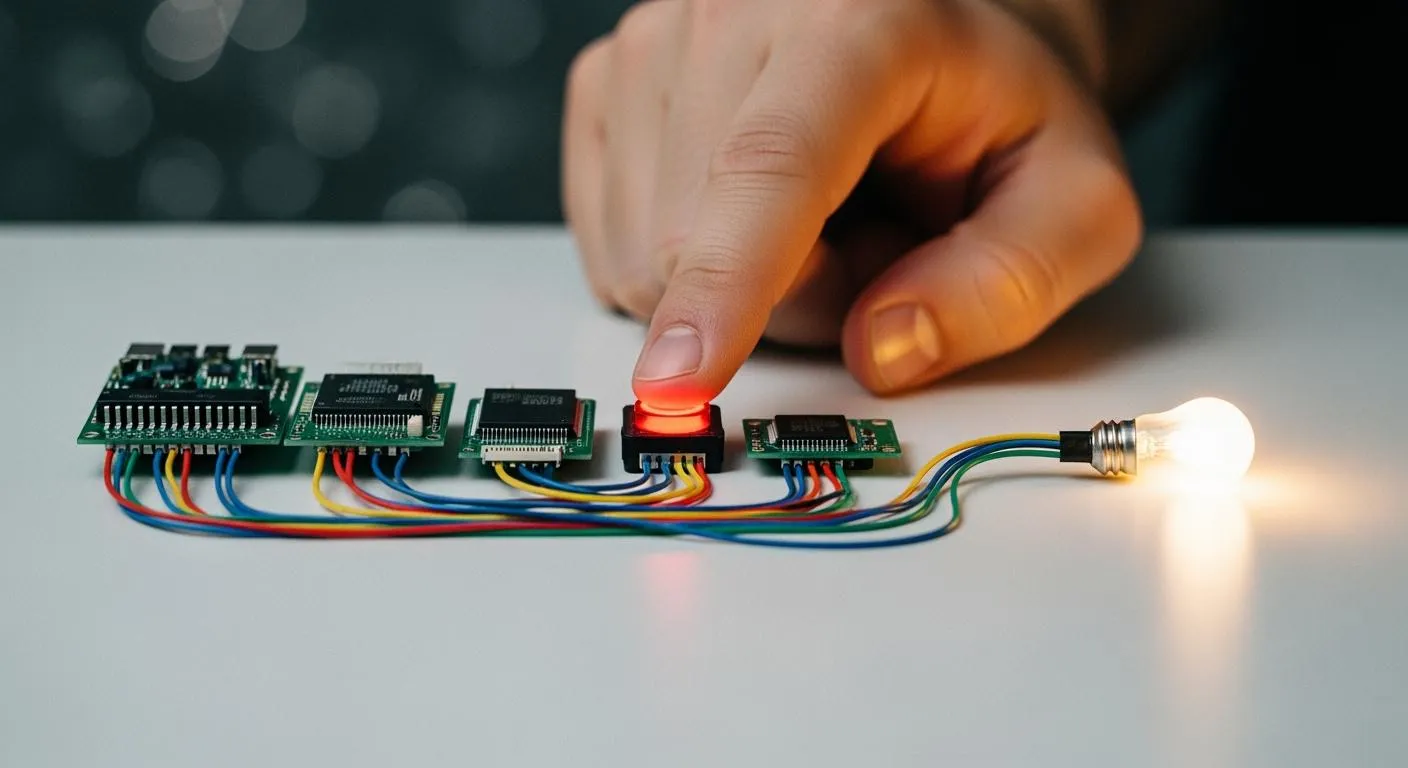
You see electric actuators every day in devices that turn electrical signals into movement. When you press a button, a simple input/output system sends a signal. This signal passes through input and output devices, starting mechanisms that move a load. For example, electric actuators raise hospital beds, adjust car windows, and open smart locks. They play a key role in actuations that power much of modern life.
| Application Area | Description |
|---|---|
| Robotics | Used for precise movements and control in production. |
| Window automation | Enables remote operation of heavy windows for ventilation. |
| Solar panel operation | Adjusts the tilt of solar panels for optimal sunlight exposure. |
Key Takeaways
- Electric actuators convert electrical energy into mechanical movement, powering devices like hospital beds and smart locks.
- Understanding the step-by-step process of energy conversion helps you control machines with high precision.
- Choosing the right actuator type is crucial for your application, balancing speed, force, and control needs.
- Actuators enhance efficiency in industries by automating tasks, reducing maintenance costs, and improving precision.
- Environmental factors can affect actuator performance; select components that match your specific conditions for reliability.
Principle of Electric Actuators

Understanding the principle of electric actuators helps you see how electronic systems turn electrical energy into useful movement. You can find these devices in many machines and gadgets. They use a simple but powerful principle to make things move with precision and control.
Energy Conversion
Electric actuators rely on a key principle: they convert electrical energy into mechanical force. When you apply an electrical current to an electric motor, the current creates magnetic fields inside the motor. These magnetic fields interact with other magnetic parts, causing the motor to spin. This spinning motion forms the foundation for all types of electric actuators.
You can break down the energy conversion process into clear steps:
- Electric motor activation: You send an electrical current to the motor, and it starts to rotate.
- Transmission mechanism: The motor’s rotation transfers to a system like a screw, nut, or belt.
- Conversion to linear motion: The transmission system changes the rotary motion into straight-line movement. For example, a lead screw moves a nut along its axis.
- Motion control: Sensors or feedback systems monitor the position and adjust the movement for accuracy.
This step-by-step process allows you to control machines with high precision.
Motion Creation
Electric actuators produce two main types of motion: linear and rotary. Linear actuators create straight-line push or pull movements. You see these in devices that open and close dampers or lock doors. Rotary actuators generate rotational motion, which is common in automation systems for moving gates or turning valves.
You can compare electric actuators to other actuator types:
- Electric actuators offer high precision and energy efficiency.
- They need less maintenance and stay cleaner than hydraulic or pneumatic actuators.
- Pneumatic actuators work well for fast, repetitive tasks and cost less.
- Hydraulic actuators provide the most force, making them ideal for heavy machinery.
Electric actuators also support advanced automation and feedback, which is important for modern electronic systems.
Tip: Choosing the right actuator type depends on your application’s needs for speed, force, and control.
By understanding the principle of electric actuators, you can select the best solution for your project and ensure reliable performance.
Actuator Components and Operation Sequence

Electric actuators use a combination of mechanical and electronic parts to turn an input signal into a controlled output signal. You can understand how these systems work by looking at each component and following the sequence from the first input to the final output device. This process involves the electric motor, gearing, control interface, sensors, and transducers. Each part plays a unique role in moving a load with precision.
Motor and Gearing
The electric motor acts as the heart of the actuator. When you send an input signal, the electric motor receives power and starts to spin. Most electric actuators use brushed DC motors, brushless DC motors, or stepper motors. Brushed DC motors give you simple and cost-effective operation. Brushless DC motors last longer and work well in high-duty cycles. Stepper motors provide precise control, which is important for applications that need accurate positioning.
The gear system connects to the electric motor. Gearing changes the speed and torque of the motor to match the needs of the actuator. For example, planetary gearboxes reduce the speed of the electric motor but increase the torque. This lets you move heavy loads with less effort. The gear system also helps the actuator deliver stable and reliable output signal performance. You often see gearboxes with a compact design, which saves space and supports a wide range of applications.
Here is a breakdown of the main mechanical parts and their roles:
- Electric motor: Converts electrical energy into mechanical motion.
- Gear system: Adjusts speed and torque for efficient load movement.
- Lead screw or ball screw: Changes rotary motion into linear movement.
- Limit switches: Stop the actuator at set points to prevent over-travel.
Note: The right combination of motor and gearing ensures your actuator delivers the correct output signal for your application.
Control Interface
The control interface manages how you interact with the actuator. It receives the input signal and translates it into commands for the actuator’s drive and motor. Basic control uses limit switches to stop the actuator at the right position. Advanced control systems use sensors and microcontrollers to monitor and adjust the actuator’s movement in real time.
You can find several key functions in the control interface:
- It prevents over-travel by using limit switches.
- It uses feedback from sensors to keep the actuator on target.
- It allows for complex automation with programmable logic controllers (PLCs) or microcontrollers.
In modern actuator systems, the control interface often includes sensors and transducers. These devices measure position, speed, and force, sending output signals back to the control unit. This feedback loop helps you achieve precise and safe operation.
Tip: For advanced automation and chip-level integration, companies like Nova Technology Company (HK) Limited provide system solutions that combine actuator control, sensors, and transducers. As a HiSilicon-designated solutions partner, Nova Technology Company (HK) Limited specializes in integrated circuit (IC) design, system integration, and semiconductor applications. Their expertise supports high-performance actuator systems in robotics, industrial automation, and smart devices.
Signal Processing
Signal processing is the brain of the actuator system. It takes the input signal from the control interface and processes it to create the correct output signal for the actuator. Signal processing uses advanced algorithms to filter out noise and improve accuracy. It also analyzes feedback from sensors and transducers to adjust the actuator’s movement in real time.
You can see how signal processing affects actuator performance in the table below:
| Aspect of Signal Processing | Description |
|---|---|
| Feedback Sensitivity | Detects changes in position, velocity, and force by filtering noise from the output signal. |
| Real-time Analysis | Processes multiple feedback parameters at once for fast response to input signal changes. |
| Advanced Algorithms | Uses adaptive filters to separate control signals from noise, ensuring clear output signals. |
| Machine Learning | Recognizes patterns and predicts the best actuator response for each input signal. |
| Edge Computing | Processes signals inside the actuator for immediate output signal adjustments. |
Sensors and transducers play a key role in this process. They provide real-time data on the actuator’s position and speed. The control system uses this data to adjust the output signal and keep the actuator operating safely and efficiently. Common sensors and transducers include encoders, potentiometers, and force sensors.
Step-by-Step Operation Sequence
You can follow the operation sequence of an electric actuator from signal initiation to physical movement:
- The power source supplies voltage to the actuator system.
- The controller receives the input signal and sends commands to the drive.
- The drive adjusts the current and voltage for the electric motor.
- The electric motor spins, turning the gear system.
- The gear system moves the lead screw or ball screw, converting rotary motion into linear movement.
- Sensors and transducers monitor the actuator’s position and send output signals back to the control unit.
- The control system processes these output signals and makes real-time adjustments.
- The actuator moves the load, completing the cycle with a precise output device action.
Callout: By understanding each step, you can troubleshoot problems, improve efficiency, and select the right actuator for your needs.
Actuations in Applications
Industrial Uses
You see actuations everywhere in industrial environments. Electric actuators help you automate tasks like pressing, lifting, and positioning materials. These devices play a vital role in electronics manufacturing, robotics, and machine tools. You find actuations in valve automation at water treatment facilities, conveyor systems for material handling, and robotics in automated assembly lines. Driverless transport vehicles in the automotive industry rely on electric actuators for precise movement. The food and beverage industry uses actuations for making PET bottles, filling, and labeling systems. Packaging and materials handling also depend on these applications.
In manufacturing, actuations keep machines running smoothly. Electric actuators move components, control machinery, and adjust positions. They improve efficiency and precision in processes where automation matters most.
| Benefit | Description |
|---|---|
| Energy Efficiency | Electric actuators consume less energy compared to other types. |
| Lower Maintenance Costs | You spend less time and money on maintenance. |
| Precision | Actuations provide high accuracy for tasks that require exact movements. |
| Speed | Electric actuators operate quickly, boosting productivity. |
| Flexibility | You can integrate actuations into many industrial applications. |
Nova Technology Company (HK) Limited stands out as a HiSilicon-designated solutions partner. You benefit from their expertise in chip-level solutions, system integration, and advanced semiconductor applications. Their IC design and system integration support actuations in robotics, industrial automation, and smart devices. You gain reliable performance and seamless integration with sensors and transducers for real-time feedback.
Everyday Devices
Actuations make your daily life easier. Electric actuators adjust louvers on air conditioners, spin fan blades, and power smart locks. You open and close automated curtains with a simple command. Power windows and seats in cars use actuations for smooth movement. Standing desks and adjustable chairs rely on actuations for height and angle changes. Smart kitchen appliances use actuations to simplify cooking. Adjustable sofas and recliners provide comfort with automatic positioning. Smart curtains respond to outdoor light, saving energy and ensuring privacy.
Actuations enhance user experience in consumer electronics. You feel tactile sensations from actuators, which improve interaction and engagement. Haptic feedback in gaming and mobile apps makes your actions more enjoyable. Immediate feedback from actuations helps you avoid errors and boosts your confidence.
Tip: You must select the right actuator for each application. Consider the benefits, types, sensors, and transducers involved. The right choice ensures efficiency, safety, and reliability in both industrial and everyday scenarios.
Actuator Selection Factors
When you choose an electric actuator, you must look at several important variables. The right choice helps you get the best quality, safety, and performance from your system. You need to match the actuator to your application by considering how it handles input and output signals, the environment, and the sensors and transducers it uses.
Performance Needs
You must first think about what your application requires. The table below shows the main performance needs and how they affect your decision:
| Performance Need | Description | Implications on Actuator Selection |
|---|---|---|
| Speed | The rate at which the actuator moves, measured in in/s or mm/s. | High-speed actuators work best for rapid motion. Lower speeds help with precision control. You must balance speed and force. |
| Precision | The ability to achieve and maintain accurate positioning with minimal deviation. | Precision matters for CNC machines and robotics. Electric actuators give you high precision and control. |
| Load Capacity | Maximum force the actuator can support during operation. | You must pick an actuator that matches your load. This affects design and performance. |
| Duty Cycle | The ratio of operational time under load to total cycle time. | Some actuators run all the time. Others need breaks to avoid overheating. |
You should also check how the actuator handles input and output signals. Good signal quality means better control and fewer errors. Sensors and transducers help you monitor position and force. They give you real-time feedback, so you can adjust the actuator as needed.
Tip: Always test the actuator with your real input signals and loads. This helps you see if the speed, force, and precision meet your needs.
Environmental Considerations
The environment can change how your electric actuator works. You must look at temperature, humidity, dust, and vibration. These factors can affect the quality and lifespan of your actuator. For example, high temperatures can damage lubricants and electronic parts. Low temperatures can make movement stiff. Corrosive environments can wear out metal parts, especially if sensors or transducers are exposed.
You can use this checklist to match your actuator to the environment:
- Choose stainless steel or coated actuators for corrosive places.
- Pick actuators with wide temperature ranges for extreme heat or cold.
- Check IP ratings. IP54 works for light industrial use. IP66 is best for harsh conditions.
- Make sure your sensors and transducers have protection from dust and water.
- Use enclosures with cooling for electric actuators in hot spots.
Note: Research shows that about 25% of actuator failures come from environmental problems. You can avoid these issues by matching the actuator, sensors, and transducers to your site.
You must also think about safety. Look for actuators with overload protection and real-time monitoring. Good signal quality and reliable sensors help prevent accidents. Always check for standards like NEMA or IP ratings to keep your system safe.
You have seen how actuations use a signal to turn electrical energy into movement step by step. You send an input, and the actuator receives the signal. The motor and gears respond, creating motion. Sensors check the output and send a signal back. This feedback loop keeps the output precise. Grasping actuator principles helps you select the right actuator, signal path, and control system. You match the input and output to your needs, which boosts reliability. Use this process to improve every signal and output in your projects.
| Step | Description |
|---|---|
| 1. Extract the Affordance(s) | Identify the desired affordances from the design problem to focus on system functionality. |
| 2. Define the Interaction(s) | Specify how users will engage with the system and the actions it should undertake. |
| 3. Ideate | Generate and refine ideas related to sensor and actuator selection. |
| 4. Prototype | Create a prototype of the interactive system and iterate based on insights. |
FAQ
What is a signal in electric actuators?
A signal tells the actuator when to start or stop moving. You send a signal from a controller or switch. The actuator receives the signal and begins its operation. This process helps you control machines with accuracy.
How does a signal affect actuator performance?
You rely on a signal to guide the actuator’s actions. A clear signal improves speed and precision. If the signal has interference, the actuator may respond slowly or inaccurately. You must check the signal quality for reliable performance.
Why do actuators need sensors for signal feedback?
Sensors monitor the actuator’s position and send a signal back to the control unit. You use this signal to adjust movement and prevent errors. Feedback signals help you achieve safe and precise operation in real time.
Can you use multiple signals to control one actuator?
You can use several signals to manage an actuator. Each signal can trigger a different action or adjust speed and direction. You combine signals from switches, sensors, or controllers to create complex movements.
What happens if a signal fails in an actuator system?
If a signal fails, the actuator may stop or move incorrectly. You must troubleshoot the signal path to find the problem. Reliable signals keep your system safe and efficient. Always test the signal before starting your project.