The Role of ESR Capacitors in Efficient Circuit Design
An esr capacitor minimizes energy loss and heat, ensuring stable voltage and reliable performance in efficient circuit design.
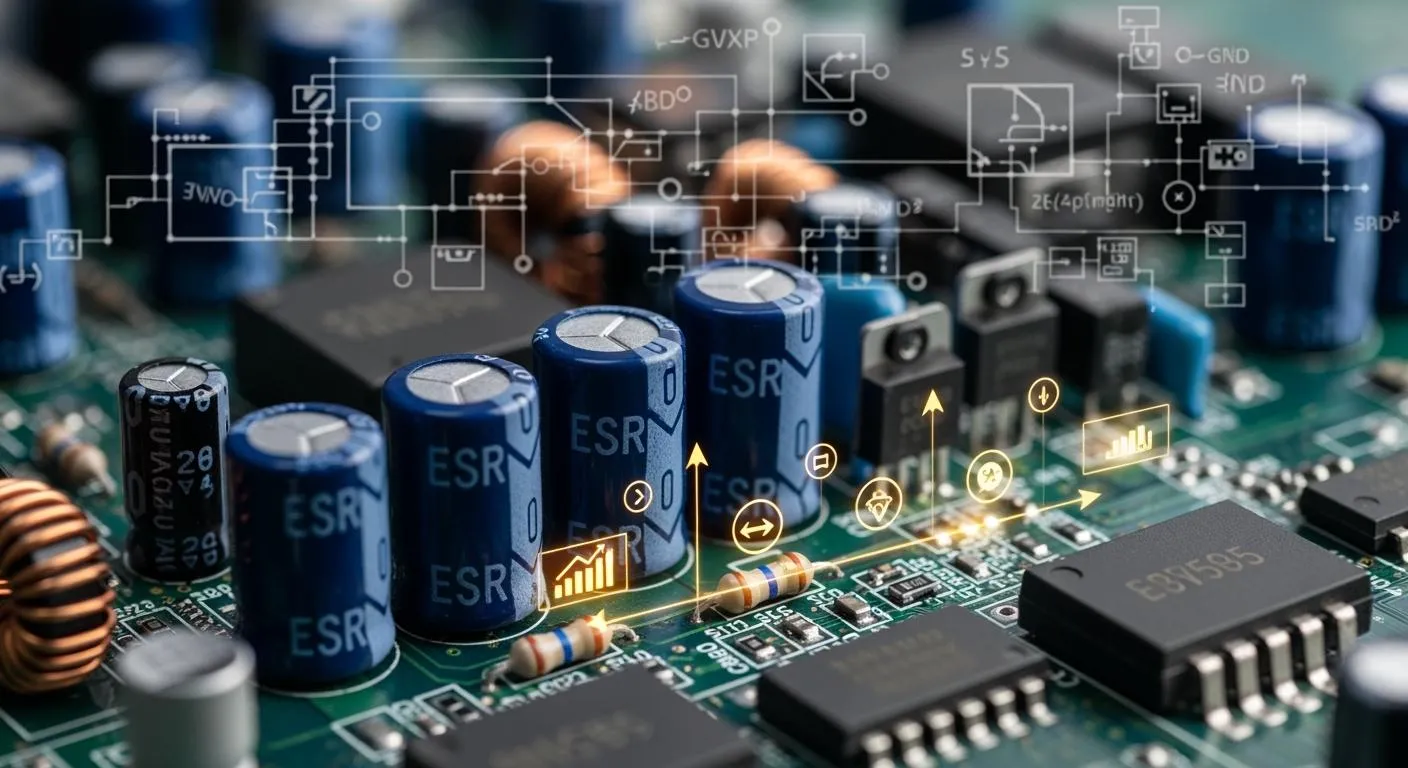
You often encounter the term ESR capacitor when working with electronic circuits. ESR, or equivalent series resistance, describes the internal resistance that appears in a real capacitor. This resistance matters because it influences how much heat the component generates and how efficiently it transfers energy. High ESR can cause excessive self-heating, limit maximum current, and reduce the lifespan of your circuit. Low ESR, on the other hand, helps keep voltage stable and improves performance. Understanding ESR allows you to select the right capacitor for reliable and efficient designs.
Key Takeaways
- Understand ESR: Equivalent Series Resistance (ESR) affects how capacitors perform. Lower ESR means less energy loss and better efficiency.
- Choose Wisely: Always check the ESR value when selecting capacitors. Lower values lead to improved performance and longer lifespan.
- Manage Heat: High ESR can cause overheating and reduce circuit reliability. Use low ESR capacitors to minimize heat generation.
- Design for Stability: Proper ESR management helps maintain stable voltage in circuits, protecting sensitive components from damage.
- Follow Best Practices: Keep traces short and use parallel capacitors to lower total ESR, enhancing circuit efficiency and performance.
ESR Capacitor Basics

What Is an ESR Capacitor
You may wonder what makes an esr capacitor different from a regular one. An esr capacitor is a type of capacitor that includes a small amount of internal resistance, known as equivalent series resistance. This resistance is not ideal, but it always exists in real-world components. You can think of esr as the part of the capacitor that turns some electrical energy into heat instead of storing it. Lower esr means the capacitor works more efficiently, with less energy lost and less heat produced.
Tip: When you choose a capacitor for your circuit, always check the esr value. Lower esr values usually mean better performance and longer life for your electronics.
Here are the main points to remember:
- Equivalent series resistance measures the internal resistance inside a capacitor.
- It shows how much energy gets lost as heat.
- A lower esr value means the capacitor is more efficient.
Why ESR Matters in Circuits
You need to understand why esr matters when you design or repair circuits. The esr of a capacitor affects how well it charges and discharges. When esr is high, more energy turns into heat during these processes. This can make your circuit less efficient and even cause overheating. In high-frequency circuits, high esr can lead to even greater energy loss and heat buildup.
- High esr values increase energy loss, especially in circuits that switch on and off quickly.
- Too much esr can distort signals, making it harder for the capacitor to filter out noise.
- Managing esr helps keep voltage stable and extends the life of your components.
You will also find that esr is important for handling ripple currents. Ripple currents are small, rapid changes in current that happen in power supplies. If the esr is too high, the capacitor cannot smooth out these ripples, which can lead to unstable voltage and shorter component life.
Key Applications
You will see esr capacitors used in many important applications. Some of the most common include:
- Switching power supplies (SMPS)
- DC/DC converters
- Voltage regulators
- Buck converters
- Boost converters
- Flyback converters
In switching power supplies, low esr capacitors help reduce ripple voltage and minimize power loss. If you use a capacitor with high esr, you may see larger output ripple and more heat. This can cause problems for sensitive chips and may even lead to failure over time. Using multiple capacitors in parallel can help lower the overall esr and improve performance.
Here is a table showing where low esr capacitors are most important and why:
| Industry/Application | Reason for Low-ESR Requirement |
|---|---|
| Automotive Electronics | Must handle temperature swings, vibration, and voltage spikes |
| Medical Devices | Need high reliability and long life, especially for implants |
| RF and Microwave Applications | Maintain Q factor and efficient power transfer in high-frequency circuits |
| DC/DC Converters | Fast response to load changes, crucial for voltage regulation |
| Processor Decoupling Networks | Quick response to fast current changes from modern processors |
You will find that typical esr values depend on the type of capacitor and the application. For example, output capacitors in power supplies often require very low esr, while input capacitors may need only low esr. In some designs, engineers use several capacitors in parallel to achieve the desired esr value.
Note: Always match the esr value to your circuit’s needs. Too high or too low can both cause problems.
ESR Fundamentals
ESR Explained Simply
You can think of esr as the hidden resistance inside every capacitor. This resistance is not part of the ideal design, but it always exists. When current flows through a capacitor, the equivalent series resistance turns some of that energy into heat. If you use a capacitor with high esr, your circuit loses more energy and may overheat. Low esr means less energy loss and better performance, especially in power supply circuits.
Here is a table showing typical esr values for different capacitor types:
| Capacitor Type | ESR Range (Ohms) | Notes |
|---|---|---|
| Electrolytic | 1-10 | Typical for modern 400V capacitors |
| <1 | Proper ESR values for lower rated voltage | |
| 3-5 | Typical for 1-10µF at 400V | |
| Tantalum | N/A | Some measurements included, specific values not detailed |
| Ceramic | N/A | No specific mention found |
You should always check the esr value when choosing a capacitor for your design.
Measuring ESR
You may wonder how to measure esr in practice. Several methods exist, each with its own accuracy and use case. Here is a quick comparison:
| Method | Accuracy Comparison | Use Case |
|---|---|---|
| In-Circuit Testing | Typically within 10-30% of true out-of-circuit value; adequate for pass/fail screening. | Field troubleshooting and preventive maintenance. |
| Out-of-Circuit Testing | Provides precise measurements; recommended for quality control and incoming inspection. | Quality control and precise measurements. |
| Dedicated ESR Meters | Offers quick assessments; operates at 100 kHz, useful for comparative readings. | Screening suspect capacitors against known-good units. |
| LCR Meters | Multi-frequency capability; balances capability, portability, and cost. | General maintenance and engineering applications. |
If you want to know how to measure esr, you can use a dedicated ESR meter for quick checks or an LCR meter for more detailed analysis. Out-of-circuit testing gives you the most accurate results, but in-circuit testing works well for fast troubleshooting.
Tip: Always compare your measurements to the manufacturer's specifications to ensure your capacitor is still performing well.
ESR’s Role in Performance
You will see that esr plays a big part in how well your circuit works. High esr causes more energy loss as heat, which lowers efficiency. Low esr capacitors help keep voltage stable and reduce power loss. This is especially important in power supply circuits, where even small losses can lead to overheating and shorter component life.
- High esr increases energy loss and heat, making your circuit less efficient.
- Low esr capacitors improve performance and reliability.
- High esr can cause larger voltage swings, which may damage sensitive electronics.
Power loss in a capacitor is proportional to the square of the current and the esr. By using a capacitor with a lower esr, you reduce the power lost as heat.
For example, in a switching power supply, a capacitor with an esr of 100 milliohms passing a ripple current of 1 amp will dissipate 0.1 watts as heat. Ceramic capacitors, with esr values below 10 milliohms, are often the best choice for high-efficiency designs.
Factors Affecting ESR
Frequency and Temperature
You will notice that frequency and temperature play a big role in how a capacitor performs. At low frequencies, dielectric losses dominate, which means the type of material inside the capacitor matters most. As you increase the frequency, parasitic inductance starts to affect the resistance. This can lead to high esr, especially in circuits that operate at radio frequencies. The self-resonant frequency marks the point where the capacitor stops acting like a capacitor and starts to behave more like an inductor. If you want to avoid high esr in your design, always check the typical esr range for your chosen capacitor at the frequency you plan to use.
Temperature also changes how a capacitor works. When the temperature rises, the esr of electrolytic capacitors usually drops. However, higher temperatures speed up chemical reactions inside the capacitor. This can cause the electrolyte to evaporate faster, which reduces capacitance and shortens the life of the component. If you run your circuit at high temperatures for a long time, you will see high esr develop as the capacitor ages.
| Factor | Description |
|---|---|
| Dielectric Loss | Class 2 materials have higher esr due to ferroelectrics. |
| Parasitic Inductance | At high frequencies, this increases resistance and can cause overheating. |
| Electrode Material | The choice and geometry of electrode material impact esr at high frequencies. |
Construction and Materials
The way a capacitor is built affects its resistance. Low frequency losses come from dielectric polarization, while mid-frequency losses depend on how the capacitor is put together. At high frequencies, ohmic losses at the terminations and contacts become important. If you use poor soldering or welding methods, you can create high esr. The size and shape of the leads also matter. For example, multilayer ceramic capacitors (MLCC) have the lowest esr because of their structure, which makes them great for high-frequency circuits. Tantalum capacitors depend on the thickness of the oxide layer and the type of cathode. Aluminum electrolytic capacitors get most of their resistance from the paper and electrolyte at low frequencies.
If you want to know what causes high esr, look at the internal parts of the capacitor. The aluminum oxide layer and the electrolyte both add resistance. At low frequencies and low temperatures, the oxide layer is the main source. At high frequencies and high temperatures, the electrolyte becomes more important. As capacitance increases, plate and lead resistance also start to matter.
Aging and Environment
Over time, capacitors change. As they age, you will see high esr develop before you notice a drop in capacitance. This makes esr a good early warning sign. If you see high esr, you should check the capacitor even if it still works. Aging causes the electrolyte to dry out, which leads to higher resistance and less ability to handle ripple current. The most common answer to what causes high esr over time is the loss of fluid electrolyte.
Environmental factors also play a part. High temperatures speed up chemical reactions and make esr rise faster. Humidity can lower insulation resistance and damage the dielectric. Mechanical stress, like vibration or bending, can cause microfractures and increase esr. You should always consider these factors when designing circuits for harsh environments.
| Environmental Factor | Impact on ESR Increase |
|---|---|
| Temperature | Speeds up aging and increases esr. |
| Humidity | Lowers insulation resistance and can damage the dielectric, leading to high esr. |
| Mechanical Stress | Causes physical damage, which increases esr and can change capacitance. |
ESR Impact on Circuit Design
Voltage Stability
You need stable voltage in your circuit to protect sensitive electronics. The ESR of a capacitor plays a major role in voltage regulation, especially in high-frequency switching circuits. When you increase the ESR, larger signals can pass through the filter, which may cause instability.
Increasing the ESR can lead to larger signals passing through the filter, which can induce instability. Conversely, reducing ESR excessively can change the capacitive nature of the component, leading to phase shifts that may also cause instability.
In power supplies, ESR directly affects the output voltage ripple.
In power supplies, ESR directly affects the output voltage ripple. A higher ESR leads to larger voltage fluctuations, which can cause instability in sensitive electronics.
You must balance ESR values to keep voltage swings under control. If you select an esr capacitor with the right resistance, you improve voltage stability and protect your circuit from unwanted noise.
Energy Loss and Heat
When current flows through a capacitor, ESR causes energy loss and heat buildup. You can see the effects in several ways:
- Increased ESR leads to power dissipation when current flows through a capacitor, resulting in heat generation.
- This heat accelerates the degradation of the dielectric material, increasing leakage current and risking capacitor failure.
- Elevated temperatures can significantly reduce the lifespan of capacitors, with a notable decrease for every 10 degrees Celsius increase.
- High ESR also introduces unwanted voltage drops, leading to inefficiencies in circuit operations, particularly in fast charging and discharging applications.
Internal heating in capacitors due to ripple current follows the equation: W = IR² * RESR + V * IL. The internal temperature rise depends on the internal resistance and the heat transfer constant. If you choose an esr capacitor with lower internal resistance, you allow higher ripple currents and reduce temperature rise.
Efficiency and Reliability
You want your circuit to run efficiently and last as long as possible. ESR affects both efficiency and reliability. As capacitors age, their ESR tends to increase. This leads to higher losses and more heat. The efficiency of DC-DC converters drops, and reliability suffers because excessive heat can cause components to fail early.
Here is a table showing the measurable effects of ESR in power supply designs:
| Circuit Effect | High ESR Consequence | Low ESR Benefit |
|---|---|---|
| Ripple voltage | Larger voltage swing on rails | Tighter regulation |
| Power dissipation | Excess heat in capacitor | Cooler operation, longer life |
| Transient response | Sluggish charge/discharge | Fast response to load steps |
| Ripple current capacity | Lower handling capability | Higher ripple current rating |
| Efficiency | Energy lost as heat | Improved overall efficiency |
High ESR also increases failure rates in industrial electronics. You can see the main failure modes in the table below:
| Failure Mode | Implications |
|---|---|
| Electrolyte Dry-Out | Increased ESR, reduced capacitance, excessive heat generation, catastrophic failure |
| Excessive Ripple Current | Internal heating increases, faster electrolyte degradation, rising ESR leading to failure |
If you select an esr capacitor with low resistance, you improve efficiency and reliability. You reduce heat, extend component life, and ensure stable operation.
Choosing Low-ESR Capacitors
Selection Tips
You need to focus on several key factors when selecting low esr capacitors for your circuit. Start by checking the ESR value in the datasheet. Lower ESR means less heat, better high-frequency performance, and higher ripple current handling. Look for capacitors with a high ripple current rating, suitable capacitance, and the correct voltage rating for your application. Always review the effectiveness of capacitance at higher frequencies, since both ESR and equivalent series inductance (ESL) affect performance. Understanding datasheets helps you make informed choices.
Here is a quick reference for typical ESR values:
| Capacitor Type | Typical ESR Range (Ohm) | Common Use |
|---|---|---|
| Aluminum Electrolytic (low-ESR) | 0.02 - 0.20 | SMPS output filtering |
| Polymer Electrolytic | 0.005 - 0.08 | High ripple, very low ESR |
| Film (polypropylene/polyester) | 0.001 - 0.10 | AC, pulse, snubber |
| Ceramic MLCC | Very low, frequency-dependent | HF bypass, DC-DC converters |
Tip: If you see ESR rising during maintenance, you should know when to replace based on esr to avoid failures.
Design Best Practices
You can improve your circuit by following best practices for low esr capacitor placement. Keep traces short to reduce unwanted resistance and inductance. Use a solid ground plane for a low-inductance return path. Limit the number of vias and separate power and signal traces to reduce noise. Placing capacitors in parallel lowers the total ESR and ESL, which is important for high-speed digital and power circuits. This approach helps maintain low impedance and prevents voltage drops.
| Design Practice | Description |
|---|---|
| Shorten Trace Lengths | Reduces parasitic resistance and inductance |
| Proper Grounding | Ensures stable, low-inductance return path |
| Parallel Capacitor Use | Divides ESR, improves ripple handling |
Application Examples
You will see low esr capacitors used in switching power supplies, DC-DC converters, and LED lighting. In data centers, using low esr capacitors reduces power loss by up to 15% and extends component life. For LED drivers, these capacitors improve voltage regulation and lower heat. In high-frequency circuits, low esr capacitors act as an effective energy storage solution, supporting stable operation. Nova Technology Company (HK) Limited, a HiSilicon-designated solutions partner, delivers advanced chip-level solutions and system integration for integrated circuit applications, ensuring reliable performance in demanding environments.
Remember: Low esr capacitors are vital for decoupling, filtering, and maintaining efficiency in modern electronics.
You see that ESR shapes how capacitors perform in your circuits. Managing ESR helps you achieve stable voltage, reduce heat, and improve reliability. Industry research shows that ESR changes with frequency and temperature, and higher ESR can affect circuit stability.
| Key Point | Explanation |
|---|---|
| Frequency Dependence | ESR changes with frequency, which impacts filtering and noise control. |
| Temperature Dependence | ESR drops as temperature rises, lowering ripple voltage in fast circuits. |
| Stability Implications | High ESR can cause phase shifts and disrupt control loop stability. |
- Apply best practices when selecting capacitors.
- Always check ESR values for your projects.
- Explore datasheets and technical guides for deeper learning.
FAQ
What does ESR stand for in capacitors?
ESR stands for Equivalent Series Resistance. You can think of it as the small amount of resistance that exists inside every real capacitor. This resistance affects how well the capacitor works in your circuit.
How do you measure ESR in a capacitor?
You can measure ESR using a dedicated ESR meter or an LCR meter. For best results, test the capacitor out of the circuit. Always compare your readings to the manufacturer’s specifications.
Why is low ESR important in power supplies?
Low ESR helps reduce voltage ripple and heat. You get better efficiency and longer component life. Power supplies with low ESR capacitors run cooler and provide more stable voltage to sensitive electronics.
Can high ESR cause circuit failure?
Yes. High ESR leads to extra heat and voltage swings. Over time, this can damage other parts of your circuit or cause the capacitor to fail completely. Always check ESR if you notice unstable performance.
Do all capacitor types have the same ESR?
No. Different capacitor types have different ESR values. For example, ceramic capacitors usually have very low ESR, while electrolytic capacitors often have higher ESR. Always choose the right type for your application.