

Managing Obsolete & EOL Components in Electronics Manufacturing: A Practical Guide for OEM Buyers
Practical guide for buyers and engineers: Managing Obsolete & EOL Components in Electronics Manufacturing: A Practical Guide for OEM Buyers. Sourcing, risk, and selection notes.

Managing Obsolete & EOL Components in Electronics Manufacturing: A Practical Guide for OEM Buyers
How 2025–2026 EOL Notices Are Reshaping OEM Procurement
A single missed end-of-life (EOL) notice can stop a production line in hours. In 2025 and 2026, the volume of verified EOL notices from major semiconductor manufacturers has accelerated, compressing the window OEM buyers have to react. The Dasenic aggregation of EOL notices issued by Texas Instruments, NXP, Renesas, Infineon, onsemi, STMicroelectronics, Microchip and Cirrus Logic shows a broad wave of parts moving into last-time-buy status. These notices are not theoretical: they are the formal trigger that forces you to either execute a calculated lifetime buy, qualify an alternate source, or accept a costly redesign.
Procurement teams that treat EOL as a reactive fire drill often pay the highest price. The alternative — a structured, proactive approach — transforms obsolescence from a panic event into a manageable logistics exercise. As Luminovo’s component lifecycle guide explains, performing a calculated lifetime buy when a part is nearing EOL but still widely used requires accurate demand forecasting to avoid squandered inventory or shortage risk. The cost of getting it wrong is not just the capital tied up in excess stock; it’s the line-down scenario when you under‑buy and the part disappears from authorized distribution.
The shift in the 2025–2026 landscape is the sheer number of parts hitting EOL simultaneously across multiple suppliers. Many of these parts are mature, high-reliability components used in industrial, medical, and aerospace applications where redesign cycles are measured in years, not weeks. With lead times for replacement ASICs still stretched, the lifetime buy is often the only path to keep a product line alive. Yet the same GlobX obsolescence management guide warns that a poorly calculated last-time buy can be more expensive than a planned redesign because of storage costs, degradation, and forecast errors. The message is clear: you need a process that starts long before the EOL notice lands.
ComponentSense reinforces this urgency: their practical guide stresses that the moment an EOL notice is published, your sourcing window narrows dramatically. Authorized inventory drains quickly, and the gray market fills with parts of uncertain provenance. The only defense is to have a system in place that monitors lifecycle changes, cross-references alternates, and triggers a pre-defined decision tree. When you’re managing a BOM with hundreds of line items, manual tracking is no longer viable.
The Six-Stage Lifecycle of an Electronic Component – and When to Act
Every electronic component moves through a predictable lifecycle, and understanding that progression is the foundation of practical obsolescence management. The widely referenced model, detailed in Luminovo’s lifecycle and EOL management guide, breaks the journey into six stages: introduction, growth, maturity, decline, phase-out, and obsolescence. Each stage carries different availability and risk profiles, and the action you take at each point determines whether you’ll be caught off-guard.
The table below maps each stage to typical availability, sourcing risk, and the recommended action for OEM buyers. Use it as a reference when you’re assessing a new BOM or auditing an existing one against current manufacturer lifecycle codes.
| Lifecycle Stage | Typical Availability | Sourcing Risk | Recommended Action |
|---|---|---|---|
| Introduction | Limited to lead customers; samples only | Very high for high-volume production | Monitor roadmap; order evaluation kits |
| Growth | Ramping up; multiple distributors | Moderate – capacity may lag demand | Secure second sources; negotiate long-term agreements |
| Maturity | Widely available; stable pricing | Low | Monitor for PCN; qualify functional alternates on paper |
| Decline | Still in production but order volumes decrease | Increasing – manufacturer may restrict allocation | Initiate formal alternate qualification; calculate lifetime buy requirements |
| Phase-Out | EOL notice issued; last-time-buy window open | Very high after LTB window closes | Execute lifetime buy or trigger redesign; lock in stock |
| Obsolescence | No factory production; aftermarket only | Extreme – counterfeit risk, limited stock | Source from authorized aftermarket suppliers only; accelerate redesign |
The critical insight is that the window between the maturity stage and the official phase-out notice is where you can act with the most leverage. Silicon Expert’s obsolescence management platform uses a Y-to-EOL forecasting algorithm that predicts the likely obsolescence date years before the manufacturer issues an EOL notice. By integrating that forecast into your design and procurement planning, you can stage a qualification project for an alternate part while the original is still in full production — avoiding the last-minute scramble entirely.
Tip: When a part moves from maturity to decline, treat it as a red flag even if no EOL notice has been published. Monitor the manufacturer’s lifecycle status quarterly and set up automated alerts for any changes. Many manufacturers will quietly shift a part to “Not Recommended for New Design” (NRND) before issuing a formal EOL, giving you a critical head start.
Lifetime Buy vs. Redesign vs. Sourcing Obsolete Stock: Which Strategy Fits Your Bill of Materials?
When an EOL notice lands on your desk, you have three broad paths: execute a lifetime buy, spin a redesign, or source existing obsolete stock from the aftermarket. Each strategy has a distinct cost profile, risk envelope, and lead-time implication. The decision is rarely as simple as “buy enough to cover the product’s remaining life” because the variables — forecast accuracy, storage conditions, technological obsolescence, and the availability of drop‑in replacements — all interact.
Luminovo’s lifetime buy methodology emphasizes that a calculated buy should start with a realistic demand forecast that accounts for both the product’s remaining market life and any buffer for field returns. GlobX’s guide adds that a poorly planned lifetime buy can exceed the cost of a redesign once you factor in capital tied up in inventory, storage environment control, and the risk of degradation. Meanwhile, ComponentSense’s advice on sourcing traceable stock highlights that the aftermarket is a viable option only when you can verify provenance and authenticity.
The table below compares the three strategies across the dimensions that matter most to an OEM buyer.
| Comparison Metric | Lifetime Buy | Redesign | Sourcing Obsolete Stock |
|---|---|---|---|
| Upfront Cost | High – one-time bulk purchase, often at premium pricing near EOL | Moderate to high – engineering time, qualification, tooling, PCB changes | Variable – per-unit cost may be higher; no large upfront outlay |
| Risk Profile | Forecast error risk; storage degradation; single source failure | Design risk; schedule slip; new component may also go EOL | Counterfeit risk; limited stock; no future supply guarantee |
| Lead Time | Immediate (once stock is received) – can bridge production gap | Months to years – depends on complexity and certification | Days to weeks – but stock may disappear before you qualify the source |
| When Best Suited | Product remaining life ≤ 3 years; high regulatory recertification cost; no pin‑compatible alternate | Product life > 5 years; high-volume production; technology refresh opportunity | Very short remaining life; low-volume service and repair; temporary bridge until redesign completes |
Industry experience reinforces these trade-offs. Microchip USA’s lifecycle analysis warns that EOL notices often come with surprisingly short lead times, leaving engineers to scramble for alternates or accept a costly last-time buy. Silicon Expert’s Y-to-EOL forecasting is designed to give you that lead time back, but only if you integrate it before the notice. The IFL Manufacturing sourcing guide adds an important nuance: for complex assemblies like PLCs, VFDs, and protective relays with proprietary firmware, reverse engineering is impractical, and the OEM replacement route remains the only viable option. In those cases, the lifetime buy or a careful aftermarket partner is non‑negotiable.
Key Takeaway: The “right” strategy is not a fixed choice; it’s a function of your BOM’s remaining life, the cost of redesign, the availability of pre‑qualified alternates, and the trustworthiness of your aftermarket supply chain. The best OEM buyers run all three scenarios in parallel the moment a part enters the decline stage, long before the EOL notice forces a decision.
Building a Proactive Obsolescence Management Process: PCN Monitoring, Cross-Referencing, and Last-Time Buy Maths
A reactive approach to obsolescence is expensive. The alternative is a documented, repeatable process that catches lifecycle changes early, evaluates alternates systematically, and calculates lifetime buy quantities based on hard data rather than gut feel. Here’s how to build that process for your team.
Step 1: Set Up Automated PCN and Lifecycle Monitoring
You cannot manually track every part on a multi‑thousand‑line BOM. Implement a monitoring tool that aggregates product change notifications (PCNs) and lifecycle status changes from major manufacturers. Both GlobX and ComponentSense emphasize that PCN tracking should be the first line of defense. Configure alerts for any part that moves from “active” to “NRND” or “EOL,” and route those alerts to both engineering and procurement. The goal is to trigger a decision tree before the LTB window shrinks.
Step 2: Maintain a Cross-Reference Library of Pre‑Qualified Alternates
Use manufacturer cross-reference tools and independent databases to identify functionally equivalent parts. Proto‑Electronics points out that most semiconductor manufacturers offer a cross‑reference menu on their websites — enter the obsolete part number and you get one or more suggested equivalents. Take that list and validate the equivalents against your design requirements: package, pinout, voltage/current ratings, timing, and firmware compatibility. Maintain a shared library of qualified alternates, and update it whenever a new PCN suggests a part is entering decline.
Step 3: Calculate the Last-Time Buy Quantity with Realistic Demand Forecasting
The lifetime buy calculation is the most consequential math you’ll do during an EOL event. Luminovo’s guide recommends building a model that includes:
- Remaining product life (years of production plus service and spares obligation)
- Annual demand forecast, including a confidence interval
- Buffer stock for scrap, field returns, and forecast error
- Storage and shelf-life constraints (moisture sensitivity level, capacitor aging)
The table below lists the parameters you should capture for every critical part that enters a phase‑out status. Using a structured template prevents the common mistake of buying a round number that “feels safe” but either over‑commits cash or leaves you short.
| Parameter | Description | Example Value | Notes |
|---|---|---|---|
| Product End-of-Life Date | Date when the final product will be shipped | Q4 2029 | Include any extended service contract obligations |
| Annual Demand | Expected units per year for the remaining life | 5,200 units | Use a 3‑year rolling average; factor in demand variability |
| Total Required Units | = (Product EOL year – Current year) × Annual Demand | 26,000 units | Adjust for ramp‑down if demand declines linearly |
| Buffer Stock (%) | Additional stock to cover scrap, repairs, and forecast error | 15% | High‑reliability parts may require 20–25% |
| Storage Constraints | MSL rating, shelf life, temperature/humidity limits | MSL 3, 5‑year shelf life | Factor in dry‑pack re‑baking cost if storing beyond shelf life |
Plugging these numbers into a simple spreadsheet gives you a defensible target quantity. The buffer stock is not a luxury; it’s an insurance policy against the forecast error that GlobX warns can turn a “cheap” lifetime buy into a write‑off.
Step 4: Verify Authenticity of Obsolete Stock
When you must source from the aftermarket, authenticity is non‑negotiable. ComponentSense advises working only with authorized aftermarket suppliers that provide full traceability documentation — date codes, original packaging, and test reports. For high‑value or safety‑critical parts, consider third‑party lab testing to verify electrical performance and die authenticity. Do not rely on visual inspection alone; counterfeiters have become adept at re‑marking and re‑packaging.
Step 5: Formalize a Decision Escalation Path
Create a clear RACI (Responsible, Accountable, Consulted, Informed) matrix for EOL events. For example, engineering owns the alternate qualification, procurement owns the lifetime buy negotiation, and the product manager approves the final strategy. A documented process ensures that when an EOL notice hits at 5 PM on a Friday, the team knows exactly what to do on Monday morning.
Actionable Checklist for OEM Buyers:
- Onboard a PCN monitoring tool that covers your top 10 semiconductor suppliers.
- For every active BOM part, record its lifecycle stage and update it quarterly.
- Pre‑qualify at least one alternate for any part that has been in production for more than 5 years.
- Build a lifetime buy template that includes demand, buffer, and storage parameters.
- Establish a relationship with at least two authorized aftermarket suppliers with traceable stock.
- Run a quarterly obsolescence review meeting with engineering, procurement, and product management.
Your EOL Component Questions, Answered
Q: How do I know if a part is truly obsolete or just allocated?
Check the manufacturer’s official lifecycle status and the last EOL notice. An allocated part is still in production but capacity‑constrained; you can still place orders, though lead times may be long. An obsolete part has no future production and typically triggers a last‑time‑buy window. Use PCN tracking tools like those recommended by ComponentSense and GlobX to verify the exact status. If the manufacturer lists the part as “End of Life” with a specific LTB date, it is obsolete. If it shows “Active” but with an extended lead time, it is allocated.
Q: What is the difference between EOL and NRND (Not Recommended for New Design)?
NRND is a caution flag, not a stop sign. The part is still available and in production, but the manufacturer advises against using it in new designs because it is likely to go EOL within a few years. EOL, on the other hand, is the formal notice that production will cease and a last‑time‑buy window is opening. NRND is your best opportunity to start qualifying alternatives before the part reaches EOL, as highlighted in the Luminovo lifecycle guide. Treat NRND as a de‑facto mandate to initiate your alternate qualification process.
Q: When should I choose a lifetime buy over a redesign?
A lifetime buy is appropriate when the remaining product life is short (typically 3 years or less), the cost of redesign and recertification is high, and the component is not subject to rapid technological obsolescence. Luminovo’s guide stresses that accurate demand forecasting is the crux — over‑buying eats up capital, under‑buying risks a line stop. If your product will be in the market for another 5‑10 years, a redesign is usually the more sustainable approach, even if it requires upfront engineering investment.
Q: How can I verify the authenticity of obsolete components from independent distributors?
Source only from authorized aftermarket suppliers that provide traceable stock with verifiable date codes and original packaging. ComponentSense advises requesting certificates of conformance, test reports, and, where possible, third‑party lab testing. For high‑value or safety‑critical parts, electrical testing and X‑ray inspection can reveal counterfeits. If a price seems too good to be true, it probably is.
Q: What are the hidden costs of a last-time buy?
Beyond the purchase price, you must account for the cost of capital tied up in inventory, climate‑controlled storage, potential part degradation (e.g., capacitor aging, moisture ingress), and the risk of forecast errors. GlobX’s obsolescence management guide points out that a poorly calculated lifetime buy can be more expensive than a planned redesign because of these hidden costs. If your LTB quantity is off by 20%, you either face a shortage that stops production or an excess that becomes a balance‑sheet write‑off.
Q: How do I manage multi-source BOMs to reduce single-source obsolescence risk?
Design in functionally equivalent alternates from different manufacturers during the initial product development phase, not after the EOL notice. Use cross‑reference tools like those described by Proto‑Electronics to identify drop‑in or near‑drop‑in replacements and then validate them in your circuit. Maintain a list of pre‑qualified second sources and update it whenever a PCN indicates a part is moving to NRND. A multi‑source BOM turns an EOL event from a crisis into a simple switch.
Managing electronic component obsolescence is not about predicting the future; it’s about having a process that turns every EOL notice into a series of pre‑planned decisions. Whether you’re executing a lifetime buy, qualifying an alternate, or sourcing from the aftermarket, the difference between a line‑down crisis and a smooth transition is the work you put in before the notice arrives. For mixed‑BOM challenges where you need to source both active and obsolete parts with flexible minimum order quantities, IC-Online provides a practical bridge between engineering requirements and procurement reality.
References & Further Reading
Related Articles
 Blog
BlogHow Parts Departments Are Minimizing the Impact of Obsolete Parts on Electronics Production
Practical guide for buyers and engineers: How Parts Departments Are Minimizing the Impact of Obsolete Parts on Electronics Production. Sourcing, risk, and selection notes.
 Blog
BlogElectronic Component Lead Times 2026: Full Guide for OEM Buyers and Component Engineers
Practical guide for buyers and engineers: Electronic Component Lead Times 2026: Full Guide for OEM Buyers and Component Engineers. Sourcing, risk, and selection notes.
 Blog
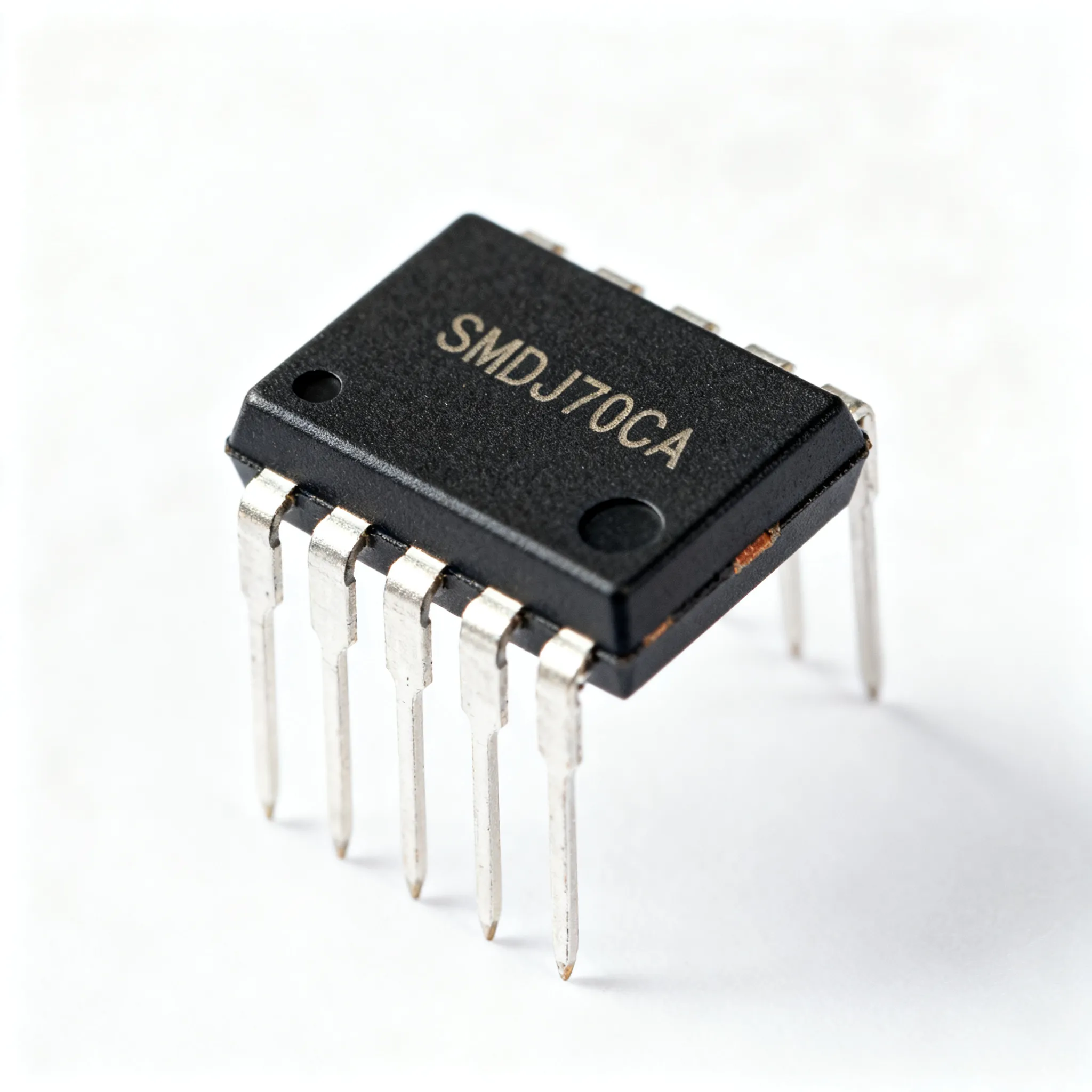
BlogSMDJ70CA Datasheet and Pinout: Specs for Design and Sourcing
SMDJ70CA datasheet essentials, pinout overview, key specs, and design/sourcing checks for engineers and buyers. Request a quote on IC-Online.
 Blog
BlogCounterfeit IC Risk Mitigation for Procurement Teams: Authenticity, Inspection, and Traceability
Procurement checklist: authenticity, traceability, and quality documentation to request with your component RFQ.
 Blog
BlogWhat Is the Electronic Symbol Resistor? Resistor Symbols and Their Meaning
The electronic symbol resistor is a zigzag or rectangle representing a two-terminal component that limits current. Learn how it's used in circuits.
 Blog
BlogWhat a Voltage Regulator Does | Background
What a voltage regulator does is keep output voltage steady by sensing changes and correcting them, protecting equipment and ensuring reliable power.