MOSFET vs IGBT: Which Semiconductor Technology Delivers Superior Performance for High-Power Applications?
Expert guide on MOSFET vs IGBT: Which Semiconductor Technology Delivers Superior Performance for High-Power Applications?. Technical specs, applications, sourcing tips for engineers and buyers.
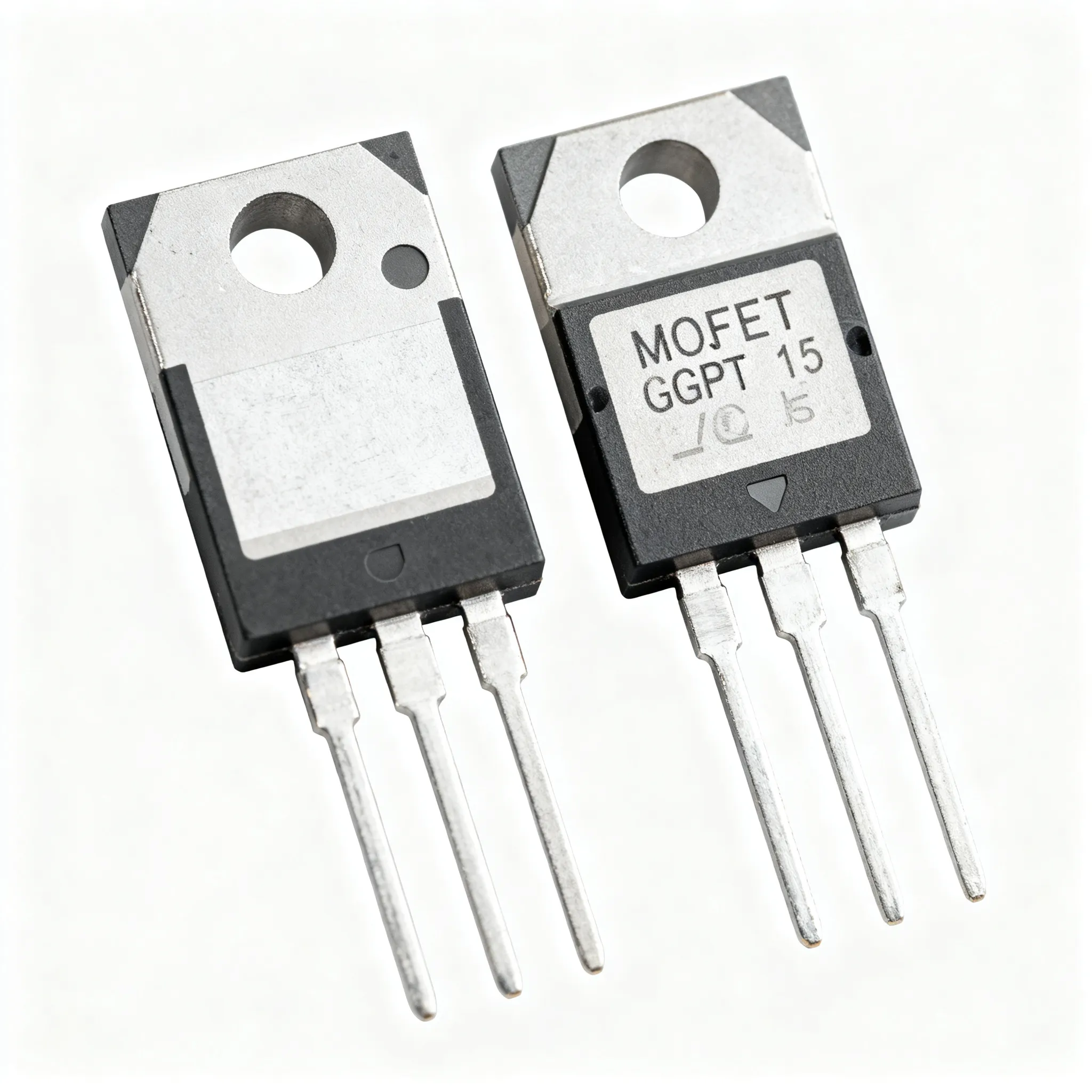
Introduction
In the rapidly evolving world of electronics, the choice between Metal-Oxide-Semiconductor Field-Effect Transistors (MOSFETs) and Insulated Gate Bipolar Transistors (IGBTs) is crucial for engineers working on high-power applications. These semiconductor devices are the backbone of modern power electronics, playing a critical role in applications ranging from industrial motor drives to electric vehicles and renewable energy systems. Understanding their specifications and performance characteristics is essential for achieving optimal efficiency and reliability in high-power circuits. As the semiconductor industry continues to grow, with global revenues projected to reach $595.2 billion by 2026, making informed decisions about component selection is more important than ever.
Technical Overview
MOSFETs and IGBTs are both types of transistors used to switch or amplify electrical signals, but they differ in construction, operation, and application. MOSFETs, known for their high-speed switching capabilities, are voltage-controlled devices that operate efficiently at lower voltages and higher frequencies. They are ideal for applications requiring rapid switching and low conduction losses, such as in power supplies and converters.
IGBTs, on the other hand, combine the easy gate-drive characteristics of MOSFETs with the high-current and low-saturation-voltage capabilities of bipolar transistors. This makes them suitable for higher voltage and current applications, such as motor drives and power inverters. IGBTs excel in applications where efficiency and robustness are required at high voltages, but their switching speed is generally slower compared to MOSFETs.
Both MOSFETs and IGBTs have their own advantages and limitations, and the choice between them depends on specific application requirements, including voltage, current, switching frequency, and thermal management considerations.
Detailed Specifications
| Specification | MOSFET | IGBT | Units | Notes |
|---|---|---|---|---|
| Maximum Drain-Source Voltage (VDS) | 600 | 1200 | V | IGBTs generally handle higher voltages |
| Maximum Continuous Drain Current (ID) | 75 | 100 | A | IGBTs support higher current levels |
| Gate Threshold Voltage (VGS(th)) | 2-4 | 4-8 | V | IGBTs require higher gate voltage |
| Turn-on Delay Time (td(on)) | 10 | 50 | ns | MOSFETs offer faster switching |
| Turn-off Delay Time (td(off)) | 50 | 200 | ns | IGBTs have slower turn-off times |
| On-State Resistance (RDS(on)) | 0.01 | 2.0 | Ω | MOSFETs have lower conduction losses |
| Maximum Power Dissipation (PD) | 200 | 300 | W | IGBTs can dissipate more power |
| Input Capacitance (Ciss) | 1500 | 5000 | pF | Higher in IGBTs due to larger die size |
| Output Capacitance (Coss) | 100 | 300 | pF | Relevant for switching performance |
| Reverse Recovery Time (trr) | 60 | 150 | ns | Important for diode commutation |
| Specification | MOSFET | IGBT | Units | Notes |
|---|---|---|---|---|
| Thermal Resistance, Junction to Case (RθJC) | 0.5 | 0.3 | °C/W | Lower in IGBTs for better heat dissipation |
| Maximum Junction Temperature (TJ) | 150 | 175 | °C | IGBTs can operate at higher temperatures |
| Package Type | TO-247 | TO-264 | - | IGBTs often use larger packages |
| Mounting Type | Through Hole | Through Hole | - | Common for high-power applications |
| Case Temperature (TC) | 100 | 125 | °C | Higher for IGBTs |
| Thermal Resistance, Junction to Ambient (RθJA) | 40 | 35 | °C/W | Lower in IGBTs |
| Weight | 4 | 6 | g | IGBTs are heavier due to larger die size |
| Die Size | 3x3 | 5x5 | mm | IGBTs have larger die for higher power |
| Application | MOSFET | IGBT | Notes |
|---|---|---|---|
| Electric Vehicles (EV) | Battery Management System | Traction Inverter | IGBTs handle higher power in EVs |
| Renewable Energy | Solar Inverter | Wind Turbine Converter | IGBTs preferred for high voltage solar/wind |
| Industrial Motor Drives | Low-Power Motor Control | High-Power AC Drives | IGBTs used in high-torque applications |
| Consumer Electronics | Power Supply | Not typical | MOSFETs dominate due to efficiency |
| Switch Mode Power Supplies (SMPS) | High-Frequency SMPS | Low-Frequency Applications | MOSFETs used for high-frequency use |
The tables above provide a comprehensive comparison of MOSFETs and IGBTs across various specifications. MOSFETs are ideal for applications that require fast switching and low conduction losses, while IGBTs are preferred for high-voltage and high-current applications due to their robust performance and higher power dissipation capabilities. Understanding these specifications is essential for selecting the right component for your application.
Design Considerations
When designing circuits that involve high-power applications, several factors must be considered to choose between MOSFETs and IGBTs effectively. The primary considerations include voltage and current requirements, switching frequency, thermal management, and efficiency.
Voltage and Current Requirements: For applications requiring high-voltage operation, such as grid-tied inverters or industrial motor drives, IGBTs are usually the better choice due to their higher voltage ratings. Conversely, MOSFETs are suitable for lower voltage applications where speed is a critical factor.
Switching Frequency: MOSFETs are known for their fast switching capabilities, making them ideal for applications operating at higher frequencies, such as switch-mode power supplies. IGBTs, while slower, offer better performance in applications where the switching frequency is lower, and higher current capacity is needed.
Thermal Management: Effective heat dissipation is crucial for the reliable operation of power electronics. IGBTs generally have better thermal performance due to their larger die size and lower thermal resistance. However, MOSFETs can be advantageous in designs where efficiency and minimal heat generation are priorities.
Efficiency: MOSFETs typically exhibit lower conduction losses due to their lower on-state resistance, making them more efficient for low-voltage applications. IGBTs, with their higher saturation voltage, may introduce more conduction losses but excel in high-power scenarios.
Other considerations include the ease of driving the gate, the requirement for protective circuits, and the overall cost. The decision between MOSFETs and IGBTs often involves a trade-off between these factors based on the specific needs of the application.
Step-by-Step Guide
- Identify Application Requirements: Determine the voltage, current, and switching frequency requirements for your application. Consider factors such as the power rating, thermal constraints, and efficiency goals.
- Review Specifications: Consult datasheets from reliable sources like DigiKey Electronics to compare specifications of potential MOSFET and IGBT candidates.
- Simulate Performance: Use simulation tools to model the performance of selected components in your circuit design. This step helps to predict thermal behavior, efficiency, and switching characteristics.
- Evaluate Thermal Management: Design appropriate heat sinks or cooling systems based on the thermal specifications of the chosen components. Consider the thermal resistance and maximum junction temperature.
- Design Gate Drive Circuit: Ensure that the gate drive circuitry is compatible with the chosen MOSFET or IGBT. Consider gate voltage levels, drive current, and protection features like snubber circuits.
- Prototype and Test: Build a prototype of your circuit and conduct thorough testing to validate performance. Monitor key parameters such as switching speed, efficiency, and thermal performance.
- Optimize Design: Based on test results, make necessary adjustments to optimize the design. This may involve changing component values, improving thermal management, or refining the gate drive circuit.
- Finalize and Document: Once the design meets all requirements, finalize the circuit and document the design process, including component choices and justification for future reference.
Common Issues & Solutions
When working with MOSFETs and IGBTs, several common issues may arise, impacting circuit performance. Here are some real problems and their solutions:
- Overheating: Ensure adequate heat dissipation through proper heat sink design and thermal interface materials. Consider using thermal simulations to predict and mitigate hot spots.
- Gate Drive Failure: Use a robust gate driver circuit with proper isolation and protection features to prevent voltage spikes and ensure reliable operation.
- Switching Losses: Optimize switching speed by selecting components with appropriate gate charge and minimizing parasitic inductance in the layout.
- Electromagnetic Interference (EMI): Implement proper shielding and filtering techniques to reduce EMI, especially in high-frequency applications.
- Component Mismatch: Carefully match component specifications to the application requirements to avoid issues like voltage breakdown or excessive current draw.
Applications & Use Cases
MOSFETs and IGBTs are used in a wide range of applications due to their distinct characteristics. Some real-world use cases include:
- Electric Vehicles: IGBTs are commonly used in the traction inverters of electric vehicles, where they handle high power levels efficiently.
- Renewable Energy Systems: IGBTs are preferred in wind turbine converters and high-voltage solar inverters due to their robustness and efficiency at high power levels.
- Industrial Motor Drives: IGBTs power high-torque industrial motor drives, providing the necessary current and voltage control.
- Consumer Electronics: MOSFETs are widely used in power supplies for consumer electronics, offering high efficiency and fast switching.
Selection & Sourcing Guide
When selecting MOSFETs or IGBTs for your application, it's essential to source components from reliable distributors. Visit IC Online to explore a wide range of components with competitive pricing and fast delivery. Ensure that the selected components meet your design specifications and are backed by comprehensive datasheets and support.
FAQ
- Q1: What are the key differences between MOSFETs and IGBTs?
A1: The main differences lie in their construction and performance. MOSFETs are ideal for low to medium voltage applications with high switching frequencies, while IGBTs are better suited for high-voltage, high-current applications. - Q2: Can MOSFETs be used in place of IGBTs?
A2: While MOSFETs can replace IGBTs in some low-voltage applications, they may not handle the high voltage and current requirements as effectively as IGBTs in high-power applications. - Q3: Why are IGBTs preferred in electric vehicles?
A3: IGBTs are preferred in electric vehicles due to their ability to handle high power levels efficiently, making them suitable for traction inverters and motor drives. - Q4: How do I choose the right transistor for my application?
A4: Consider factors like voltage, current, switching frequency, thermal management, and efficiency. Review datasheets and simulate performance to make an informed decision. - Q5: What are the thermal management considerations for IGBTs?
A5: IGBTs require effective heat dissipation through heat sinks or liquid cooling systems, as they generate significant heat during operation. - Q6: Are there specific applications where MOSFETs excel?
A6: MOSFETs excel in applications requiring fast switching and high efficiency, such as power supplies, converters, and RF amplifiers. - Q7