

Supply Chain Volatility: How OEM Buyers Can Secure Obsolete and Hard-to-Find ICs
Practical guide for buyers and engineers: Supply Chain Volatility: How OEM Buyers Can Secure Obsolete and Hard-to-Find ICs. Sourcing, risk, and selection notes.

The 40–150% Price Shock and 12–20 Week Delays That Turn Parts Obsolete Overnight
OEM procurement teams are no longer navigating a supply chain—they are weathering a series of violent, unpredictable shocks. What was once an occasional EOL notice has become a constant stream of allocation alerts and price revisions. The numbers tell a stark story: IT procurement professionals now routinely absorb price hikes of 40–150% (Alibaba.com Seller Blog), while standard OEM replacement parts that once shipped in two to four weeks now demand 12–20 weeks or longer (IFL Manufacturing).
These swings do more than inflate costs—they forcibly push parts into functional obsolescence. A microcontroller that was available and cost-stable six months ago can suddenly become practically unobtainable for a production run, forcing a board-level crisis. When a single line item on your BOM carries a 20-week lead time and a 60% cost hike, the economics of an entire product generation tilt. Obsolescence morphs from an engineering nuisance into a boardroom-level risk, demanding a procurement strategy that treats supply chain volatility as a first-class design parameter.
Key Takeaway: The new normal is not a transitory spike but a structural reset of price and availability expectations. OEM buyers must treat every IC as potentially scarce and build sourcing buffers and verification processes into their standard RFQ workflow.
| Driver | Mechanism | Procurement Impact |
|---|---|---|
| Geopolitical export controls and fab concentration | Trade restrictions and concentration of advanced nodes in a few regions curtail the flow of specific IC families. | Parts become allocation-sensitive overnight; buyers must confirm export classification and secure multi-region sourcing options. |
| Fab capacity allocation skew | Foundries prioritize high-volume consumer, automotive, and AI chips over lower-margin industrial-grade components. | Mature-node ICs (analog, mixed-signal, legacy MCUs) face extended cycle times; lead-time confirmation via supplier RFQ becomes mandatory. |
| Raw material and substrate inflation | Costs for silicon wafers, lead frames, gold bonding wire, and packaging substrates continue rising. | Price-adjustment clauses and index-linked contracts are no longer optional; quote validity windows shrink. |
| Logistics and shipping instability | Port congestion, container imbalances, and air freight cost volatility add weeks to deliveries. | Buyers must factor logistics buffer into safety stock calculations and request incoterms-aligned delivery commitments. |
| Obsolescence waves in legacy product families | Manufacturers accelerate NRND and EOL notices for older process nodes to repurpose capacity. | PCN monitoring and lifecycle intelligence must be embedded in the BOM review cycle; last-time-buy planning starts earlier. |
The table above captures why the floor has dropped out from under traditional forecasting. Even parts that are not yet “obsolete” behave as if they are, simply because they cannot be reliably acquired within a manufacturable window. The response is not panic buying but a shift to allocation-aware procurement, where every line item is confirmed via an RFQ that demands documentation, not just a quote.
Reading the IC Lifecycle Tea Leaves: From Early Warnings to the Last-Time Buy Window
Semiconductor obsolescence is not a surprise—it is a predictable, structural force (Vyrian) that plays out across a well-documented lifecycle curve. Yet many OEMs still treat the discontinuation notice as an emergency rather than the final step in a sequence that started years earlier. The difference between a controlled last-time buy and a frantic broker scramble is how early the signal is detected and acted upon.
A component typically moves from Introduction, through Growth and Maturity, into Decline, and finally End-of-Life (EOL) where a Last-Time Buy (LTB) notice is issued. The earlier you recognize the transition from Maturity to Decline, the more options you have. Luminovo’s lifecycle guide shows that integrating lifecycle intelligence at the design stage—flagging parts nearing the Decline phase—prevents costly redesigns and production stoppages.
Tip: Do not rely solely on manufacturer PCN emails. Cross-reference distributor inventory trend data and independent lifecycle databases. A part that shows steadily decreasing stock depth across three authorized partners, even without a formal EOL notice, is already in the practical obsolescence zone.
The actions you take must align with the lifecycle stage and the lead-time signals you confirm through the RFQ process. The table below maps typical stages to recommended procurement moves.
| Lifecycle Stage | Typical Allocation-Backed Lead Time (confirm via RFQ) | Recommended Buyer Action |
|---|---|---|
| Mature (stable allocation) | Confirm allocation lead time; often still in weeks but shortening | Initiate second-source qualification; secure long-term pricing agreement with authorized distribution. |
| Mature to Decline transition | Allocation tightens; lead time extends beyond standard windows | Flag item on BOM for design review; require multi-source alternatives during engineering change order discussion. |
| Decline (NRND announced) | Confirm allocation-backed lead time; expect variability | Begin safety-stock build with authorized channels; validate functional alternatives, including architecture-compatible families like GD32 for STM32 (verify pinout, firmware, and certification). |
| End-of-Life (EOL notice active) | Confirm last-time-buy window and final delivery date with supplier | Calculate total lifetime demand plus service/repair margin; negotiate fixed-price LTB contract; store under controlled conditions with periodic re-qualification. |
| Post-EOL (market dependent) | No new manufacturing; rely on authorized leftover stock or verified independent sources | Move to authenticated broker sourcing with full inspection and test protocol; start redesign if product lifecycle justifies it. |
These actions turn the lifecycle from a vulnerability into a managed process. The emphasis on confirming allocation-backed lead times rather than assuming generic figures is critical—relying on a dated lead-time quote from a website or a previous order invites disaster when the part is suddenly constrained.
Authorized vs. Broker vs. Gray Market: What Each Sourcing Path Really Means for Your BOM
When standard distribution can no longer fill an order, OEM buyers face three increasingly risky sourcing tiers. The path you choose directly dictates the validation burden, the probability of counterfeit parts, and the downstream liability if a field failure occurs. Vyrian’s research underscores that organizations which apply disciplined sourcing and risk controls outperform those that react to shortages with desperate purchases. Meanwhile, Microchip USA insists that strict quality control protocols are non-negotiable when moving outside authorized supply chains.
The comparison below frames the trade-offs you must weigh—cost, speed, and the depth of verification required to keep a counterfeit from reaching the production floor.
| Channel | Cost & Risk Level | Key Verification Methods | Delivery Speed | When to Use |
|---|---|---|---|---|
| Authorized Distributor/Manufacturer Direct | Moderate cost; lowest counterfeit risk. Full traceability to wafer lot. | Standard receiving inspection; manufacturer certificates. No decapsulation required. | Slower when under allocation; schedule confirmed via RFQ. | Any time parts are available; mandatory for safety-critical and regulated applications. |
| Independent Broker (franchised/trusted) | Higher cost; medium risk. Stock may be new old stock or excess inventory from other OEMs. | Visual inspection, X‑ray, decapsulation on sample batch, electrical testing against original datasheet. Require lot traceability paperwork. | Faster for scarce parts; delivery timeline depends on inspection cycle. | When authorized allocation is exhausted; for legacy product builds where redesign is not yet approved. |
| Gray Market / Open Platform | Lowest initial cost but highest risk; quality and authenticity uncertain. | Full suite of anti-counterfeit tests required: XRF, decapsulation, scan acoustic microscopy, serialization checks. Often insufficient documentation. | Unpredictable; may ship quickly but with high rejection rates. | Avoid unless all other paths fail and the application can tolerate a full batch test-and-scrap regimen. |
Each step away from authorized distribution adds layers of verification that you must own. For independent broker transactions, the purchase order should explicitly require high-resolution images of the parts with date codes, a certification of conformance, and the right to return any lot that fails independent lab analysis. Any broker that refuses these terms is not a viable partner for obsolete IC procurement.
Hardening Your BOM Against Obsolescence: Second-Source Qualification, Long-Term Deals, and Design-for-Supply
Resilience is not a procurement band-aid applied after the shortage hits; it is an engineering and commercial framework built into the BOM from the start. Escatec frames this as “design for supply”—making supply chain awareness an explicit design rule by specifying components with multiple viable sources, avoiding single-sourced parts in critical paths, and proactively flagging items that are entering the Decline phase. When engineering and procurement collaborate early, the BOM becomes a defense rather than a liability.
On the commercial side, Quettor’s analysis recommends stress-testing BOMs against scenarios where elevated lead times and pricing persist for multiple years. Secured supply agreements should incorporate price-adjustment mechanisms, allocation guarantees, and performance penalties—not blanket force majeure clauses that release the supplier from all obligations during predictable disruptions.
When qualifying a second source, the evaluation must go beyond functional pin-to-pin checks and align with OEM technical, quality, and regulatory benchmarks (eWorkOrders). A part that works on the bench but fails EMC re-certification or requires a firmware re-write that triggers a safety recertification can be more expensive than a redesign. The following actionable strategies form the core of a hardened BOM plan.
- Multi-source at the schematic level from day one. Identify and validate alternates for every active IC during the development phase. For microcontrollers, evaluate candidates like GD32 or APM32 families for functional overlap, then verify pinout, firmware, peripheral timing, and regulatory compliance before approving them as second sources—never treat them as guaranteed drop-ins.
- Embed lifecycle intelligence into the BOM release checklist. Before sign-off, require that every line item carry a lifecycle status (Active, Mature, NRND) and an approved second-source plan for any part classified as single-source or in the Decline phase.
- Negotiate long-term supply agreements with fixed-price and allocation terms. Secure a portion of future capacity for volume parts. Include mutual penalties for late delivery and price-escalation caps. Build in the right to source from alternative channels if the supplier fails to meet allocation commitments, with the cost difference covered by the supplier.
- Maintain a vetted broker panel for post-EOL emergencies. Pre-qualify independent brokers by auditing their inspection capabilities, quality management system, and track record before you need them. Establish a standing agreement on testing protocols (X‑ray, decapsulation, electrical verification) and acceptable failure thresholds.
The mitigation timeline below shows how these actions map to different phases of supply chain stress, giving you a playbook to deploy as conditions evolve.
| Action | When to Use | Trade-off |
|---|---|---|
| Qualify second-source alternatives | During design phase and at first sign of allocation tightening (Mature stage) | Requires engineering resource and may extend time-to-market; avoids single-sourced crisis later. |
| Negotiate secured supply agreements with penalty and price cap clauses | For production-intent BOMs with volume forecasts | Commits to volume obligations; requires legal review and supplier willingness; essential for predictable cost control. |
| Execute a controlled last-time buy with excess margin (10–20%) | After EOL notice, before final order window closes | Ties up cash in inventory and exposes to shelf-life degradation; provides insurance against field service demand. |
| Transition to verified independent broker sourcing with full test regimen | Post-EOL when no authorized inventory remains | Higher unit cost and longer receiving cycle due to inspection; increases risk of latent counterfeit if protocols are lax. |
| Authorize a board redesign and migration to a modern supply base | When obsolete IC is single-sourced, LTB cost exceeds redesign budget, or product has long remaining life | Significant NRE, retooling, and recertification expense; secures supply for future production and eliminates broker dependency. |
Applying these strategies consistently transforms an erratic reaction to obsolescence into a measured, cost-justified process. The most common mistake is waiting until the part is impossible to find; the moment a PCN arrives, your timeline for a rational decision shrinks to weeks.
The Questions No One Wants to Ask — But Must — When Facing a Discontinued IC
Q: How do I structure a last-time buy when the supplier announces EOL so I don’t end up with excess or a shortage?
A: Start by calculating total lifetime demand for the product, including service, repair, and warranty units, and add a safety buffer of 10–20% depending on the part’s criticality and long-term storage sensitivity. Negotiate a fixed-price purchase agreement with the OEM or authorized distributor that locks the unit price and final delivery date. Once the inventory arrives, store it under controlled conditions (temperature, humidity, and ESD protection) and implement a periodic re-qualification test to verify solderability and electrical parameters. This protects against moisture ingress and degradation over time.
Q: What authentication steps are non-negotiable when buying an obsolete IC from an independent broker?
A: Require full lot traceability paperwork including the original manufacturer date-code log and chain-of-custody. Perform a multi-layered physical inspection on a sample batch: high-magnification visual inspection for re-marking or lead re-tinning, X‑ray to check die and wire-bond anomalies, and decapsulation coupled with die-mark comparison against known-good units. Full electrical testing against the original datasheet specification is mandatory. Microchip USA’s guidance emphasizes that OEMs, CMs, and buyers must enforce strict quality control protocols to prevent counterfeit chips from entering production. Any failure in these steps should trigger a lot rejection; never accept a “visual only” sign-off from a broker.
Q: Can I safely substitute a GD32 for an STM32 in a design when the original microcontroller is discontinued?
A: The GD32 family can serve as an evaluation candidate, but you must verify pin-to-pin compatibility, firmware behavior, and toolchain support thoroughly. Despite surface-level similarity, differences in power-on sequencing, peripheral register maps, internal clocking, and timing margins can cause subtle failures in existing firmware. Redo full validation including EMC and safety certification re-testing if the product is subject to regulatory compliance. Treat the substitution as a design-change project requiring engineering sign-off, not a drop-in swap.
Q: When does it make more sense to redesign a board rather than chase obsolete parts?
A: Redesign becomes the preferred path when the obsolete part is single-sourced and the last-time buy cost approaches or exceeds the NRE for a board spin, or when the product has several years of projected revenue and would benefit from migrating to a modern, multi-sourced component base. Vyrian’s research shows that organizations that approach obsolescence strategically—using lifecycle intelligence and disciplined sourcing—consistently outperform those that repeatedly scramble for shrinking stock. A redesign that eliminates a single-sourced bottleneck can immediately reduce supply risk and lower long-term BOM cost.
Q: How can I verify that a ‘factory sealed’ part from a broker is genuinely new old stock?
A: Ask for the specific batch and lot numbers and cross-check them against the manufacturer’s date-code log to confirm the parts were produced within the claimed window. Inspect the package seal under magnification for signs of resealing or inconsistent adhesive patterns. Test mold compound consistency via scanning acoustic microscopy if the part is critical. Where available, use manufacturer serialization or unique traceability codes. If the broker refuses independent third-party lab verification, treat the lot as suspect and do not integrate it into production.
Q: What contract terms protect me if a secured supply agreement still fails to deliver?
A: Your agreement must include clear penalty clauses for late or short delivery—monetary liquidated damages tied to lost production cost. Cap price escalation at a predefined percentage per quarter. Insert a right-to-source clause that allows you to procure from alternative channels if the supplier fails to meet allocation commitments, with the cost delta covered by the original supplier. Crucially, carve out foreseeable supply chain events (such as raw material cost surges or logistics constraints common to the industry) from force majeure exemptions, so the supplier cannot claim blanket immunity for disruptions that should be managed under the agreement.
When your BOM includes parts that are already in the Decline phase or completely discontinued, the only safe path is a verified RFQ through a partner that enforces rigorous quality gates. IC-Online’s RFQ and BOM upload connects OEM buyers with a vetted supply chain that treats allocation-sensitive and obsolete IC sourcing as a discipline, not a gamble. Upload your mixed BOM and start a conversation about flexible MOQs and verified delivery timelines.
References & Further Reading
- OEM Manufacturing Lead Time Explained: A 2026 Guide on Alibaba.com
- Riding the storm: How can OEMs deal with volatility in the EMS industry? – Escatec
- OEM Electrical Replacement Parts: Complete Sourcing Guide – IFL Manufacturing
- Semiconductor Shortage: Buyers Accept Higher Prices & Delays – Quettor
- OEM Standards Insights for Better Compliance – eWorkOrders
- How Obsolete Electronic Parts Are Reshaping the Global Semiconductor Supply Chain – Vyrian
- Component Obsolescence: Lifecycle & EOL Management Guide – Luminovo
- ← Previous ArticleNext Article >>
Related Articles
 Blog
BlogElectronic Component Lead Times 2026: Full Guide for OEM Buyers and Component Engineers
Practical guide for buyers and engineers: Electronic Component Lead Times 2026: Full Guide for OEM Buyers and Component Engineers. Sourcing, risk, and selection notes.
 Blog
BlogFlexible MOQ and Mixed BOM Sourcing for NPI: Streamline Your BOM Upload and RFQ Process
BOM and RFQ best practices for electronic component procurement. Upload your BOM or request a quote for mixed lines and flexible MOQ.
 Blog
BlogWhat a Voltage Regulator Does | Background
What a voltage regulator does is keep output voltage steady by sensing changes and correcting them, protecting equipment and ensuring reliable power.
 Blog
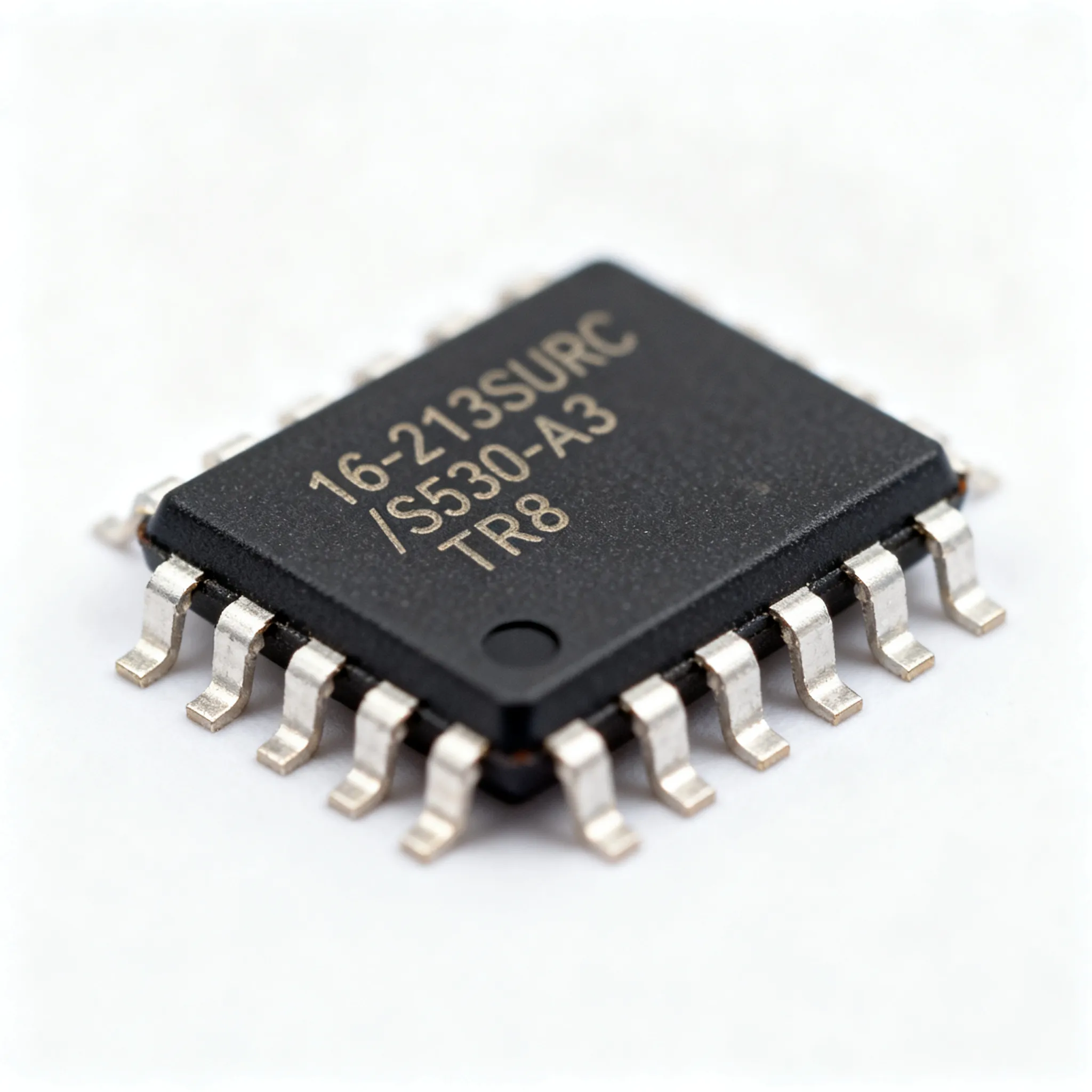
Blog16-213SURC/S530-A3/TR8 Datasheet and Pinout: Specs for Design and Sourcing
16-213SURC/S530-A3/TR8 datasheet essentials, pinout overview, key specs, and design/sourcing checks for engineers and buyers. Request a quote on IC-Online.
 Blog
BlogWhat Is DC Voltage? 2026 Guide to Everyday Electronics
What is DC voltage? It's a steady, one-way electrical flow that powers phones, laptops, and gadgets. Learn how DC differs from AC and why devices need it.
- Blog
Supply Chain Volatility: How OEM Buyers Can Secure Obsolete and Hard-to-Find ICs
Practical guide for buyers and engineers: Supply Chain Volatility: How OEM Buyers Can Secure Obsolete and Hard-to-Find ICs. Sourcing, risk, and selection notes.