Troubleshooting Microcontroller Issues: Common Pitfalls and Solutions
Introduction Microcontrollers are the backbone of modern electronics, driving everything from home appliances to complex industrial systems. Accordi
Introduction
Microcontrollers are the backbone of modern electronics, driving everything from home appliances to complex industrial systems. According to the Semiconductor Industry Association, global semiconductor revenue reached $595.2 billion in 2024, highlighting the critical role microcontrollers play in this booming industry. However, troubleshooting microcontroller issues remains a significant challenge for engineers. This article delves into common pitfalls and solutions, providing insights into effectively managing these ubiquitous components.
Technical Overview
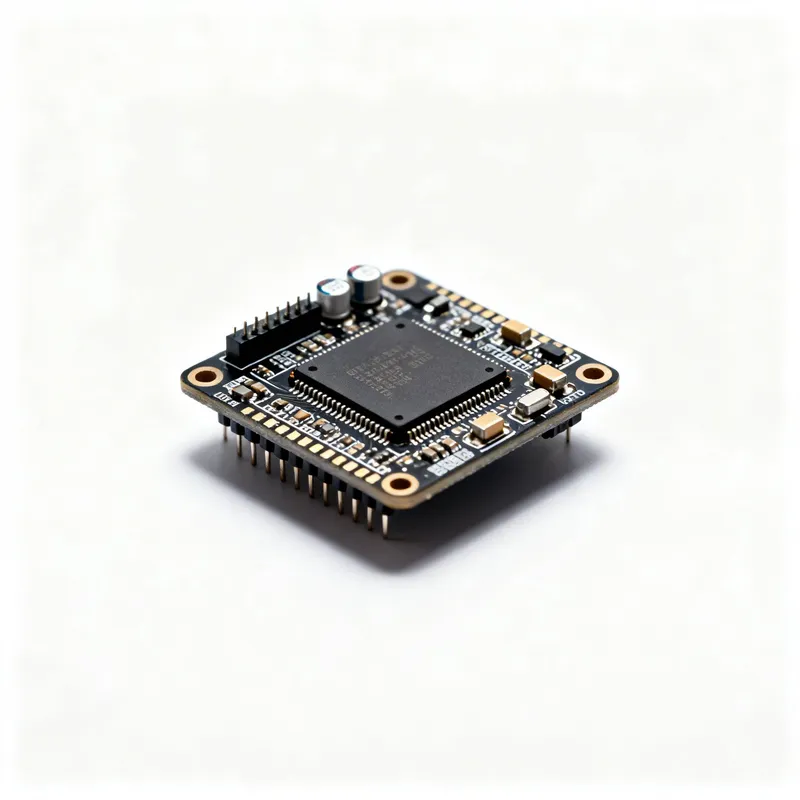
Microcontrollers are compact integrated circuits designed to govern a specific operation in an embedded system. They typically consist of a processor, memory, and input/output peripherals on a single chip. The architecture can vary significantly between different types, but the core remains a balance between processing power and energy efficiency.
Understanding the architecture is crucial for troubleshooting. For instance, ARM Cortex-M microcontrollers are known for their low power consumption and high efficiency, making them ideal for battery-powered devices. On the other hand, PIC microcontrollers are favored for their simplicity and ease of programming, often used in educational settings and simple automation tasks.
Key Specifications Table
| Specification | Description |
|---|---|
| Clock Speed | 1 MHz to 300 MHz, depending on the model |
| Memory | 2 KB to 2 MB Flash, 128 B to 512 KB RAM |
| Voltage | 1.8V to 5.5V operating voltage range |
| I/O Pins | 5 to 100+ GPIO pins |
| Power Consumption | 10 µA to 500 mA |
Applications & Use Cases
Microcontrollers are indispensable in a variety of applications:
- Consumer Electronics: Used in televisions, remote controls, and kitchen appliances to manage user interfaces and control logic.
- Automotive Systems: Integral in engine control units (ECUs) and infotainment systems, ensuring optimal vehicle performance and user experience.
- Industrial Automation: Employed in programmable logic controllers (PLCs) for precise control and automation in manufacturing processes.
- Healthcare Devices: Power medical devices such as pacemakers and diagnostic equipment, where reliability and precision are paramount.
Selection & Sourcing Guide
Choosing the right microcontroller involves considering the application requirements, such as processing speed, power consumption, and peripheral interfaces. Engineers should prioritize components with robust documentation and community support to simplify troubleshooting. For sourcing, it's advisable to utilize reputable distributors like IC Online, which offers competitive pricing and fast delivery.
FAQ
- What causes a microcontroller to fail? Common causes include electrical overstress, improper handling, and firmware bugs. Ensuring proper power supply and handling can mitigate these issues.
- How do I debug a non-responsive microcontroller? Start by checking the power supply and clock signal. Then, verify the firmware for any logical errors or infinite loops.
- Why does my microcontroller reset unexpectedly? This may be due to brownout conditions or watchdog timer resets. Ensure stable voltage levels and adjust watchdog timer settings as necessary.
- How can I reduce the power consumption of my microcontroller? Utilize sleep modes and optimize the clock frequency to match the application requirements without excessive power use.
- What tools are essential for microcontroller development? A reliable IDE, a debugger, and an oscilloscope are crucial for effective development and troubleshooting.