RS-1210K332JT Obsolescence Risk Checklist: Key Verification Steps for Procurement Engineers
RS-1210K332JT lifecycle and obsolescence risk checklist. What to verify before redesign or last-time-buy — without assuming drop-in replacements.
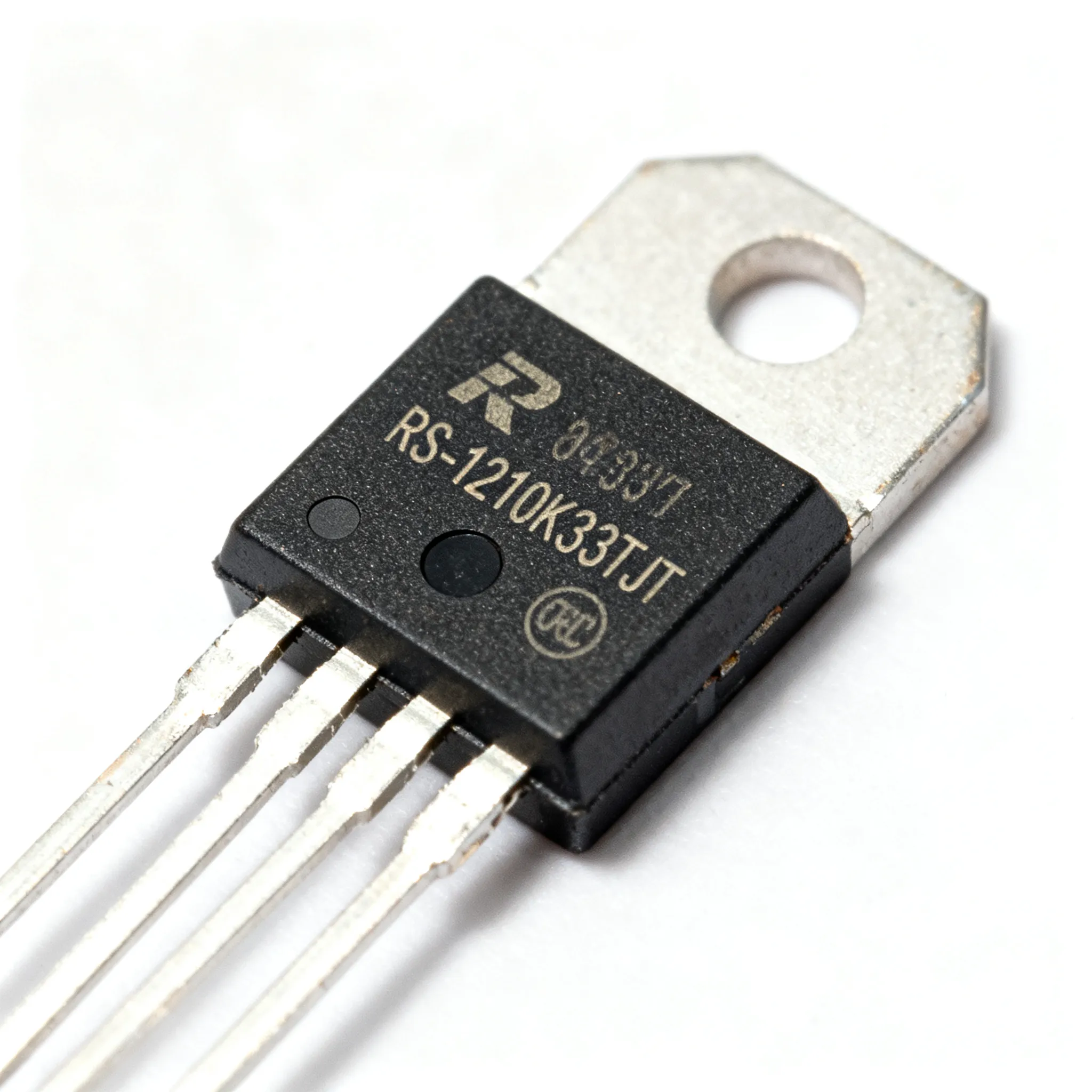
Summary: A single thick-film chip resistor rarely makes headlines—until it vanishes from authorized channels without a PCN, and your production schedule collides with a last-time-buy you never saw coming. For procurement engineers managing BOMs where RS-1210K332JT appears on high-runner assemblies, this checklist translates the noise around obsolescence management into a verifiable, repeatable workflow. The steps below are grounded in publicly available lifecycle intelligence frameworks, distributor documentation practices, and the hard lessons drawn from safety recalls that trace back to passive-component supply gaps.
When a Tiny Resistor Triggers a Safety Recall: The RS-1210K332JT Wake-Up Call
Procurement teams handle thousands of line items each quarter, and a commodity 1210 resistor like RS-1210K332JT rarely earns a second glance during BOM scrubs. That instinct is precisely what makes it dangerous. When a part this mundane moves to end-of-life—or simply disappears from the ordering system without a formal product-change notification—the ripple effects can extend far beyond a missed production slot. Recalls documented by the CPSC, NHTSA, and FDA demonstrate that field corrections frequently originate not from complex ASICs, but from passive components whose substitution was expedited under schedule pressure, or whose LTB was missed entirely because nobody flagged the lifecycle status early enough.
The arithmetic is sobering. A 1210 resistor might cost fractions of a cent in reel quantities, but a line-down event on an automotive ECU or industrial controller burns thousands of dollars per hour. If a field recall is triggered—whether through a NHTSA safety investigation or a medical-device correction reported to FDA—the per-unit remediation cost, brand damage, and regulatory exposure dwarf any savings from reactive sourcing. This is why Mouser's procurement resource library stresses the importance of lifecycle-aware sourcing even for passives: datasheets encode more than electrical specs; they carry the clues to part maturity that experienced buyers learn to read. The checklist that follows treats RS-1210K332JT as a case study in building those instincts into a disciplined, auditable procurement process.
| Driver | Mechanism | Procurement Impact |
|---|---|---|
| Passive-component commoditization | Manufacturers treat thick-film chip resistors as high-volume, low-margin products; SKU rationalization happens quietly. | No formal PCN may be issued; the part simply disappears from the ordering system, requiring buyers to detect the gap through periodic BOM health checks. |
| Mature footprint, narrowing supplier base | 1210 (EIA 3225) is a mature standard, but specific resistance/tolerance/termination combinations can consolidate to one or two OEMs. | Verify single-source risk via manufacturer and authorized distributor documentation; a dual-source assumption can be dangerously wrong for niche resistance values. |
| Long product lifecycles in end equipment | Industrial drives, avionics LRUs, and medical instruments can have 10–20-year production and service tails. | LTB quantity calculations must span the full production run plus service spares, not just the next 12 months of demand. |
| Counterfeit infiltration in passive supply chains | Low unit cost invites grey-market substitution; non-authorized stock may carry incorrect marking, substandard terminations, or out-of-spec TCR. | Require authorized-channel traceability documentation; a 1210 resistor with counterfeit termination finish can fail solderability testing or delaminate under thermal cycling. |
| Regulatory traceability requirements | FDA, NHTSA, and aviation authorities increasingly expect full component-level audit trails for safety-critical subassemblies. | Procurement must retain PCN history, alternate qualification records, and LTB rationale for each BOM line item subject to regulatory review. |
These drivers are not hypothetical. The FAA's obsolescence management guidance for avionics explicitly calls for five-year advance notification of component obsolescence—a standard that is aspirational for most commercial resistor manufacturers but sets the bar for what procurement engineers should demand in their supplier agreements. When that standard is not met, the verification steps outlined in this article become your operational backstop.
Decoding RS-1210K332JT: What the Part Number Reveals About Lifecycle and EOL Risk
Experienced component engineers know that a part number is a forensic document. For RS-1210K332JT, each segment of the string encodes information that helps assess maturity, alternative availability, and the likelihood that the manufacturer will sustain production. Understanding this encoding is the first step in the lifecycle verification process that Mouser recommends as part of every datasheet-driven sourcing decision.
The "RS" prefix typically designates a thick-film chip resistor series from a specific manufacturer. Thick-film technology is mature and well-characterized; it has been in volume production for decades. That maturity is a double-edged sword: it means process stability and a deep pool of potential alternates, but it also means the manufacturer may view the series as a legacy product line ripe for consolidation. The "1210" segment confirms the EIA standard 1210 footprint (3225 metric: 3.2 mm × 2.5 mm), an industry-standard package with abundant alternative suppliers. The "K" in "K332" indicates the resistance multiplier, with "332" decoding to 33 followed by two zeros—3,300 ohms, or 3.3 kΩ nominally. The "JT" suffix encodes tolerance (±5%) and termination finish (typically tin over nickel barrier, although the exact plating composition should be confirmed against the manufacturer's datasheet).
| Parameter | Decoded Value | Lifecycle / Sourcing Implication |
|---|---|---|
| Series prefix (RS) | Thick-film chip resistor, manufacturer-specific series designation | Cross-reference against the manufacturer's active series list; if the series has been superseded by a newer generation (e.g., a "RC" or "ERJ" series from the same vendor), treat as elevated obsolescence risk. |
| Package / Footprint | 1210 (EIA standard, 3225 metric: 3.2 mm × 2.5 mm) | Mature, multi-sourced footprint. The 1210 size remains active across Yageo, Samsung Electro-Mechanics, Vishay, Bourns, and others. Footprint alone is not a constraint; the resistance/tolerance/termination combination is. |
| Resistance code (K332) | 3.3 kΩ nominal (33 × 10²) | Standard E24 value; widely available. Non-standard values (E96, E192) carry higher single-source risk; E24 values like 3.3 kΩ are commodity-adjacent. |
| Tolerance (J) | ±5% | Standard tolerance; most thick-film 1210 alternates are available at ±5% or tighter. Tight-tolerance (±0.1%, ±0.5%) parts narrow the alternate field considerably. |
| Termination finish (T) | Tin over nickel barrier (typical; verify with datasheet) | Compatibility with lead-free reflow profiles. Mismatched termination plating between the original and alternate can cause solder joint reliability issues if not validated during qualification. |
| Power rating (typical 1210 thick-film) | 0.5 W (1/2 W) at 70°C, derating above 70°C | Verify the alternate matches or exceeds this rating under the application's ambient temperature range. Under-specifying power rating is the most common substitution failure mode. |
| Maximum working voltage | 200 V (typical for 1210 thick-film; confirm with manufacturer datasheet) | Critical for circuits exposed to transients. An alternate with a lower voltage rating may pass resistance/tolerance checks but fail in operation. |
| Operating temperature range | -55°C to +155°C (typical thick-film) | Automotive and industrial applications may require extended range or AEC-Q200 qualification; confirm whether the original part and alternate carry the necessary ratings. |
Tip: Do not rely solely on a parametric search tool to confirm lifecycle status. Many distributors update their lifecycle flags on a lag—sometimes weeks or months after the manufacturer's internal decision. Cross-reference the part number against the manufacturer's PCN/PDN portal directly, and subscribe to change-notification alerts for the entire resistor series, not just the individual SKU. If the manufacturer does not offer a public PCN feed, request a quarterly BOM health report from your authorized distributor that explicitly flags any part with declining order volume or extended lead-time trends, both of which can signal an unannounced phase-out.
Reactive vs. Proactive Obsolescence Management for RS-1210K332JT: Tools and Frameworks Compared
When a BOM line item like RS-1210K332JT shows early warning signs—declining distributor inventory depth, lengthening order-to-delivery intervals, or silence from the manufacturer's PCN system—procurement teams face a strategic choice: react to the event after it becomes critical, or deploy a proactive framework that catches the signal before it disrupts production. The table below compares four established methodologies, each profiled against the specific demands of mid-volume passive-component procurement.
| Framework / Tool | Approach | Data Refresh Latency | Best-Fit for RS-1210K332JT | Limitations |
|---|---|---|---|---|
| SiliconExpert automated lifecycle monitoring | Algorithmic BOM scrubbing with lifecycle-status flags, multi-source cross-reference, and PCN alerting | Varies by manufacturer tier; tier-1 passives typically updated within 30–90 days of manufacturer change | Strong for high-BOM-line-count assemblies where manual checks are impractical; flags RS-series changes automatically | Subscription cost may be hard to justify for a commodity resistor unless it is part of a larger managed BOM; small manufacturers may not be tracked |
| Utmel EOL playbook (structured LTB with scientific storage) | Manual process: identify NRND/EOL, execute LTB based on storage-shelf-life calculations, pre-qualify alternates in parallel | Near-real-time if the buyer initiates a distributor RFQ with explicit lifecycle-status questions | Excellent framework for a single resistor line item; the LTB calculation methodology is directly applicable to RS-1210K332JT | Labor-intensive; requires procurement engineering time to build the obsolescence register and track storage conditions |
| Sparetech risk-tiering methodology | Assign Monitor / At Risk / EOL tiers; factor in alternative procurement lead times; prioritize action based on tier, not just demand signals | Depends on the frequency of BOM health reviews; monthly cadence recommended for At Risk parts | Pragmatic for procurement teams managing mixed BOMs; RS-1210K332JT would likely start at Monitor and escalate to At Risk if distributor stock thins | Tier assignments are only as good as the inventory and lifecycle data feeding them; manual checks are still needed for confirmation |
| FAA avionics obsolescence guidance (long-horizon notification) | Contractual framework: require five-year obsolescence notice from the component manufacturer, or documentation of alternate sourcing path | Not real-time; designed as a contractual obligation layer above operational procurement | Relevant if RS-1210K332JT is used in avionics or other regulated applications; sets the standard for supplier agreements | Many commercial resistor manufacturers cannot or will not commit to five-year notification; the guidance is aspirational for commodity passives unless specified in the supply contract |
The takeaway from this comparison is that no single tool or framework is sufficient alone for a part like RS-1210K332JT. A mature procurement operation layers automated BOM monitoring (to catch the signal early) with a structured manual EOL playbook (to execute LTB and alternate qualification when the signal turns red), all while maintaining the contractual notification framework that the FAA guidance describes for safety-critical applications. The APMG PPP guide on technological obsolescence reinforces this layered approach, warning that components can become functionally obsolete—inadequate for the service purpose—even when they remain physically available, if the surrounding technology ecosystem has moved on.
From Datasheet Audit to Alternate Validation: A 7‑Step Verification Checklist for RS-1210K332JT
The following seven-step workflow translates the frameworks discussed above into a concrete, auditable process specifically tailored to RS-1210K332JT. Each step references the tools, documentation, and decision points that procurement engineers can apply immediately, whether the part is still in active production or has already gone silent.
- Confirm official lifecycle status. Start with the manufacturer's PCN/PDN portal—search by series (RS) and by full part number. If the manufacturer does not maintain a public portal, send a formal RFQ to at least two authorized tier-1 distributors with an explicit request for lifecycle-status confirmation. Document the response (or non-response) in a BOM health register. A part that is absent from the manufacturer's active-price-book without a published EOL notice is at de facto NRND status and should be escalated immediately.
- Audit authorized distributor inventory depth. Check stock levels across all franchised distributors for the region. Declining inventory across multiple channels—especially when combined with "call for availability" flags or minimum-order-quantity increases—is a stronger obsolescence signal than any single data point. This audit should be repeated at a monthly cadence for parts flagged as Monitor or At Risk under the Sparetech risk-tiering methodology.
- Evaluate pin-compatible alternatives. Identify candidates that match the 1210 footprint, 3.3 kΩ ±5% resistance, ≥0.5 W power rating, and tin-over-nickel termination finish. A part like Yageo RC1210JR-073K32L often matches electrically and mechanically. Compile at least two candidate alternates where possible, and note any differences in TCR (temperature coefficient of resistance), maximum working voltage, or operating temperature range that could require design verification.
- Calculate Last-Time-Buy quantity. Multiply annual board-level usage by the product's remaining forecast years (production run plus service spares), add a 10–20% buffer for scrap and rework, and verify that the total falls within the resistor's storage shelf-life envelope. The Utmel scientific-storage-based LTB playbook recommends factoring in moisture-barrier packaging integrity; for chip resistors stored in sealed bags at ≤40°C and <90% RH, a ≥2-year solderability window is typical for commercial-grade parts.
- Request and qualify alternate samples. Obtain engineering samples of the top candidate alternate through authorized channels. Perform tolerance stack-up analysis against the full circuit, review thermal derating curves, and run at least one pilot build with functional testing at temperature extremes. The APMG PPP guide warns that a component that is electrically equivalent on paper may still represent technological obsolescence risk if the termination plating, substrate material, or laser-trimming process has changed in ways that affect long-term reliability.
- Document the forensic trail. Retain PCN correspondence, distributor lifecycle confirmations, LTB quantity calculations, alternate qualification test reports, and engineering sign-off for the substitution. For regulated industries, this documentation should be structured to survive a production audit or a field-recall investigation. The World Bank procurement guide for digital identification systems offers a useful template for the level of documentation rigor expected in publicly scrutinized supply chains—practices that are increasingly adopted in commercial procurement as well.
- Set a recurring review cadence. Add
RS-1210K332JT(and its qualified alternate) to a quarterly BOM health review. Even after an alternate is qualified, the original part may return to active production, or the alternate itself may go EOL. A quarterly cadence catches these shifts before they become emergencies.
Key Takeaway: The seven steps above are not a one-time exercise. Obsolescence management is an ongoing discipline, not a fire drill. Procurement engineers who embed these verification steps into their standard BOM management process—for every passive component, not just the expensive ones—are the ones who avoid the recalls, line-downs, and last-minute scrambles that make obsolescence a board-level topic rather than just a procurement footnote.
Procurement Engineers' FAQ: RS-1210K332JT Obsolescence Decisions Under the Microscope
Q: Where do I find an official EOL or NRND notice for RS-1210K332JT?
Start with the manufacturer's PCN/PDN portal, searching by both the full part number and the RS series prefix. If the manufacturer is unknown or does not maintain a public portal, cross-reference lifecycle status pages on tier-1 authorized distributor websites. Many passives never receive a formal EOL notice; the first red flag is often the part's disappearance from the manufacturer's active price book or a shift to "non-stock" status across multiple franchised distributors. Treat absence from the ordering system as de facto NRND and escalate accordingly. Requesting a written lifecycle confirmation via distributor RFQ creates a documented paper trail that supports subsequent sourcing decisions.
Q: How risky is buying RS-1210K332JT from non‑franchised or grey‑market sources?
High. Unauthorized stock carries counterfeit risk—incorrect resistance values, substandard termination plating, or parts that have been re-marked with a different date code. Storage conditions are unknown; moisture exposure during uncontrolled warehousing can degrade solderability even if the resistor measures correctly on a multimeter. Traceability to the original wafer lot is typically absent, making it impossible to investigate batch-level reliability issues. For a low-dollar passive like RS-1210K332JT, the cost of a line-down event or field recall far outweighs any per-piece savings from grey-market sourcing. The only prudent paths are Last-Time Buy through franchised distributors or qualification of an authorized-channel alternate. If grey-market sourcing is unavoidable for legacy sustainment, require third-party electrical and solderability testing on a statistically valid sample from each date code lot, and quarantine all parts until test reports are reviewed.
Q: What is the fastest path to qualify a drop‑in alternative for RS-1210K332JT?
Identify candidates that match the 1210 footprint, nominal 3.32 kΩ resistance, ±5% tolerance, ≥0.5 W power rating, and tin-over-nickel termination finish. A part like Yageo RC1210JR-073K32L often aligns electrically and mechanically, but evaluate it as a candidate—verify all parameters against the original datasheet. Validate through tolerance stack-up analysis across the full operating temperature range, review the alternate's power derating curve against the application's ambient conditions, and run at least one pilot build with functional testing that includes worst-case transient voltage exposure. Do not skip the thermal step; a substitution that passes ambient bench testing can fail under elevated-temperature operation if the alternate's power rating or TCR differs meaningfully from the original. The qualification should also confirm solder-joint reliability with your specific PCB pad geometry and reflow profile—a termination finish mismatch can cause wetting issues that only appear in production volumes.
Q: How do I calculate the right Last‑Time‑Buy quantity for a passive that has a production run extending five years?
Multiply annual board-level consumption by the remaining forecast years (production plus service/spares), add a buffer of 10–20% for manufacturing scrap, rework, and engineering samples, then validate that the total LTB quantity fits within the component's storage shelf-life. For thick-film chip resistors like RS-1210K332JT stored in original moisture-barrier packaging at ≤40°C and ≤90% RH, solderability typically remains acceptable for ≥2 years; for extended storage beyond that, periodic solderability testing (every 12–24 months) is a pragmatic safeguard. If the LTB quantity calculation produces a number that is uneconomical or exceeds the manufacturer's minimum order quantity for a discontinued SKU, the priority should shift immediately to alternate qualification rather than attempting to stretch the LTB budget. The Utmel EOL playbook provides a detailed framework for this calculation, including storage-condition variables that affect long-term reliability.
Q: Does the 1210 package itself limit alternative sourcing?
The 1210 (EIA 3225 metric) footprint is a mature, widely adopted standard. Multiple suppliers—including Yageo, Samsung Electro-Mechanics, Vishay Dale, Bourns, and KOA Speer—actively manufacture thick-film chip resistors in this package size. The package alone is not the constraint. The limiting factors are usually the combination of resistance value (3.32 kΩ), tolerance (±5%), termination finish, and maximum working voltage. Always verify that the alternate's voltage rating can handle the circuit's worst-case transients with margin; a 1210 resistor with a 150 V maximum working voltage cannot safely replace one rated for 200 V in a circuit exposed to inductive switching spikes. Additionally, some high-reliability applications require specific termination materials (e.g., palladium-silver for hybrid modules) that can narrow the alternate field significantly.
Q: What storage conditions keep LTB stock of RS-1210K332JT reliable through the product's lifetime?
Store LTB inventory in the original moisture-barrier packaging at 30–40°C and <90% relative humidity. Avoid temperature cycling and condensation; a climate-controlled warehouse is ideal, but even a clean, dry indoor cabinet away from direct sunlight and HVAC vents is sufficient for commercial-grade chip resistors. For high-reliability boards (avionics, medical, automotive safety systems), implement a periodic solderability-testing protocol—pull a small sample from each date code lot every 12–24 months and perform wetting-balance or dip-and-look solderability testing per IEC 60068-2-58 or equivalent. If solderability degrades, the remaining stock may require re-baking or re-plating before use—a step that adds cost but is far cheaper than scrapping an entire LTB lot. Document all storage conditions and test results; this forensic trail is invaluable during production audits and can be the difference between a contained correction and a full field recall if a solder-joint issue emerges years into the product lifecycle.
After addressing these operational questions, the broader strategic question remains: is RS-1210K332JT worth the effort of managing as a discrete obsolescence risk item, or should the engineering team redesign the BOM position around a more widely second-sourced resistor? The answer depends on the product's remaining lifecycle, the regulatory exposure of the end application, and the cost of requalification versus the recurring overhead of monitoring a single line item. For high-runner assemblies with decade-scale production commitments, the safest long-term play is to qualify a second source now—while the original part is still available for back-to-back comparison testing—rather than waiting for the EOL notice that may never come.
References & Further Reading
- Getting Ahead of Component Obsolescence – Mouser Purchasing Resource Library
- Manage Obsolescence Risk – SiliconExpert
- The Proactive Playbook for EOL Component Sourcing – Utmel
- 12 Best Practices for Spare Parts Obsolescence Management – Sparetech
- Obsolescence and Life Cycle Management for Avionics – FAA
- Technological Obsolescence and Technical Enhancements – APMG PPP Guide
- Procurement Guide and Checklist for Digital Identification Systems – World Bank
- Recalls & Product Safety Warnings – CPSC
- Check for Recalls: Vehicle, Car Seat, Tire, Equipment – NHTSA
- Recalls, Corrections and Removals (Devices) – FDA
- Resources Related to Investigations and Recalls – NHTSA
Next Step: Obsolescence risk management for passives like RS-1210K332JT begins with a clear-eyed assessment of lifecycle status, alternate availability, and LTB economics. The verification steps in this checklist provide a repeatable framework, but the final decision always depends on your specific production forecast, regulatory environment, and risk tolerance. To move from framework to action, submit your BOM to IC-Online for a mixed-BOM RFQ with flexible MOQ. Our procurement desk can confirm current allocation status, request lifecycle confirmations from authorized distributors, and help you build the alternate-qualification pipeline that keeps your production lines running—whether RS-1210K332JT stays active or goes silent.