Testing a Starter Solenoid A Simple Guide
Figuring out how to test a starter motor solenoid is a straightforward task you can handle. You can diagnose the p
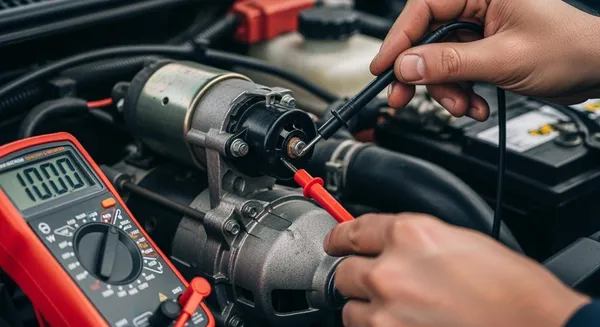
Figuring out how to test a starter motor solenoid is a straightforward task you can handle. You can diagnose the problem with your vehicle's starting system using one of three simple methods.
- Listening for a distinct click
- Using a multimeter to check voltage
- Performing a bypass or jumper wire test
Tip: This guide provides clear, step-by-step instructions. Learning how to test starter solenoid helps you confidently find the issue. You can test starter solenoid yourself and get closer to a solution.
Key Takeaways
- Listen for a single click. This often means the starter solenoid is bad.
- Use a multimeter to check voltage. This shows if power reaches the starter motor.
- A jumper wire test helps you check the solenoid directly. It bypasses the ignition switch.
- The bypass method uses a screwdriver. It checks if the starter motor works.
- Always do safety steps first. Disconnect the battery and wear safety gear.
Common Bad Starter Solenoid Symptoms
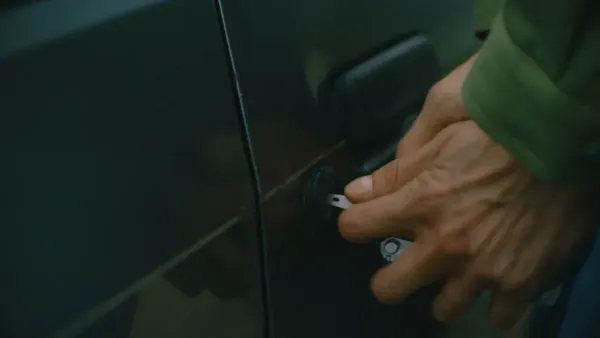
Before you start testing, you should recognize the common signs of a bad starter solenoid. Your vehicle often gives clear clues when this part begins to fail. Understanding these symptoms helps you confirm your diagnosis later.
Single Loud Click, No Crank
You turn the key and hear one loud, solid "CLICK," but the engine does not turn over. This is one of the most classic signs of a bad starter solenoid. The solenoid has two jobs. It acts as a powerful electrical switch and pushes the starter gear forward. The click tells you the solenoid received power from the ignition switch. However, its internal contacts are likely worn out. They fail to send the high current from the battery to the starter motor itself.
Rapid, Repeated Clicking
A fast, machine-gun-like clicking sound when you try to start the car usually points to a power issue. The solenoid needs a lot of electricity to engage the starter. If your battery is weak or has corroded terminals, the solenoid will:
- Try to engage.
- Lose power immediately.
- Disengage and try again.
This cycle repeats very quickly, creating the rapid clicking noise. While it can indicate a solenoid problem, you should check your battery and connections first.
Note: A weak battery is the most common reason for rapid clicking. Always test your battery's charge before assuming the solenoid is the problem.
No Sound and No Crank
You turn the key and get complete silence. Nothing happens at all. This symptom can mean the solenoid has completely failed. Corrosion, dirt, or faulty wiring can prevent electricity from reaching the solenoid. The solenoid cannot close the circuit to power the starter motor. A dead solenoid acts like a broken bridge, stopping the electrical current from ever reaching its destination.
Starter Motor Keeps Running
Sometimes the starter motor continues to run even after you release the key or the engine has started. This creates a loud whirring or grinding sound. This issue happens when the solenoid's internal plunger gets stuck. It fails to retract, keeping the starter gear engaged with the engine's flywheel. This is a serious problem that can damage both the starter and the flywheel. You should address it immediately.
Safety and Preparation
Your safety is the top priority before you begin any test. The starting system uses high electrical current, and the engine can be dangerous if it starts unexpectedly. You must follow these preparation steps carefully to ensure a safe and effective diagnosis.
Disconnect the Vehicle Battery
You must disconnect the battery before working on the starter solenoid. This step prevents accidental electrical shorts, which can damage components or cause sparks. It also protects you from electrical shock.
Important: Always disconnect the negative (-) terminal first. This is typically black and marked with a minus sign. Use a wrench to loosen the nut on the terminal clamp, then twist and pull the clamp off the battery post. Tuck the cable aside so it cannot accidentally touch the battery.
Wear Safety Gloves and Goggles
Protect yourself with the right personal protective equipment (PPE). Working on a vehicle can expose you to dirt, grease, and potential hazards.
- Safety Goggles: Wear them to shield your eyes from battery acid, sparks, or flying debris.
- Gloves: Use mechanic's gloves to keep your hands clean and protect them from sharp edges or hot engine parts.
Secure the Vehicle in Park or Neutral
You need to prevent the vehicle from moving while you work. An unexpected roll could cause serious injury. First, park the vehicle on a flat, level surface. Engage the parking brake firmly. For an automatic transmission, put the gear selector in Park (P). For a manual transmission, put it in Neutral. For extra security, place wheel chocks behind the rear wheels.
Locate and Clean Solenoid Terminals
A good electrical connection is essential for accurate testing. You will first need to locate the starter solenoid. It is a small, cylindrical component usually mounted directly on top of the larger starter motor. You will see a few electrical terminals on it. Before testing, inspect these terminals for dirt, grease, or corrosion. Use a wire brush or a small piece of sandpaper to scrub the terminals and cable connectors until they are shiny. A clean connection sometimes fixes the problem without any further testing.
How to Test a Starter Motor Solenoid: 3 Methods
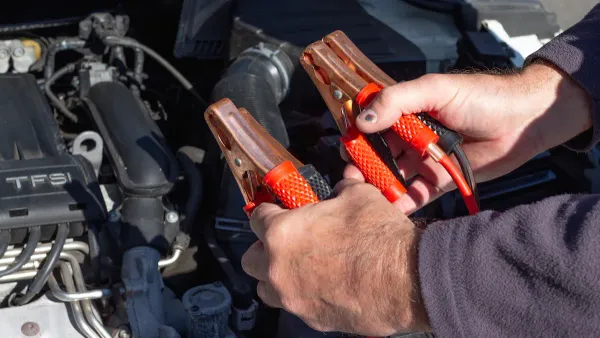
Now that you have completed the safety preparations, you are ready for the core task. You can learn how to test a starter motor solenoid using three effective methods. Each one helps you gather different clues to diagnose the problem. We will cover using a multimeter for precise measurements, a jumper wire for direct activation, and a bypass test to isolate the starter motor.
How to Test Starter Solenoid with a Multimeter
Using a digital multimeter is the most accurate way to diagnose your starting system. This method lets you see exactly where the electricity is flowing and where it stops. This is the best way to test starter solenoid with confidence.
Tool Tip: 🧰 Set your multimeter to the correct function before each test. For voltage, use DC Volts (V⎓). For continuity, use the setting with a sound wave symbol (•))) or Ohms (Ω).
Here is how to test a starter motor solenoid using this tool:
- Set Up for Voltage Test: Reconnect the battery's negative terminal. Set your multimeter to DC voltage mode.
- Test the Control Circuit (S-Terminal): Locate the small wire connected to the "S" (Start) terminal on the solenoid. Place the multimeter's black probe on the negative battery post or a clean metal ground on the engine. Touch the red probe to the metal connector on the S-terminal.
- Check for Signal Voltage: Have a helper turn the ignition key to the "Start" position and hold it there. You should see a voltage reading on your multimeter. A healthy signal from the ignition switch will typically be around 8V to 12V.
- Good Result: If you see voltage, your ignition switch and control circuit wiring are working correctly.
- Bad Result: If you see 0 volts, the problem is not your solenoid. The issue lies in the ignition switch, neutral safety switch, or the wiring in between.
- Test the Output Circuit (M-Terminal): Now, check if the solenoid is sending power to the starter motor. Keep the black probe on a good ground. Move the red probe to the large terminal on the solenoid that has a thick cable running to the starter motor. This is the "M" (Motor) terminal.
- Check for Output Voltage: Have your helper turn the key to "Start" again. You should hear the solenoid click, and your multimeter should immediately read battery voltage (12V or more).
- Good Result: A 12V reading means the solenoid's internal contacts are working and sending power. If the starter still doesn't spin, the starter motor itself is likely faulty.
- Bad Result: If you hear a click but see 0 volts (or very low voltage) at the M-terminal, the solenoid has failed internally. It is receiving the signal but not sending power. This confirms a bad solenoid.
Checking Continuity
Another excellent test you can perform with a starter solenoid with multimeter is a continuity test. This checks if the internal switch is making a good connection.
- Step 1: Disconnect the battery's negative terminal again. Set your multimeter to continuity mode (•))).
- Step 2: Touch one probe to the large battery (B+) terminal on the solenoid and the other probe to the large motor (M) terminal. With the key off, you should hear no beep.
- Step 3: Reconnect the battery. Have a helper turn the key to "Start." The multimeter should now beep, indicating a closed circuit.
| Test Condition | Multimeter Beeps? | Diagnosis |
|---|---|---|
| Key OFF | No | Good |
| Key in "Start" | Yes | Good |
| Key OFF | Yes | Bad Solenoid (Stuck On) |
| Key in "Start" | No | Bad Solenoid (Not Engaging) |
The Jumper Wire Test
This test manually sends power to the solenoid's control circuit, bypassing the ignition switch. It helps you determine if the solenoid itself can function when given direct power.
⚠️ Extreme Caution Required: This method can be dangerous. It creates sparks and can damage your vehicle's electronics if done incorrectly. Only perform this test if you are comfortable working with live electrical circuits. Always wear safety glasses and insulated gloves.
- Confirm Safety: Double-check that the vehicle is in Park or Neutral with the parking brake engaged. Keep your hands and tools clear of all moving engine parts like belts and fans.
- Prepare the Jumper: Use a well-insulated wire that is at least 12-gauge.
- Connect to Power: Attach one end of your jumper wire to the positive (+) terminal of the vehicle's battery.
- Activate the Solenoid: Briefly touch the other end of the jumper wire to the small "S" terminal on the solenoid.
- Expected Result: You should see a small spark and hear a loud "CLICK" as the solenoid engages. The starter motor should begin to crank the engine.
- Diagnosis: If the starter cranks, it confirms the solenoid and starter motor are functional. The problem is likely with your ignition switch or the control circuit wiring. If you only hear a click but the starter does not crank, the solenoid is faulty. If nothing happens at all, the solenoid has completely failed.
Test Starter Solenoid with The Bypass Method
This final technique, often called the "screwdriver test," helps you determine if the starter motor works independently of the solenoid's switching function. This is a quick way to find out if the motor is dead.
⚠️ High Current Warning: This test bypasses all safety controls and creates a large electrical arc (spark). The current is very high and can cause severe burns or weld the screwdriver to the terminals. Use a screwdriver with a thick, well-insulated handle.
- Safety First: Ensure the vehicle is in Park or Neutral and the parking brake is on. Wear your safety goggles and gloves. Keep your face away from the solenoid.
- Locate the Terminals: Identify the two large metal posts on the solenoid. One has the thick cable coming from the battery's positive terminal (B+). The other has the cable going into the starter motor (M).
- Bridge the Connection: Firmly press the metal shaft of your screwdriver across both large terminals at the same time. Be prepared for a bright, loud spark.
- Result 1: Starter Motor Spins: If the starter motor immediately begins to spin, it proves the motor itself is working. Since you bypassed the solenoid to get this result, the solenoid is confirmed to be the faulty component.
- Result 2: Sparks but No Spin: If you see large sparks but the starter motor does not spin (or just makes a humming noise), the starter motor has failed.
- Result 3: Nothing Happens: If there are no sparks and no action, you have a major power supply problem. Check that your battery is connected and charged, and inspect the main battery cables for damage or corrosion.
By using these methods, you can effectively how to test starter solenoid and pinpoint the exact cause of your starting issue.
Understanding Your Test Results
You have completed the tests. Now you can use the results to make a final diagnosis. Each test gives you a specific clue. By putting these clues together, you can confidently identify the root cause of your starting problem.
Diagnosis: Faulty Solenoid
You can be almost certain the solenoid is faulty if your tests showed the following patterns. The solenoid is the bridge between your ignition and the starter, and these results show the bridge is broken.
- You heard a single, loud click when turning the key, but the starter motor did not spin.
- Your multimeter showed 12V at the small 'S' terminal but 0V at the large 'M' terminal when the key was turned.
- The starter motor cranked perfectly when you performed the bypass test with a screwdriver.
Conclusion: 💡 If you bypassed the solenoid and the starter worked, you have found your culprit. The solenoid is receiving the signal but failing to send power to the motor. It needs to be replaced.
Diagnosis: Bad Starter Motor
Sometimes the solenoid does its job, but the starter motor itself has failed. Your test results will look different in this case.
You can diagnose a bad starter motor if:
- Your multimeter confirmed 12V at the 'M' terminal when the key was turned, but the motor only hummed or did nothing.
- You saw large sparks during the bypass test, but the starter motor still refused to spin.
These results show that full battery power is reaching the motor, but the motor cannot use it.
Diagnosis: Weak Battery or Bad Wiring
Your starting problem may not be the starter or solenoid at all. A weak power source can mimic the symptoms of a failed component. You should suspect a battery or wiring issue if:
- You heard rapid, repeated clicking when trying to start the engine.
- The engine does not turn over, but your dashboard lights come on.
- Your vehicle starts immediately with a jump start.
Corroded or loose cables can also prevent enough current from reaching the starter. Professionals use a "voltage drop test" with a multimeter to find high resistance in the main battery cables. A high voltage drop reading indicates that the cables or their connections are bad and are choking the flow of electricity.
Diagnosis: Ignition Switch Issue
What if you get no click and no crank? If your battery is fully charged, the problem might be upstream from the solenoid. You can diagnose an ignition switch or control circuit problem if your multimeter test showed a specific result.
Key Finding: When you tested the small 'S' terminal on the solenoid, you saw 0 volts while your helper turned the key to "Start." This means the "start" signal never reached the solenoid in the first place. The issue lies with the ignition switch, neutral safety switch, or the wiring connecting them.
You have now learned how to test a starter motor solenoid and diagnose your vehicle's starting problem. Remember the key signs of a faulty solenoid. If you hear a click but get no power at the starter motor, the solenoid is the issue. If the starter spins during a bypass test, you have also confirmed the solenoid is bad.
Next Step: ✅ With a confirmed diagnosis, you can now confidently replace the faulty solenoid. You have successfully completed the most critical step of the repair.
FAQ
Can I just replace the solenoid and not the whole starter?
Yes, you can often replace just the solenoid. Many solenoids are sold separately and can be unbolted from the starter motor. This can be a cost-effective repair if your tests confirm the starter motor itself is still good.
How much does a new starter solenoid cost?
A new starter solenoid is usually an affordable part. Prices typically range from $20 to $80, depending on your vehicle's make and model. Replacing only the solenoid is much cheaper than replacing the entire starter motor assembly.
What are the most essential tools for this job?
You will need a basic set of tools to perform these tests.
Essential Toolkit 🔧
- A socket or wrench set
- A digital multimeter
- Safety glasses and gloves
- A wire brush for cleaning terminals
Is a clicking sound always the solenoid?
💡 A single, loud click usually points to the solenoid. However, rapid, fast clicking often indicates a weak battery or a bad connection. You should always test your battery's charge first before you decide the solenoid is the problem.