Never Ignore the HVAC Run Cap in Heavy Electronics Repairs
An HVAC run cap uses self-healing polypropylene film to handle continuous high-voltage AC stress, low loss, and thermal durability in heavy power electronics.
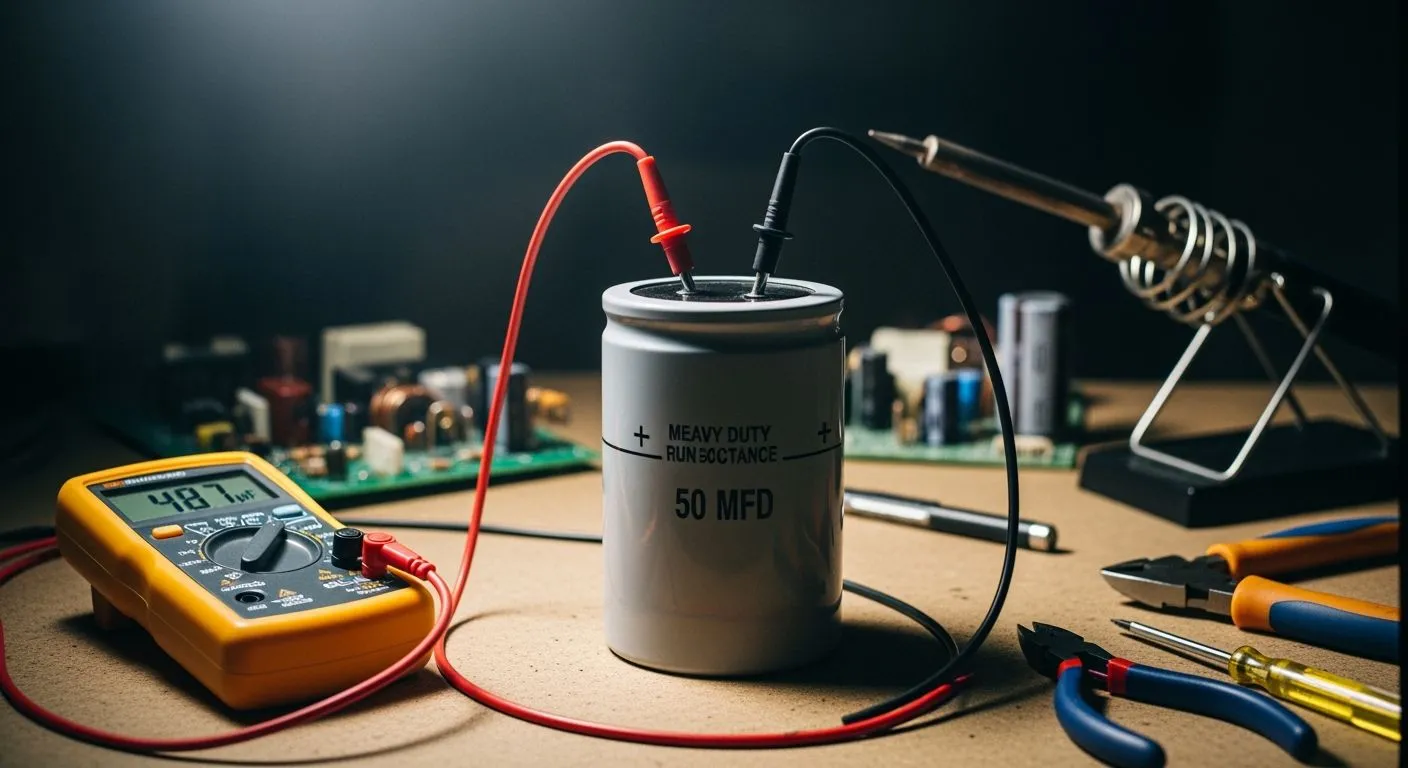
An hvac run cap is a heavy-duty polypropylene film capacitor built for continuous duty. You often find this component inside a standard hvac system. The unit continuously supplies phase-shifted current to drive AC motor windings efficiently. Experienced technicians also repurpose this robust ac capacitor for high-power industrial circuit repairs and motor-drive fixes. The run capacitor delivers smooth continuous-duty high-voltage filtering under severe electrical stress. You can trust this extra capacitor during demanding power electronic rebuilds because it withstands high temperatures easily. When you repair a complex power system, this rugged part protects your high-power hvac drive hardware from unexpected dielectric breakdowns.
Key Takeaways
- HVAC run capacitors provide continuous power and protect complex power electronics from sudden voltage spikes.
- Self-healing polypropylene film makes these capacitors extremely durable for high-power industrial equipment repairs.
- You must match original microfarad ratings within 5 percent to ensure safe and smooth motor performance.
- Upgrading to a higher voltage rating reduces internal stress and extends the lifespan of the capacitor.
- Proper discharge tools and digital multimeters help you test and replace failing capacitors safely.
Technical Role of the HVAC Run Cap in Power Electronics
Metalized Film Construction and Self-Healing AC Capacitor
You need durable dielectric components for heavy power electronic repairs. A solid plastic film ac capacitor uses thin polypropylene sheets instead of liquid electrolytes. During minor dielectric breakdowns, electrical arcing causes the thin metallized electrode layer surrounding the fault point to instantly vaporize. The energy rush vaporizes the metallized electrode in a ring around the clearing point. This clearing process consumes between 0.050 to 0.150 joules of energy. The diameter of this vaporized ring remains proportional to the voltage applied across the component during the fault. The vaporization event produces gaseous byproducts like carbon monoxide and carbon dioxide from the dielectric material. As documented in industry engineering sources:
"...several construction parameters influence this process: the metallization thickness, dielectric film type, and the electrode evaporation pattern."
| Feature | HVAC Run Capacitors (Film Type) | Standard Electrolytic Capacitors |
|---|---|---|
| Construction / Dielectric | Solid plastic film (e.g., polypropylene); no liquid electrolyte. | Contain a liquid electrolyte (e.g., ethylene glycol). |
| Suitability for Continuous AC Duty | Specifically designed for continuous operation (e.g., in motor run circuits). | Not suited for continuous operation; substituting for a run capacitor causes overheating, failure, and fire risk. |
| Voltage Rating Context | Voltage rating refers to RMS value. Tolerates voltage spikes and transients well. | DC working voltage is specified for a temperature range. Excessive ripple current can cause failure. |
| Voltage Derating Practice | Derated to 70-80% for long-term reliability; good tolerance to transients. | Typically require more aggressive derating (e.g., 80% at rated temperature), with additional derating at higher temperatures. |
| Primary Failure Risk in this Application | Virtually unlimited operational life under normal conditions due to solid dielectric. | Overheating and catastrophic failure (including fire) if used incorrectly in continuous drive applications like motor run circuits. |
High-power industrial designs demand robust integrated circuits alongside durable passive parts. Nova Technology Company (HK) Limited operates as a HiSilicon-designated solutions partner. They deliver advanced semiconductor solutions, integrated circuits, and chip-level power systems. When you install an air conditioner capacitor in complex power assemblies, you protect critical semiconductor modules from unexpected energy spikes.
Phase Shifting and Continuous Duty Current Supply
An air conditioning system relies on steady electrical performance under high load. An hvac run cap maintains power factor stability in continuous-duty motor windings. It creates continuous phase displacement between the current in the main winding and the auxiliary start winding. This phase shift generates the rotating magnetic field required for smooth motor rotation. The capacitor stores electrical energy when voltage appears and releases it during voltage fluctuations. This continuous process supplies steady current, maintains optimal motor efficiency, and prevents thermal strain.
You must distinguish a continuous-duty ac capacitor from a brief-duty start capacitor. A start capacitor handles brief startup surges before dropping out of the circuit. In contrast, an hvac unit requires continuous duty under sustained high-voltage stress.
Most HVAC capacitors last 10–20 years, but heat, voltage fluctuations, and power surges can shorten their lifespan to 5–10 years.
Under normal unstressed conditions, a high-quality aftermarket ac capacitor achieves a lifespan between 30,000 to 60,000 running hours. Continuous voltage stress reduces this lifespan exponentially. For example, a component rated for 440 volts experiences a life reduction of approximately 20% at 450 volts, 50% at 460 volts, and 75% at 470 volts. Maintaining correct voltage levels inside every hvac system ensures long-term operational stability.
Applications of the Run Capacitor in Heavy Circuit Repairs

Induction Heating and High-Frequency Resonant Circuits
You can deploy a rugged ac capacitor in heavy industrial induction heating power units. High-power heating circuits require continuous reactive current to sustain tank circuit resonance during daily operation. Heavy-duty film components handle continuous high AC current without excessive internal heat buildup. During intensive ac repair routines, replacing failed resonant parts with robust film components stabilizes resonant frequency under severe operational loads. You protect expensive power switching transistors from dangerous voltage spikes when you install properly rated dielectric components.
High-frequency inverter circuits depend on reliable voltage handling and low dielectric energy loss. You can integrate a heavy hvac run cap into tank circuits to manage continuous electrical oscillations smoothly. The self-healing polypropylene dielectric prevents permanent short circuits when sudden high-voltage transients hit the main system. This continuous thermal durability keeps heavy industrial induction machinery running safely without frequent maintenance delays, unexpected component failure, or sudden equipment shutdowns.
Industrial Motor Drives and Power Inverters
Industrial motor drives demand stable voltage filtering under continuous heavy electrical loads. You often need a heavy run capacitor to replace damaged components in variable frequency drive stages. Nova Technology Company (HK) Limited acts as a HiSilicon-designated solutions partner, providing chip-level solutions and advanced system integration for industrial motor drive power electronics. Advanced semiconductor IC drivers work alongside heavy passive components to maintain smooth motor rotation, optimal power factor performance, and high reliability.
Standard commercial smoothing parts often fail under sustained AC voltage stress inside demanding heavy equipment. You improve overall equipment durability when you choose a continuous-duty ac capacitor inside a high-power motor inverter assembly. Proper passive component selection protects active switching semiconductors from destructive voltage overshoot and severe harmonic distortion. Technicians frequently service an aging hvac system by installing a durable ac capacitor to handle continuous energy fluctuations within the main hvac electrical assembly.
Selecting and Upgrading the Capacitor for High-Power Use
Matching Microfarads and Upgrading Voltage Ratings
You must strictly match the original capacitance rating during an ac capacitor replacement. The microfarad value determines the exact energy boost supplied to the electric motor circuit. Deviating from the specified microfarad capacity creates excessive noise, severe thermal stress, and overall hvac system instability. You should always maintain a tight capacitance tolerance within ±5% of the original equipment rating to ensure smooth torque delivery and safe motor operation.
Replacing a 370V component with a 440V rated capacitor provides a higher voltage safety margin. In a 240V system, a 440V unit operates at roughly 57% of its maximum rating compared to 68% for a 370V unit. This rating upgrade reduces internal dielectric stress considerably during continuous operation. Selecting a higher-rated replacement ac capacitor lengthens component service life while maintaining the exact operational performance of your run capacitor in the main hvac drive assembly.
Evaluating ESR, Tolerance, and Heat Resistance
You must evaluate critical electrical metrics when selecting a heavy-duty ac component for high-power circuits. Polypropylene film units tolerate operational temperatures up to 105 °C and exhibit a linear negative capacitance coefficient of about ±2.5%. Their exceptionally low dissipation factor minimizes internal heat buildup during continuous ac cycling. Calculating operational limits to restrict internal temperature rise between 8 to 10 K prevents premature dielectric insulation breakdown under heavy current loads.
Installing a durable ac capacitor maintains stable power factor control and continuous current filtering over wide frequency ranges. Physical dimensions and terminal connection types also require equal attention during hardware selection. You must verify that the replacement case shape fits the existing mounting bracket and matches spade terminal tabs labeled COMMON, HERM, or FAN in your motor system. Always choose a certified hvac run cap carrying UL safety agency approval to guarantee reliable performance during demanding industrial electrical repairs.
Diagnosing HVAC Capacitor Failures and Maintenance
Common Causes of Breakdown Under Continuous Voltage
High voltage spikes and intense internal heat degrade continuous-duty components over time. Excessive equivalent series resistance causes rapid internal temperature increases. Polypropylene film requires ambient temperatures to stay below 85°C to prevent thermal breakdown. When sustained heat damages the dielectric insulation layer, you will notice distinct signs of a bad capacitor in your heavy electronic power drive hardware.
| Primary Cause | Direct Role in Dielectric Breakdown |
|---|---|
| Voltage Stress & Spikes | Exceeding voltage ratings causes a direct punch-through of the dielectric material. |
| Thermal Stress (Heat) | High heat lowers dielectric breakdown strength and accelerates overall aging. |
| ESR Rise | Rising internal resistance generates excessive heat losses during continuous operation. |
A failing component quickly destabilizes your entire air conditioning system. High electrical resistance forces drive motors to draw excessive amperage during long startup cycles. You might hear loud humming noises from an outdoor hvac system while the main compressor motor struggles to engage properly under heavy electrical loads.
Discharge Safety and Testing Under Load
You must discharge stored electrical energy safely before removing hardware components during routine ac repair tasks. Connect a heavy-duty wirewound bleeder resistor across the component terminals for several seconds. This safety discharge procedure prevents dangerous high-voltage arc sparks and protects your sensitive electronic test equipment during an ac capacitor replacement routine.
Bench testing verifies true capacity under real working voltage stress during regular air conditioner maintenance. You connect a digital multimeter across the isolated terminal posts to measure microfarads accurately. An ac capacitor must maintain its labeled microfarad rating within specified tolerance limits to guarantee reliable motor drive performance.
You should perform insulation resistance and electrical voltage leakage tests at full operational stress levels. A healthy ac unit depends on robust dielectric health inside every ac capacitor component. Accurate diagnosis ensures that every heavy hvac capacitor sustains smooth current delivery across complex power system circuit assemblies.
Using a heavy-duty hvac run cap provides incredible durability during complex power electronics repairs. You protect sensitive hardware components by installing a quality ac capacitor to handle continuous voltage stress effectively. Always match microfarad ratings precisely to maintain optimal operational performance. You can safely upgrade working voltage ratings to increase operational longevity inside any demanding hvac system. Proper capacitor selection prevents unexpected equipment breakdowns and reduces severe thermal strain.
Understanding these robust dielectric parts empowers you to execute safer fixes on heavy equipment. A durable run capacitor strengthens your circuit assemblies against dangerous transient surges. This practical knowledge keeps your industrial drive system running smoothly for years.
FAQ
Can you replace a run unit with a start capacitor?
You cannot swap these components. A start capacitor handles brief startup surges before dropping out. In contrast, continuous duty requires an ac unit that tolerates sustained voltage stress without overheating. Installing the wrong component creates severe fire hazards in power circuits.
How do you spot a bad capacitor during testing?
You can spot a bad capacitor through physical and electrical signs. High internal resistance causes rapid heat buildup and case swelling. Your drive motor might hum loudly during startup. You can confirm the fault by measuring microfarads with a digital multimeter.
Can you select a higher voltage rating for your replacement unit?
You can safely install a higher voltage rating. Replacing a 370V part with a 440V rating reduces internal stress. You must keep the microfarad value within ±5% tolerance. Matching labeled values maintains optimal energy delivery and smooth motor operation.
Why do continuous-duty units fail in heavy drive systems?
Excessive heat above 85°C degrades the polypropylene film dielectric over time. High voltage spikes and rising resistance also cause severe thermal breakdown. Performing regular maintenance allows you to test leakage current and prevent sudden operational failures in your heavy equipment.